





 Portuguese
  English
  Spanish
  4 min of reading
  0 comments


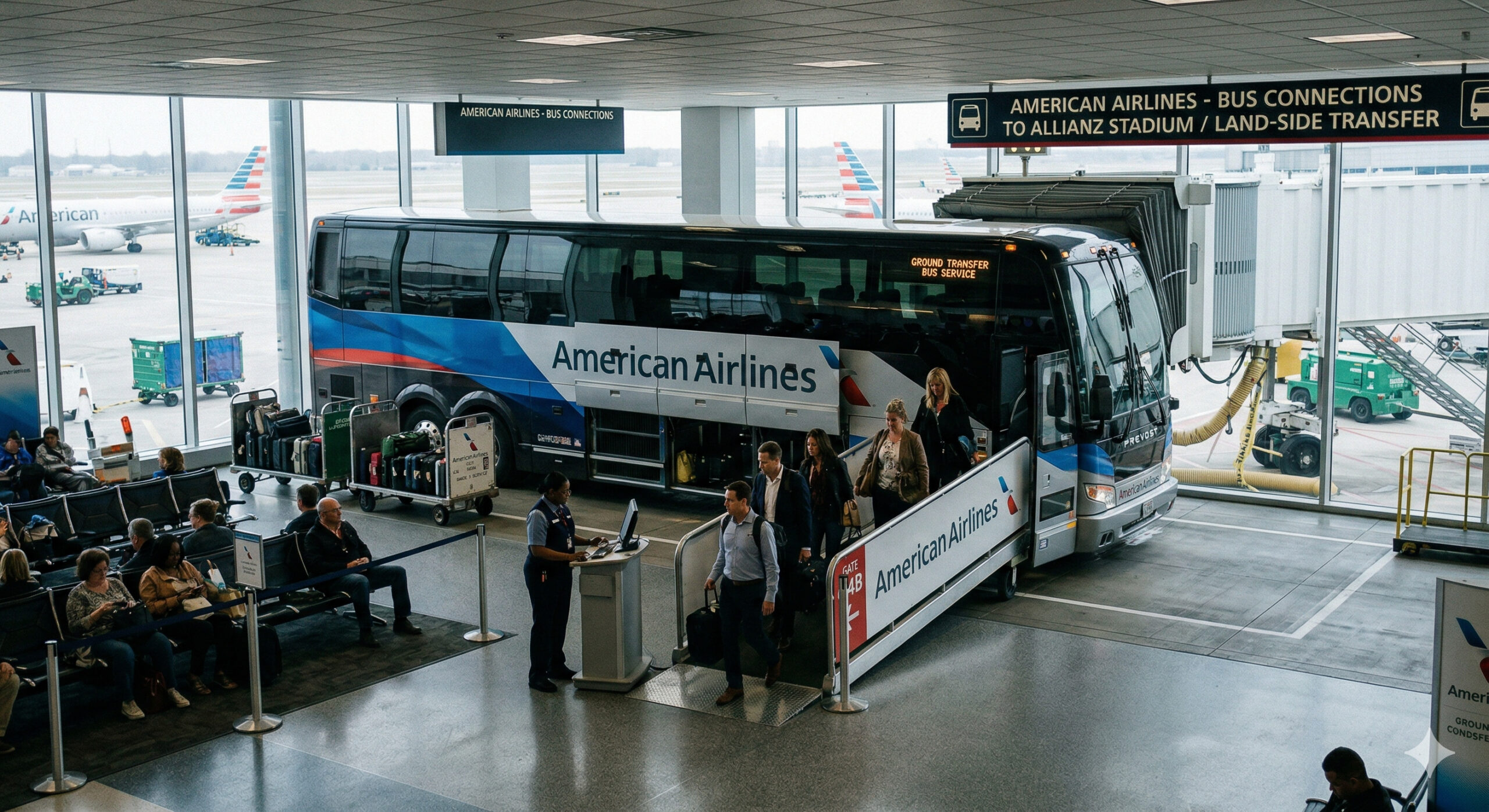
American Airlines integrates luxury bus into air system on short routes, with check-in and baggage check like flights.
From expanded initiatives throughout the decade and consolidated until 2024 and 2025, American Airlines has begun to incorporate a hybrid transportation model that connects highways and airports within the same travel experience. In partnership with Landline, the company started selling land segments as part of air tickets on short routes in the United States.
The most impactful data is that the passenger goes through the entire traditional flight process, including check-in, baggage check, and airport security, but boards a luxury bus instead of a plane. This strategy represents a significant operational shift in a sector historically dependent on aircraft even for short distances.
How the experience works that simulates a complete flight
The model adopted by American Airlines transforms ground transportation into a direct extension of the air network. The passenger buys the ticket normally, selects origin and destination, and receives an integrated itinerary.
-
São Paulo surprises the world with a colossal railway network project that promises over 1,000 km of tracks, R$ 194 billion in investments, and 40 projects connecting the capital to the interior with fast and sustainable trains.
-
The world’s largest escalator, measuring 905 meters in China, reduces urban travel time from 1 hour to about 20 minutes and transforms mobility in mountainous regions with an engineering solution adapted to the terrain.
-
A R$ 300 million logistics giant is taking shape in Serra with over 100,000 m² and raises a question: how can this transform e-commerce and distribution in the state?
-
Could Uber Rides Lose Minimum Fare? Understand What’s Happening!

On the day of travel, the process follows the aviation standard:
- check-in performed in the company’s system
- baggage check to the final destination
- passing through security controls
After this process, instead of boarding a regional plane, the passenger is directed to a premium bus operated by Landline.
These vehicles are designed to offer comfort similar to executive flights, with reclining seats, Wi-Fi, and increased space.
Short routes and smaller cities explain the adoption of the model
The partial replacement of flights by buses mainly occurs on short-distance and low-demand routes, especially between smaller cities and major airport hubs.
In the United States, many of these routes involve distances that can be covered in a few hours by highway, making the use of aircraft less efficient.
By integrating buses into the system, the company maintains connectivity for these regions without needing to operate unprofitable flights. This model allows passengers from these cities to continue accessing domestic and international flights from larger airports.
Operational costs and efficiency influence decision
Operating regional aircraft involves high costs, including fuel, maintenance, crew, and airport fees. On routes with low occupancy, these costs become difficult to sustain.
The use of buses significantly reduces these expenses while maintaining the passenger distribution structure to strategic hubs.
This change does not eliminate flights but adjusts operations to make the system more efficient on certain routes. Additionally, the model allows for greater operational flexibility, with quicker adjustments based on demand.
Shortage of regional pilots influences the scenario
Another relevant factor is the shortage of pilots, especially in the regional segment of North American aviation. Training new professionals can take years and involves high costs.
This scenario has led airlines to review their operations, reducing less profitable flights and seeking alternatives.


Although not the only reason, the lack of pilots contributes to the adoption of solutions such as integration with ground transportation. The strategy allows for optimizing the use of available crews on longer and more profitable routes.
Logistical integration transforms bus into extension of the plane
One of the most relevant aspects of this model is the logistical integration. Checked baggage goes directly to the final destination, without the need for intermediate pickup.
This means that the passenger does not need to manage different stages of the trip, maintaining a continuous experience.
In practice, the bus functions as a “ground flight,” connected to the rest of the air journey. This concept expands the traditional definition of air transport, incorporating different modalities within a single system.
The experience has generated diverse reactions among passengers. Many report surprise upon discovering that part of the trip will be made by highway, especially when they expected to board an aircraft.
However, others highlight positive aspects, such as greater comfort on short routes and reduced delays associated with regional flights.
The perception of the service largely depends on the passenger’s expectations and the transparency in communicating the trip. Over time, the trend is for this model to become more familiar to the public.
Model has existed for years but gains scale recently
Although it may seem like a recent innovation, the integration between ground and air transportation has been tested since 2018 in different markets.
What has changed in recent years is the scale and formalization of the model within the operations of airlines.
The expansion indicates that the concept has moved from being experimental to becoming part of the operational strategy of large companies. This movement accompanies broader changes in mobility and the search for logistical efficiency.
The replacement of short flights with ground transportation can generate positive environmental impacts. Aircraft on short routes tend to have higher relative fuel consumption per passenger.
The use of buses, especially modern models, can reduce emissions in certain contexts. This environmental advantage reinforces the interest in hybrid solutions in a sector pressured by sustainability goals. However, the real impact depends on factors such as occupancy and the type of vehicle used.
Aviation begins to redefine its own limits
The decision of American Airlines to integrate buses into the air system on short routes represents a significant change in how passenger transportation is organized.
By transforming the bus into an extension of the flight, the company redefines the concept of air travel and introduces a hybrid model that combines operational efficiency, cost reduction, and maintenance of connectivity.
This movement indicates that the future of aviation may not only be in the skies but also in the intelligent integration between different forms of transportation.









Seja o primeiro a reagir!