





 English
  Francês
  Alemão
  Italiano
  Japonês
  Norueguês
  Portuguese
  Spanish
  2 min of reading


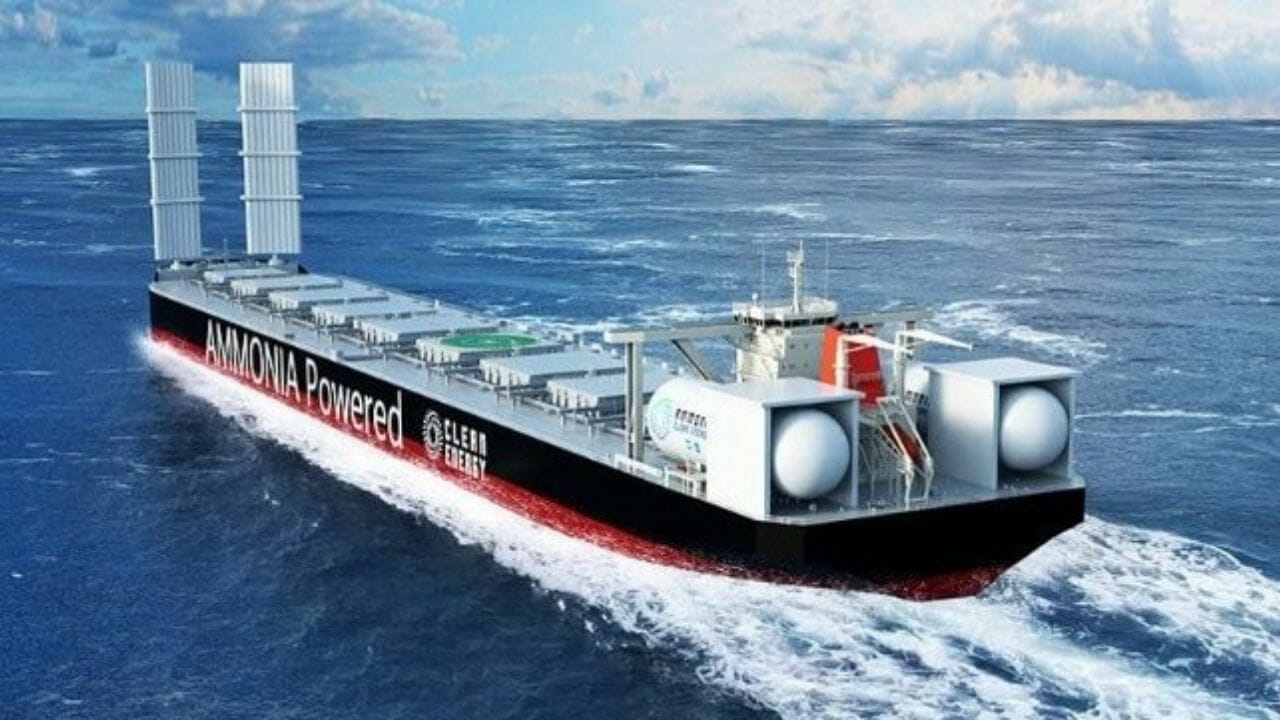
You Know That Expression “Fair Winds”? It Seems Ammonia Is Catching That Breeze in the Race to Become the Most Sustainable Marine Fuel of the Future.
According to Luis de Mattos, an offshore regulatory compliance specialist, ammonia stands out economically as a viable option for hydrogen production. Unlike other green fuels, ammonia does not face additional costs for carbon extraction.
Renewable Energy and Supply Logistics
But it’s not just about economics when building a sustainable future. The use of cleaner fuels also requires a keen eye on the energy source. For large-scale production of zero-carbon fuels, areas with high incidence of renewable energy, such as solar and wind, become highly attractive.
And here’s the detail: many of these areas are conveniently located near major maritime trade routes. However, these locations are also known for their low population density and relatively small energy markets.
-
São Paulo surprises the world with a colossal railway network project that promises over 1,000 km of tracks, R$ 194 billion in investments, and 40 projects connecting the capital to the interior with fast and sustainable trains.
-
The world’s largest escalator, measuring 905 meters in China, reduces urban travel time from 1 hour to about 20 minutes and transforms mobility in mountainous regions with an engineering solution adapted to the terrain.

-
New shoe factory in Ceará is expected to create 400 jobs and strengthen the local economy.
-
No one imagined it, but a mixture of sawdust with a mineral that fights fires surprises scientists with a result that changes the course of fire-resistant construction.


The Role of Safety in the Energy Transition
Safety is a critical component of this energy transition. Changes in the designs of new vessels are already on the horizon, including the physical separation of accommodation and fuel areas in ship structures. Imagine a scenario where the engine rooms are fully automated, minimizing the risks associated with handling fuels like ammonia.
Future Regulations and Challenges
There is still a lot of water to flow under this bridge. By 2030, stricter regulations from the International Maritime Organization (IMO) regarding nitrogen oxides (NOx) emissions and other greenhouse gases are expected. And don’t be surprised if more efficient, low-temperature fuel cell technology replaces combustion engines in new ship builds.
New Horizons in Global Shipping
Though there are challenges and uncertainties, logistics and infrastructure, like in any open sea, transformations bring with them an ocean of opportunities. New types of ships, cargo markets, and routes are about to emerge, writing a new chapter in global maritime history.
So, will we be able to make the use of ammonia as marine fuel a safe and sustainable reality by 2030? Time will tell, but one thing is certain: we are sailing in increasingly greener waters.








Seja o primeiro a reagir!