





 Portuguese
  English
  Spanish
  5 min of reading
  0 comments


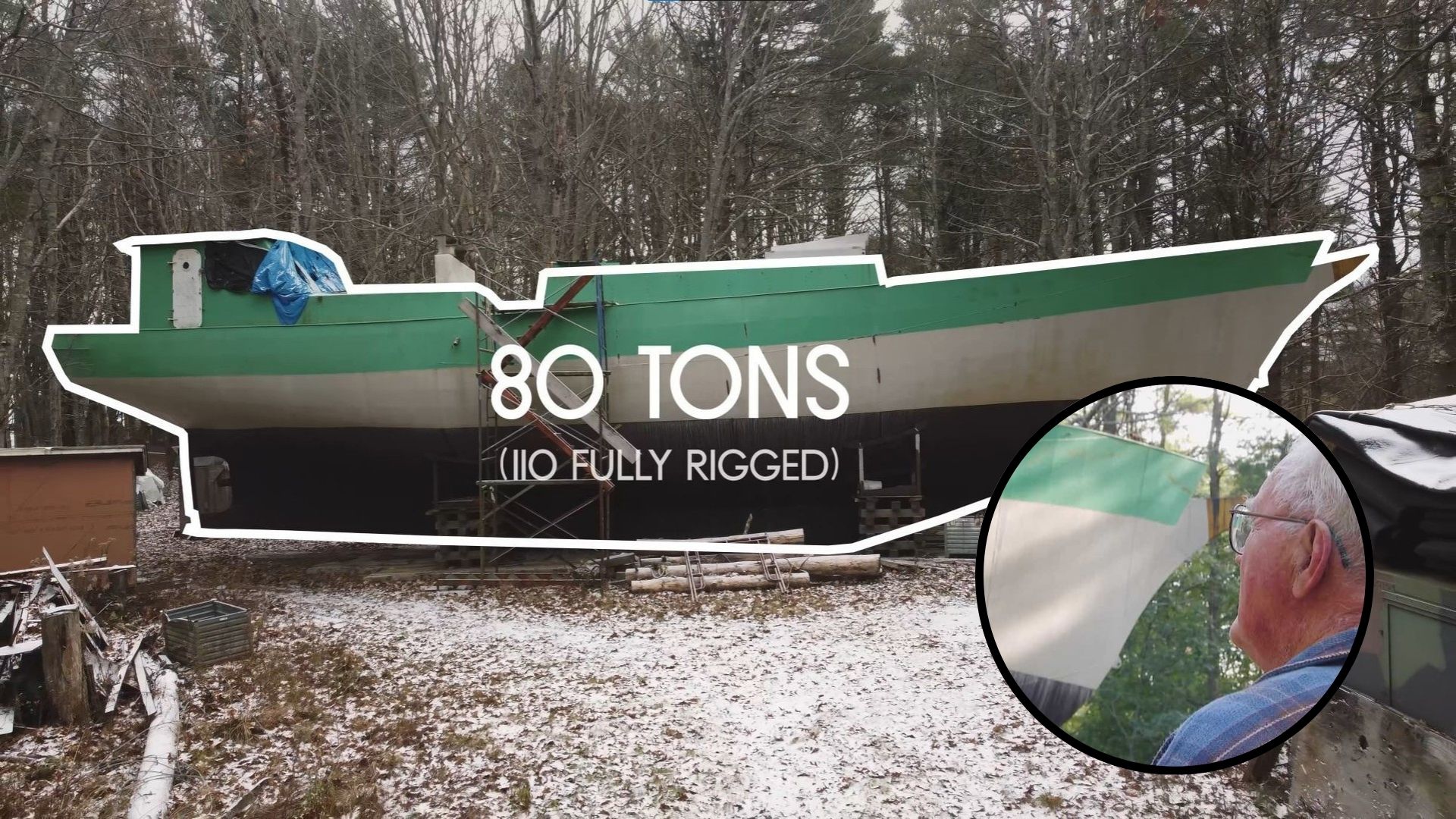
Handcrafted construction, prolonged legal dispute, and environmental impasse keep 34-meter vessel out of water in the United States, even after decades of work and attempts to release for launch in a coastal area of Maine.
A steel schooner measuring 113 feet, about 34 meters, has spent more than three decades being assembled on a residential lot in Freeport, Maine, and has become a rare case where nautical ambition, educational proposal, and urban conflict advance side by side.
Named Island Rover, the vessel was conceived by Harold Arndt to operate in training programs related to the sea and resource conservation, but remains out of water due to a lengthy dispute over zoning, permits, and the method of launching to the coast.
The origin of the project helps explain why it has never been treated merely as a backyard curiosity.
-
They have orbited the Moon and are now returning home: the astronauts of Artemis II are making final preparations for a descent at 38,000 kilometers per hour, with a landing in the ocean scheduled for this Friday at 9 PM Brasília time.

-
In the heart of the Sahara, the Ounianga Lakes form 18 permanent mirrors of water in an area of 62,000 hectares where it has hardly rained for decades, creating a blue archipelago fed by underground aquifers in the driest desert on the planet.

-
With 17 seniors aged between 90 and 99, the group breaks the record for the oldest choir in the world and becomes news in the United Kingdom.

-
The propeller plane manufactured by Embraer in Brazil flew side by side with the most lethal supersonic fighter of the American Navy over the deck of the largest nuclear aircraft carrier in the world, and the photos of the Super Tucano next to the F/A-18 Super Hornet over the USS Nimitz prove that the Brazilian turboprop has earned a place that no one thought possible for an aircraft of this category.

On the Island Rover Institute’s website, the organization states that the ship was designed as a platform for educational activities with youth, emphasizing conservation, waste reduction, and hands-on learning.
The same presentation describes the schooner as a 113-foot vessel, displacing 110 tons and capable of accommodating 25 people, built with surplus materials from the military shipbuilding industry.
Educational project and construction with recycled steel


Arndt began the work in the early 1990s, transforming his own property into an improvised shipyard.
Reports place the start of construction between 1992 and 1993, while another record described the Island Rover as a two-masted schooner built with repurposed steel from U.S. Navy ships.
In another account, it was noted that the interior had been planned to include a kitchen, dormitories, research laboratory, and common area, reinforcing the collective and educational purpose of the boat.
More than its size, what made the vessel unusual was the combination of handcrafted construction and institutional purpose.
According to the institute, the idea was to use the ship in sailing education programs, bringing students closer to navigation, material reuse, and opportunities related to the maritime sector.
This proposal has been the axis used by Arndt over the years to argue that the vessel was not born as a leisure yacht, but as a teaching tool with an environmental emphasis.
Zoning dispute blocked project advancement
The impasse began to gain public dimension when the initiative was formally linked to a nonprofit entity.
It was reported that Arndt created the Island Rover Institute in 2001 to facilitate educational programs and help fund the work.

The change altered how the project was framed by the city, which stopped viewing it merely as a private venture and began treating it as incompatible use with the residential zone where it was located.
The dispute fully entered the administrative and judicial sphere from the 2000s onward.
Reports indicate that the municipality began contesting the project in 2004, alleging violations of local rules for that area, and that subsequent agreements established deadlines for the removal of the vessel.
Public documents show the existence of commitments made in 2005 and 2014 requiring the definitive removal of the boat, with the provision for property transfer to the municipality if the obligations were not met.
Removal attempts and high legal costs
Not even when there was a physical relocation of the structure did the controversy disappear.
In 2018, the Island Rover was moved from the original site to a nearby lot, but remained in a residential area and continued to be contested.
That same year, the court ordered the responsible parties to pay over $36,000 in fees and legal costs to the municipality, in a process that kept the discussion open about the vessel’s permanence, removal, and ownership.
Meanwhile, the neighborhood around the hull has changed significantly.
A report aired in 2024 showed the vessel still surrounded by woods and high-end residences built over time in the coastal region of Freeport.
Complaints from residents about noise, dirt, and impact on the surroundings have also been recorded, along with the assessment that the removal to the water is technically possible, but blocked by legal hurdles.
Environmental impasse and hurdles for launching at sea
The most concrete attempt to unlock the case reappeared in the public records of Freeport.
Documents from the Coastal Waters Commission analyzed a request to create temporary access and a provisional launching structure on Shore Drive.
The plan included a support road, ramps, and mats to take the hull to the Harraseeket River.
The technical analysis discussed environmental licensing requirements and highlighted the need to assess soil stability, tidal behavior, and risks to wetlands.
Despite this procedural advancement, the temporary launch was not approved.
It was reported that the request was denied due to environmental concerns involving Raspberry Cove, including potential impacts on marshes, birds, and horseshoe crab populations.
The discussion began to include proposals for local referendums to attempt to change municipal rules and pave the way for an exceptional authorization.
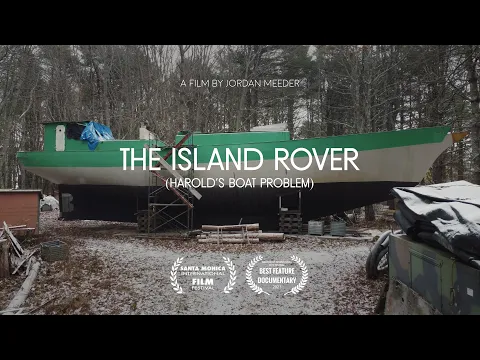
Legal dispute continues after more than three decades
The case has gained new developments recently. It was recorded that Arndt, then 83 years old, opened a new front of dispute by suing the city, alleging successive blockages over more than two decades.
At the same time, local authorities sought additional assessment from the Maine Department of Environmental Protection, indicating that any solution also depends on state technical analyses.
Even with the uncertainties, the original purpose remains the main argument of the schooner’s advocates.
The institute maintains that the Island Rover can serve educational programs, bringing youth closer to navigation, environmental conservation, and careers related to the maritime industry.
It was also highlighted that the project has always been associated with the idea of teaching material reuse and ocean culture.
Over time, the vessel has ceased to be merely an unusual work to become a symbol of impasse between individual project, urban transformation, and regulatory limits.
The nearly completed hull remains close to the water, but its arrival at sea depends on administrative and judicial decisions that have yet to produce a definitive outcome.







Seja o primeiro a reagir!