





 Portuguese
  English
  Spanish
  6 min of reading
  0 comments


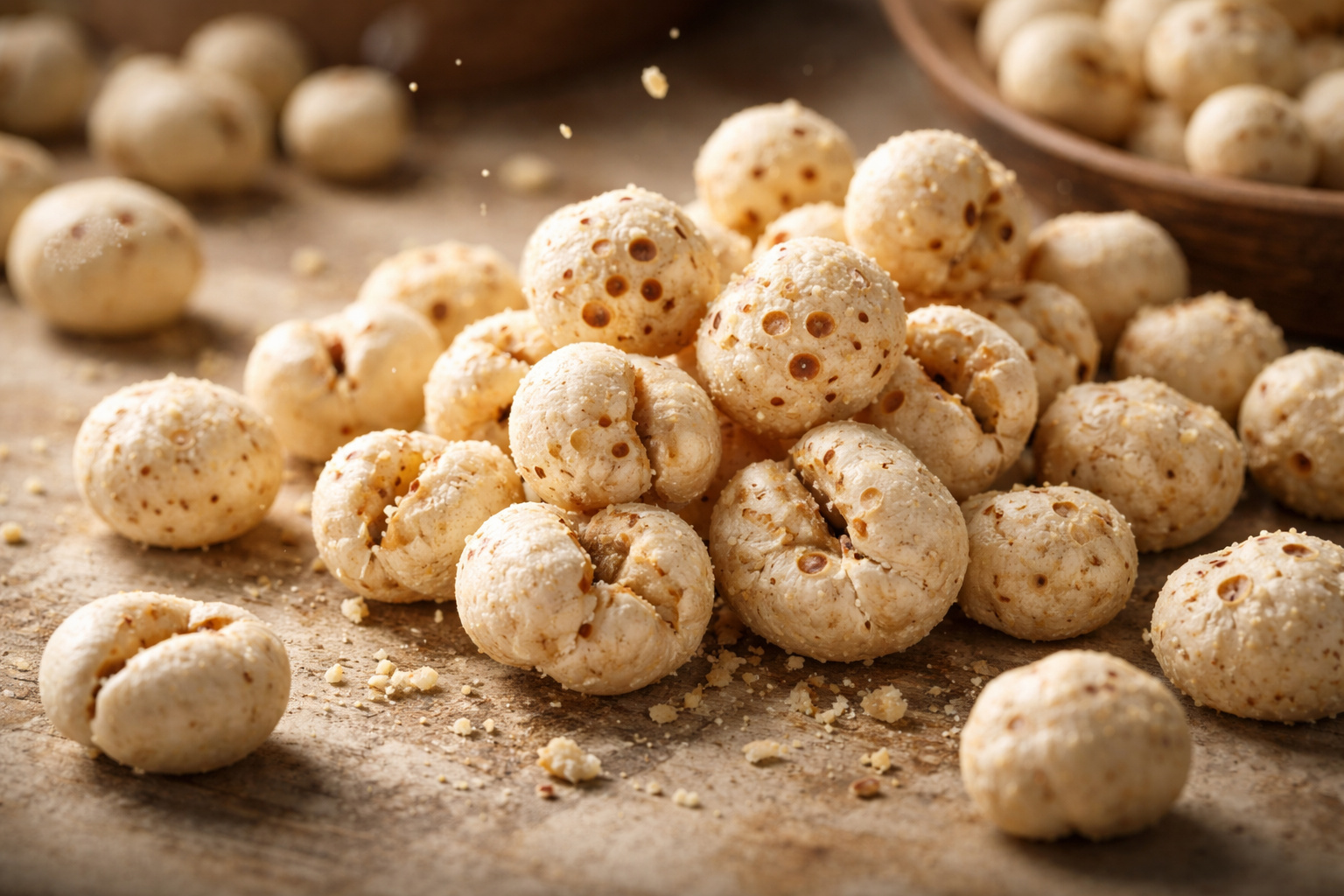
Makhana seed becomes a global trend due to low fat content and presence of antioxidants with anti-inflammatory potential.
In 2024, a traditional food cultivated for centuries in ponds of India began to gain traction in international markets: makhana, also known as fox nuts. Extracted from the aquatic plant Euryale ferox, this product has transitioned from a regional ingredient to occupying shelves as an alternative to ultra-processed snacks. According to a report published by Al Jazeera in 2025, makhana has been experiencing growth in exports and expansion into markets such as the United States, Europe, and the Middle East, driven by the demand for foods considered healthier
The most relevant fact is that makhana combines low fat content with the presence of antioxidant compounds, and is consumed after heating, when the seed expands and acquires a texture similar to popcorn. This traditional preparation method and its nutritional properties are well documented in the literature on the species Euryale ferox, which has been used as food for centuries and is now positioned as a value-added product in the global market.
This set of factors helps explain why the food has begun to gain international space as an alternative within the snack category, following the global trend of replacing ultra-processed products with options that have a simpler nutritional profile.
-
China showcases robot dogs that act in groups like a coordinated pack, make decisions together, and could change the way modern wars operate.

-
The coldest seawater ever recorded in Earth’s history was hidden under extreme ice 717 million years ago and reached an impressive -15°C.

-
China has launched the world’s first floating artificial island, a scientific structure designed to face open seas, test equipment weighing hundreds of tons, and reach depths of 10,000 meters.

-
China accelerates global science and may surpass the United States in 2 years with increased public investment, continuous growth, and direct impact on the global technological competition.


What is makhana and how is this seed produced
Makhana is the seed of Euryale ferox, an aquatic plant from the family Nymphaeaceae, primarily cultivated in regions of India, China, and Southeast Asia. Unlike conventional agricultural crops, its cultivation occurs in flooded environments, usually shallow ponds, which makes the process more labor-intensive and reliant on traditional techniques.


After harvesting, the seeds undergo drying and controlled heating. This process causes internal expansion due to steam pressure within the seed structure, resulting in a light and crunchy product.
This physical phenomenon is the same basic principle of popcorn, but applied to a seed with a completely different chemical composition, which alters its final nutritional value.
Actual nutritional composition and what differentiates makhana
Unlike many viral contents, makhana is not a “miracle” food, but it has specific characteristics that justify its growth.
Studies show that it contains about 9% to 12% protein, is primarily composed of carbohydrates, and has an extremely low fat content, close to 0.1% in some analyses. This combination is unusual compared to snacks like nuts, which have a high lipid content.
Additionally, the seed is a source of minerals such as magnesium, phosphorus, and potassium, elements involved in important metabolic functions. This profile makes makhana energetically efficient, with low fat density and the presence of micronutrients, positioning it among the lighter snacks from a nutritional standpoint.
Antioxidant compounds and what science has really found
The main scientific interest surrounding makhana is not only in its basic nutritional composition but in the bioactive compounds present in the seed.
Research has identified substances such as:
- gallic acid
- epicatechin
- phenolic compounds

These elements are associated with antioxidant activity, with the ability to neutralize free radicals. Laboratory studies have demonstrated that extracts from the plant exhibit strong antioxidant activity both in vitro and in animal models.
This point is crucial: makhana has proven antioxidant activity in the laboratory, which justifies scientific interest, but does not automatically mean proven direct effects in humans.
Anti-inflammatory and other effects: what is real and what is exaggeration
Part of the popularization of makhana comes from claims about benefits such as anti-inflammatory action, glycemic control, and even anti-aging effects.
Scientific evidence shows that:
- antioxidant compounds may reduce inflammation at the cellular level
- animal studies indicate improvement in metabolic parameters
- there are indications of a positive impact on glycemic control
However, these results are still limited to laboratory studies or animal models.
There is no robust clinical evidence that proves that the common consumption of the food leads to weight loss, rejuvenation, or direct therapeutic effects in humans. This distinction is essential to separate science from marketing.
Why makhana went viral in the West
The rise of makhana did not happen by chance. It is directly linked to a structural change in global eating behavior. In recent years, consumers have begun to reject ultra-processed foods and seek alternatives with:
- less fat
- fewer additives
- natural origin
At the same time, there has been growth in the functional snack market, which combines convenience with perceived health benefits.

Makhana fits perfectly into this space, offering a texture similar to popular snacks but with a simpler nutritional composition and lower lipid content. Additionally, its appearance and versatility have facilitated adaptation to different food cultures.
Glycemic index and metabolic impact
Another relevant factor identified in research is the relatively low glycemic index of makhana. Studies indicate values close to 37, considered low when compared to foods like industrial popcorn or processed snacks.
This means that the food causes a slower release of glucose into the blood, which may contribute to greater satiety and energy stability.
This aspect is particularly relevant in the context of diets aimed at metabolic control, although it does not replace comprehensive nutritional strategies.
Real difference between makhana and traditional snacks
The comparison with conventional snacks helps to understand its growth. Ultra-processed products generally have a high concentration of fat, sodium, and chemical additives, as well as high caloric density.
Makhana, on the other hand, has:
- low fat content
- lower energy density
- simpler composition
This structural difference is what supports its position as an alternative within the natural and functional food market.
Limitations, risks, and correct interpretation
Despite the growth and scientific attention, makhana should not be treated as an isolated nutritional solution. The available studies show potential but do not yet confirm direct clinical effects in humans on a large scale.
Moreover, the nutritional value depends on the preparation method. Industrial versions may contain added salt, oils, or seasonings that alter the original profile.
This reinforces that the food should be analyzed within a broader dietary context, and not as a product with miraculous properties.
Makhana represents a clear example of how traditional foods can gain prominence in a global scenario oriented towards health, practicality, and naturalness. Based on scientific evidence, the seed presents relevant antioxidant compounds, low fat content, and nutritional characteristics that differentiate it from common snacks.
The combination of ancient tradition, initial scientific validation, and adaptation to the modern market has transformed makhana from a regional food into a global product, positioned in one of the fastest-growing categories in the food industry: functional snacks.






Seja o primeiro a reagir!