





 Portuguese
  English
  Spanish
  4 min of reading
  0 comments


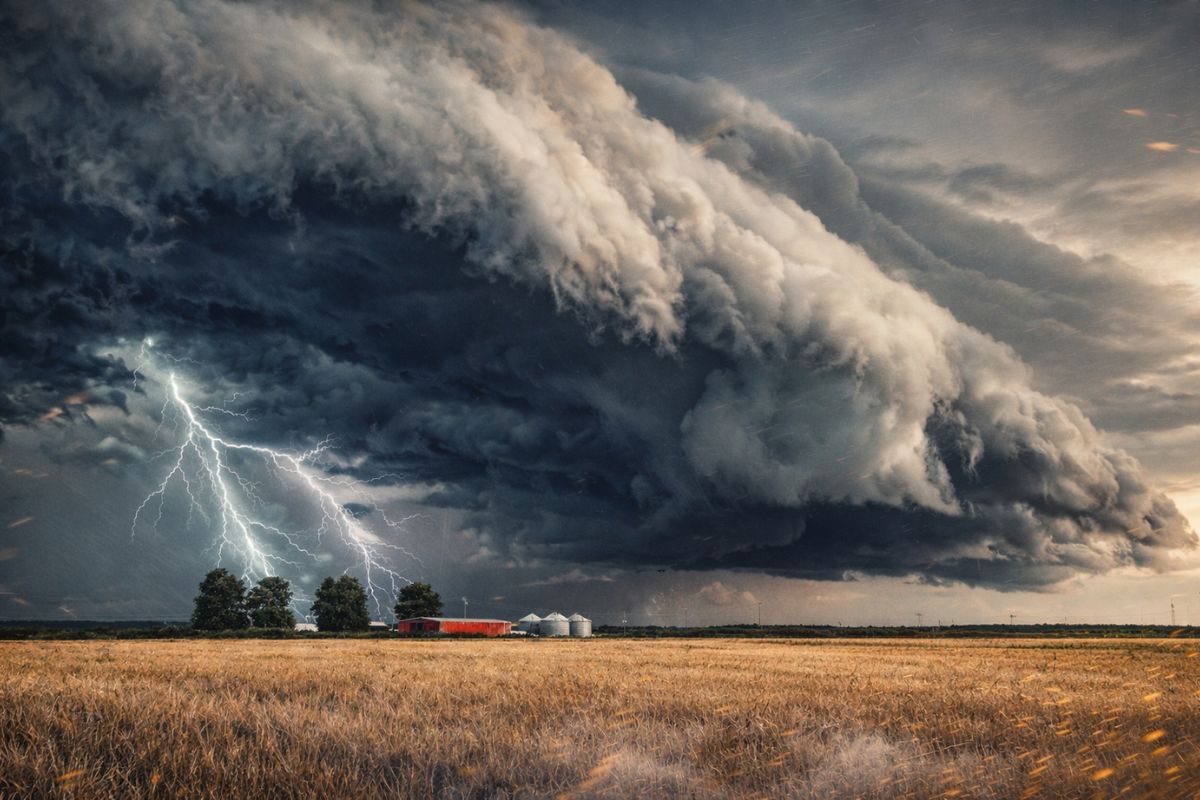
The cyclone forms between North Argentina, Uruguay, and Rio Grande do Sul with Inmet alerts for almost the whole South region including risk of winds of up to 125 km/h on the coast, rains of 100 mm per day, possibility of hail, landslides, and power outages
An extratropical cyclone begins to form this Tuesday (7) between North Argentina, Uruguay, and Rio Grande do Sul, and is already causing significant changes in the weather. According to information from the portal ndmais, Inmet issued alerts for almost the entire South region of Brazil, except for the east of Paraná, indicating a risk of rains of up to 100 mm per day, possibility of hail, and winds that can reach 125 km/h on the coast. The cyclone is expected to be more intense than usual for this type of formation, according to meteorological projections.
The anticipated impacts are severe. Inmet warns of the risk of power supply interruptions, damage to crops, falling trees, river floods, flooding, and landslides between Tuesday (7) and Wednesday (8). The cyclone is associated with a cold front that will push instability throughout the South, and the expectation is that winds will intensify as the system moves towards the ocean throughout Wednesday.
Where the cyclone will cause the greatest damage in South Brazil
The extratropical cyclone concentrates its greatest risks in three main areas. In the interior of Rio Grande do Sul, wind gusts can reach up to 90 km/h, enough to knock down trees and cause structural damage.
-
It wasn’t China: a European country tests the world’s first train with quantum technology that eliminates the need for GPS and inaugurates a new era in rail transport.

-
Scientists create a filter made from organic materials that transforms even seawater into drinking water using only sunlight, without electricity, without chemicals, and with almost zero production cost.

-
No more worrying about age: scientists discover a way to reprogram your cells to keep your bones as strong as iron for a lifetime.

-
Artemis II makes historic flyby of the Moon, sets record for distance from Earth, captures the far side, and witnesses a solar eclipse that no one on the planet could see.

On the coast of Rio Grande do Sul, winds are expected to be even more intense, with gusts of up to 125 km/h according to Meteored, raising the risk of severe damage to buildings and infrastructure.
The coast of Santa Catarina will also be impacted by the cyclone. The forecast is for strong winds capable of shifting sand dunes and affecting buildings near the shore.
Rain accumulations are expected to remain high until the end of Wednesday, with volumes close to 100 mm concentrated in Rio Grande do Sul, the coast of Santa Catarina, and western Paraná the regions that concentrate the greatest potential impact of this event.
Why this cyclone may be more intense than usual
The extratropical cyclone forming this Tuesday has characteristics that differentiate it from similar formations.
The combination of the system’s position forming over the region between Argentina, Uruguay, and the extreme south of Brazil and the associated cold front creates conditions for intensification above the standard, with lower atmospheric pressure than usual and a more pronounced wind gradient.
When Meteored and Inmet classify a cyclone as “more intense than usual,” it means that the sustained winds and predicted gusts exceed what is typically expected for this type of phenomenon in the region.
Extratropical cyclones are relatively common in South Brazil, especially in autumn, but not all generate winds of 125 km/h and simultaneous hail alerts this one is at the top of the severity scale for the region and requires heightened attention from the population.
The risk of hail associated with the cyclone
In addition to strong winds and heavy rain, the cyclone brings the possibility of hail a risk that significantly increases the potential for damage.
Hailstones can destroy crops in minutes, damage vehicles, break windows, and cause losses that no heavy rain alone would provoke. Inmet included hail among the phenomena predicted in the alerts issued for the South region.
The hail associated with the cyclone is more likely during the most unstable phases of the event, when convection is more intense especially during the afternoon and evening of Tuesday and the early morning of Wednesday.
For rural producers in Rio Grande do Sul, western Paraná, and Santa Catarina, the hail alert means that crops in the harvesting or maturation phase are exposed to damage that can represent significant financial loss.
How to protect yourself during the passage of the cyclone
The safety guidelines are straightforward and should be followed between Tuesday and Wednesday. Do not seek shelter under trees during wind gusts as this is one of the main causes of death in storms.
Avoid parking vehicles near elevated structures that could be knocked down. Do not remain in open areas or fragile structures during storms with lightning.
Unplug electrical devices during thunderstorms to avoid damage from power surges. Do not cross flooded areas or areas with currents; just 30 centimeters of flowing water can sweep away a person, and even less can move a vehicle. Avoid moving in slopes and areas with a history of landslides.
The recommendation is to monitor weather alerts in real-time and act preventively the cyclone has a predicted arrival time, and those who prepare in advance suffer less during the passage of the system.
Are you in the risk area of this cyclone? How are you preparing? Share in the comments and help inform those who need this alert.








Seja o primeiro a reagir!