





 Portuguese
  English
  Spanish
  6 min of reading
  6 comments


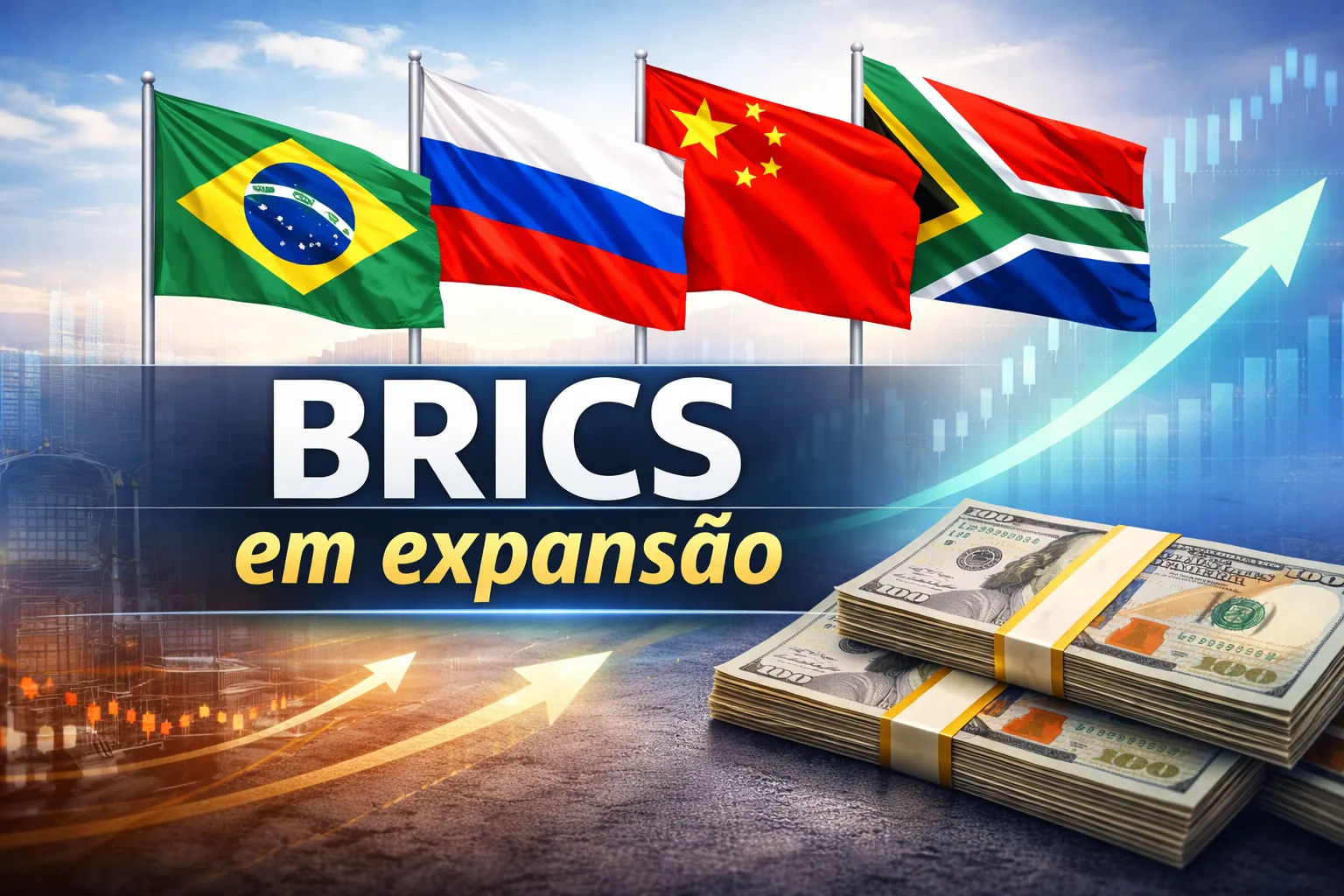


Assessment Indicates Progress of the Block in Trade, Reserves and Bilateral Agreements, with Gradual Reduction of Dollar Use, Growing Geopolitical Impact and Possible Effects on Financial Flows, Monetary Policy and Global Economic Balance
For the first time in decades, the BRICS block has surpassed the G7 in global GDP participation, reaching almost 35%, sparking debates about the future of the dollar, the reorganization of global trade, the increasing use of alternative currencies, and the geopolitical impact of sanctions imposed since 2022.
According to some experts, the advancement of the BRICS marks a historical inflection point in the international economy, as it removes the G7 nations’ isolated leadership over the largest share of global GDP, something that has shaped the financial system since the post-World War II.
This new block includes Brazil, Russia, India, China, South Africa, and other countries, gathering significant demographic weight, vast commodity reserves, and increasing trade integration outside the traditional western axis.
-
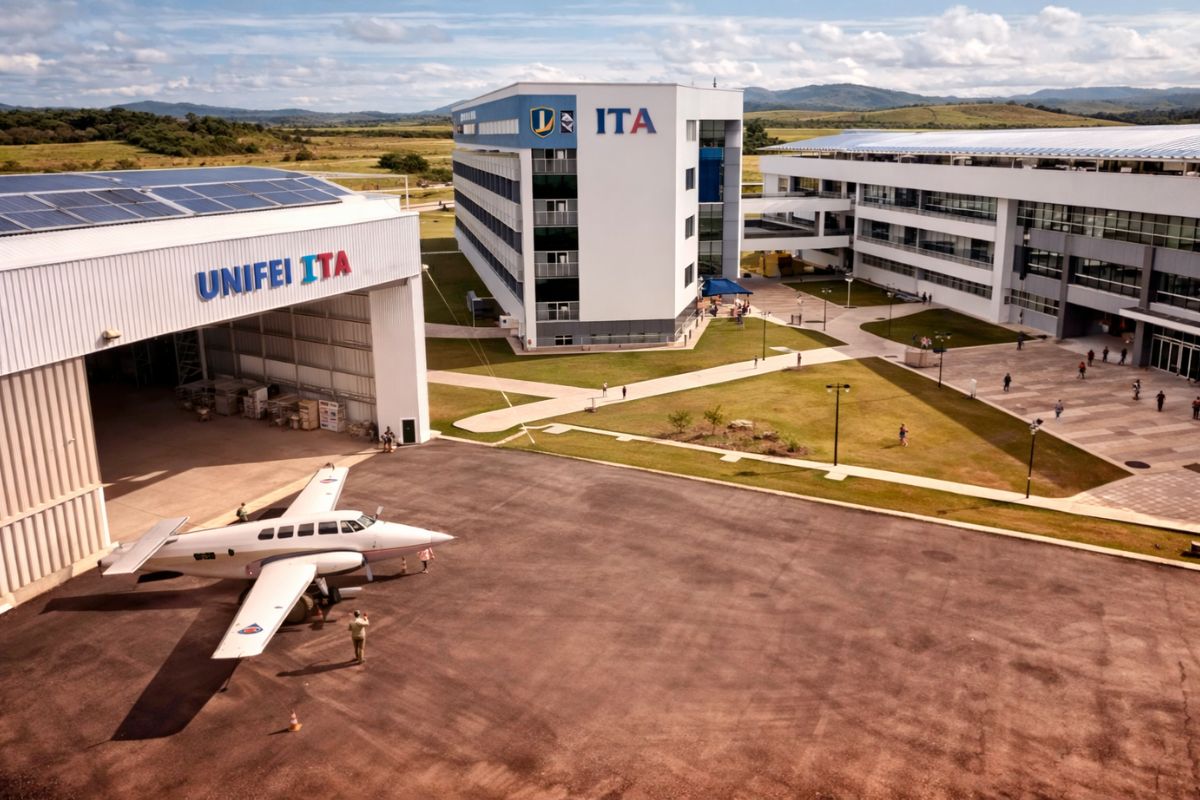
The institute that trained the greatest aerospace engineers in Brazil has just opened its first campus outside São Paulo after 75 years: ITA Ceará will have R$ 445 million, new courses in energy and systems, and classes are expected to start in 2027.
-
Luciano Hang, owner of Havan, goes to Juiz de Fora after the tragedy in February, brings R$ 1 million, hands out R$ 2,000 cards, and donates up to R$ 15,000 to victims in the region.

-
The Brazilian passport allows legal residence in dozens of countries without the need for a prior visa, and most Brazilians are unaware that they can apply for residency directly upon arriving in nations in South America, Africa, and even Europe.

-
Petrobras sends a message to Brazilian truck drivers after fuel collapse and reveals plan to have 100% domestic diesel.


The change occurs in parallel to an old debate about global reserve currencies, historically associated with dominant empires.
After World War II, the dollar consolidated its hegemony with the Bretton Woods agreement in 1944, officially becoming the main reserve currency and standard for global trade, finance, and investments.
A report from the Atlantic Council, while concluding that the dollar still dominates, reports that sanctions and geopolitical shifts have encouraged BRICS countries to adopt alternative payment systems (such as CIPS) and to push for alternatives to the dollar in international transactions.

Dollar as Pillar of the International Financial System
Currently, the dollar still dominates global banking reserves, representing about 58% in 2024, far above the euro, which comes in second with approximately 20%, maintaining a significant structural advantage.
This predominance makes the dollar somewhat of an operating system for the international economy, as oil, grains, microchips, and most strategic commodities are priced and settled in this currency.
As a result, a large portion of relevant international transactions goes through American banks, granting the United States the power to block payments and reserves of countries that oppose its strategic interests.
This mechanism became evident after Russia’s invasion of Ukraine in 2022, when hundreds of billions of dollars of Russian foreign reserves were frozen and the country was excluded from the Swift system.
The coordinated action by the U.S. and allies financially isolated Moscow, reinforcing among non-Western countries the perception of structural vulnerability to the dominance of the dollar and associated institutions.
Sanctions Accelerate the Movement of Dedollarization
The 2022 sanctions acted as a catalyst for the dedollarization process, leading BRICS countries to seek alternatives to reduce exposure to financial blockades and trade restrictions.
One of the first steps was the reorganization of trade flows, especially in the energy sector, moving away from the West and redirecting exports to Asian markets.
After February 2022, Russian oil exports to India and China grew sharply, while sales to European countries fell drastically due to the sanctions.
The central element of this change lies in the currency used, as billion-dollar agreements began to be closed in Chinese yuan and Russian rubles, replacing the dollar in trade settlements.
Before the war, most of Russia’s exports were settled in dollars or euros, far surpassing the use of the ruble in international transactions.
With the onset of sanctions, the dollar’s share plummeted, and currently almost 75% of Russian exports are settled in rubles and yuans, according to the data presented.
Reduction of Treasury Bonds and Gold Rush
Another relevant movement involves the reduction of BRICS positions in long-term U.S. Treasury bonds, a gradual but consistent change since 2010.
About 15 years ago, these countries held over 40% of global holdings in U.S. Treasury bonds, a proportion that has now fallen to less than 20%.
The exit from these assets raises the question of the destination of capital, and the answer has been the strengthening of gold reserves, regarded as a neutral asset and out of reach of direct sanctions.
China’s gold reserves, as a proportion of total foreign reserves, have rapidly grown since mid-2022, marking a clear inflection in the country’s financial strategy.
Russia follows a similar pattern, with accelerated gold accumulation after a long period of stability, reinforcing the search for assets that cannot be frozen or blocked.
Gold is seen as real money, which cannot be printed by governments nor eliminated by political decisions, serving as a potential base of trust for new financial systems.
Gradual Decline of Dollar Dominance
Despite remaining the leader, the dollar’s share in global reserves has fallen from about 70% in 2001 to 58% in 2024, a reduction of 12 percentage points over just over two decades.
Almost half of this decline has occurred in the last 10 years alone, signaling a recent acceleration of the movement, even though the dollar maintains a broad advantage over competing currencies.
This loss of space is not being absorbed predominantly by the euro, but rather by currencies considered non-traditional, which have grown by more than 2% since 2020.
This advancement, while small in absolute terms, indicates a diversification of global reserves and a reduction of exclusive dependence on the U.S. dollar.
Internal Tensions Limit Advancement of BRICS
Despite the momentum, dedollarization faces significant obstacles, as the BRICS do not form a homogeneous alliance, sharing more the goal of reducing Western influence than a unified economic agenda.
There are deep tensions among members, including geopolitical disputes, divergent strategic interests, and different economic models, making it difficult to create a robust common currency.
These internal fragilities reduce the predictability and confidence needed for a BRICS currency to replace the dollar as the dominant reserve in the short term.
Nevertheless, the block brings together significant demographic power and relevant control over strategic commodities, factors that support its growing role in international trade.
Technological Sanctions and Side Effects
The debate about the dollar’s decline connects to another front, that of technological sanctions, as in the case of American restrictions on the sale of advanced microchips to China.
After restrictions imposed during the Biden administration, Nvidia began selling H20 chips, diluted versions, to the Chinese market, generating about 15 billion dollars in revenue.
Subsequently, new restrictions blocked these sales, directly affecting an American company, while Chinese manufacturers intensified efforts to develop domestic chips.
Huawei, severely impacted by sanctions, saw its quarterly revenue drop by 76%, but reacted by diversifying businesses and investing in cloud services within China.
Two years later, the company launched a smartphone with a domestically produced chip, surprising the market and demonstrating its ability to circumvent technological blockades.
These episodes reinforce the perception that sanctions can accelerate the technological self-sufficiency of targeted countries, weakening the economic power of Western companies in the long run.
A Global System in Transition
The current scenario suggests a turning point, with an emerging block seeking alternatives to the dollar-dominated system, while the U.S. maintains unprecedented economic and military strength.
The success of the BRICS in redefining the global monetary system is not guaranteed, but the signs of change are clear and supported by data on trade, reserves, and investments.
History shows that currencies accompany the rise of new powers, but it also reveals that monetary transitions are slow, complex, and marked by conflicts and gradual adjustments.
In the short term, the dollar remains central, but the movement towards diversification, gold, alternative currencies, and bilateral agreements outside the traditional system indicates that the world is no longer the same as it was decades ago.









O dólar vai virar pó.
É uma tendência importante e necessária. Pois os EUA transformam o dólar em instrumento de ataque aos outros países. Nenhum país deveria ter esse tipo de poder.
E quem quiser que acredite nessa falácia!! Você me faz rir seu repórter. Kkkkkkk
Cheirinho de ****!!!
Nenhuma falácia. Você é que parece desinformado.
Vai rolar lata, vai…