





 Portuguese
  English
  Spanish
  4 min of reading
  5 comments


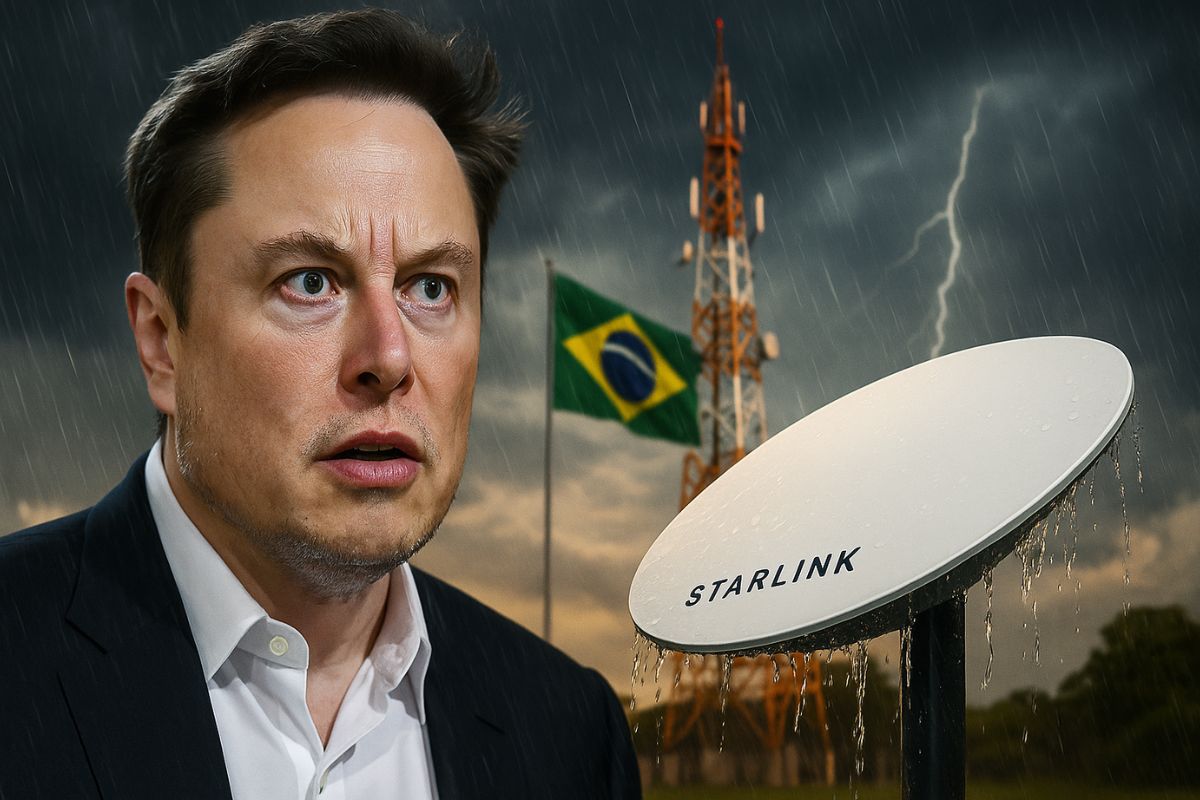


Starlink’s Free Internet Directly to Cell Phones Launched in the USA Still Lacks Authorization from Anatel and Any Forecast for Arrival in the Brazilian Market
The partnership between Starlink, Elon Musk’s company, and the American carrier T-Mobile created a buzz on social media by launching T-Satellite, a service that connects cell phones directly to satellites for internet access in areas without traditional coverage. The new offering raised questions about a possible arrival in Brazil and fueled speculation about “free satellite internet.”
However, according to a report published in O Globo on August 1, 2025, the reality is different: Starlink’s free internet in Brazil does not exist and there is no forecast for it to exist. Anatel (National Telecommunications Agency) itself confirmed that no company has requested testing or licensing for the use of the technology here so far.
What Is Starlink’s T-Satellite?
The T-Satellite is a satellite connectivity service created by T-Mobile in partnership with Starlink, using technology called Direct to Device (D2D). Instead of relying on ground antennas, the phone connects directly to low Earth orbit satellites from Starlink — enabling access to the network in completely remote locations, such as forests, deserts, and areas along the road without signal.
-
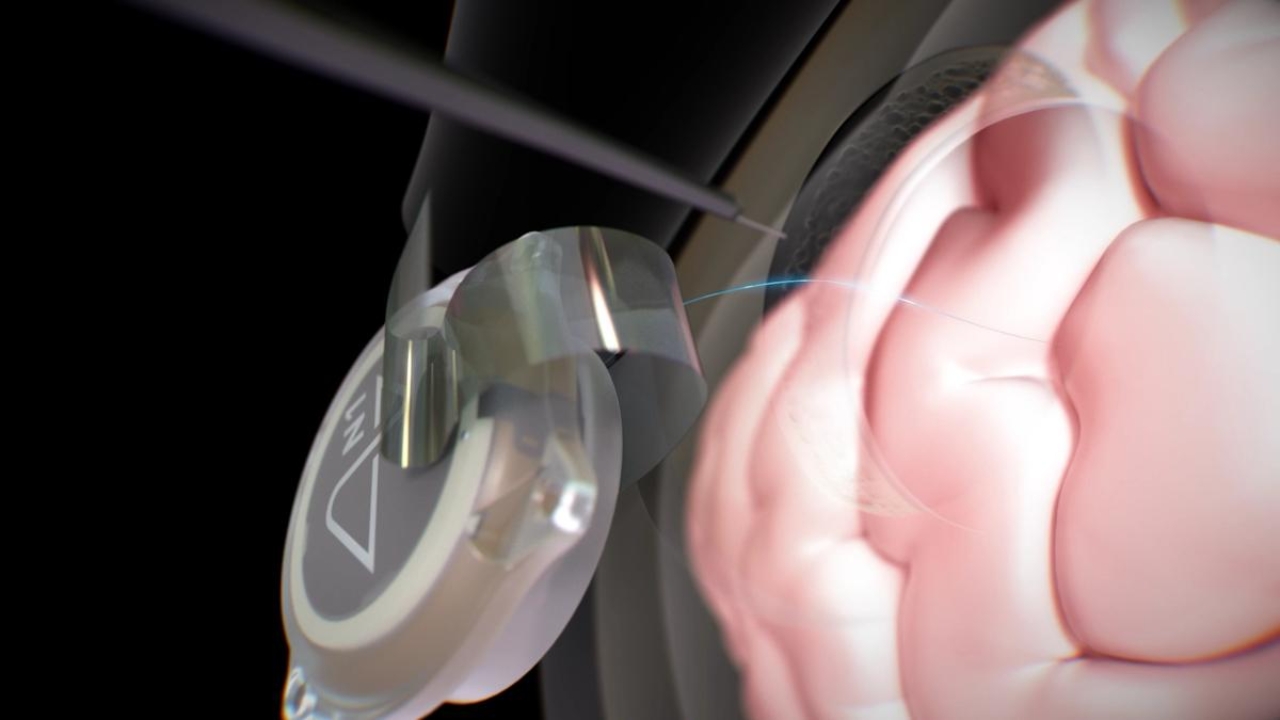
Neuralink, the company specialized in brain chips founded by Elon Musk, announced that it intends to implant thousands of brain chips thanks to large-scale production.
-
Hummer H1X3: The 60-ton car, 14 meters long, and $25,000 tires – all for a single owner in the United Arab Emirates.

-
A city in the United States has a secret to handle peak electricity demand and can supply power to about 300,000 homes for up to 4 hours.

-
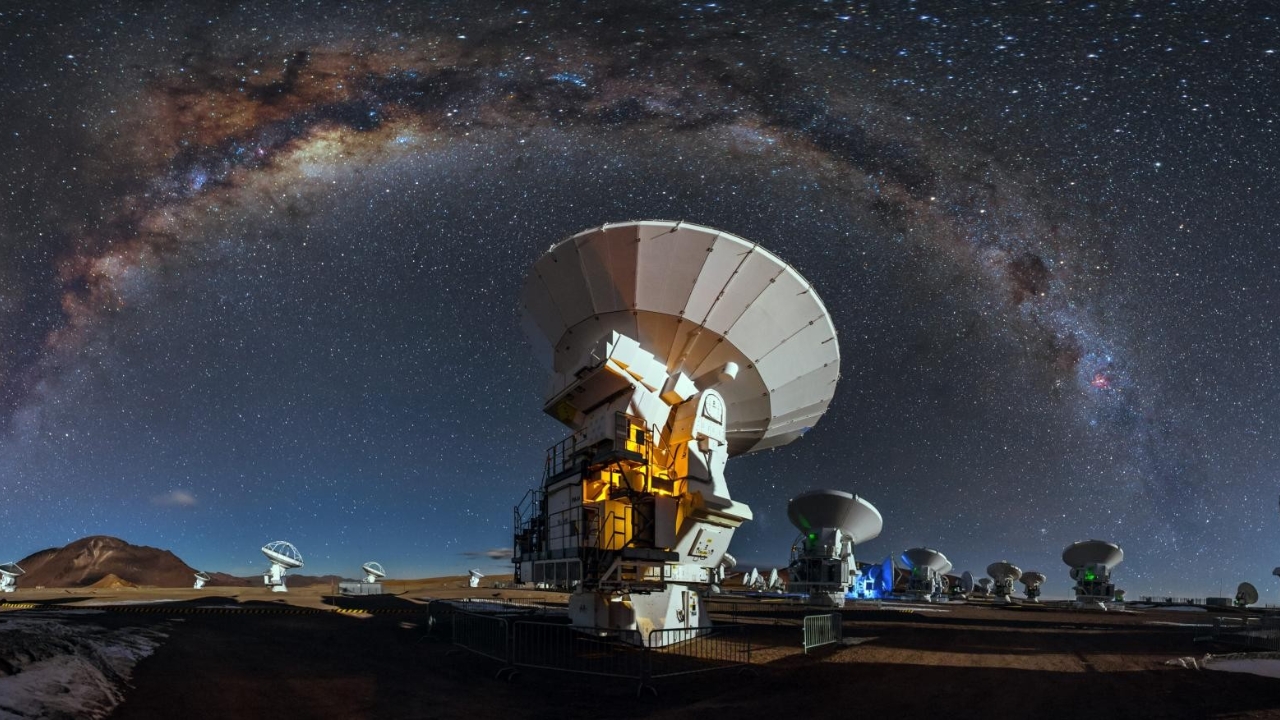
In the desert, at an altitude of 5,000 meters, there is a radio telescope that consumes as much energy as a city and relies on artificial oxygen to operate.

The system does not require additional antennas or external devices. On modern cell phones (like iPhones and recent Samsung and Motorola models), the signal can be picked up even inside a car or with the device in your pocket — as long as there is a reasonable view of the sky.
For now, T-Satellite does not provide full internet, but allows SMS sending, location tracking, and emergency calls. On some devices, it is already possible to send images. Features like voice calls, videos, and full mobile data are still under development.
And in Brazil, Why Is Starlink’s Free Internet Not Available?
According to an official response from Anatel to the newspaper O Globo, the agency already has an experimental regulatory environment, called D2D sandbox, which allows temporary authorizations for testing the technology. However, no company — neither Starlink nor Brazilian carriers — has requested entry into this environment.
Furthermore, Starlink does not have a mobile service provider license in Brazil, which prevents the conduct of commercial tests of the kind. Under current rules, only cellular phone carriers with an active license can request authorization to offer D2D in the country.
In other words, even if the technology is functional in the USA, it depends on local regulation and agreements with national operators to be implemented in Brazil.
Why Did Many People Think It Would Be “Free Internet”?
The confusion arose because the T-Satellite is offered at no additional cost in T-Mobile’s higher-tier plans, which led many Brazilian users to assume that Starlink was “providing free satellite internet.” In practice, the service is included in paid plans from the American carrier and requires activation at a physical store in the USA.
Additionally, even customers from other American carriers can add T-Mobile’s plan via eSIM (digital chip), but again, this is only possible with a compatible device and physical presence in the United States.
When Can This Technology Arrive in Brazil?
In the short term, there are no concrete signs that the service will be approved in Brazil. The absence of tests, the restricted business model, and the licensing requirements with Anatel make the arrival uncertain.
Moreover, for Direct to Device to work fully here, it would be necessary:
- Agreements with Brazilian mobile operators
- Allocation of specific radio spectrum for the service
- Regulatory assessment and technical tests under Anatel’s supervision
- Adaptation to the legal framework for telecommunications and data protection
What Already Exists from Starlink in Brazil?
Starlink already operates in Brazil with its satellite broadband plans for households, businesses, rural areas, and trailers. This service uses a specific external antenna and is not related to the new Direct to Device system.
Starlink’s residential plans, although not free, have been used in remote areas as a solution for digital exclusion. The direct connectivity via cell phone still depends on a new generation of infrastructure and regulation.
Would you use a mobile plan connected directly to satellites if it arrived in Brazil? Or do you think the technology needs to mature more before it is worthwhile? Comment below — your experience and opinion help map the real interests of the Brazilian public in this new scenario.







Talvez e uma forma de se livrar destas empresas de m que só nos **** tipo tim claro Oi vivo uns novos.
Eu quero internet direta via satélite.
Essa Anatel quer meter o bedelho em tudo, bando de cretinos, vão roubar que ganham mais, pois já é o que estão fazendo em vez de atrapalhar, acham que o povo tá ligando se Anatel aprova ou não