





 Portuguese
  English
  Spanish
  4 min of reading
  0 comments


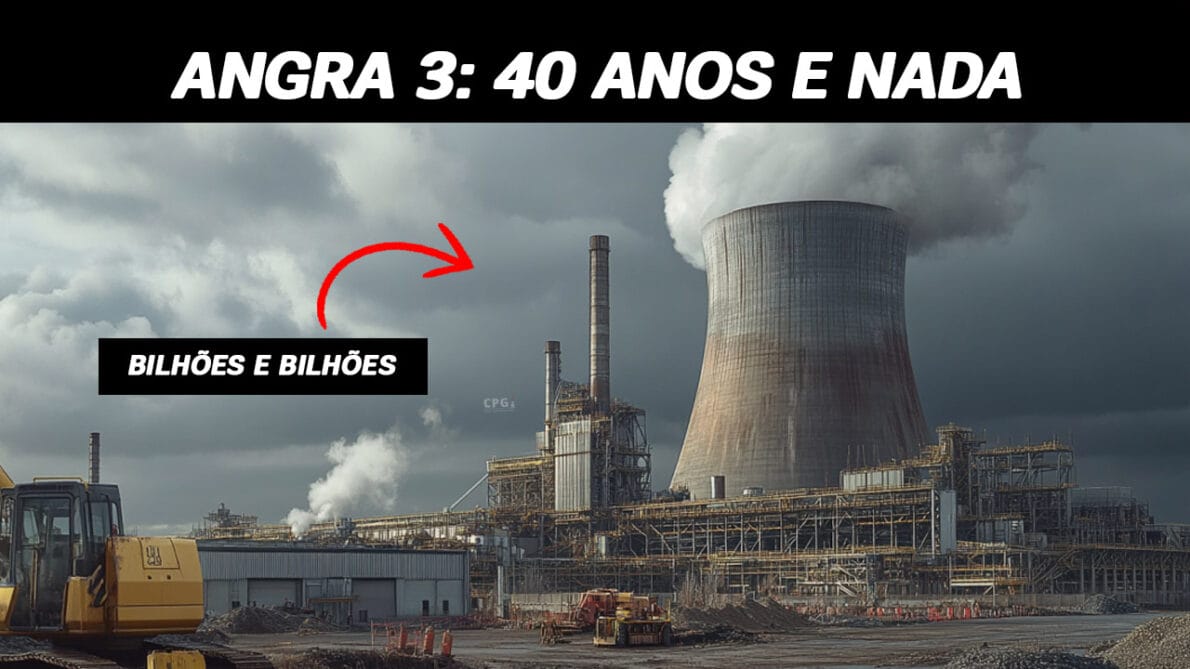
Stopped For 40 Years, Nuclear Power Plant Angra 3 Has Already Consumed Billions And Needs Even More To Be Completed. The Government Is At An Impasse: Continue With The Project Or Abandon It For Good?
For nearly four decades, a monumental project has been practically frozen in time, accumulating billions of reais in costs and sparking heated debates among experts, politicians, and the public.
Angra 3, one of Brazil’s biggest nuclear energy generation promises, has already consumed an astronomical amount of public resources, but it is still far from becoming a reality.
The nuclear power plant project Angra 3, which has been stagnant for almost 40 years, received an investment of R$ 12 billion by 2023, and now needs at least an additional R$ 23 billion to be completed, according to the National Bank for Economic and Social Development (BNDES).
-
A new Brazilian shopping center worth R$ 400 million will be built in an area equivalent to more than 4 football fields, featuring 90 stores, 5 cinemas, a supermarket, a college, and parking for 1,700 cars, potentially generating 3,000 jobs.

-
Larger than entire cities in Brazil: BYD is building a 4.6 km² complex in Bahia with a capacity for 600,000 vehicles per year, but the discovery of 163 workers in conditions analogous to slavery has shaken the entire project.

-
With an investment of R$ 612 million, a capacity to process 1.2 million liters of milk per day, Piracanjuba inaugurates a mega cheese factory that increases national production, reduces dependence on imports, and repositions Brazil on the global dairy map.

-
Brazilian city gains industrial hub for 85 companies that is equivalent to 55 football fields.


The construction, which began in 1984, has generated controversy due to its high costs, risks, and the unfulfilled promises that it would revolutionize energy supply in Brazil.
Despite the controversies, the Energy Research Company (EPE) and the government are at a decisive moment to decide whether the project will finally be completed.
The Financial Dilemma
According to a recent study presented by BNDES, the Brazilian government faces a difficult decision: continue with the investments or give up on Angra 3.
The cost to abandon the project would be enormous, but completing it also requires an injection of billions.
In addition to the R$ 12 billion already invested, it is estimated that an additional investment of R$ 23 billion will be necessary to complete construction.
Is Technology and Equipment Still Viable?
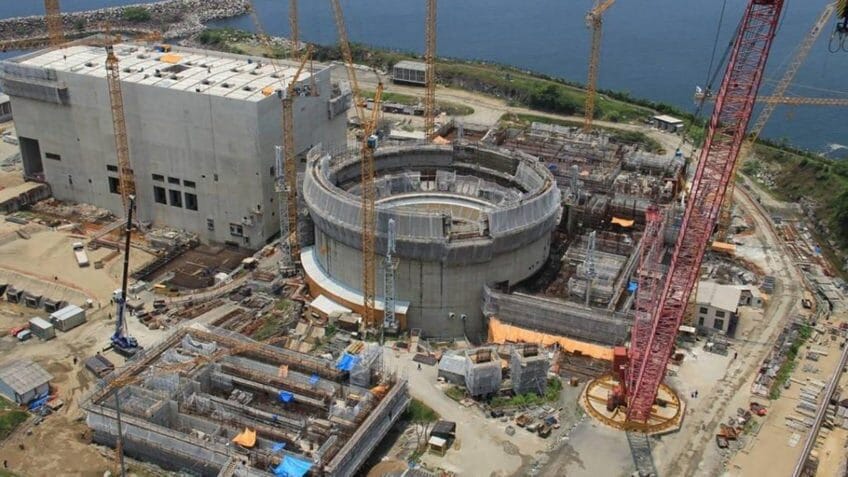
The president of Eletronuclear, Raul Lycurgo, explained that although the project has been stalled for so long, the materials already purchased for construction, including the pure steel reactor vessel, are not obsolete.
Lycurgo stated that 12,000 pieces of equipment are properly stored and ready for installation. According to him, these components continue to be manufactured the same way they were 40 years ago, ensuring their technical viability.
What Still Needs To Be Done?
Despite the existing equipment, Eletronuclear still needs to acquire all the instrumentation, control, supervision, and monitoring equipment, which is expected to cost the additional R$ 23 billion.
According to BNDES, this amount would be necessary to fully equip the plant and make it operational.
Financing and Debts
In addition to construction costs, Angra 3 is surrounded by R$ 14 billion in financing, which, according to Lycurgo, will need to be paid back in advance.
The burden of this financing adds another point of controversy to the project, which is already heavily debated among proponents and critics of nuclear energy.
The Controversy of Nuclear Energy
One of the main points of debate regarding Angra 3 is related to the danger that nuclear energy may pose.
Critics cite the risks of accidents and environmental impact, while proponents, like Lycurgo, argue that nuclear energy is a clean and safe source, as it does not generate greenhouse gases.
High Cost per Megawatt Hour
Another critical point is the cost of the generated energy.
According to Lycurgo, the cost of nuclear energy in Angra 1 and Angra 2 is around R$ 355.20 per megawatt-hour, while the production of Angra 3 would initially cost about R$ 650 per megawatt-hour.
The president of Eletronuclear emphasized, however, that this value could be reduced if tax benefits were granted to the project, as already happens in other sectors, such as the aerospace field.
Comparison With Other Power Plants
Lycurgo also compared the cost of nuclear energy with that of other thermal sources.
Natural gas-fired plants, for instance, have costs exceeding R$ 1,300 per megawatt-hour, and diesel-fired plants can exceed R$ 2,000 per megawatt-hour.
He pointed out that, although these sources continue to be part of the Brazilian energy matrix, ideally they should only be used during peak demand periods, not continuously, as is currently happening.
The Future of Angra 3: Is It Worth It?
The big question surrounding Angra 3 is whether the investment is worthwhile given the costs and controversies involved.
Although the project has the potential to generate energy at a lower cost than other thermal sources, the delay and high completion costs raise doubts about the project’s economic viability.
Moreover, the debate over the risks of nuclear energy remains heated, raising uncertainties about the future of the plant.
As highlighted by Miriam Leitão, a journalist from the newspaper O Globo, Angra 3 is a project that “makes no sense from an economic or environmental perspective”.
For Leitão, the billion-dollar investment in nuclear energy diverts resources that could be invested in renewable sources, which are cheaper and less risky.
She argues that the cost of the energy produced by Angra 3 will be very high, and the return on investment does not justify the resources needed for its completion.
And Now, What Will The Government Do?
With all this information at stake, the final decision is yet to come.
The government, together with the Energy Research Company (EPE) and BNDES, needs to determine whether to proceed with the completion of Angra 3 or abandon the project for good.
One thing is certain: the future of the nuclear power plant remains surrounded by uncertainties.
Do you think it’s worth investing more billions of reais to complete Angra 3, even with the risks and controversies of nuclear energy? Leave your opinion in the comments!





Seja o primeiro a reagir!