





 Portuguese
  English
  Spanish
 4 min of reading
  0 comments


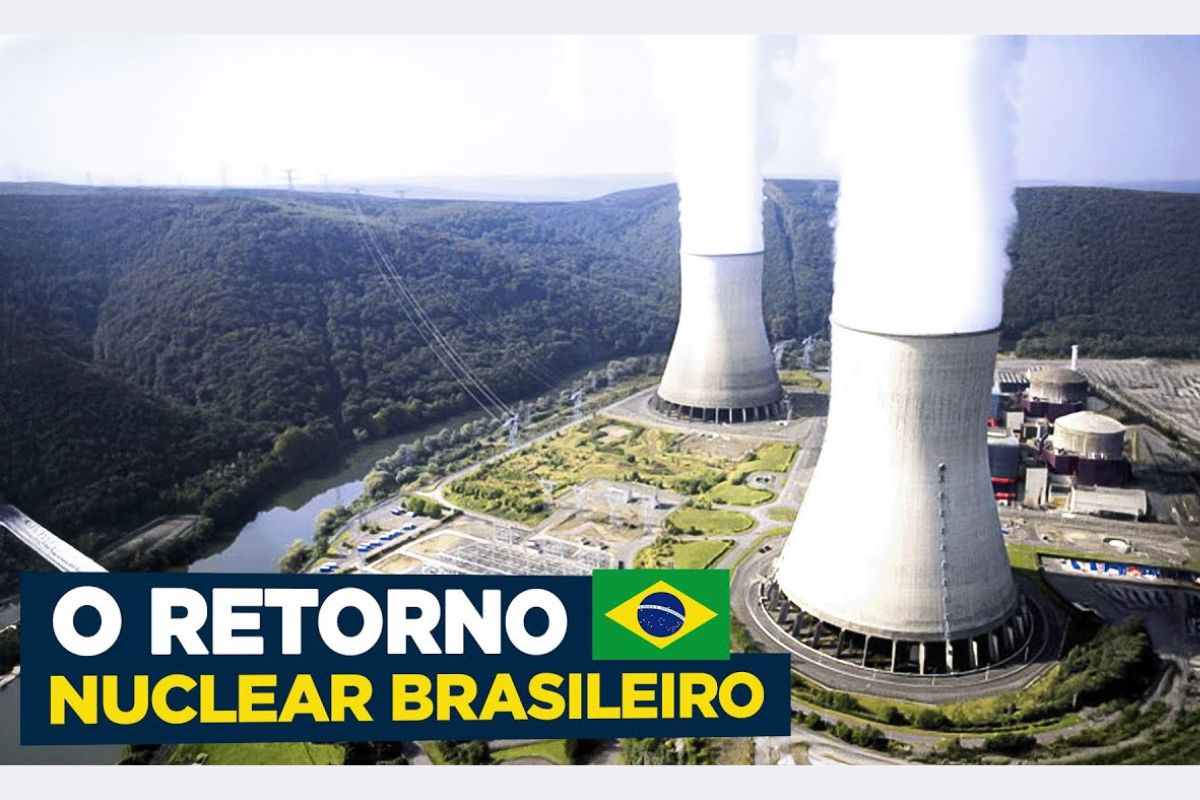
The Saga of Angra 3 Contrasts a Stalled Project, Aging Technology, and High Costs with the Promise of Firm Energy, Leaving the Country to Choose Between Completing the Plant or Acknowledging the Loss
Angra 3 was born as a symbol of energy sovereignty and has gone through decades of ups and downs to become a portrait of the country’s major unfinished projects. Located in Angra dos Reis, integrated into the Almirante Álvaro Alberto complex, the plant was conceived with an estimated capacity of about 1.4 GW and the promise of reinforcing the security of the electric system. Time, however, has taken a heavy toll with delays, structural degradation, political disputes, and regulatory uncertainties.
Today, the project carries the pressure of not wasting what has already been invested and the need to update safety and control standards. The dilemma is straightforward. Either Brazil completes Angra 3 with governance and planning compatible with its complexity or it accepts the definitive shutdown, avoiding the perpetuation of costs without delivery.
Where the Project Got Stuck and Why
The story of Angra 3 begins in the 1970s as part of a technological cooperation agreement that envisioned multiple plants.
-
The largest food company on the planet, JBS, has just opened a 4,000 square meter laboratory in Florianópolis to develop customized proteins that modulate muscle mass gain, immune response, and metabolic performance.

-
After nearly 30 bids and competition among industry giants, a Spanish company purchases one of the largest airports in Brazil for almost R$ 3 billion and takes over the management of Galeão in a concession that will last until 2039.

-
The Federal Revenue Service now automatically cross-references everything you declare with data from banks, credit cards, brokerage firms, and insurance companies, and any discrepancy between your income and your expenses triggers an alert in seconds.

-
Amid global tensions, Brazil blocks the United States’ proposal at the WTO and paves the way for a trade crisis and possible retaliations.


Construction of its unit began in 1984 and was interrupted in 1986 during the economic crisis, with less than a third completed.
Resumption came in 2009, with projected operation a few years later, but new stoppages occurred starting in 2015, amid allegations, contract terminations, and progress falling short of expectations.
The back and forth exposed weaknesses in coordination between engineering, licensing, and financing.
With each pause, the cost of requalification increases, as structures deteriorate and systems need to be revised in light of current standards.
Adding to this is an institutional environment that rarely guarantees technical continuity in high-complexity projects.
Aging Technology and the Need for Updates
Angra 3 was designed as an evolved replica of Angra 2, based on a PWR reactor of the generation conceived in the 1980s.
Nuclear and conventional components acquired at that time require conservation programs, testing, and requalifications to meet modern protection, instrumentation, and control requirements.
Although the concept of pressurized reactor continues to be widely used, digital solutions, seismic standards, and depth defense layers have advanced.
Completing the plant depends on integrating old equipment with updated systems, validating interfaces, redundancies, and emergency procedures.
It is neither simple nor quick and requires stringent technical management.
How Much Is Left and What It Costs the Budget
The physical progress of Angra 3 has been resumed over the years and has reached something close to two-thirds completion, with main buildings erected and part of the civil and electromechanical systems installed.
The bill, however, is not trivial. Each delay reopens cost fronts in asset conservation, retraining packages, project updates, and regulatory adjustments.
There have been attempts at repricing and inclusion in partnership programs to attract capital and rearrange risks.
Still, the economic balance depends on the tripod of tariffs, schedule, and project risk. Without technical predictability, any estimate becomes fragile.
Angra 3 can only be sustained if there is a closed executive plan, well-allocated contracts, and governance capable of following them without further interruptions.
Energy Impact and Systemic Risks
The appeal of Angra 3 lies in providing firm energy, continuously available, reducing water dependence during dry periods and complementing intermittent sources like wind and solar.
In scenarios of transition and climate variability, dispatchable nuclear plants add predictability to the Interconnected System.
The flip side is that nuclear projects require continuous quality standards, permanent environmental monitoring, and operational robustness for decades.
If governance fails, the risk is turning accumulated investment into sunk cost, without the energy security counterpart that motivated the project.
To move forward, Angra 3 needs a clear institutional arrangement, with defined roles and responsibilities among controllers, financiers, regulators, and supply chain.
Environmental and nuclear licensing requires updated documentation, validation of engineering changes, and transparency regarding risks and mitigation.
Without a single attack plan, with realistic milestones and performance accountability mechanisms, the project tends to repeat the cycle of promises and stoppages.
The alternative path is to orderly close it, account for losses, and redirect resources.
The worst scenario is remaining in limbo, consuming resources without delivering power to the system.
And you, in light of the history, should Brazil complete Angra 3 with a closed technical plan and controlled schedule or terminate the project to avoid further sunk costs?








Seja o primeiro a reagir!