





 Portuguese
  English
  Spanish
  5 min of reading
  0 comments


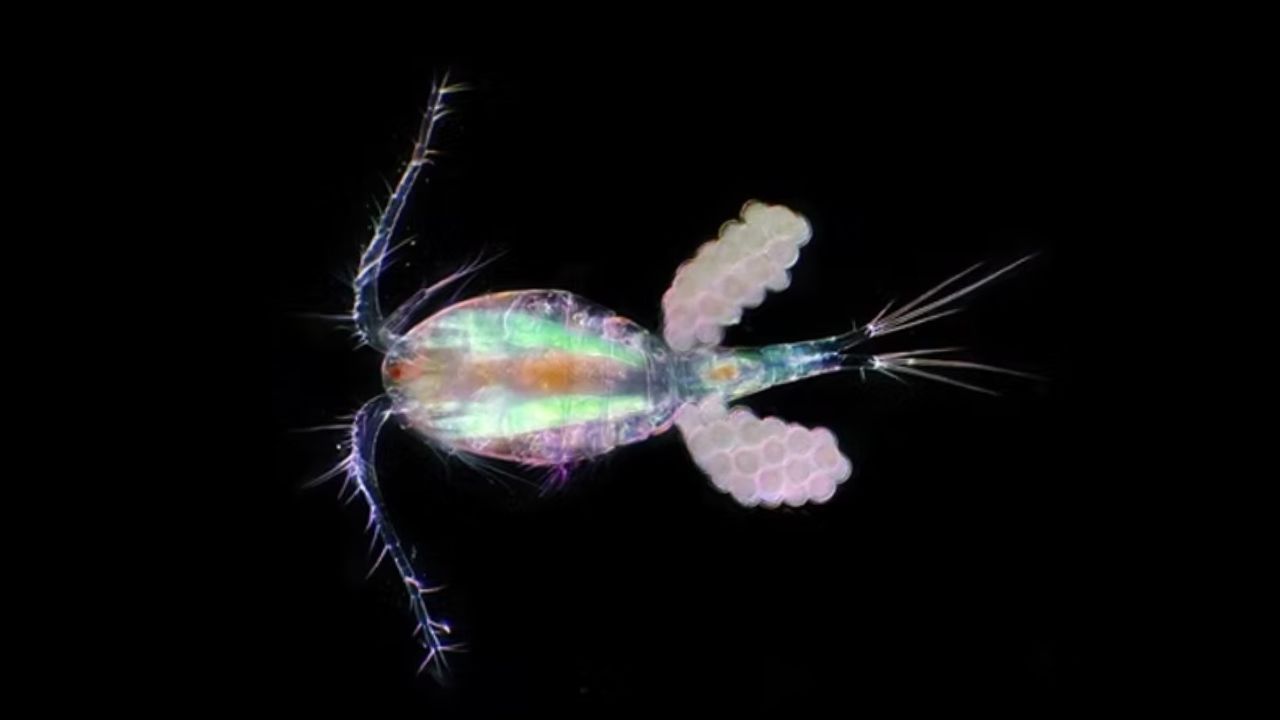
Animals From Different Ecosystems Face Extreme Heat Caused by Global Warming. See How Species Try to Adapt, Evolve, or Change Behavior to Survive.
The animals from various parts of the world are being forced to cope with the extreme heat caused by the rapid warming of the planet, a phenomenon that has intensified in recent decades and is already impacting everything from small marine crustaceans to large terrestrial mammals.
Recent research shows that some species can withstand increasingly high temperatures, while others face biological limits that put their survival at risk, especially in desert, coastal, and tropical regions.
This scenario involves scientists, universities, and international research centers investigating how, when, and why certain animals withstand extreme heat better than others.
-
How an innovative city combines high technology, well-being, and sustainability to become the largest reference in clean energy on the planet.
-
Couple buys 1846 church in ruins for R$ 660,000, invests R$ 3.2 million in renovations, transforms it into a millionaire mansion, and even preserved a historic cemetery with over 300 graves.

-
He started running at 66 years old, broke records at 82, and is now a subject of study for having a metabolic age comparable to that of a 20-year-old, in a case that is intriguing scientists and inspiring the world.

-
Oldest tree on the planet reappears after 130 years of searches: Wattieza, 385 million years old, was 10 meters tall and had no leaves or seeds; Gilboa fossils in New York solved the mystery in 2007.

The studies analyze environments such as the coastal zones of Mexico, deserts in the Middle East, tropical forests in the Caribbean, and African savannas, where rising temperatures are already a daily reality.
The goal is to understand how these adaptations occur, whether they are sufficient, and which species are most vulnerable in a world that is warming faster than ever.
Marine Animals and the Limits of Heat Tolerance
In regions near Baja California, Mexico, small tide pools reach temperatures exceeding 37 °C under the tropical sun.
In this seemingly hostile environment, tide pool copepods — microscopic crustaceans — manage to survive and reproduce.
Interestingly, these populations tolerate temperatures about seven degrees higher than individuals of the same species found in northern California.
However, laboratory experiments reveal an alarming fact. When exposed to even higher temperatures, these animals die quickly.
This happens because, as the body overheats, essential proteins begin to lose their structure, compromising vital functions. This process demonstrates that, even among adapted species, there is a physical limit that is difficult to surpass.
The Planet Is Warming Faster Than Natural Adaptation
Since 1880, the global average temperature of the Earth has increased by about 0.08 °C per decade. Currently, this rate is approximately double what it was in the early 1980s.
This accelerated pace creates a tremendous challenge for animals, as biological evolution typically occurs over many generations.
Despite this, some studies indicate that certain animals can respond relatively quickly to extreme heat.
For instance, in urban environments, ants known as crazy ants have demonstrated the ability to evolve, over several generations, to tolerate temperatures close to 47 °C.
This adaptation offers a kind of “extra time,” although it is not a definitive solution.
Behavioral Strategies of Animals in Extreme Environments
In addition to genetic evolution, many animals utilize behavioral strategies to cope with extreme heat.
In arid deserts, where temperatures can exceed 50 °C, survival depends on precise choices of when and how to move.
The Rüppell’s fox, for example, lives in one of the hottest regions on the planet and avoids the heat by hunting only at night.
Meanwhile, the Sahara silver ant builds underground tunnels and quickly emerges to the surface only to collect food, minimizing sun exposure.
These behaviors show that, in extreme environments, time and space are resources as important as food and water.
Physical Adaptations That Help Animals Cope With Extreme Heat
Some species have developed impressive physical adaptations. Desert snails, such as the Sphincterochila, enter a state of dormancy during the hottest periods, conserving energy until the rains arrive.
They can withstand temperatures above 50 °C for hours, which is unimaginable for most animals.
Camelids, on the other hand, have nostrils with moist inner linings, capable of recovering moisture from the air during breathing.
Kangaroo rats and wombats nearly do not need to drink water, as they extract all the necessary moisture from food and produce extremely dry feces, avoiding water loss.


Social Animals, Solitude, and Survival in Hot Climates
Extreme heat also influences social behavior. In arid regions, living in large groups can be disadvantageous, as water and food are scarce.
This is the case for African wild asses, ancestors of domestic donkeys, which have adopted a solitary lifestyle.
These animals often position themselves near water sources and mate only when females come close, avoiding unnecessary movements.
This strategy contrasts with that of species living in wetter environments, where group living facilitates survival.
Size, Reproduction, and Adaptation Capacity
In general, the smaller and simpler an organism is, the greater its capacity to adapt to extreme heat tends to be.
Small species, with large populations and short reproductive cycles, generate genetic variations more quickly.
Bacteria, for example, can reproduce several times a day, accelerating evolutionary changes. In contrast, large animals, such as elephants or whales, take many years to reproduce.
This drastically reduces the speed at which they can respond to climate changes, increasing the risk of population decline.
When Behavior Hinders Evolution
Interestingly, not all changes help in the long run. Studies with Anolis lizards in the Caribbean showed that individuals able to refuge in cooler areas during heat have not developed greater physiological tolerance to high temperatures.
This behavior has limited the ability of future generations to adapt.
This phenomenon, known as the Bogert effect, indicates that escaping from heat may reduce the evolutionary pressure necessary to promote lasting biological changes.
An Extra Time That May Be Running Out
Despite impressive examples of adaptation, experts warn that most animals live in a sort of “borrowed time.”
Some species can even slightly raise their limits of tolerance to extreme heat in a few years, but this does not keep pace with the current rate of global warming.
If temperatures continue to rise at the same rate, even the most resilient animals may reach their biological limits.
In this scenario, understanding these adaptations is essential not only for science but also for conservation strategies in an increasingly hotter planet.
Image Source: Andrei Savitsky/Wikimedia Commons (CC BY-SA 4.0)
With information from National Geographic.






-

-

-

4 pessoas reagiram a isso.