





 Portuguese
  English
  Spanish
  2 min of reading
  0 comments


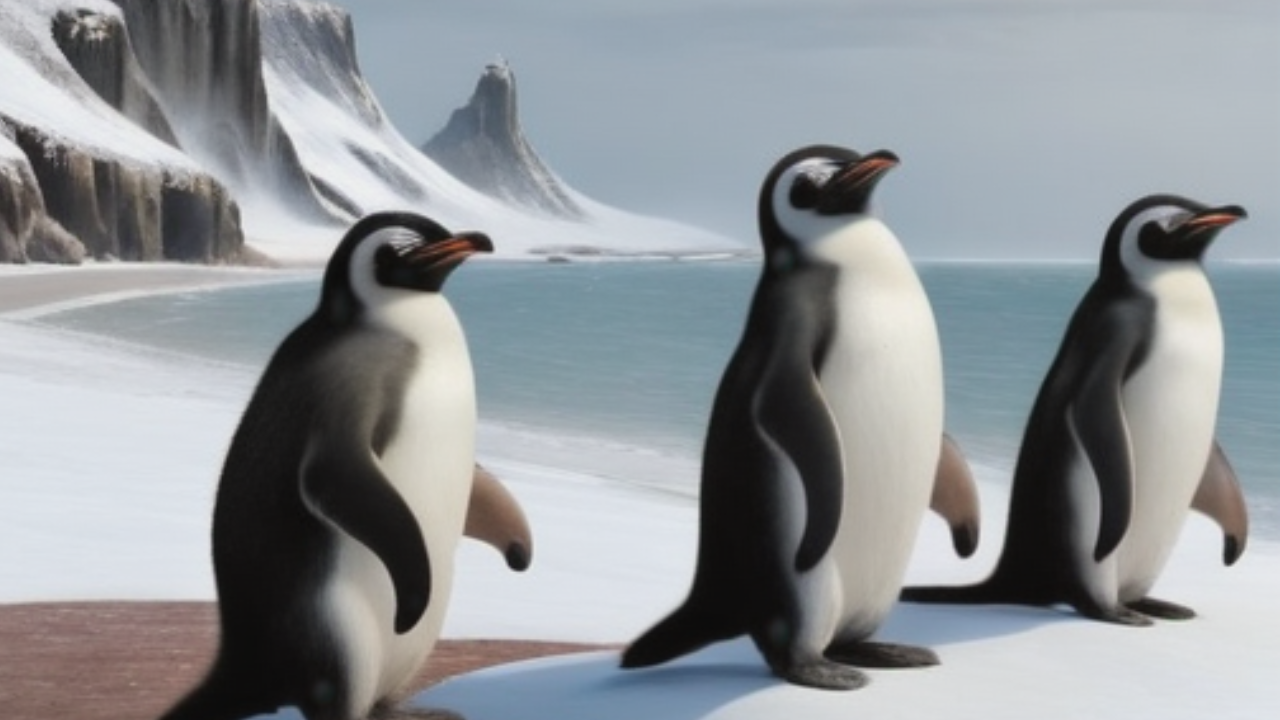
Trump Imposes Tariffs on Remote Islands in Antarctica, Surprises Australia and Raises Debate on Global Economic and Environmental Impacts.
In an unexpected measure that generated international perplexity, former United States President Donald Trump included the isolated Heard and Macdonald Islands — located in the region of Antarctica — in the new round of trade tariffs.
The decision, deemed a mistake by Australian authorities, directly affects uninhabited and practically inaccessible territories, raising questions about the criteria adopted and the possible impacts on the global economy.
The Heard and Macdonald Islands, situated about 4,000 kilometers southwest of Australia, are recognized for their unique biodiversity, featuring vast colonies of penguins, seals, and seabirds.
-
Larger than entire cities in Brazil: BYD is building a 4.6 km² complex in Bahia with a capacity for 600,000 vehicles per year, but the discovery of 163 workers in conditions analogous to slavery has shaken the entire project.

-
With an investment of R$ 612 million, a capacity to process 1.2 million liters of milk per day, Piracanjuba inaugurates a mega cheese factory that increases national production, reduces dependence on imports, and repositions Brazil on the global dairy map.

-
Brazilian city gains industrial hub for 85 companies that is equivalent to 55 football fields.

-
Peugeot and Citroën factory in Argentina cuts production by half and opens a layoff program for more than 2,000 employees after Brazil drastically reduced purchases of Argentine vehicles.

Uninhabited and rarely visited by humans, these islands are part of the UNESCO World Heritage and are a rare example of an untouched ecosystem.
However, they have recently become the target of a 10% trade tariff imposed by the Trump administration, despite having no significant economic activity.
Australia’s reaction was immediate. Trade Minister Don Farrell described the decision as “clearly a mistake,” highlighting that the measure affects locations with no meaningful commercial ties to the U.S.
“Poor penguins… I don’t know what they did to Trump, but this shows how rushed the process was,” he joked in an interview with ABC.
In addition to the Heard and Macdonald Islands, other Australian regions have also been included in the tariff list, such as Christmas Island, the Cocos (Keeling) Islands, and Norfolk Island — the latter, with a population of about 2,200 inhabitants, was hit with an even higher tariff of 29%.
The justification for such tariffs remains unclear. Reports indicate that export data was misinterpreted, resulting in incorrect records regarding the origin of certain shipments.
According to an analysis by The Guardian, electronic products that actually came from other regions were labeled as if they originated from the Antarctic islands, distorting trade statistics.
For Australian Prime Minister Anthony Albanese, the decision reflects a misguided approach to U.S. trade policy.
He described the tariffs as “completely unjustified” and stated that “they are not the act of a friendly country.”
Professor Mike Coffin from the University of Tasmania emphasizes the absence of any productive infrastructure on the islands, noting that the last human expedition occurred in 2016.
“There’s nothing there. Just penguins, seals, and an active volcano,” he said, referring to Big Ben, the largest volcano in Australia, located on Heard Island.





Seja o primeiro a reagir!