





 Portuguese
  English
  Spanish
  5 min of reading
  0 comments


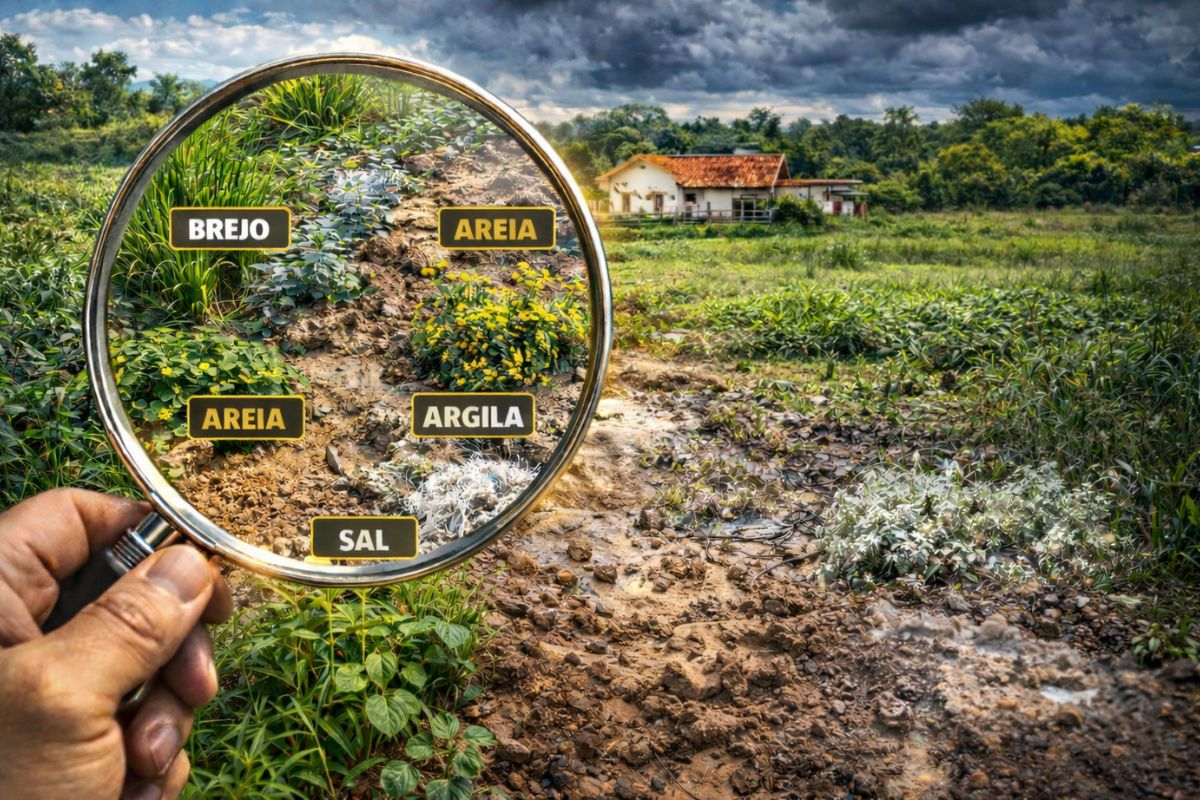
When Visiting a Property, Observing the Plants on the Ground Can Prevent Losses, Reveal Serious Soil Limitations, and Show Problems That Don’t Always Appear on a First Visit to the Property.
Those considering buying a property usually look at location, price, access, water, and structure, but often overlook a detail that can make all the difference: the vegetation that grows naturally on the land. Instead of just being common brush, it can serve as a silent warning about shallow soil, excessive sand, heavy clay, swamp, salinity, and other conditions that are difficult to correct.
In agriculture, this type of reading is old. The so-called indicator plants help to show if the soil has serious limitations, those that can turn the dream of owning rural property into high costs, low productivity, and headaches. Not every isolated plant condemns the area, but the dominance of certain species can be an important warning sign before closing a deal.
Why Indicator Plants Can Change the Purchase Decision
Indicator plants are species that appear more prominently in certain types of soil and environmental conditions.
-
China rejected an entire shipment of beef from Argentina after detecting an antibiotic so dangerous that it has been banned for human consumption for over 30 years, and now the export sector is facing a crisis of international trust.

-
With nearly 500 thousand tons per year, barley production is growing in Brazil, while a decline in beer consumption among Generation Z raises alarms in the sector.
-
With tractors out of reach for small producers, a tricycle created by Embrapa Algodão becomes a cheap and efficient solution and gains national prominence.
-
From 130 producers in the year 2000 to just 15 today: the dramatic decline of passion fruit in Araguari shows how the lack of labor in the Brazilian countryside is killing a decades-old agricultural tradition, even with Brazil being the largest producer in the world.

By observing which species dominate the area, it is possible to have a clearer sense of the land’s quality and about the problems that may be hidden there.
This is important because not every soil limitation can be resolved with fertilization or correction. Some problems are costly, others practically irreparable, and knowing these signs before buying a property can prevent a wrong investment in an area that will require much more than the buyer imagines.
Shallow and Stony Soil Can Compromise the Property from the Start
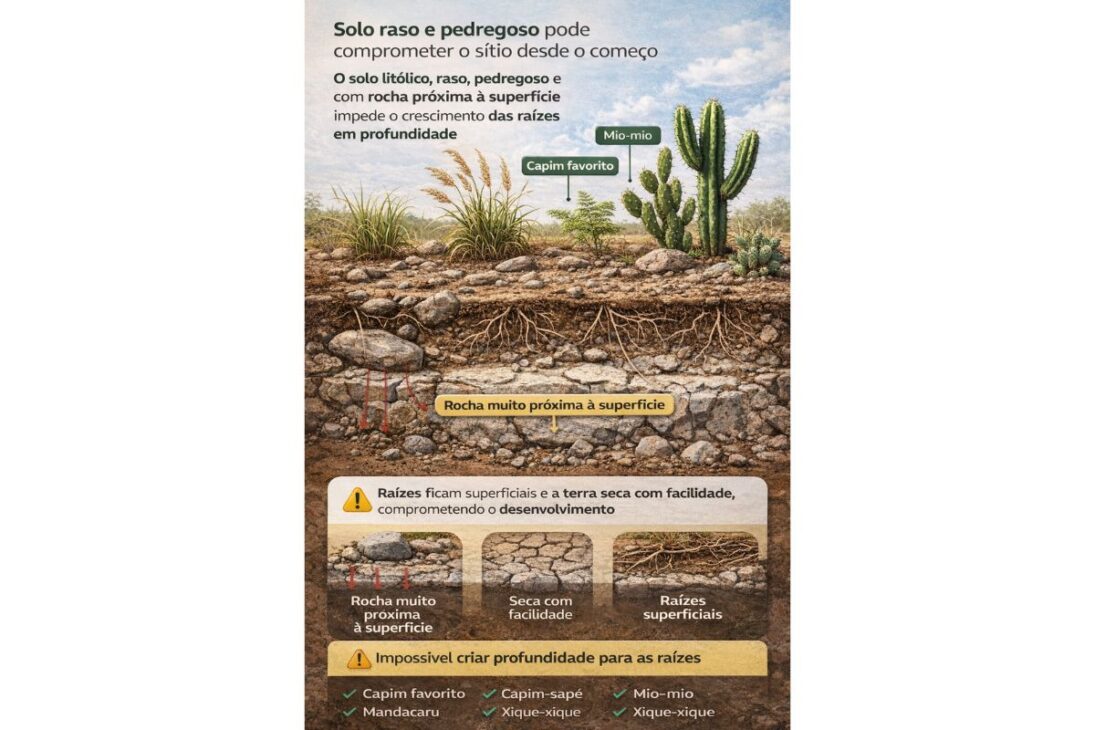
One of the most serious situations is lithic soil, described as shallow and stony. In this case, the rock is very close to the surface, preventing roots from reaching depth and severely limiting plant development.
Species that can indicate this type of condition include capim favorito, some types of ferns, capim-sapé, mio-mio, mandacaru, and xique-xique.
In a property with this profile, the soil dries out easily, roots spread superficially, and the production capacity can be very limited.
This is the type of problem that cannot be solved with simple management, because there is no way to create depth where rock dominates the subsoil.
Sandy Soil Can Hide Low Water and Nutrient Retention
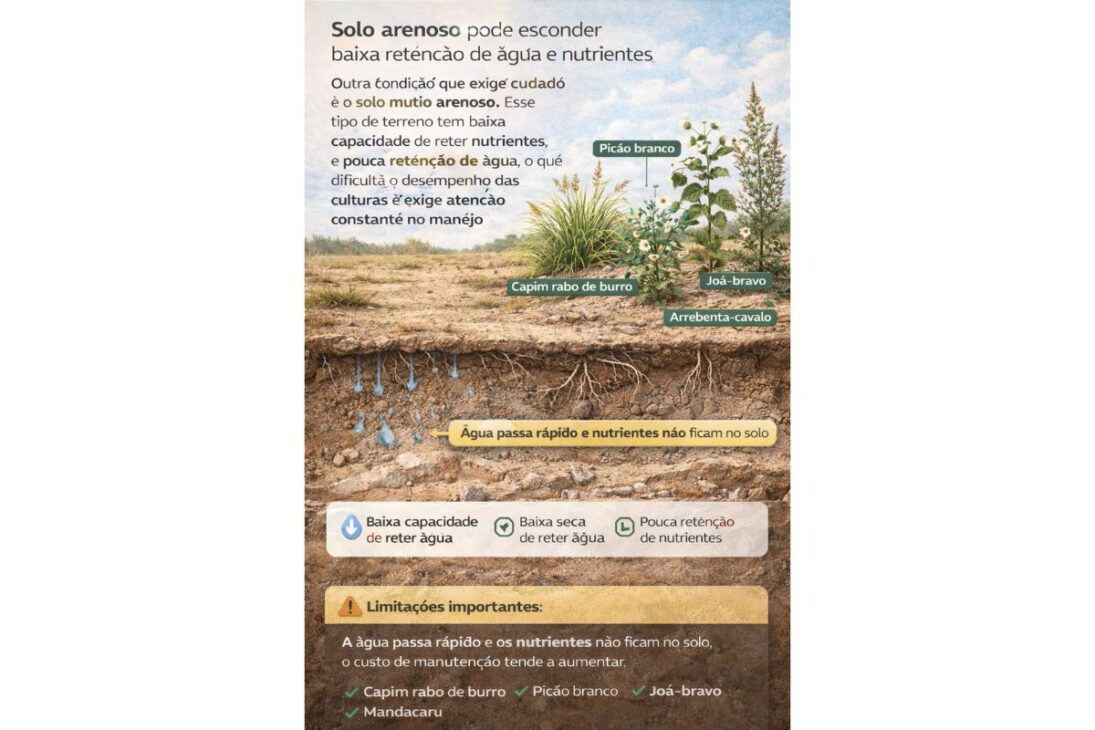
Another condition that requires caution is very sandy soil. This type of land has a low capacity to retain nutrients and little water retention, which hinders crop performance and requires constant attention in management.
Plants associated with this condition include capim rabo de burro, picão branco, joá, arrebenta-cavalo, and joá-bravo.
When evaluating a property, this type of soil deserves attention because it may seem easier to work with at first glance, but it has significant limitations for production.
When water passes too quickly and nutrients do not stay in the soil, maintenance costs tend to increase.
Very Clayey Soil Can Become an Obstacle for Management and Harvesting
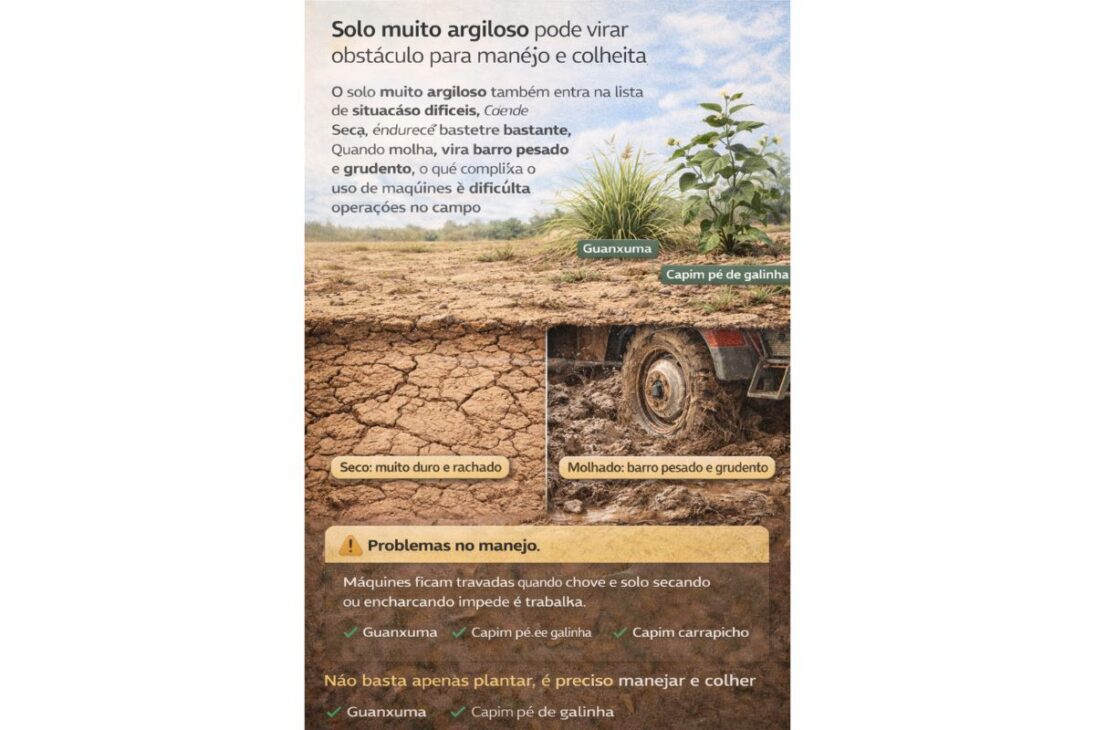
Very clayey soil also makes the list of difficult situations. When dry, it becomes very hard. When wet, it turns into heavy, sticky mud, complicating the use of machinery and hindering operations in the field.
In this environment, plants such as guanxumã, capim pé de galinha, and capim carrapicho can emerge, especially in drier areas.
In a property with this profile, it is possible to plant, but the problem arises when too much moisture prevents machinery from entering and hinders the production routine. It’s not enough just to manage planting; it’s essential to be able to manage and harvest safely.
Swamp and Hydromorphic Soil Sound the Maximum Alert
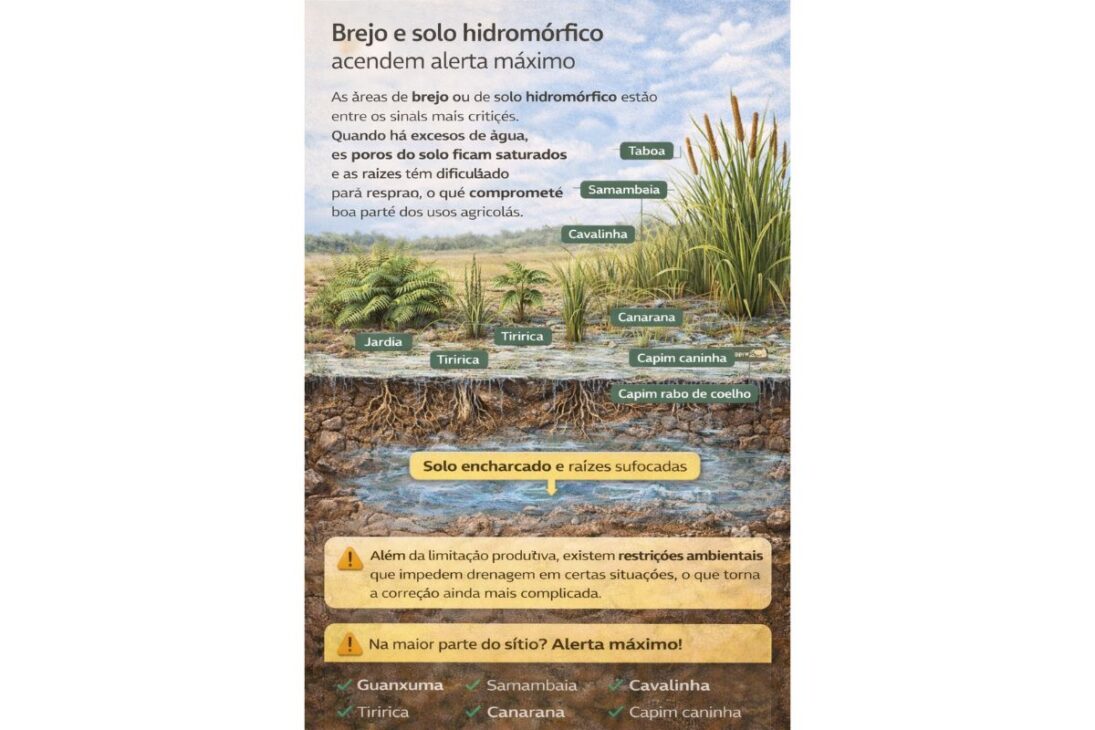
Swamp areas or hydromorphic soil are among the most critical signs. When there is excess water, the soil pores become saturated, and the roots have difficulty breathing, which compromises a good part of agricultural use.
In such areas, taboa, samambaia, cavalinha, tiririca, canarana, capim caninha, capim rabo de coelho, and capim arroz can appear. If this type of vegetation dominates a large part of a property, the alert should be taken seriously.
In addition to productivity limitations, there are environmental restrictions that prevent drainage in certain situations, making correction even more complicated.
Obstruction to Water and Roots Can Also Be Hidden
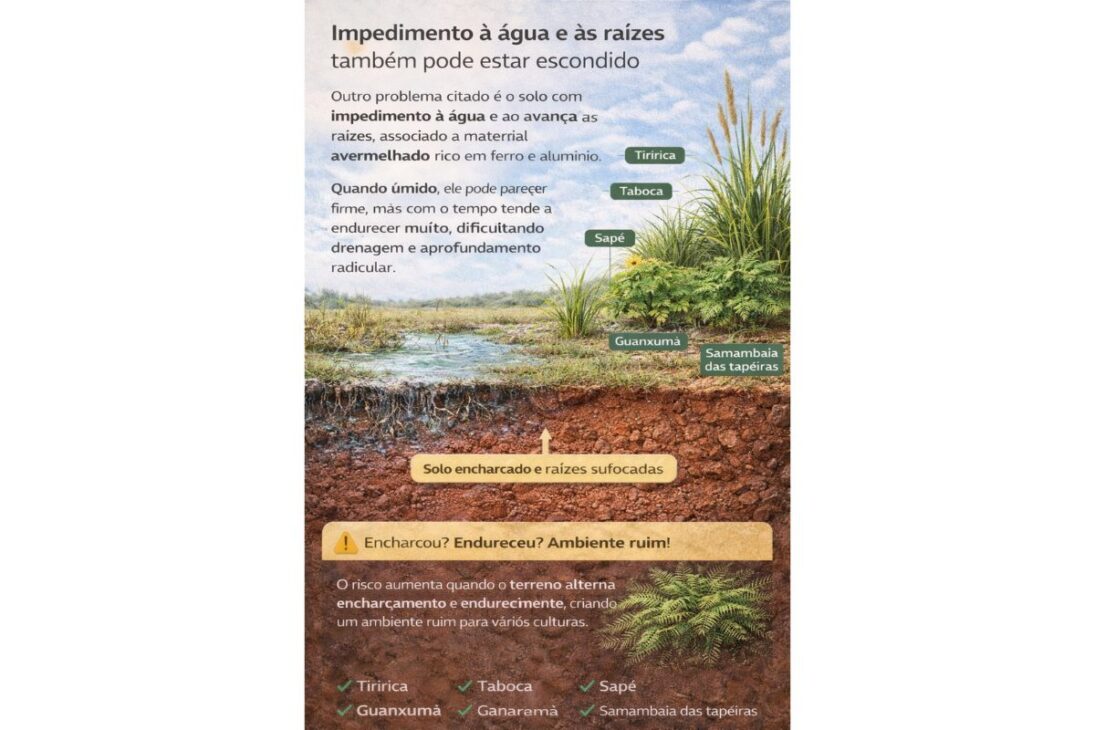
Another problem mentioned is soil with obstruction to water and root advancement, associated with reddish material rich in iron and aluminum.
When wet, it may seem firm, but over time it tends to harden a lot, making drainage and root deepening difficult.
Depending on the topography and how water drains, this type of soil may present tiririca, taboca, sapé, guanxumã, and samambaia das tapeiras.
In a property, this condition may go unnoticed during a quick visit, but compromise the use of the area in the long term.
The risk increases when the land alternates between saturation and hardening, creating an environment unsuitable for several crops.
Saline Soil Can Also Transform the Rural Dream into Loss
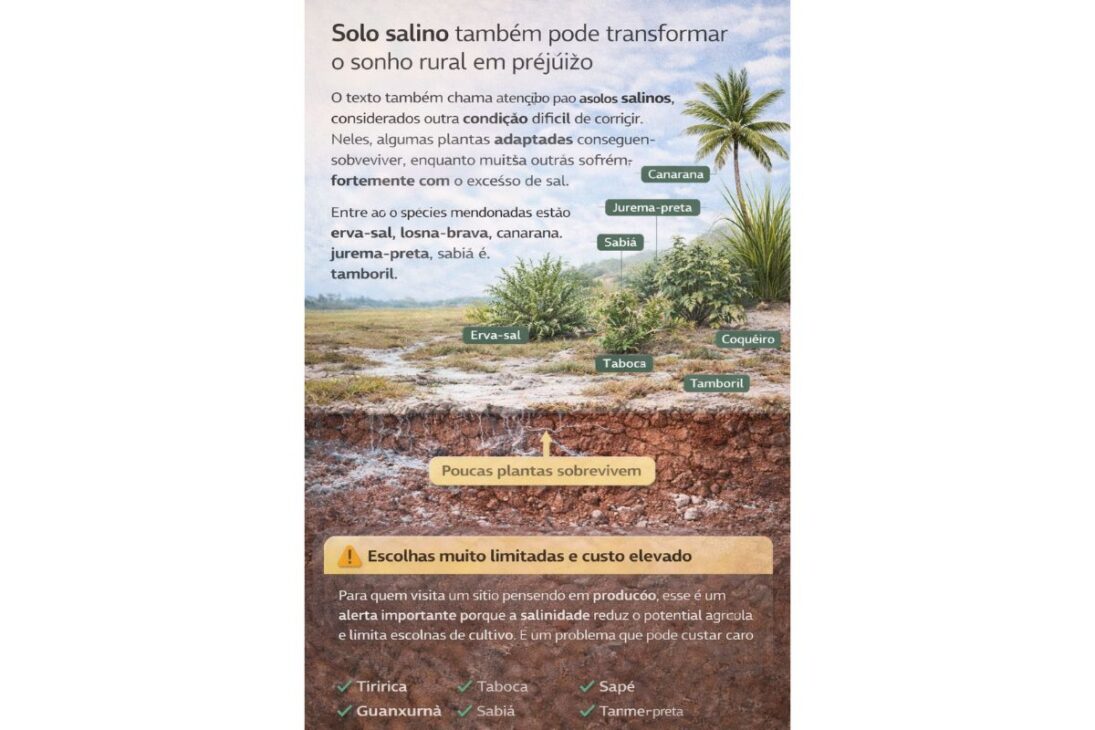
The text also draws attention to saline soils, considered another difficult condition to correct. In these soils, some adapted plants can survive, while many others suffer severely from the excess salt.
Among the species mentioned are erva-sal, losna-brava, canarana, jurema-preta, sabiá, and tamboril. The coconut tree appears as an option with some resistance.
For those visiting a property thinking about production, this is an important alert because salinity reduces agricultural potential and limits cultivation choices. It’s a problem that can be costly and significantly restrict property use.
An Isolated Plant Does Not Condemn the Property
An important point is that the presence of a single plant is not enough to draw a definitive conclusion. The most relevant warning sign is the dominance of that vegetation over others, showing that the soil condition favors that specific type of adaptation.
When analyzing a property, the ideal is to observe the entirety of the area, the vigor of the plants, the topography, and the behavior of the dominant vegetation. What really matters is not a lone specimen, but the repetition and strength of that pattern in the land.
Even areas that have been worked can carry signs of the past, when an indicator vegetation dominated the location before the establishment of another cover.
Reading the Vegetation Can Prevent Loss Before Signing the Contract
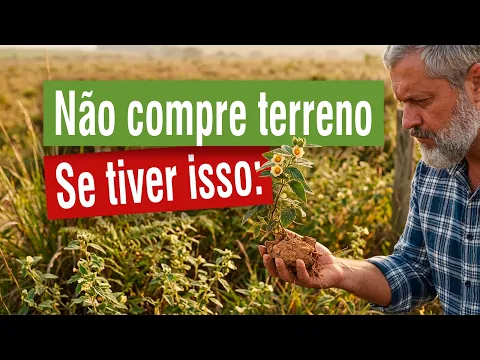

Buying a property without understanding the signs of the land can lead to evaluation errors and unexpected expenses shortly after the purchase.
Shallow soil, excessive sand, heavy clay, swamp, physical barriers, and salinity are conditions that directly interfere with property use and can completely change the viability of the investment.
Therefore, observing the indicator plants is more than just rural curiosity. It’s a practical way to see what the soil is saying before the loss appears in practice.
Instead of relying solely on the area’s appearance, it’s worth looking closely at the vegetation and understanding what it reveals about the future of that land.
Would you skip buying a property after noticing these signs on the land?







-

Uma pessoa reagiu a isso.