Portuguese
  Spanish


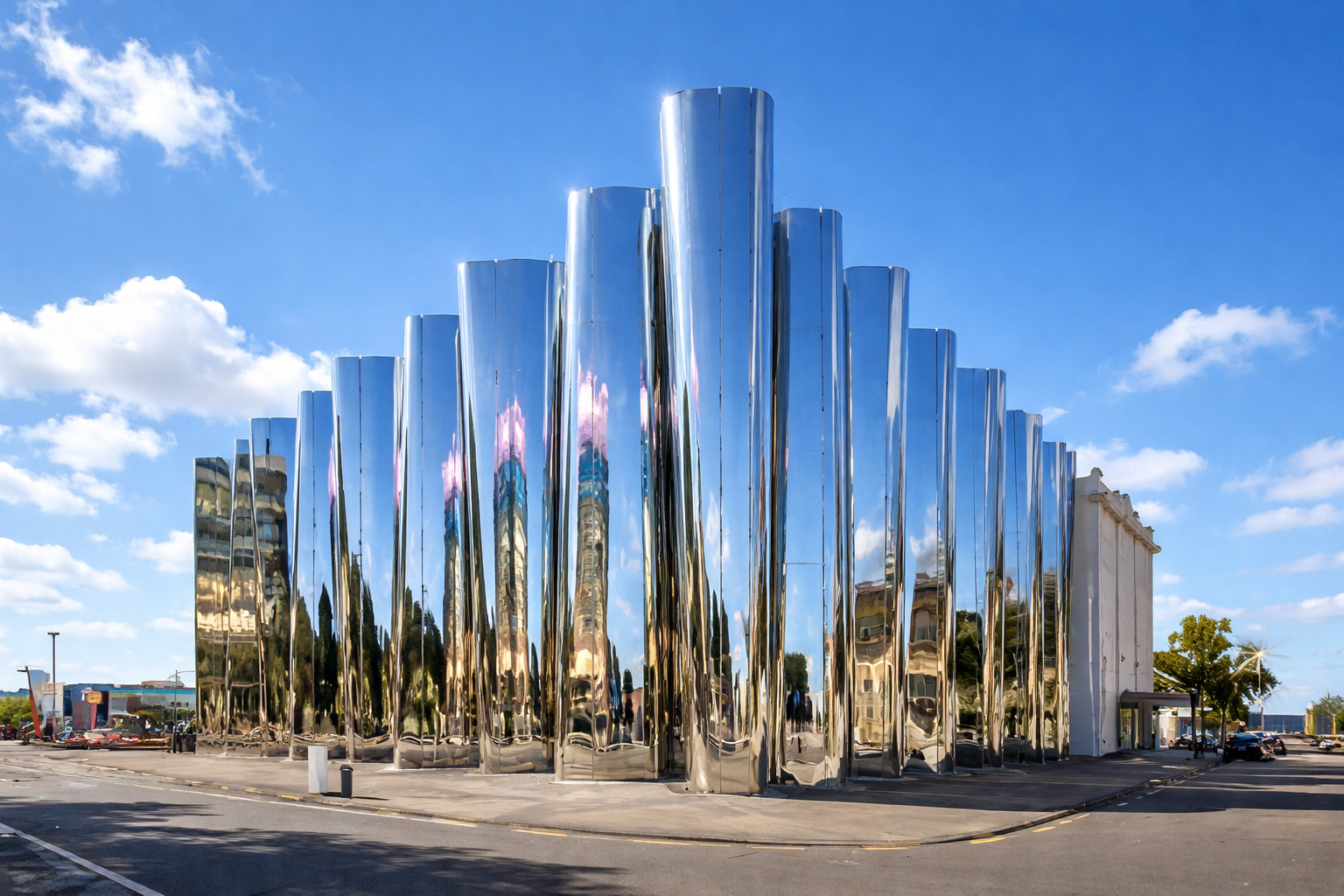

More than a museum, the Len Lye Centre building in New Plymouth brings together experimental cinema, sculptures in motion, and an environment where sound, light, and energy are felt in the body.
On the coast of New Zealand, a shimmering building draws attention not only for its appearance but for what happens inside it. The Len Lye Centre does not function as a traditional museum. It operates as a true sensory laboratory, where sculptures move, vibrate, and produce sound, and experimental films transform images into rhythm and emotion.
Dedicated to a single artist, the pioneer Len Lye, the space has become one of the main international destinations for those seeking to understand how art, science, and perception intersect.
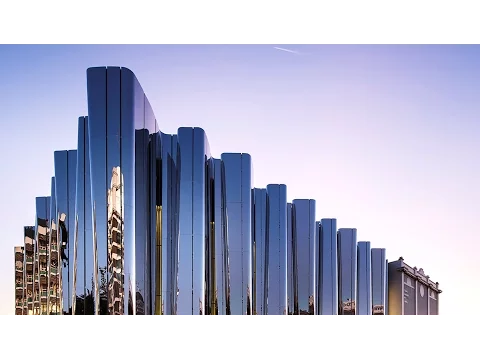

What is the shimmering Len Lye Centre
The Len Lye Centre is a building dedicated to the work of New Zealand artist Len Lye, active between 1901 and 1980. He was one of the first to explore abstract cinema and kinetic sculpture, creating works that do not tell traditional stories but work with movement, light, and music.
-
Neon Blue Glow in Brazilian Waters Captivates Locals and Goes Viral, Unveiling Rare “Sea Fire” Phenomenon

-
Forgotten Map Leads Diver to Shipwreck with Gold, Rare Jewels, and Secrets Hidden for Nearly 350 Years
-
Furong: The 2,000-Year-Old Chinese City Built on a 60-Meter Waterfall Becomes a Global Tourist Phenomenon

-
YouTube Inventor Dubbed “Real-Life Tony Stark” Builds Robotic Legs for Father’s Day, Creating a Wheelchair That Conquers Stairs and Rough Terrain




The shimmering building is part of the Govett-Brewster Art Gallery complex, expanding the venue’s role with exhibitions, research, and the display of contemporary works that engage with these ideas.
More than preserving the past, the centre keeps Lye’s proposal alive: to experiment.
How this shimmering building works inside
Upon entering the Len Lye Centre, visitors quickly realize they are not in a common museum. Some sculptures move on their own. Others vibrate with enough force to generate sound in the environment.

These works are called kinetic sculptures. They use motors, energy, and metallic materials to create real, not simulated, movement. In many cases, the sound is not a soundtrack. It arises from the movement of the work itself.
The building also houses a technical room dedicated to the maintenance of these sculptures. This reveals an uncommon aspect of art: the mechanical and almost industrial side behind the pieces. Additionally, there are galleries with drawings, paintings, and archives of the artist, showing how his ideas evolved from paper to physical movement.
The scriptless cinema that became a global reference
One of the central points of the shimmering building is its 62-seat cinema. It may seem small, but it is highly specialized. There, experimental films are screened, including works by Len Lye and contemporary productions. Unlike traditional cinema, these films do not follow a linear narrative. They work with rhythm, color, and music.
In works like Free Radicals (1958), for example, lines and shapes dance on the screen synchronized with the sound. There are no characters or conventional story. Still, the impact is direct.
This type of language has influenced what we now know as video art and audiovisual installations.
Why the Len Lye Centre attracts artists from around the world
The centre has become an international destination not only for the architecture of the shimmering building but for the content it brings together. It houses a complete collection of Len Lye, including films, sculptures, paintings, and writings. This attracts researchers, curators, and artists interested in the relationship between sound, movement, and perception.
Moreover, the space maintains an active program with festivals, exhibitions, and events. This transforms the venue into a meeting point between different cultures and artistic languages.
In practice, visitors find not just an exhibition. They find a living environment, constantly updating.
Science and art in the same space
One of the most interesting aspects of the Len Lye Centre building is the connection between art and science. The sculptures do not move by chance. They explore principles of physics such as vibration, energy, and resonance. In educational programs and workshops, these concepts are presented in a practical and accessible way.
This makes the space relevant not only for artists but also for students and curious minds.
What makes this shimmering building different from any other museum
The main difference lies in the experience. While many buildings demand silence and contemplation, the Len Lye Centre invites the whole body to participate. Visitors listen, feel vibrations, and perceive the space actively.
The exhibitions also mix historical works with contemporary creations. This shows how Lye’s ideas continue to influence artists today.

Another important point is the integration with the city. The architectural project was designed to connect the cultural space to the urban flow of New Plymouth, bringing art closer to everyday life.
What this case reveals about the future of art
The Len Lye Centre shows that art can go beyond static images. It can occupy space, generate sound, and engage the body. It also reinforces a growing trend: the blend of art, technology, and science. Today, many artists work precisely at this intersection.
More than preserving a legacy, the shimmering building points to the future of artistic creation.
By transforming movement, sound, and energy into artistic language, the Len Lye Centre redefines what it means to visit a cultural space. It not only showcases works. It creates experiences that linger in the body and memory.
Would you visit a place where art is not only seen but also felt in the body?