





 English
  Francês
  Alemão
  Italiano
  Japonês
  Norueguês
  Portuguese
  Spanish
  4 min of reading
  0 comments


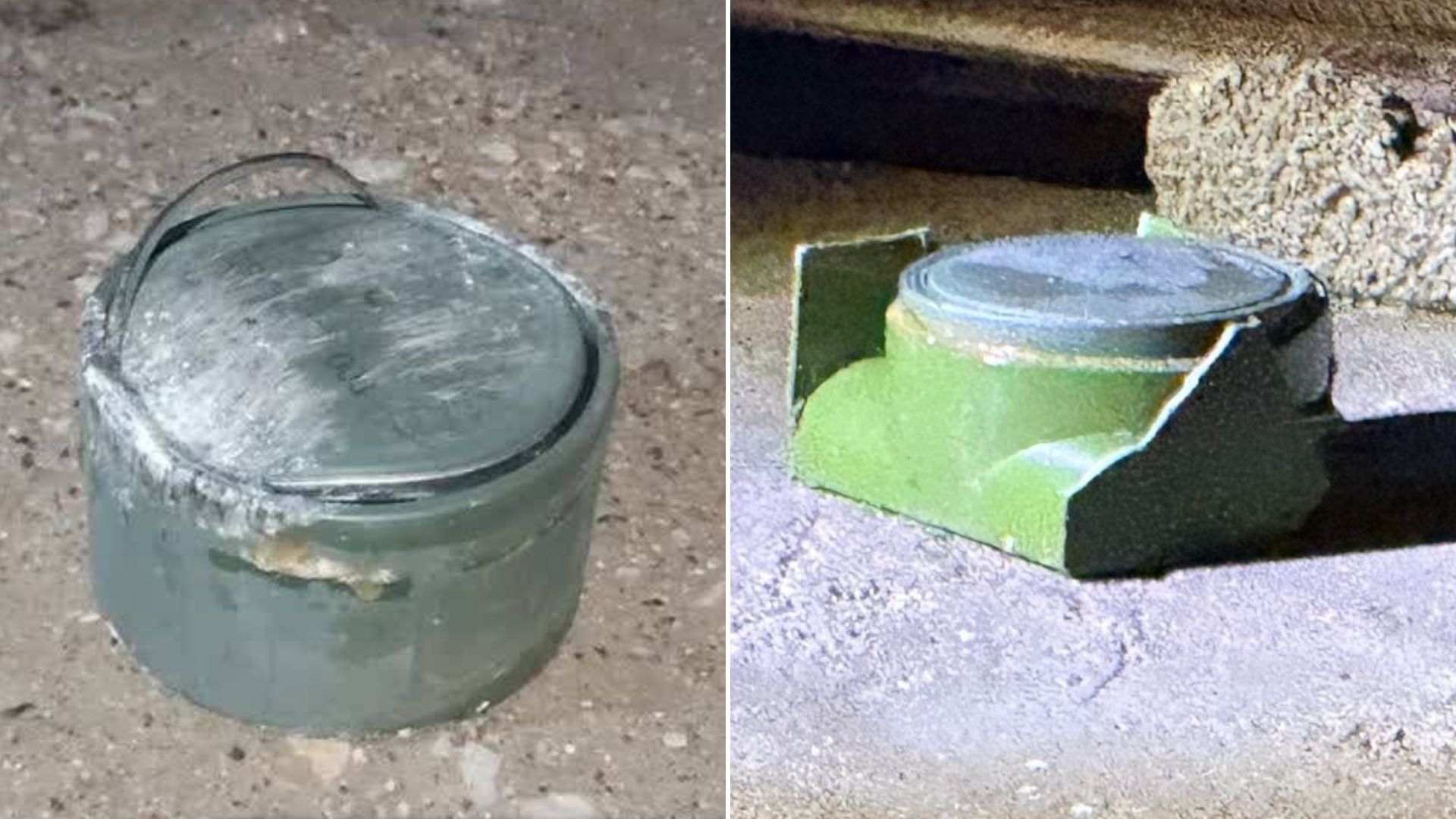
The discovery of antitank mines near a supposed missile base in southern Iran, along with reported deaths after explosions and the suspicion of the use of American weaponry, has heightened tensions over a possible attempt to block mobile launchers and limit Iranian military operations.
The images circulating online and reports released by Iranian state media have placed antitank mines at the center of a new episode in the vicinity of Shiraz, southern Iran, following the discovery of devices near a supposed missile facility and reports of deaths in the Kafari area.
Discovery near area linked to missiles
Iran’s state media reported on Thursday the discovery of the devices in areas near the village of Kafari. According to the Tasnim agency, several people died after the objects were launched in the region and detonated upon being handled.
According to the description released, the artifacts resembled small metal packages, slightly larger than tuna cans.
-
At just 14 years old, a boy creates a system without energy, using steel pipes buried in the ground, that irrigates seedlings with moisture from the air, to combat the water scarcity threatening reforestation in northern China.

-
Contaminated water from uranium threatens mining areas, and Chinese scientists have created a solar-powered living filter that could change environmental decontamination.

-
Archaeologists find in Mexico a sacrifice altar over 1,000 years old, surrounded by skulls, human bones, and signs of rituals from the Toltec Empire.
-
Goodbye to the traditional oven? IKEA draws attention with a 3-in-1 microwave that combines an air fryer, grill, and heating in the same compact, affordable appliance designed for small kitchens.


The images shared on social media have since been analyzed by weaponry experts and open-source investigators.
These assessments indicated a similarity between the objects seen in the photos and the BLU-91/B antitank mines, which are part of the American-made Gator dispersible system. These devices are designed to be launched from aircraft over large areas, with the function of incapacitating vehicles and restricting movement.
What the images indicate about the Gator system
However, independent confirmation of the episode remains limited. The U.S. military has not confirmed the use of these mines, although several analysts have argued that the photographs point to the Gator system.
Experts in munitions cited by The Washington Post assessed that the images appear to show U.S.-made mines scattered about five kilometers from ballistic missile facilities near Shiraz. The system was developed to quickly create temporary minefields in locations where ground forces may not be present.
When activated, the dispensers of this system release hundreds of mines over a wide area. The goal is to create obstacles capable of damaging armored vehicles or restricting their movement along strategic routes.
Open-source investigators from Bellingcat stated that some of the mines were geolocated in Kafari, about two kilometers from the entrance of what is believed to be the Southern Missile Base of Shiraz. The site is identified as one of Iran’s so-called missile cities, underground complexes intended for the storage and launch of ballistic missiles.
The War Zone reported that the United States is the only participant in the current conflict known to possess the specific variant of mine identified in the images. Nevertheless, the episode remains without conclusive verification of who actually launched the devices.
Possible impact on Iranian launchers
The presence of these mines near a facility of this type has raised questions about a possible attempt to hinder Iranian missile operations. Mobile launchers play a central role in this strategy, as they allow for rapid movement after firing and make the weaponry harder to target.
In this scenario, the use of mines near access points and circulation routes could reduce the ability of these launchers to enter and exit underground facilities. The assessment is that restricting movement would make the vehicles more vulnerable to air attacks.
According to the analysis cited by The War Zone, Iranian forces continued to launch missiles even after repeated attacks on known launch points and tunnel entrances during Operation Epic Fury. Therefore, the installation of obstacles on roads and nearby access points could serve as an additional measure to limit this type of operation.
The text also mentions a historical precedent for this type of employment. Similar systems were used in the Gulf War of 1991 to hinder the operations of Iraqi Scud missile launchers, blocking movement routes and forcing vehicles to operate in more exposed areas.
Functioning and humanitarian concerns
The BLU-91/B was designed to target vehicles, not people. Generally, it is activated upon detecting the magnetic signature of a large metallic object, such as trucks or armored vehicles.
Many versions of this type of mine feature a self-destruct timer, a mechanism that can deactivate them after a few hours or days. Still, experts warn that the devices remain dangerous if this system does not function as intended.
The report on the presence of the mines has also heightened humanitarian concerns. Landmine monitoring organizations and human rights groups point out that even antitank mines can pose a risk to civilians when they appear outside controlled military zones.
This concern is amplified by reports that several people died after coming into contact with the objects. Without broader independent verification and without official confirmation from the United States, it remains unclear whether the case was an isolated incident or the beginning of a new tactic aimed at limiting Iran’s missile operations.








Seja o primeiro a reagir!