





 Portuguese
  English
  Spanish
  5 min of reading
  1 comment


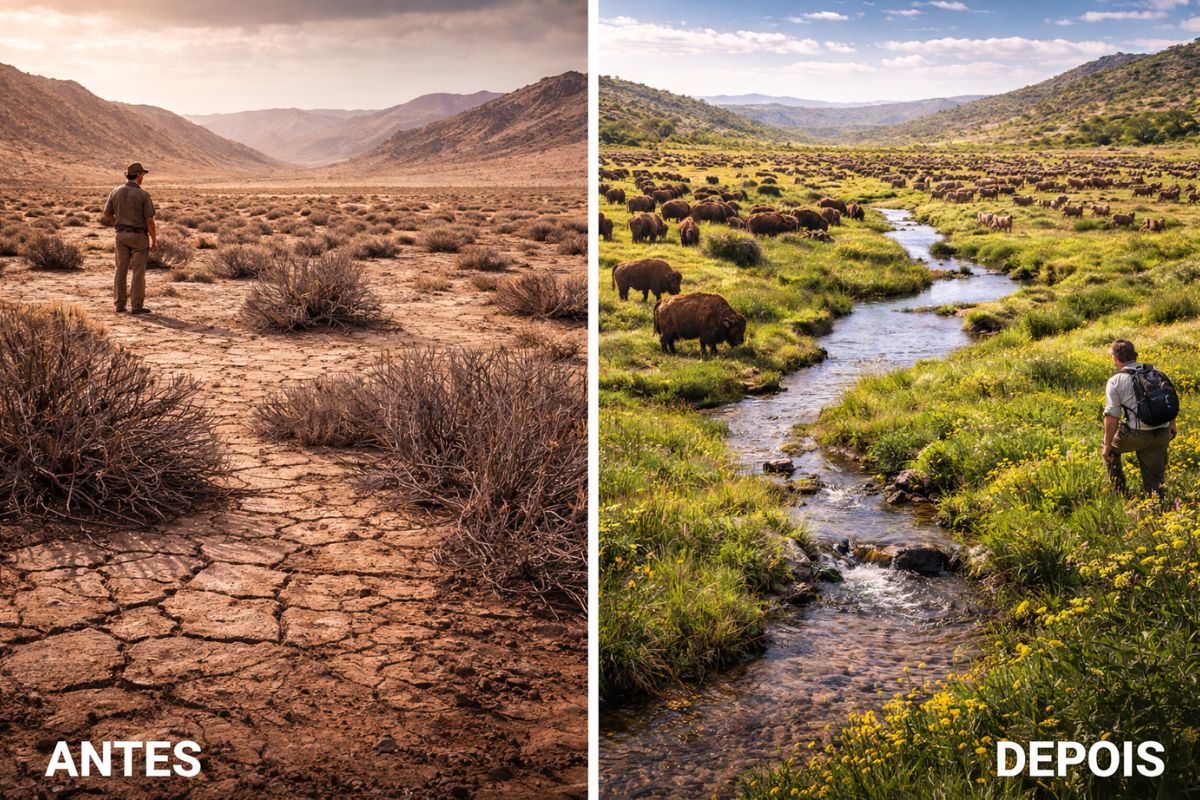


Abandoned Agricultural Deserts for Decades Start to Retain Water, Restore Fertility, Reorganize Ecosystems, and Sustain Functional Vegetation After the Controlled Reintroduction of Large Native Herbivores in Monitored Projects in Several Countries with Measurable Environmental Impacts in 2026
Ancient agricultural deserts, formed after decades of intensive farming, exhausting monocultures, heavy mechanization, and continuous use of chemical inputs, have begun to show accelerated environmental recovery following the reintroduction of large native herbivores. Previously compacted, biologically inert soils that could not absorb water have begun to respond consistently in just a few years.
In 2026, scientists monitor these agricultural deserts through soil analyses, moisture sensors, biological inventories, and satellite images. The data shows that regeneration is occurring at a faster rate than traditional methods based solely on manual planting, artificial irrigation, or chemical soil amendment.
Which Animals Are Regenerating Agricultural Deserts

The recovery of agricultural deserts does not depend on a single species, but on functional groups of herbivores, each with a specific role in the ecological process.
-
The most famous volcano in the world could paralyze one of the largest metropolises on the planet: Japan accelerates emergency plans for the eruption of Mount Fuji, which could bury Tokyo in ash for over two consecutive weeks.

-
The United States has a serious problem with its F-35s: China is already producing fighters at a pace that exceeds American capacity and could manufacture up to 300 aircraft per year before the end of the decade, shifting the global military balance.

-
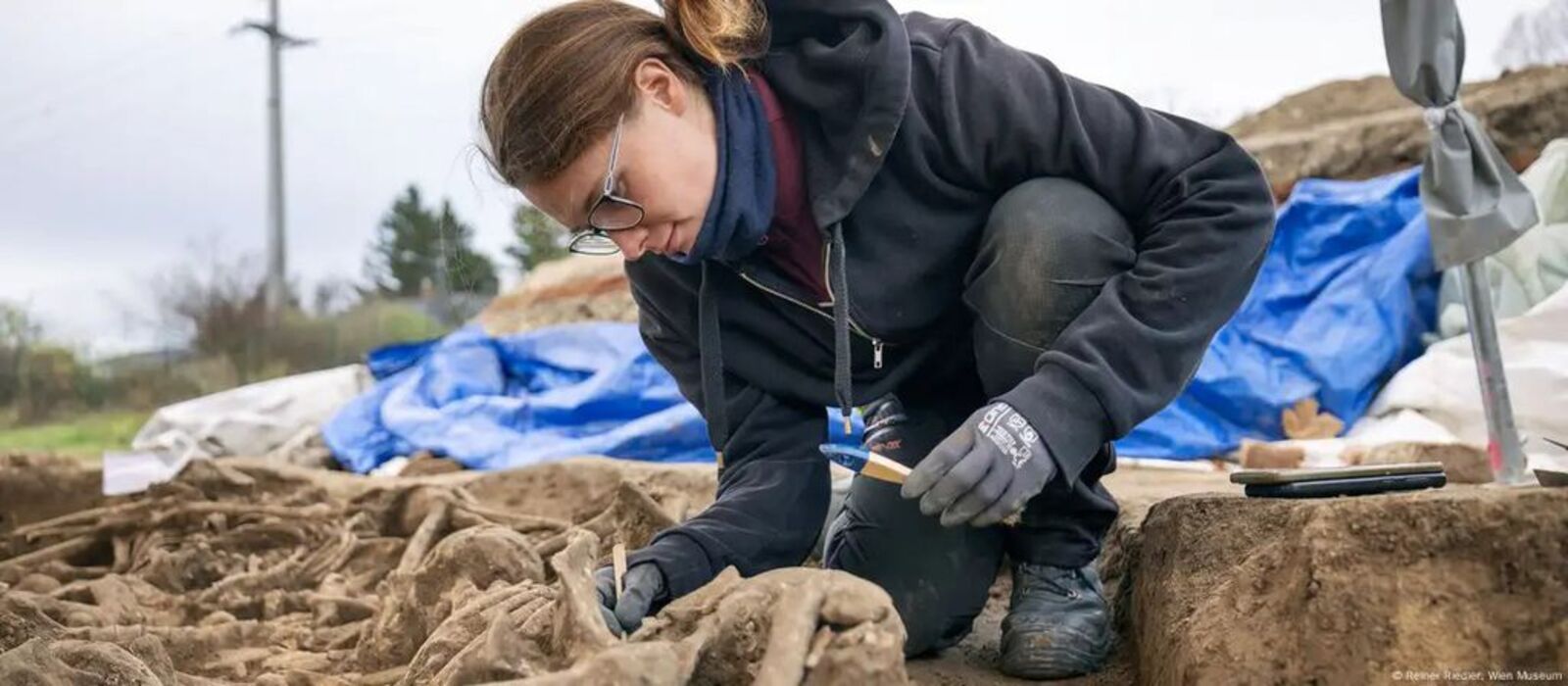
Remains with battle wounds of over 100 soldiers from the Roman Empire are found beneath a football field in Vienna, leaving everyone surprised.
-
Elon Musk notes Brazil and lowers the price of his internet, Starlink, promising to connect all corners of the country with affordable plans, 10,000 satellites, and 1 million active users in the national territory!


The main animals involved in the monitored projects until 2026 are:
Wild horses, such as Przewalski’s horses, operate in large open areas. They travel long distances daily, break the superficial soil crust with moderate trampling, and distribute seeds on a large scale, as well as fertilizing the soil with nutrient-rich manure teeming with microorganisms.
Bison and large native bovids have a strong physical impact on the soil. Their weight creates micro-depressions that retain rainwater, while selective grazing prevents the advance of invasive shrubs and maintains the open landscape, favoring deep grasses.
Wild donkeys and kulans operate in arid and semi-arid environments. They access areas where machines cannot reach, maintain natural trails that facilitate water infiltration, and disperse drought-resistant seeds.
Guanacos and other South American camelids regenerate degraded fields by grazing without destroying the plant cover. Their trampling is light, avoiding excessive compaction, and their feces contribute to distributed fertilization.
Giant hamsters, marmots, and other burrowing herbivores play a critical role in degraded agricultural steppes. By digging tunnels, they increase soil aeration, create water infiltration channels, and mix chemically isolated soil layers.
Tapirs and large seed dispersers, especially in degraded tropical areas, transport large fruit seeds that no other species can spread. This accelerates the return of trees and structural plants to the ecosystem.
Each of these animals acts as a living biotechnology, replacing machines, fertilizers, and artificial irrigation.
How These Animals Reactivate Soils Considered Dead

In agricultural deserts, the soil has lost structure, porosity, and microbial life. The continuous presence of herbivores reverses this process through multiple simultaneous mechanisms.
Moderate trampling breaks the compacted crust created by tractors and years of drought. The soil once again allows water infiltration, reducing surface runoff and erosion.
Manure and urine introduce fresh organic matter, rich in carbon, nitrogen, and phosphorus, along with billions of living microorganisms. This reactivates the soil microbiome, essential for nutrient absorption by plants.
Excavation by small and medium herbivores creates vertical channels that connect the surface to deep layers.
Water begins to penetrate deeply, remaining available for longer even during dry periods.
Water Retention Transforms Agricultural Deserts into Functional Soils

The most immediate change observed in the regenerated agricultural deserts is water retention.
Rains that previously flowed over the surface now infiltrate, recharge the soil, and sustain vegetation for weeks or months.
This retention reduces local climate extremes, decreases dust, stabilizes soil temperature, and creates minimum conditions for spontaneous germination of native plants.
The soil ceases to be a hard surface and instead functions as a biological sponge, storing and redistributing moisture.
Vegetation Returns Without Intensive Planting
With restored water and microbiology, vegetation returns spontaneously in the agricultural deserts.
Pioneer grasses appear first, stabilizing the soil and creating slightly more humid microclimates.
The herbivores disperse seeds along natural trails, depositing them along with organic fertilization. This creates “survival niches” where plants have a higher chance of establishing.
Over the years, more complex species begin to occupy the environment.
Plant succession occurs without the need for artificial reforestation, reducing costs and common failures in traditional projects.
Where Results Are Already Visible in 2026
In 2026, the regeneration of agricultural deserts is observed in multiple regions:
In China, wild horses traverse ancient desertified agricultural areas, reactivating soils and slowing desert expansion.
In the United Kingdom, few herbivores have restored square kilometers of exhausted agricultural land, eliminating the need for heavy machinery.
In Ukraine, giant hamsters, marmots, and large herbivores have rebuilt collapsed agricultural steppes.
In Saudi Arabia, oryx, gazelles, and ibex restore ecological chains in desert reserves.
In Patagonia, the return of guanacos after the withdrawal of domestic cattle has regenerated fields and associated water systems.
In Brazil, tapirs and other large dispersers accelerate the recovery of degraded areas in the Amazon, Cerrado, and Atlantic Forest.
Agricultural Deserts Become Environmental and Economic Assets
The recovery of agricultural deserts repositions these territories as strategic assets.
Areas previously unproductive now generate ecosystem services, such as water retention, soil stability, biodiversity, and climate mitigation.
The cost of recovery is lower, maintenance is natural, and benefits increase over time, without dependence on external inputs.
Next Step Expands Scale by 2030
In 2026, the regeneration of agricultural deserts ceases to be an isolated experiment and begins to integrate public policies, climate financing, and international restoration programs.
The challenge now is to scale up while maintaining ecological balance and proper management of animal populations.
Herbivore-based regeneration becomes a central strategy to recover millions of degraded hectares.
In light of this set of animals, mechanisms, and already measurable results, do you believe that agricultural deserts can cease to be an environmental liability and become one of the largest global solutions for soil and water recovery in the coming decades?







Nature knows what she needs