





 Portuguese
  English
  Spanish
  5 min of reading
  0 comments


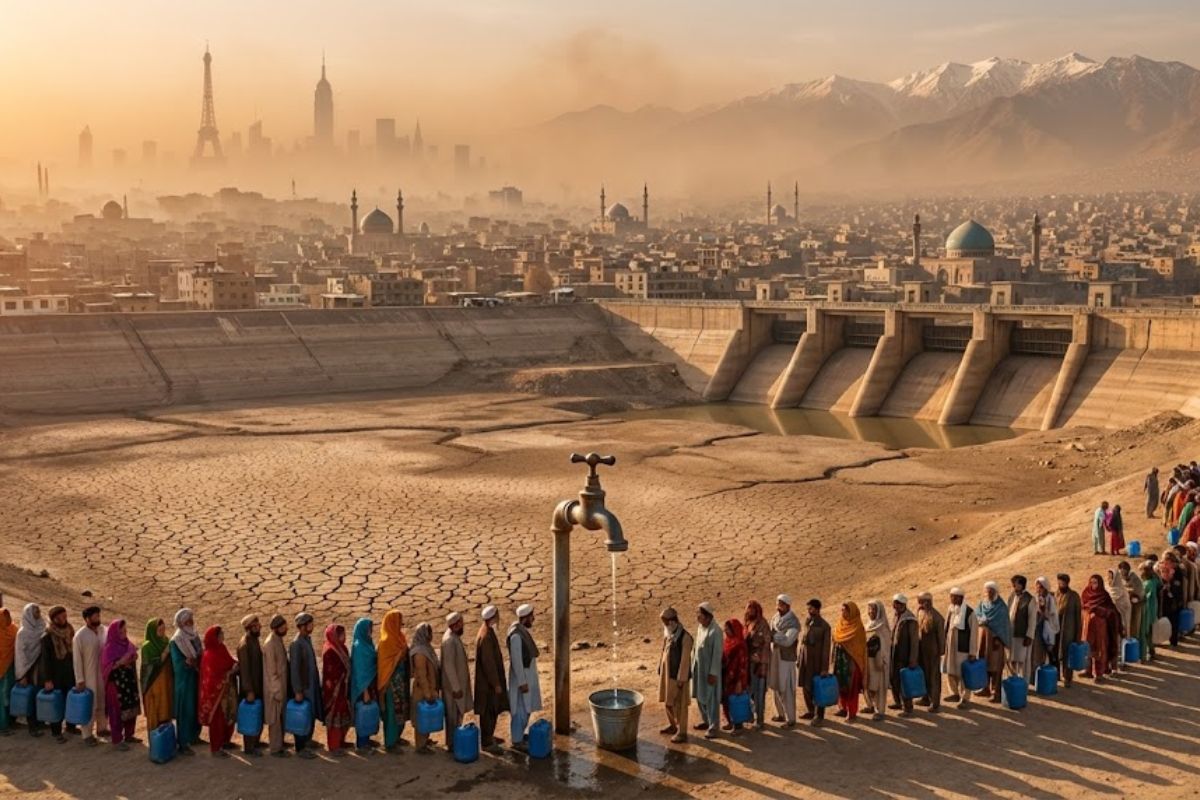
Kabul Faces An Accelerated Water Crisis Marked By Water Scarcity, Chronic Supply Crisis, And A Real Risk Of Becoming The First Capital Without Water, Raising A Global Alarm Regarding Urban Water Resource Management And Climate Adaptation In Arid Countries, Vulnerable Megacities, And Other Areas Under Extreme Water Pressure.
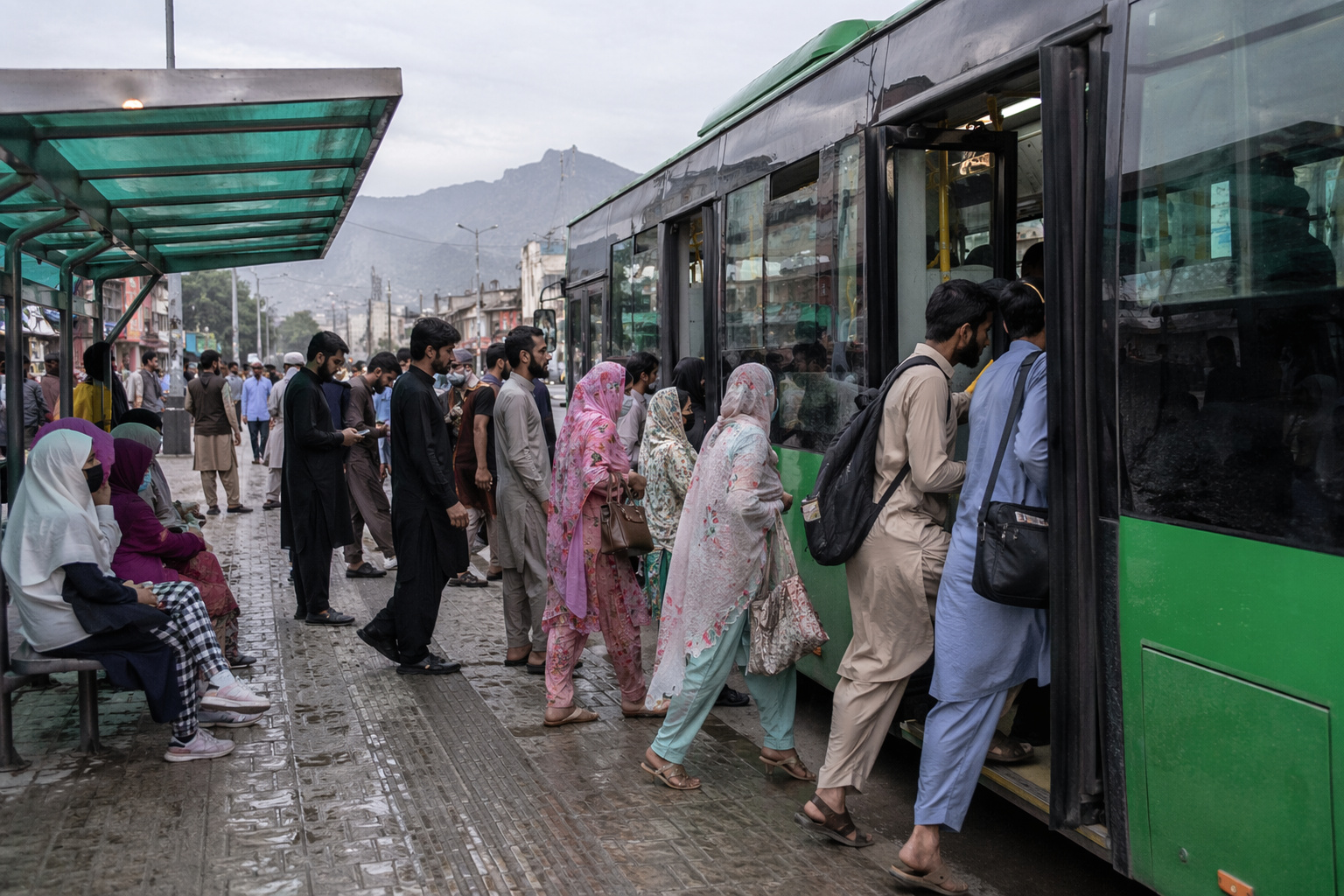
The threat of water collapse in Kabul is no longer a theoretical scenario in climate reports: it is a daily reality for millions of residents who already deal with dry taps, depleted wells, and constant lines for water. The possibility of the city becoming the first capital without water in the world turns the case into an extreme symbol of the imbalance between consumption and replenishment of water resources in urban areas.
With an estimated population of 5 to 6 million people, the capital of Afghanistan faces the depletion of underground aquifers, exacerbated by outdated infrastructure, rapid urbanization, and contamination of water sources. Since 2021, the end of some international funding has reduced the capacity for emergency response, while the supply crisis advances. According to experts, Kabul already exhibits all the classic signs of chronic water scarcity leading to an urban water collapse.
Why Kabul Is So Close to A Water Collapse
The situation in Kabul results from the combination of three main vectors: drier climate, rapid population expansion, and environmental management failures.
-
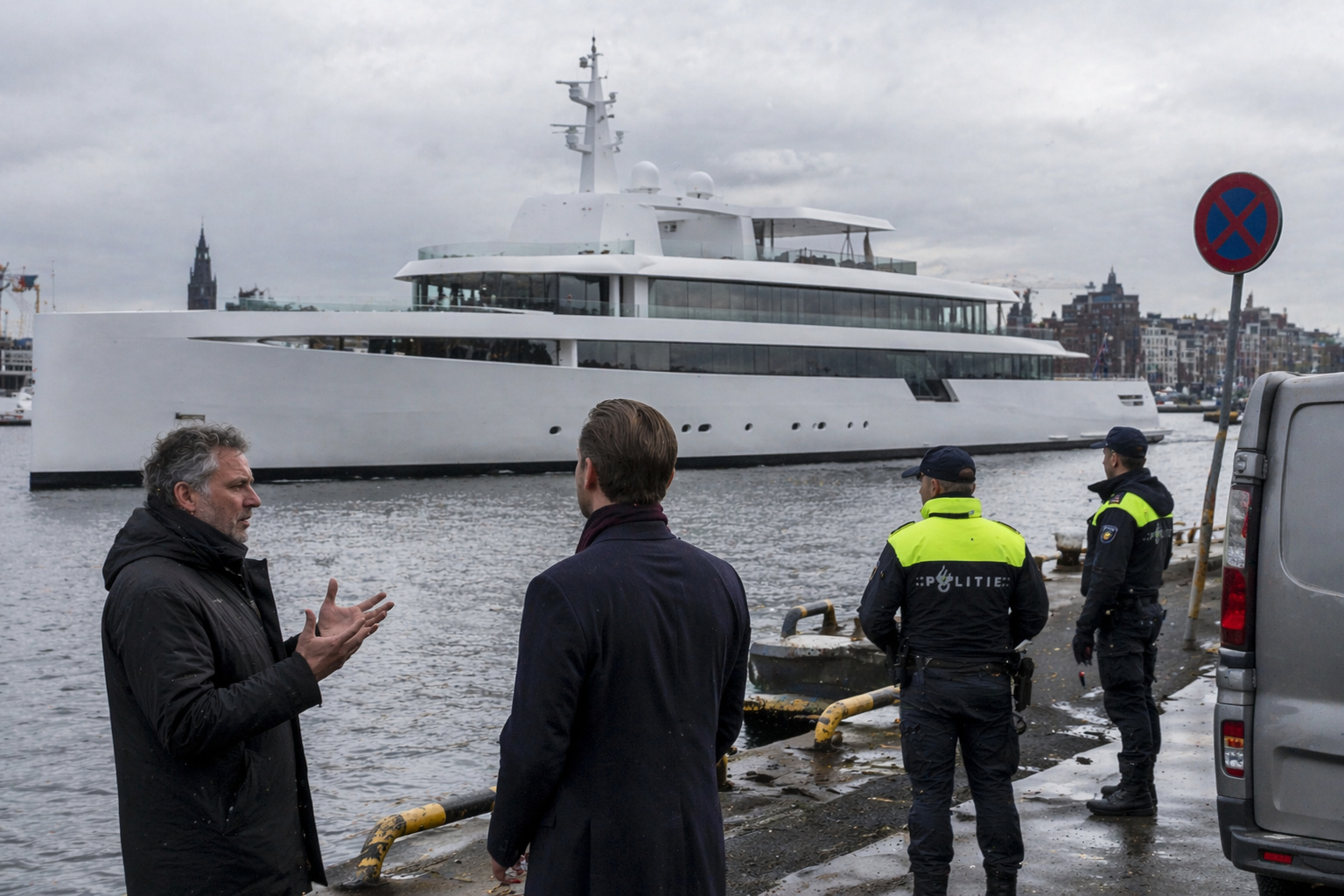
The secret masterpiece of Steve Jobs that took five years to create was blocked before its debut due to an unexpected debt of millions — and the reason behind the blockage in Amsterdam still surprises today.
-
Why is chocolate so “addictive”? Studies show how chemical compounds activate the brain, trigger intense pleasure, and make it difficult to control consumption.

-
Cat owners are now prohibited from leaving them alone for long periods, and a new rule imposes a mandatory routine of care and daily interaction in Sweden.

-
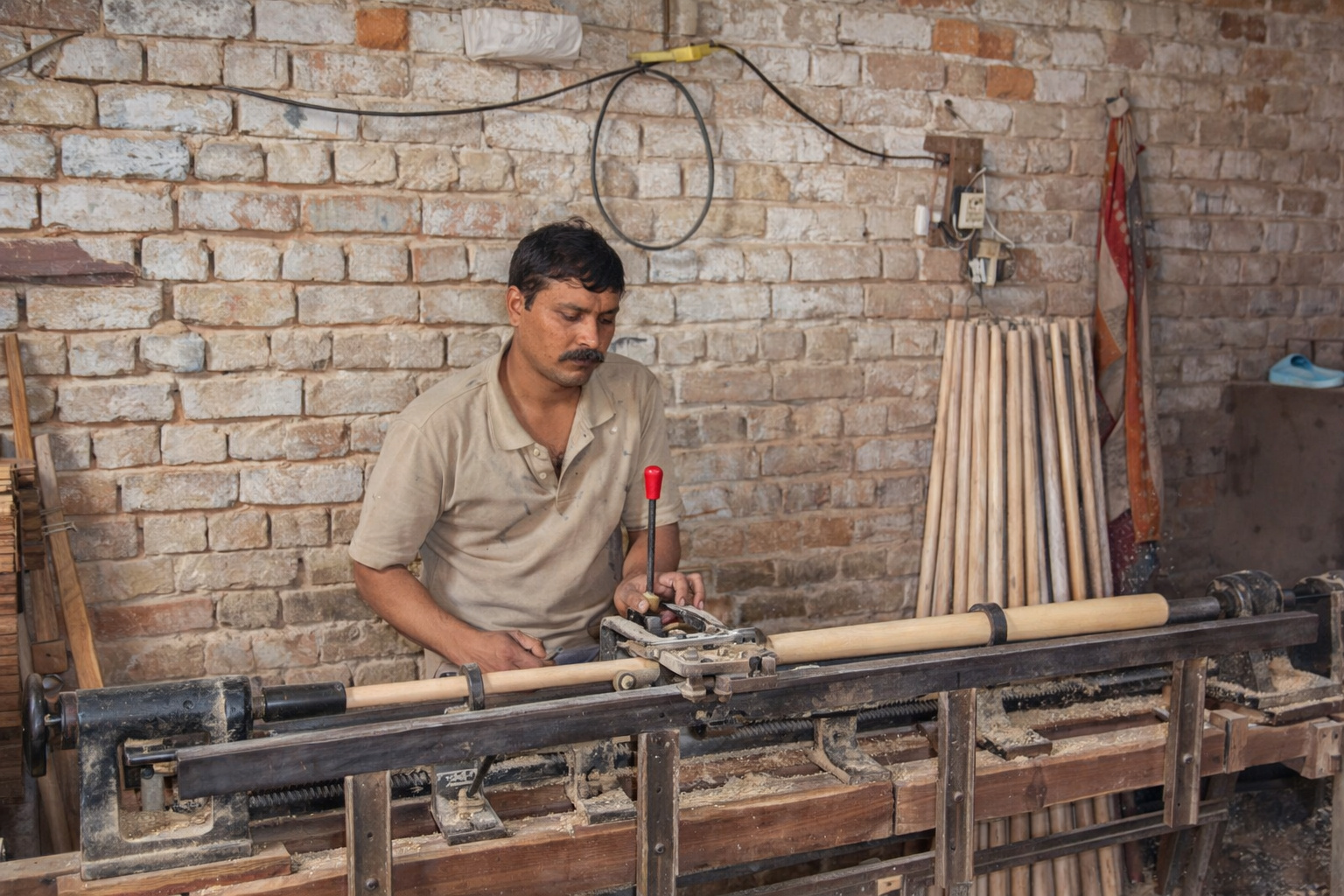
The factory in India produces 70-centimeter pool cues, uses fine wood, combines traditional craftsmanship with modern technology, and excels in global exports.
The reduction in rainfall makes it difficult to recharge groundwater, while demand grows with unplanned urbanization.
The result is a consumption that far exceeds the natural replenishment capacity.
Water scarcity in Kabul is also linked to the lack of consistent policies for protecting springs, rivers, and recharge areas.
In many neighborhoods, access depends on wells that are literally drying up, forcing families to dig deeper or turn to questionable quality sources.
As the available water decreases and pressure on the system increases, the water collapse shifts from a distant hypothesis to a matter of time.
Since the political landscape changed in 2021, the interruption of funding and international cooperation projects has further reduced the capacity to monitor aquifers, expand networks, and modernize systems.
In this context, the supply crisis in Kabul becomes harder to reverse, as resources, planning, and governance are lacking to coordinate long-term actions.
Urbanization, Pollution, and The Capital Without Water in Formation
Unorganized urban growth has turned Kabul into a classic case of extreme pressure on infrastructure.
New neighborhoods have arisen faster than water and sewage networks, and a large part of the population now depends on private or informal wells.
This fragmented model makes the system vulnerable to failures, increases waste, and complicates water quality control.
At the same time, domestic and industrial pollution contaminates local springs and rivers, reducing the availability of drinking water.
Without proper sewage treatment, the very watercourse used by part of the population ends up overloaded with waste.
In such scenarios, the city approaches the point where even new water intakes cannot meet the demand.
Therefore, Kabul is already seen as a potential first capital without water.
The expression summarizes the risk of a metropolis that combines water scarcity, supply crisis, and environmental degradation, in a context where structural solutions require time, investment, and international coordination.
If nothing changes, the capital without water ceases to be a headline and becomes a permanent reality.
Other Metropolises Have Already Approached The Same Limit
Kabul is not the first global alert. Cape Town, South Africa, in 2018, nearly reached the so-called “Day Zero”, when reservoirs would be so low that supply would be cut for the general population, leaving only critical points maintained by the government.
Massive conservation campaigns, strict per capita consumption targets, and industrial usage reallocation were decisive in averting the worst scenario.
Another important example is Chennai, India, in 2019, when the four main reservoirs dried up.
The population relied on water trucks and long lines for water, vividly illustrating a case of simultaneous supply crisis and water scarcity.
The experiences of both cities demonstrate that, although the situation is critical, it is possible to avoid complete water collapse with rapid responses, transparency, and societal involvement.
These cases reinforce that what is happening in Kabul is not an isolated phenomenon but part of a pattern repeating in large urban centers with insufficient water planning, population pressure, and climate vulnerability.
The difference is that, in Kabul, the financial and institutional margins for maneuver are much smaller.
Possible Solutions To Halt The Water Collapse In Kabul
The technical solutions to face the water collapse in Kabul are known, though challenging to implement in a fragile context. Among the most impactful actions are:
Rainwater harvesting, through rooftop collection systems and community reservoirs;
Treated wastewater reuse, especially for non-potable uses, reducing pressure on clean water sources;
Modernizing distribution networks, reducing leaks and losses throughout the system.
Besides infrastructure, educating the population for conscious water use is essential.
Arousing public awareness, setting consumption targets, tiered tariffs, and incentives for efficient usage can reduce immediate pressure on resources.
Without this, any physical investment risks being overwhelmed by unsustainable consumption habits.
To prevent Kabul from solidifying as the first capital without water, it is also crucial to rebuild international cooperation mechanisms focused on sanitation and natural resource management.
The supply crisis and water scarcity in Kabul cannot be treated just as an Afghan internal issue, since their symbolic and practical impacts fuel the global debate on water security.
Three Urgent Lessons From The Kabul Crisis
The city’s situation summarizes, in three points, what other metropolises need to observe closely:
Uncontrolled water use can render entire cities unviable. When groundwater extraction systematically exceeds natural replenishment, the path to water collapse is direct.
Inadequate infrastructure accelerates resource depletion. Old networks, irregular wells, and precarious sewage systems multiply losses, contamination, and inequality of access.
Planning and education are central to preventing a capital without water. Cities that combined integrated management, transparency, and social participation managed to avert the scenario of irreversible supply crisis.
And What This Means For Those Far From Kabul
The case of water collapse in Kabul is not just a distant tragedy.
It serves as a mirror for other regions that already deal with water scarcity and partial supply crisis, but do not yet see themselves as potential candidates to become a capital without water or a metropolis with collapsed services.
If you live in a large city, paying attention to these signs is crucial: pressure on water sources, episodes of rationing, contamination of urban rivers, and lack of investment in sanitation are warning indicators.
A concrete path is to demand transparency of data on consumption, losses, and water quality, support reuse policies, and, daily, reassess habits of waste at home and work.
Ultimately, avoiding new cases of water collapse like Kabul’s depends on political decisions, planning, and behavior changes now, before other capitals enter the same path and discover, too late, what it means to live in a city officially without water.






-

-

-

-

-

-

18 pessoas reagiram a isso.