





 Portuguese
  English
  Spanish
  4 min of reading
  0 comments


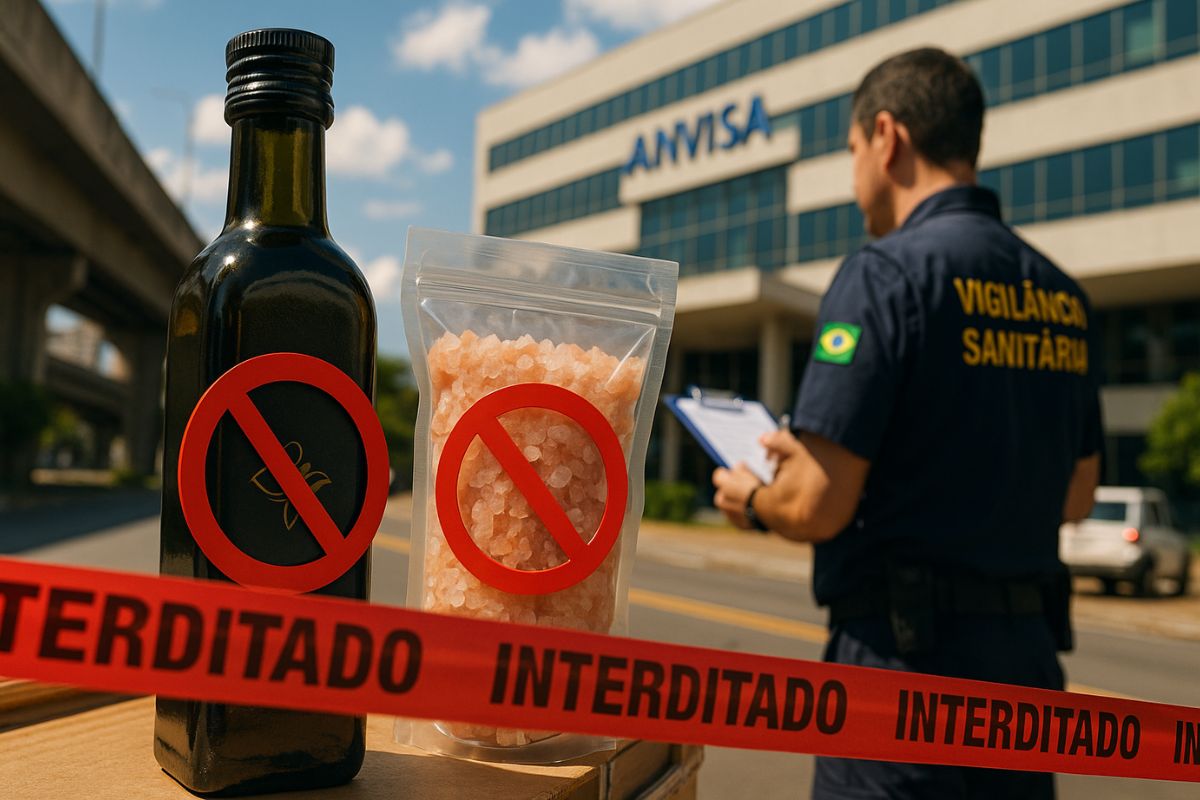
Anvisa Bans Well-Known Brands and Warns About Risks to Consumers.
Anvisa bans well-known brands after identifying irregularities in products such as Ouro Negro olive oil and Kinino brand Himalayan salt, reinforcing sanitary control over food that reaches the Brazilian market and may pose health risks.
The agency’s decision shows that even popular and widely consumed products can be targeted for suspension when there are doubts regarding origin, composition, labeling, or compliance with Brazilian regulations, requiring increased attention from consumers and merchants.
Why Anvisa Bans Well-Known Brands
Anvisa bans well-known brands when it identifies elements that may place consumers in a situation of sanitary vulnerability. In the most recent case, the agency determined the suspension of manufacturing, sale, distribution, importation, and advertising of Ouro Negro extra virgin olive oil throughout Brazil.
-
Heineken’s factory in Brazil produces 300 million beer cans in just 4 months, reaches 1 million hectoliters, received R$ 2.5 billion, and is already projecting an annual capacity of 5 million with sustainable technology.
-
Inside an active volcano in Africa, residents use volcanic rocks to build houses in an impressive setting.

-
After 14 years of waiting, a rammed earth mansion built in 1702 in the North Zone of São Paulo will become a park with leisure facilities and green areas, with a million-dollar investment.

-
With 2 unfinished nuclear reactors, up to 25 billion in costs, and proven fraud, the Nukegate case has left 800,000 consumers still paying today for energy that will never be produced.

The measure was taken to eliminate risks and ensure that only products with proven origin and within quality standards remain in the market.
The agency’s actions are part of a public health protection policy. When there is suspicion regarding authenticity, traceability, or compliance with Brazilian regulations, the product needs to be withdrawn from circulation.
It is at this point that the role of the health surveillance agency becomes clear: it acts as a barrier between the consumer and a potentially irregular item. The logic is simple: when in doubt, the product cannot be sold.
What Happened to Ouro Negro Olive Oil
Ouro Negro olive oil was subject to a total ban after reports and analyses raised questions about its origin and compliance with Brazilian rules. Anvisa determined the complete suspension of the product in the country.
According to the disclosed information, the responsible company had its CNPJ (business registration) suspended, which compromised the legal and sanitary safety of the food and reinforced the need to interrupt its circulation.
This type of disqualification occurs when there is incompatibility between what the product claims to be and what it actually is. In the case of oils, this is even more sensitive, as there is a large volume of imported items, and not all can prove authenticity, acidity, provenance, and labeling. When the chain of origin is unclear, the consumer loses confidence, and the state intervenes.
Why Kinino Himalayan Salt Was Withdrawn
In addition to olive oil, Anvisa bans well-known brands when it identifies compositional flaws. This was the case with batches of Kinino brand Himalayan salt.
Tests indicated iodine levels below those required by Brazilian legislation. Iodine is mandatory in table salt specifically to prevent public health issues, such as goiter and developmental changes.
In light of the results, the company itself requested the voluntary withdrawal of the irregular batches, which shows alignment with sanitary regulations and consumer protection.
Even so, the agency’s guidance is clear: products from the indicated batches should not be consumed.
Food products that do not meet legal standards must be removed from shelves, even if they are from well-known brands.
How Consumers Should Act Upon Finding a Banned Product
Upon realizing they have Ouro Negro olive oil or Kinino Himalayan salt from irregular batches at home, consumers should stop using them immediately.
The standard guidance is to keep the packaging and the receipt and to contact the establishment where the item was purchased to inquire about exchanges, returns, or refunds. This record helps verify the purchase and facilitates the process with merchants and manufacturers.
If the consumer has consumed the product and exhibits any unusual symptoms, the recommendation is to seek medical attention and inform that they used a banned food item.
It is also possible to report the case to Anvisa through official channels. The more consumers participate in the information flow, the faster the market adjusts.
How to Identify Registered and Safe Products
To avoid purchasing irregular items, consumers need to adopt some basic precautions. It is important to check if the product has labeling in Portuguese, clear manufacturer or importer information, a legible expiration date, and, when applicable, a registration or notification number with Anvisa.
Products without defined origin, without a date, without identification of who manufactured or imported them, and without compliance with national standards should be avoided.
Prior verification is especially relevant for imported foods or items sold online. Buying products with miraculous claims, without explicit composition, also poses risks. Health surveillance acts, but vigilant consumers reduce the space for substandard products.
Why These Actions Are Important for the Market
When Anvisa bans well-known brands, the aim is not to punish consumers, but to protect the population and compel the sector to maintain high-quality standards.
The removal of irregular items from the market reinforces confidence in those who do everything correctly and prevents companies that violate rules from competing unfairly.
These actions also prevent the circulation of products that promise more than they can deliver, such as the so-called “Miracle Tea,” cited by the agency as an example of an item lacking transparent composition. Strong oversight keeps the market healthy and prevents consumers from becoming guinea pigs.
The decision by Anvisa to ban well-known brands such as Ouro Negro olive oil and Kinino Himalayan salt shows that food safety in Brazil remains a priority and that the origin of the product matters as much as its packaging.
Even popular items can be withdrawn from circulation when they do not meet sanitary regulations.
Now we want to hear from you: have you ever encountered any irregular or different product than advertised on store shelves or online? Tell us in the comments how it went and if you managed to resolve it.





Seja o primeiro a reagir!