





 Portuguese
  English
  Spanish
  5 min of reading
  3 comments


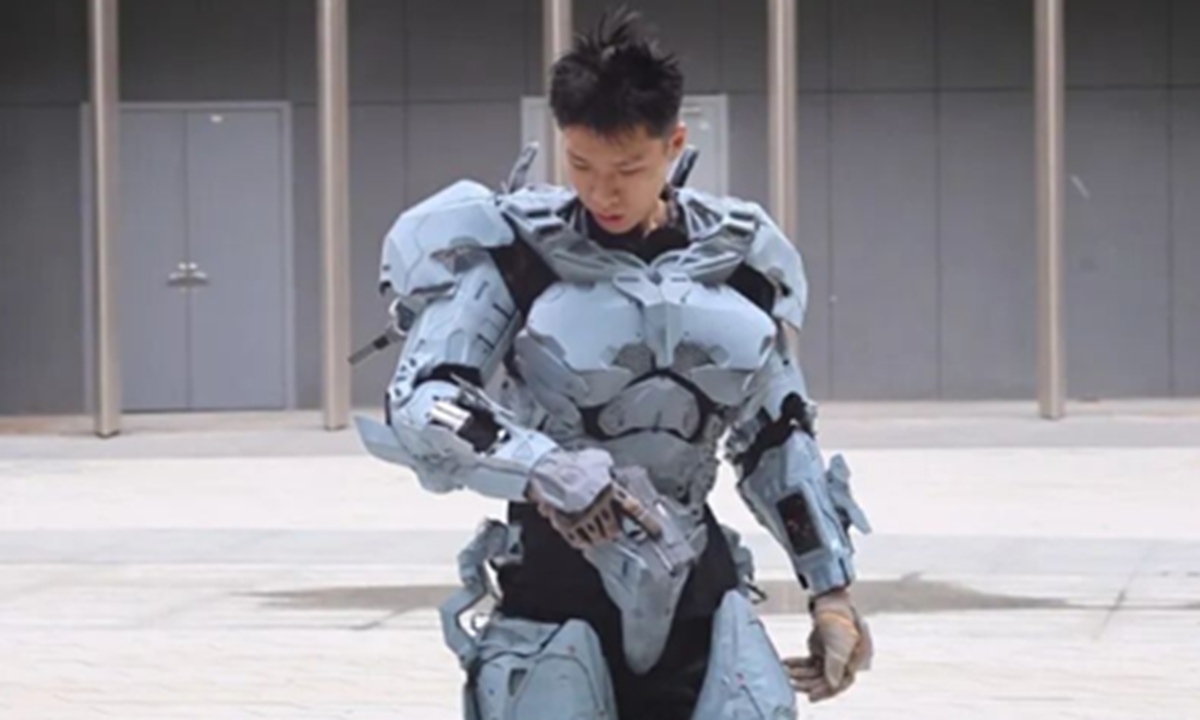


A Wearable Armor Made At Home Gained Attention For Combining 3D Printing, Automation, And Voice Commands In A Project Assigned To A 21-Year-Old Chinese University Student And Rekindled Interest In Exoskeletons, Makers, And Digital Manufacturing.
A 21-year-old university student from Chongqing, in southwestern China, drew attention on social media for building, on his own, a robotic exoskeleton inspired by Iron Man, using 3D printed parts and voice command activation.
Images of the suit in action show parts of the assembly opening and closing automatically, in coordinated movements, while an audio system responds to the user.
The story was initially reported in articles attributing the information to the Chinese state agency Xinhua and gained further replications on websites and social media profiles.
-
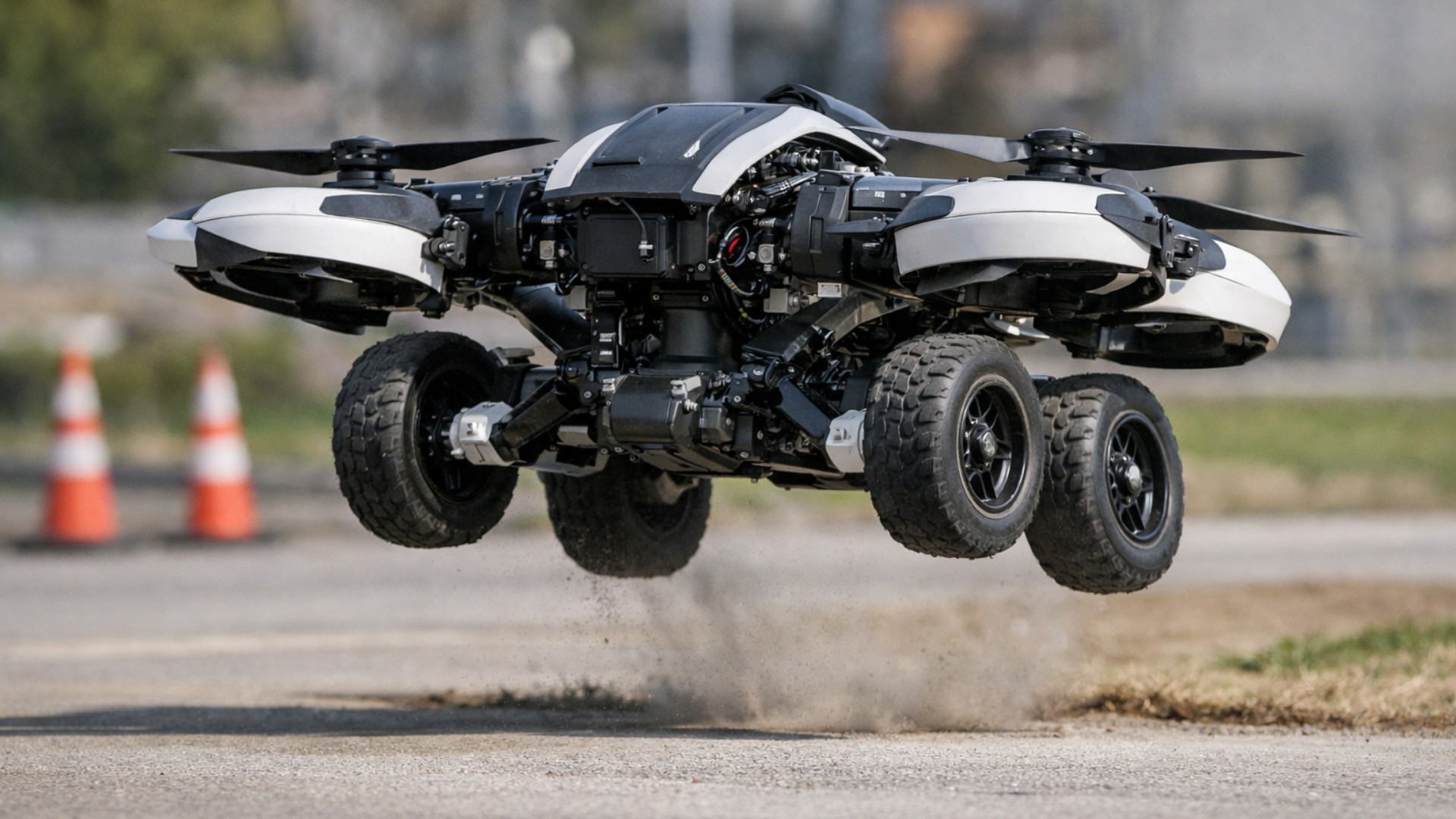
Researchers in the U.S. have created a flying robot that transforms into a land vehicle while still in the air. The technology, based on aerodynamic transition, converts landing into a scene worthy of Transformers and redefines mobility between sky and ground.
-
Spread across two continents, with 197 parabolic antennas in South Africa, 131,000 2-meter antennas in Australia, and a range of up to 150 km, the SKA begins to “listen” to the Universe on an unprecedented scale and accelerates the search for black holes, primitive galaxies, and nearly invisible radio signals.

-
Goodbye batteries: a new sensor created by Japanese scientists uses sweat as an energy source and points to a promising path for more sustainable devices, with greater autonomy and less need for frequent recharging.

-
The Brazilian Army inaugurated the assembly line for the Guaicurus armored vehicle with a contract for 420 units by 2033, and the same vehicle has already been tested in combat in Afghanistan and Lebanon by European armies.


The case was also highlighted by Brazilian technology portals, which describe the project as a full-body suit with automation and voice control.
Who Is Huang Yanjun And How Long Did The Project Take
The student is identified as Huang Yanjun and is noted as a university student in Chongqing.
According to Xinhua, as reported by the Global Times, he allegedly dedicated about two months of his summer vacation to complete the construction and adjustments of the suit.
These same publications indicate that the initiative was motivated by the observation that many fan projects focus on isolated parts, such as helmets and decorative components.

With this, the student aimed for a full-body version, bringing together the shell, joints, and actuation system in a single unit.
3D Printing And CAD Modeling In The Construction Of The Suit
The manufacturing process starts with digital design.
According to Xinhua, the student modeled the parts in a CAD environment and, from these files, produced components on a 3D printer to then assemble the external structure of the suit.
During the assembly phase, the assembly was organized in segments, with parts that fit together and move at specific points.
Videos shared on social media show plates and panels being activated in sync, suggesting a mechanism with motors and joints to open and close certain areas of the suit.
In reports by Global Times, the activation sequence is presented as part of the “Jarvis Effect”, with the automatic response of the system to the user and the initiation of plate movements.
The description is treated as a demonstration of control functioning and not as an industrial system.
Voice Commands, Automation, And Effects In Demonstrations
The reports attributing the case to Xinhua state that the suit is voice-controlled and that the student implemented a response system similar to the virtual assistant depicted in the Iron Man franchise.
The aim, according to these texts, was to allow the user to trigger routines of the suit without the use of manual controls, as seen in the videos with the opening and closing of specific parts.
According to this material, the project includes features aimed at demonstrations, such as visual effects in recorded presentations.
The publications mention smoke and lasers as items associated with the suit in some records but do not detail specifications, power, usage limits, or safety conditions of these components.
Videos On Social Media And The Repercussion Of The Exoskeleton
The circulation of videos on social media helped to broaden the project’s reach.
The images show the student using the armor while panels shift and reposition, with sound responses synchronized to the commands.

This type of record tends to focus attention on the visible functioning of the suit, as it is there that the automated movements and the “assembly” effect inspired by cinema appear.
The reports that echoed the case treat the material as evidence of voice activation and coordination of moving parts.
Reuse Of Parts And Interest In Electronics Since Early Age
The profile of the student, as presented by Xinhua and reproduced by Global Times, includes a long-standing interest in electronic components and material reuse.
The texts report that he would collect used items and dismantle devices to learn how they worked, a practice that would have influenced his familiarity with circuits and assembly.
The same publications assert that, already at university, he conducted experiments with automation systems in smaller projects before moving on to a full suit.
The reports describe this path as a combination of study, trial, and practical adjustments throughout the process.

Walking Assistance Robot And Mention Of Patent Application
Besides the exoskeleton, Xinhua, according to Global Times, states that the student is involved in a project for a walking assistance robot and that there would be a patent application underway.
The publicly available content, however, does not provide a registration number, complete technical description, or verifiable document that allows confirmation of patent application details without direct access to official databases.
Therefore, information about this development remains restricted to what has been published by the reports that cited the agency.
What can be more clearly seen in the video records is the suit itself, with an articulated shell, automation in panels, and a voice command system that activates demonstrative routines.
By combining digital modeling, 3D printing, and automation in a wearable prototype, the case entered the radar of communities linked to DIY engineering and digital manufacturing projects.
Part of the interest, according to the discussions on social media, lies in the visual similarity to the character; another part focuses on the construction method and the use of tools accessible to the public.
The project also rekindled ongoing discussions among 3D printing and mechatronics enthusiasts about the practical limits of a wearable suit, such as weight, autonomy, and safety, points that are not detailed in the echoed reports.







Já deu essa armadura do homem de ferro, cria outras armadura mais legais…
Podia diminuir o tamanho dos seios.
China sempre impressionando com suas tecnologias, até os jovens de lá são avançados, que incrível! PS: HOMEM DE FERRO É O MELHOR HEROI