





 Portuguese
  English
  Spanish
  7 min of reading
  0 comments


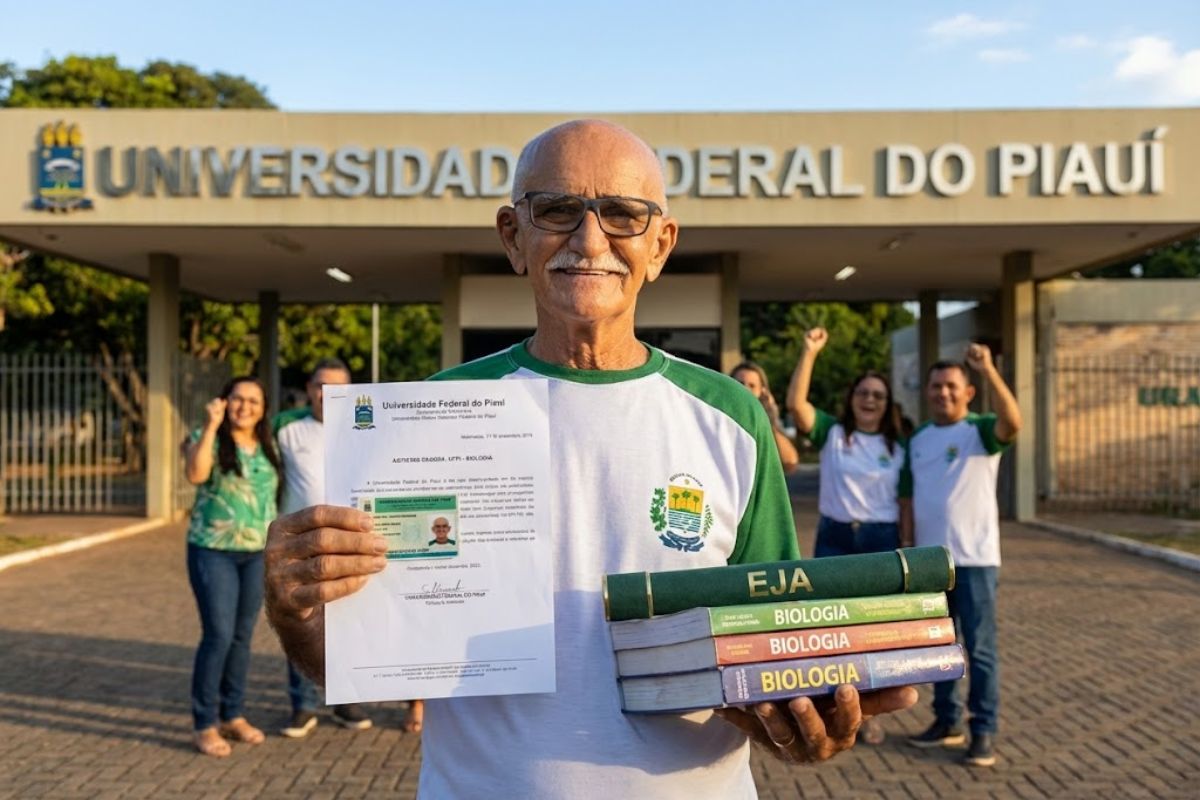
João José de Carvalho, His Janjão, At 75, A Former Student of EJA in Patos do Piauí, Celebrates His Second Approval in Biological Sciences at UFPI, After Interrupting His Dream Due to Distance and Physical Limitations. The Case Highlights Public School and the 311 Approvals of EJA in Sisu 2026.
At 75, the former EJA student João José de Carvalho, known as His Janjão, celebrated his second approval in the Biological Sciences course at the Federal University of Piauí (UFPI), after needing to interrupt his first attempt. The news, recorded at UFPI on 03/02/2026, highlights a detail that often goes unnoticed: when the opportunity finally arrives, staying in it can be as challenging as securing the spot.
Living in another municipality and a graduate of Youth and Adult Education (EJA) in the state system, he reports that distance and physical limitations weighed heavily on his first approval. Now, the return reignites a personal and family goal: to be an example for five grandchildren, showing that learning has no expiration date and practically reinforcing the value of public school in a context where Piauí recorded 311 approvals of EJA students in Sisu 2026.
A Name, A Story, and the Path through Youth and Adult Education

João José de Carvalho arrives at the university carrying a history that does not fit a simple label. He is called His Janjão by those who know him in Patos do Piauí, where he studied in the Youth and Adult Education modality of the state network, at the Center for Integrated Full-Time Education (Ceti) Reunida de Patos.
-
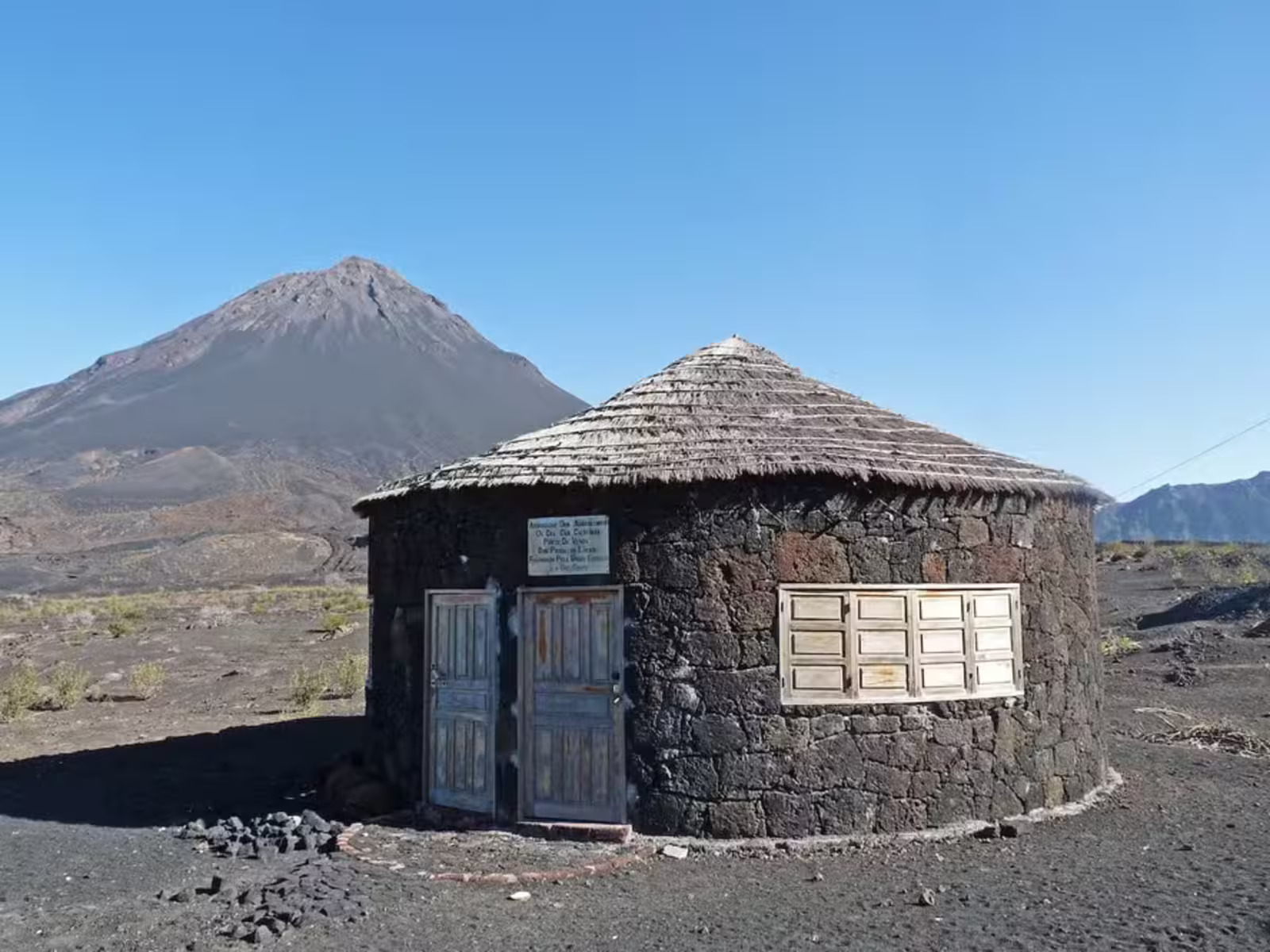
Inside an active volcano in Africa, residents use volcanic rocks to build houses in an impressive setting.
-
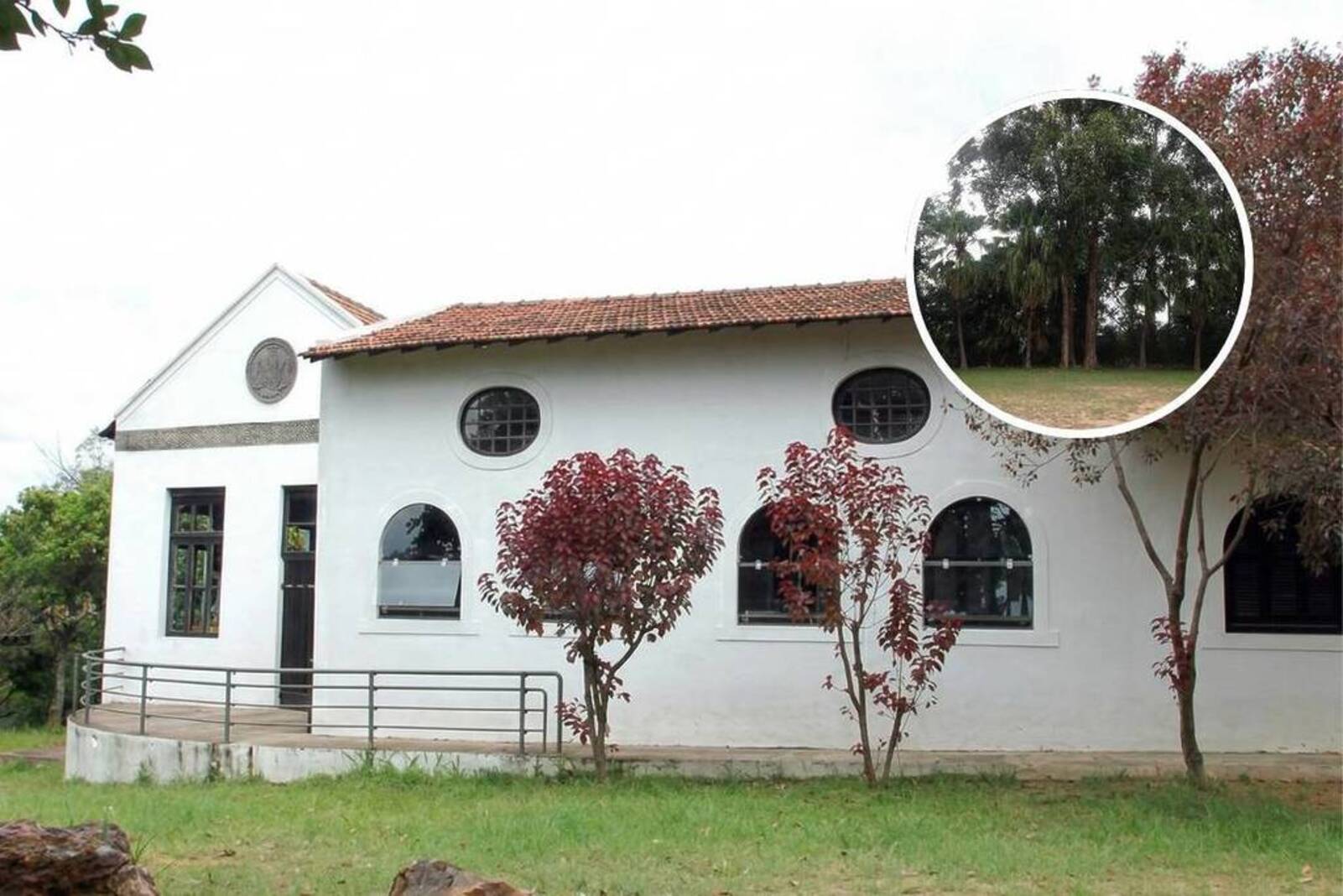
After 14 years of waiting, a rammed earth mansion built in 1702 in the North Zone of São Paulo will become a park with leisure facilities and green areas, with a million-dollar investment.
-
With 2 unfinished nuclear reactors, up to 25 billion in costs, and proven fraud, the Nukegate case has left 800,000 consumers still paying today for energy that will never be produced.

-
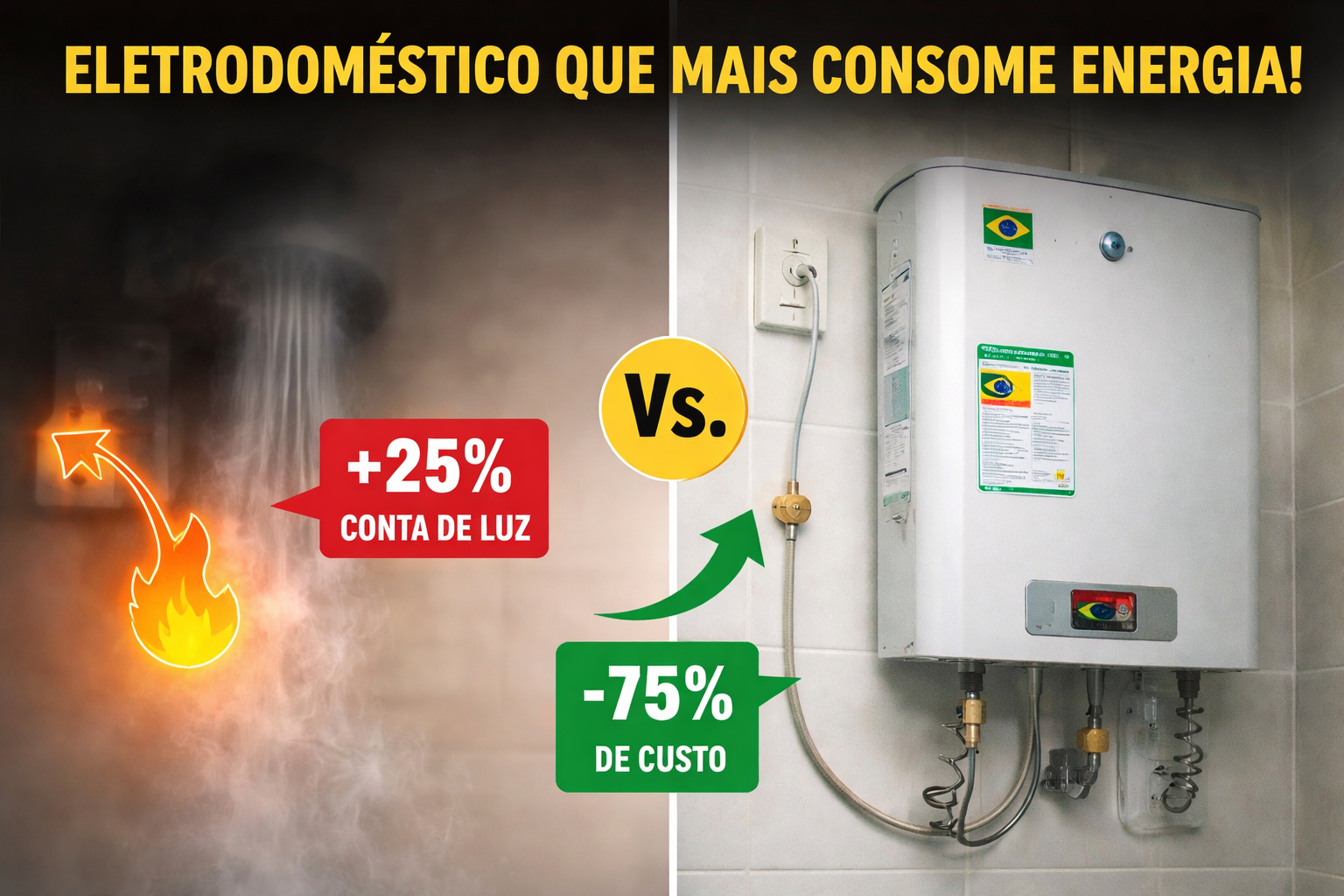
The household appliance that consumes the most energy in Brazilian homes is not the air conditioner; it is located in the smallest room of the house, is used daily, and can account for up to 25% of the electricity bill, while an alternative in the same outlet can reduce this cost by up to 75%.
The central point is not age, but the persistence in building a journey when the “ideal” time has already passed in the calendar of many.
EJA exists precisely to welcome those who interrupted their studies for various reasons and decide to start again. This includes youth, adults, and the elderly, each with specific realities: work, family, commuting, health, and daily limitations that make studying a careful fit, not an automatic path.
In this context, the highlight of the former EJA student does not come from a “beautiful story,” but from a concrete fact: he returned to compete for a spot, was approved, and decided to face the challenge of staying in the course again.
The First Approval, the Withdrawal, and the Weight of Staying
The first approval in Biology was the beginning of a long-held dream but had to be interrupted. His Janjão recounts two objective obstacles: the distance, as he lives in another municipality, and physical limitations that kept him away from the university.
There is a huge difference between “entering” and “being able to continue”, and this difference is often invisible when the conversation is limited to the moment of the list of approved students.
When he talks about distance, it is not just about kilometers. Distance is also cost, time, wear and tear, dependence on transportation, and the need to balance commuting with daily tasks.
As for the physical limitations, mentioned by him without details, they remind us that the body imposes rhythm, pauses, and adjustments and that the university, to truly function as an opportunity, needs to be a space that can be inhabited, not just reached.
The second approval, therefore, carries symbolic and practical weight. He describes the return with emotion and renewed motivation, like someone who recognizes the chance and knows it requires energy, planning, and support. It is not a repetition; it is a resumption with awareness of everything that previously hindered.
What the 311 Approvals in Sisu Reveal About Public School in Piauí
The individual story gains context when it appears alongside a larger datum: in 2026, EJA students from the state system in Piauí totaled 311 approvals in the Unified Selection System (Sisu).
The total comes from 186 approved in the first call and 125 in the second call. This number is not just a statistic: it indicates that there is demand, effort, and concrete results when there are doors open for starting over.
Sisu, being a selection system for vacancies in public institutions, increases visibility and access, but also unveils a challenge: those who manage to compete for a spot still face, afterward, the everyday realities of higher education.
In other words, what happens after the approval matters just as much as the approval itself, especially for those coming from EJA, where the journey is often marked by interruptions, returns, and reconstructions of routine.
In this sense, the 75-year-old former EJA student becomes a human portrait of a broader phenomenon. He does not “represent” everyone, but helps to better understand what the 311 approved suggest: there are people in different phases of life seeking university, and public school can serve as a real bridge to that when it manages to provide conditions for access, permanence, and learning.
Distance, Accessibility, and Routine: Why Studying Can Be Harder Than It Seems
When a student says that distance hindered them, it is common to imagine only the commute, but the layers are many.
Travel time influences sleep, nutrition, willingness to attend classes and study. Costs pressure budgets, and logistics interfere with family commitments and household responsibilities. Permanence, in practice, depends on a daily engineering of choices, energy, and support.
With physical limitations, this equation becomes even more delicate. In general terms, higher education requires reading, activities, assessments, and presence in different spaces, in addition to dealing with deadlines and demands that do not naturally adapt to the student’s reality.
The idea of “overcoming” should not become romanticization: the point is to recognize that barriers exist and that they can be reduced when there is organization, institutional support, and support networks, whether in the family, the school community, or the university itself.
The trajectory of His Janjão stands out because he does not hide the difficulty, but he also does not reduce his identity to it. He speaks of a second chance, of the emotion in returning, and of greater motivation. It is the rare combination of frankness about limits and firmness about the objective.
From Grandfather to University Student: The Example for Grandchildren and the Idea of Citizenship Through Study
His Janjão is a grandfather of five grandchildren and is keen to associate his diploma with something larger than personal achievement. He wishes to be a reference within the home and show, in practice, that studying can be a lifelong project at any age.
Instead of turning university into a trophy, he describes it as part of a lifelong path of knowledge that accompanies a person forever. When a grandfather goes back to studying, the message circulating in the family is powerful: learning is not only for “those who have time”; it is for those who decide.
This vision also reinforces the social role of public school, especially when connected to Youth and Adult Education. It is not just about recovering content or “regularizing” interrupted studies but about rebuilding autonomy, repertoire, self-esteem, and social participation.
The words of the Secretary of Education, Rodrigo Torres, follow this line by pointing out public school as a space for new beginnings and opportunities at any age, in addition to highlighting EJA and the Alfabetiza Piauí program as policies for access, permanence, and learning.
Looking at this set, the story of a former EJA student, the figure of 311 approvals in Sisu, and the institutional recognition of the role of these policies make it clear that the debate is not only about securing a spot. It is about trajectory. Approval is a milestone; education is a process.
What This Story Teaches About Starting Over Without Romanticization
There is a common risk when stories like this go viral: turning the person into an “exception” and using this as proof that everything relies solely on willpower. His Janjão’s own experience shows the opposite.
He tried, entered, had to stop for concrete reasons, and is now returning. This highlights that determination matters, but conditions matter too, and that starting over can mean adjusting routes, not insisting on the same path as if nothing had happened.
For this reason, the impact of the case is not in painting a perfect reality but in illuminating an essential point: there are students who need time, structure, and understanding to persist.
When public school and EJA can support the return to studies, they do not “work miracles”; they perform a social function that, for many, makes the difference between falling behind and moving forward.
And, at the most human level, the question remains that he himself seems to answer with his actions: what is “too late” when the goal is to learn, broaden horizons, and leave a legacy within the home? For him, too late is not a date; it is to give up.
The second approval of former EJA student João José de Carvalho in Biology at UFPI, at 75, is not just an individual achievement: it exposes the real challenges of staying, the strength of a possible restart, and the weight of public education in a state that recorded 311 approvals of EJA students in Sisu 2026.
More than a result, it is a reminder that education can transcend generations and not just statistics.
And you: have you seen anyone in your family or community go back to studying after many years? What helped and what hindered in that journey?
Share in the comments, because these stories show where education works and where it still needs to improve.







Seja o primeiro a reagir!