





 Portuguese
  English
  Spanish
  5 min of reading
  0 comments


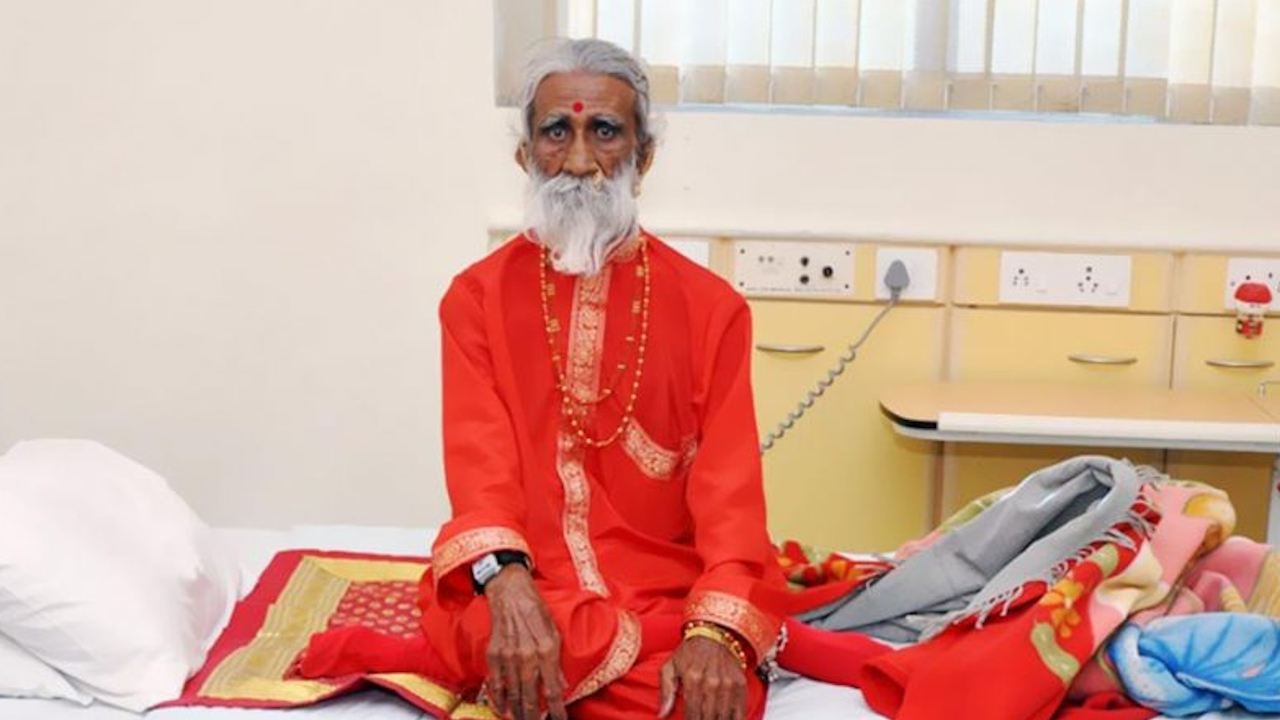
Monitored By Indian Army Doctors, Elderly Man Spends 15 Days Without Eating Or Drinking Under Constant Exams And Reignites Debate On Limits Of The Human Body.
In April and May 2010, an episode documented by the Defence Institute of Physiology and Allied Sciences (DIPAS), an agency connected to the Ministry of Defence of India, once again intrigued doctors, researchers, and military authorities. The Indian Prahlad Jani, then 82 years old, underwent 15 days of continuous clinical observation inside a military hospital in Ahmedabad, in the state of Gujarat, to investigate a claim he had repeated for decades: living without eating, drinking, or excreting since the age of 12, that is, for about 70 years.
The teams conducting the study included military doctors, metabolism specialists, radiologists, endocrinologists, and civilian researchers. Throughout the period, Jani remained in a closed room, monitored by cameras 24 hours a day, accompanied by nurses, and subjected to daily exams. The initial report publicly released by spokespeople for DIPAS and reported by outlets such as BBC, India Today, and Reuters confirmed that no food, water, or excretion was recorded during the monitored period, reigniting the debate about physiological limits and phenomena considered exceptional.
The Routine Of Examinations And What The Medical Team Observed In The Man Who Claimed To Live 70 Years Without Eating Or Drinking
During the 15 days of observation, Jani underwent:
-
A 68-year-old pizza delivery driver went off route to buy a soda that was missing from a visually impaired customer’s order, refused an extra tip, and now Dan Simpson has over R$ 546,000 in donations from people around the world who want to ensure he can retire peacefully on April 30.

-
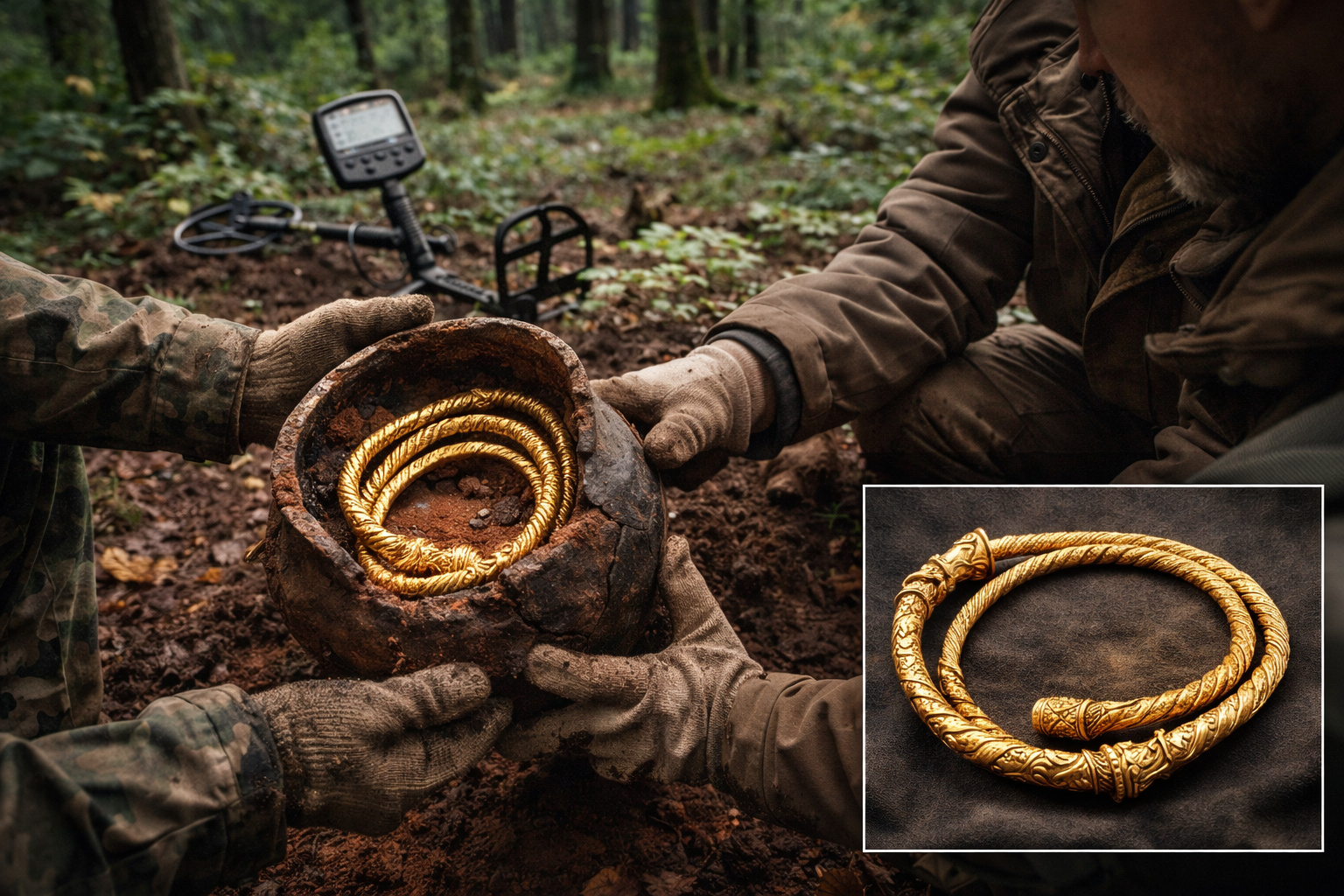
Amateur archaeologists were searching a forest in Poland with metal detectors when they found a ceramic pot buried for over 1,500 years. Inside was a pure gold necklace weighing 222 grams, folded to fit in the vessel, and when experts examined the piece, they discovered it was the first Gothic torque ever found in Polish territory.
-
Millions of people have been eating pomegranates for centuries without knowing that this ancient fruit contains punicalagins, which scientists are studying for their possible effects on memory and vascular health.

-
Argentina patrols the South Atlantic with ships built in France and monitors over 1.1 million km² with 87 m OPVs, a range of 7,500 miles, 360° radar, and a 30 mm cannon against illegal fishing in the 200-mile zone.

- continuous video monitoring;
- neurological, cardiological, and metabolic assessments;
- periodic tomography to monitor organ function;
- urine, feces, and blood analyses;
- hormonal tests of glands related to hunger and thirst.
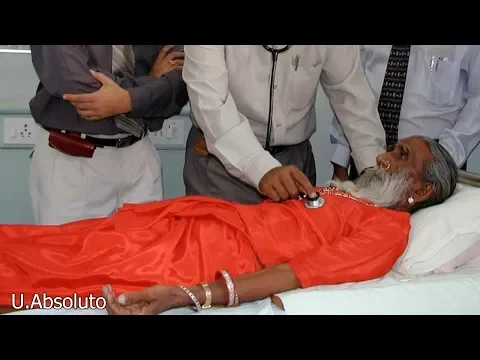

According to DIPAS, no food was introduced into the room and there was no record of ingestion, secretion, or bodily elimination.
A specific detail caught attention: ultrasound exams indicated that Jani’s bladder filled moderately, but the fluid seemed to be reabsorbed by the body, something considered highly unusual but observed in all analyses.
The military team described the case as “extraordinary” and “with no immediate physiological explanation.” Official reports, however, were cautious: they did not conclude that Jani truly lived seven decades without eating or drinking, but recorded that during the 15 days, under absolute surveillance, there was no ingestion or elimination.
Why The Indian Army Was Interested In The Case Of The Man Who Lives Without Eating Or Drinking
DIPAS is responsible for studying extreme circumstances that soldiers may face — lack of water, food deprivation, high altitudes, and war environments.
Cases like Jani’s may provide clues about human adaptations to extreme scenarios, especially in survival missions, operations in remote areas, and resistance training.

The interest did not arise by chance: Jani claimed that his condition was not the result of physical training, but of spiritual practices in Hinduism that include intense meditation, breath control, and religious deprivation rituals. He was considered a sadhu, an ascetic dedicated to rigorous spiritual practices and voluntary isolation.
For the military, even if Jani’s more extreme reports were not verifiable, understanding how his body functioned under such anomalous conditions was valuable from a scientific standpoint.
What Science Has And Has Not Been Able To Explain About The Man Who Lived Without Eating Or Drinking
Despite constant monitoring, specialists did not find a clear physiological explanation for Jani’s body’s functioning during the 15 days of examination. The human body, according to traditional biomedical parameters, requires:
- continuous water intake to maintain blood pressure and plasma volume;
- caloric ingestion to sustain basal metabolism;
- elimination of toxins and metabolic waste;
- renal function linked to electrolyte balance.
Any prolonged absence of water causes severe dehydration in a few days, and total absence of food leads to organ collapse after relatively short periods. During the observations, however, Jani exhibited:
- stable blood pressure;
- normal oxygenation levels;
- preserved cognitive state;
- consistent vital signs;
- absence of clinical signs of acute malnutrition.
For some scholars of extreme physiology, the case may be related to extremely rare metabolic states of drastic reduction in energy expenditure, similar to those observed in animal hibernation, but this hypothesis has never been confirmed.
On the other hand, for more skeptical scientists, it is possible that Jani’s condition results from factors still undetected, or that the absence of ingestion before the exams is not historically verifiable, which prevents definitive conclusions about the claims of 70 years.
The Impact On The Scientific Debate And The Criticisms Of The Study Regarding Prahlad Jani
The case generated division among specialists. Some endocrinologists and military physicians involved in the study stated that the exams were rigorous and methodologically sound, and that, at least during the 15 observed days, there was no violation of protocol.
Other groups, especially those connected to Western universities, criticized the lack of complete data publication in peer-reviewed journals, claiming that this limits the quality of evidence regarding the case of the man who claims to live 70 years without eating or drinking. Nevertheless, everyone agrees on one point: what was recorded in the 15 days of observation is highly unusual and worthy of in-depth investigation.
The Human Figure Behind The Phenomenon – Man Who Lives Without Eating Or Drinking
Prahlad Jani lived much of his life in caves and temples in the Gujarat region, dedicating himself to intense religious practices since adolescence. He claimed that his energy came from devotional rituals, and that since the age of 12 he had not felt hunger or thirst. Despite scientific doubts, testimonies from local residents reported that Jani lived in an extremely austere manner and was known to avoid any type of food.
He died in 2020, at 90 years old, maintaining the same routine of silence and isolation until the end.
A Real Documented Case And Still Without Consensual Explanation: Man Who Claims To Live 70 Years Without Eating Or Drinking
The case of Prahlad Jani remains one of the most intriguing examples of contemporary medicine. He was observed, filmed, monitored, and examined for 15 consecutive days by official institutions associated with the Indian Army, with no record of ingestion or excretion.
However, his claims of 70 years without eating or drinking remain unverified historically and without scientific consensus.
Still, the episode has entered the literature of extreme physiology as one of the rare moments when medicine observed, in a direct manner, a phenomenon that challenges known biological parameters and continues to be studied and debated to this day.







-

-

-

-

-

-

29 pessoas reagiram a isso.