Portuguese
  Spanish


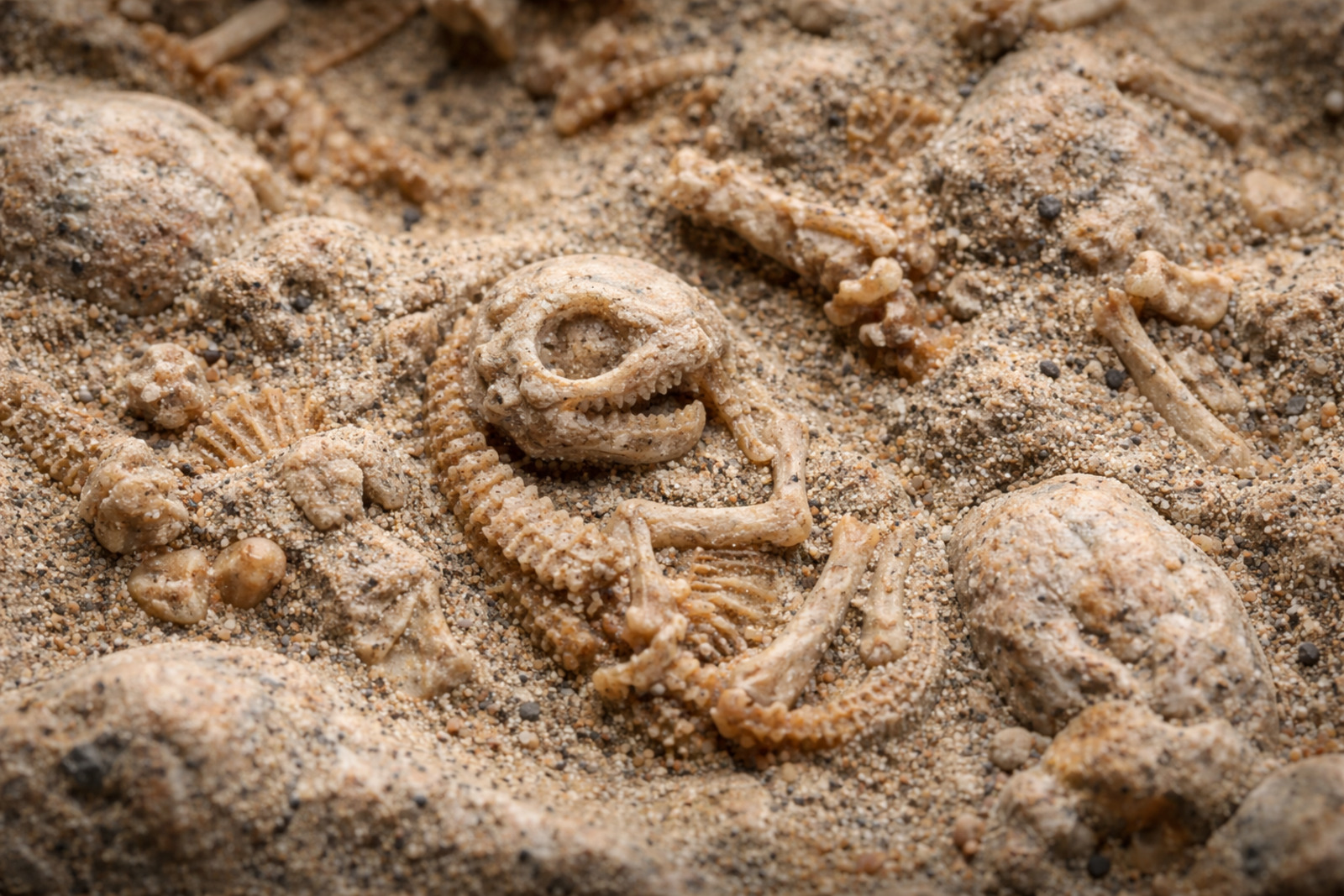


Discovery in the Chinese province of Yunnan gathers dinosaur embryos 190 million years old, preserves rare organic material and reveals distinct embryonic stages
Embryos of dinosaur 190 million years old have been identified near Lufeng, in the Chinese province of Yunnan, in a discovery that gathers about 20 individuals at different stages and preserves rare organic traces, expanding knowledge about the development of these animals.
Discovery in Lufeng
The fossils belong to Lufengosaurus, a long-necked sauropodomorph from the Early Jurassic.
The estimated age of 190 million years places these dinosaur embryos among the oldest ever recorded.
-
Scientists Convert Food Waste into Aviation Fuel, Successfully Test 50% Blend with Conventional Kerosene to Cut Emissions and Promote Sustainable Flights

-
OnePlus N6 Smartphone to Launch in India with 8,000mAh Battery and 45W SuperVOOC Charging, Lasting Up to Three Days
-
Scientists Plan to Release Air Bubbles Underwater to Protect Antarctica’s “Doomsday Glacier” from Melting

-
Chinese R6000 Drone Combines Airplane and Helicopter Features, Carries Up to 12 People for Multiple Missions



The discovery significantly predates the dating of known dinosaur embryos.
Most specimens of this type previously identified came from the Cretaceous period, while the material found in Lufeng is much older.

Several preserved stages
The site’s distinction lies in the diversity of specimens. Instead of a single preserved nest, researchers found bones from several dinosaur embryos at different stages of development in the same location.
More than 200 bones were recovered, representing about 20 embryonic individuals. According to data linked to the University of Toronto Mississauga, the remains likely came from several nests grouped in that area.
The collection was described as rare because most fossilized embryos tend to appear in isolated nests, recording only one moment of development.
In Lufeng, the material preserves a broader growth sequence.
Growth inside the egg
To understand development, scientists analyzed the femur and identified an accelerated pattern. During incubation, the bone doubled in length, going from 12 to 24 millimeters inside the egg.
The result also indicated that these primitive dinosaurs moved before hatching. This behavior had already been confirmed in modern birds but had never been directly demonstrated in dinosaurs.
Dr. Robert Reisz stated that the discovery opens a new window into the life of these animals and allows tracking embryonic growth.
He also mentioned that the finding represents the first evidence of this type of movement in a dinosaur.

Rare organic material from the fossils
The chemical analysis of the bones, using targeted infrared spectroscopy, detected traces compatible with collagen fibers.
Finding this type of material in such ancient fossils is extremely rare and surprised the team.
The dinosaur embryos from Lufeng are over 100 million years older than other fossils with similar organic traces.
For researchers, the site is extraordinarily rare in the record and expands knowledge about dinosaur embryology.
With information from Daily Galaxy.