





 Portuguese
  English
  Spanish
  6 min of reading
  6 comments


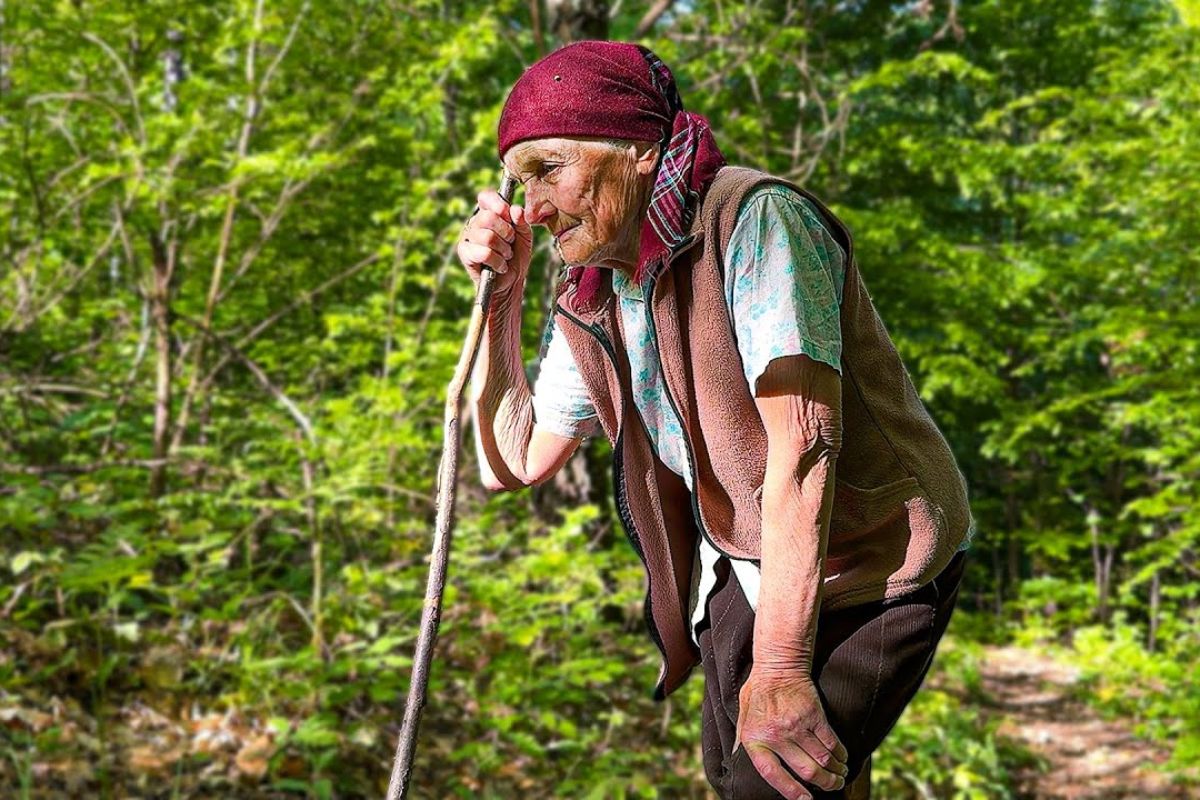


At 84 Years Old and With Eight Raised Children, She Lives Alone in a Remote Village in the Mountains, Tends to the Well, Makes Cheese, Bakes Corn Bread, Visits Her Neighbor, and Insists on Working Every Day, Challenging Fatigue, Loneliness, and the Forgetting of Those Left Behind There.
At 84, Nadiya from Lazy village, in the Transcarpathian region of Ukraine, a mother of eight, lives alone in a small village in the mountains, surrounded by steep slopes, dirt trails, and silence. Her husband died in 2017 at the age of 90, and one of her sons was taken by diphtheria at the age of eight. Even so, she hasn’t stopped. Every day, she gets up early, tends to the well, prepares food, watches the pasture, organizes the house, and keeps repeating the phrase that has become her routine: “I don’t have time to chat, I have a lot of work.”
Far from her married children and with no one living next door, she lives alone, but refuses to see herself as fragile. She struggles to walk up and down the hill, but without giving up, she is grateful that she no longer has to carry buckets of water for kilometers, preserves the 60-year-old trough where she still kneads bread, and lovingly keeps the photos of the family and the medals that tell the story of a lifetime of effort.
The Hard Routine of Those Who Haven’t Stopped Working

In the mountain village, the elderly woman’s routine starts early and ends late. Even at 84, she works non-stop, repeating tasks she did when she was in her 30s or 40s.
-
China is building a city in Brazil: a complex with an investment of R$ 5.5 billion comes to light, but allegations involving workers draw attention.
-
While Argentina buys old war equipment, Brazil is keeping an eye open and joins the select group of nations with advanced military technology by investing $5.2 billion, producing 36 Gripen fighters in the country, and reducing operational costs.

-
Brazil on alert? Why invading Brazil is a NIGHTMARE for the USA: 8.5 million km², 213 million inhabitants, Amazon covering 60% of the territory, trillion-dollar war, and resistance that even 13,000 aircraft could not control.

-
How to build a floating island from scratch with reeds, giant blocks, and stakes in the lake in a process that needs to be repeated almost every day.
In the past, she harvested the entire field alone while her husband spent most of his time away at work.
Today, she herself admits that she has had enough, that she doesn’t intend to cultivate everything as before, but still takes care of the land, watches the apples, collects what she can, and speaks fondly of the fruit-laden trees.
Every day, she practically confirms what it means to age away from the city. Climbing the mountain is difficult, going down is a bit easier, but the journey still requires breath and balance.

Even so, she continues, step by step, because she needs to fetch water, watch the land, take care of the house, and ensure that nothing is lacking. Between tasks, she talks to the trees, with the animals, strokes the cat, and treats the place as a living part of the family she has built.
Well, Water, and Simple Technology to Survive in the Mountains

One of the central points of the life of someone who lives alone in the mountains is water. In the past, she recalls, people would walk up to 2 kilometers, carrying full buckets, going up and down, whether under the sun or in the cold.
Today, she is grateful that she no longer has to do that. She goes into the woods, follows the trail, arrives at a well about two meters deep, and supports herself with a rope tied to a tree to avoid accidents.

There, a motor installed two years ago pumps the water from the well and pushes the liquid through a cable buried in the mountain, about 200 meters uphill to the house.
It’s a simple but decisive solution. She takes pride in the equipment, says the motor works well, and that there is always water in the summer, even though the well isn’t very deep.

This combination of physical effort and small technical resources allows her to continue living alone with autonomy, without abandoning the place where she built her own life.
Cheese, Corn Bread, and Hand-Made Rustic Food
Inside the house, the kitchen is the heart of the routine. The old wooden trough, with about 60 years of use, remains sturdy, serving to knead dough. She prepares “klyag,” a whey similar to sour milk, pouring it gradually and mixing gently until it reaches the right consistency.
The cheese she produces comes from the milk of her own cows, milked at night and in the morning. With this milk, she makes fresh and simple cheeses, the direct result of daily work.
In the pantry, she proudly recalls that, just last year, she consumed two or even three sacks of dried mushrooms, saved for winter and used in soups and rustic dishes.
At bread time, she mixes corn flour with homemade kefir, shapes the dough, puts everything in the home oven, and fills the environment with the smell of cake and corn pie.
Homemade cakes and corn pie are part of her daily life, always preceded by a prayer before eating, a ritual that blends faith, gratitude, and discipline.
Neighborhood Ties Amidst Loneliness
Although she lives alone, she is not completely isolated. There is a neighbor in the same region of the village, another woman who also endures the hard daily life of the mountains. Whenever she can, the elderly woman walks slowly to her friend’s house.
She brings simple gifts, but full of meaning, like popcorn and homemade corn bread made by her own hands. The reception is warm, with thanks, hugs, and invitations for her to come by more often.
In their conversation, they talk about luck when they manage to get a ride to the city center and back, share stories about their children, the swing built by relatives, and the boys at school who want to take pictures.
The neighbor wishes for her to live to 100, thanks her for the visit, and invites her to her house for Easter. These brief encounters break the harshness of isolation and show that, even in small villages, neighborhood ties remain an important form of emotional support.
Memories of Her Husband, Children, and a Life of Courage
Inside the house, the walls are covered with old photos. She shows her daughter when she was a bride, daughter Nadia with her father, the oldest daughter, the youngest, her brother, the neighbors, and herself next to her son Vasyl.
In one of the images, still young, around 35, she sees herself with another body, another rhythm, but the same determination. Each photograph is a concrete reminder that the house was once full of people, of voices, footsteps, and children’s laughter.
On the shelf, next to the photos, are the medals. There is the “For Courage” medal received by her husband, and the “Heroine Mother” medal awarded for raising eight children under difficult conditions.
She recounts that she lived with her husband from 1959 to 2017, when he died at 90 years and 2 months. She speaks of him with respect and affection. She says he was a good man who loved children, worked hard, and never offended his wife or children.
One of the boys died of diphtheria at the age of eight, a pain that never disappeared but that she learned to bear.
Today, seven children are alive, most of them married, one still single. The old clothes she no longer wears she thinks of donating, without excessive attachment, but with the awareness that they are part of a long story. Amid memories, mourning, and pride, she continues living alone in the mountains, with a house full of memories and a yard full of chores.
Active Old Age, Faith, and Resilience in a Village that is Emptying

At 84, the elderly woman does not see herself as a victim but as a survivor of a time when almost everything depended on her own physical strength.
Her husband is gone, some neighbors have left, one of her sons died young, and the village seems increasingly empty. Nevertheless, she maintains her routine, makes cheese, bread, dries mushrooms, cares for her water supply, and is thankful she can still climb up and down the mountain.
She knows that in many places, people her age are in nursing homes or living with relatives. Not her.
She chose to keep going and still manages to cope, even facing fatigue, loneliness, and the weight of years. Between the well, the oven, the photos, the medals, and the visit to her neighbor, her life reflects an active old age marked by work, faith, and silent resilience.
Could you imagine your old age living in such an isolated place, or would you find it impossible to maintain a life of work and independence in the mountains?







Onde mora?
Onde mora a senhora? Isso, para que não pareça ficção.
Repito q uma mãe não mediria esforços para vê, saber como os filhos estão. Já o contrário, raramente ocorre. Só o grande Deus e o Espírito Santo pra sustentá-la e cuidar do dia a dia dela. Graças a Deus q Ele vê tudo.