





 Portuguese
  English
  Spanish
 5 min of reading
  1 comment


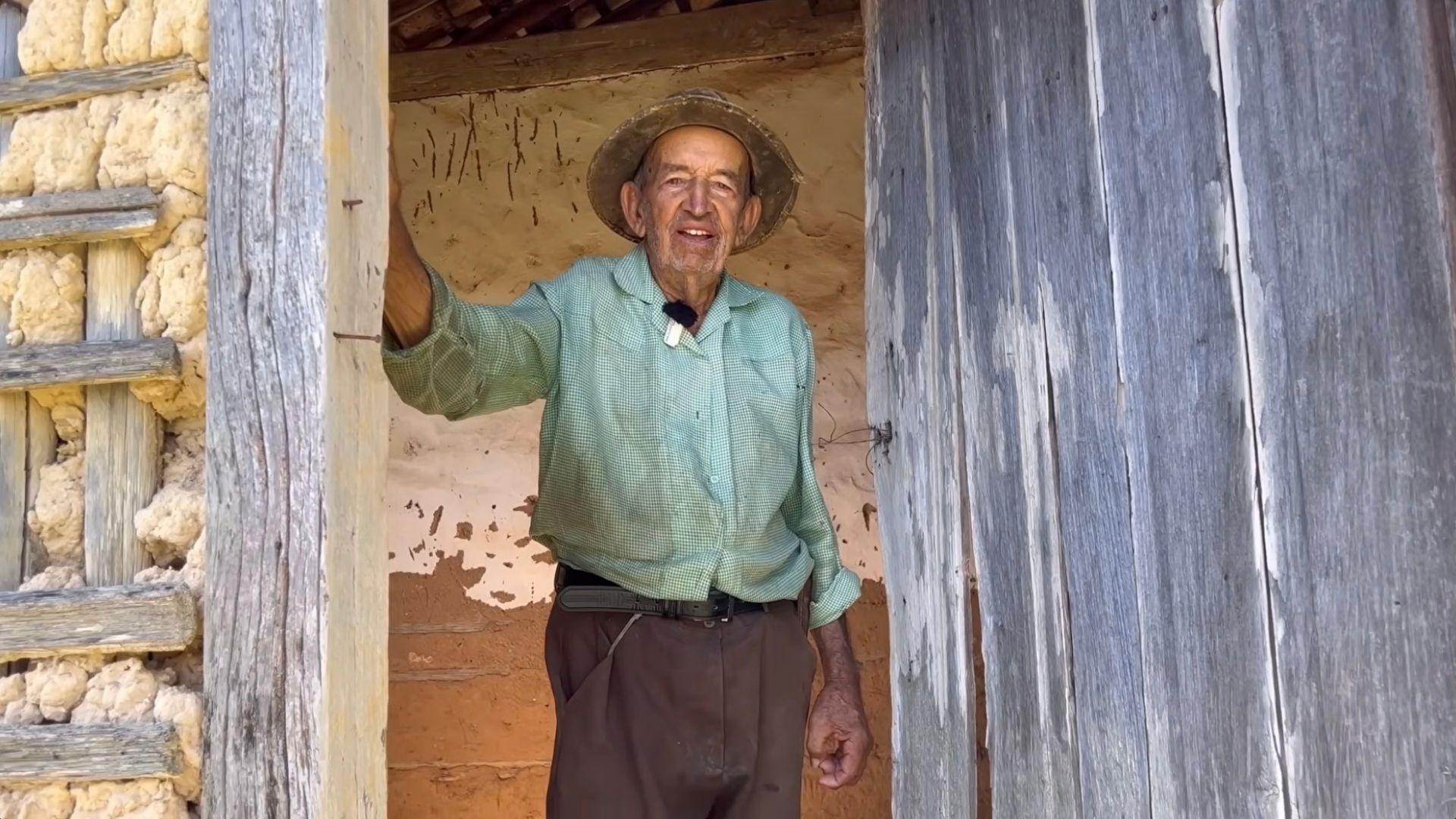


Among Dirt Roads, Fresh Brewed Coffee, and a House Marked with the Date of 1895, the Simple and Resilient Routine of an Elderly Couple Reveals How Rural Work, Faith, and Care for the Land Span Generations and Withstand Time
Right at the beginning of the journey, on the route between São Roque and São João Batista da Canastra, a small mud-walled house by the roadside catches the eye. At first glance, it seems just another old building in the interior of Minas Gerais. However, upon stopping for a simple conversation, one discovers that this place holds over 135 years of history, hard work, and the living memory of rural Brazil.
The information was released through an audiovisual account recorded during the visit to the site, where residents and visitors share stories, customs, and details of life in the countryside, according to the record made on-site. Thus, what would be just a quick stop transforms into a deep dive into a century-old story.
The Mud-Walled House That Has Withstood Since 1895

Upon entering the building, one detail immediately catches the eye: an old mark on the wood stove indicates the date “1800 and 95”, referring to the year 1895. Although the residents claim that the house might be even older, this inscription officially confirms that the structure has crossed three centuries, enduring time, changes, and the transformations of modern life.
-
He started running at 66 years old, broke records at 82, and is now a subject of study for having a metabolic age comparable to that of a 20-year-old, in a case that is intriguing scientists and inspiring the world.

-
Oldest tree on the planet reappears after 130 years of searches: Wattieza, 385 million years old, was 10 meters tall and had no leaves or seeds; Gilboa fossils in New York solved the mystery in 2007.

-
A 48-square-meter house assembled in hours with 4,000 bricks made of recycled plastic that does not absorb moisture, has natural thermal insulation, and costs less than 90,000 reais in a complete kit.

-
Luciano Hang revealed that Havan’s air fleet has already accumulated more than 20,000 landings, 10,000 flight hours, and 6 million kilometers traveled, and he says that without the planes, the company would never have grown so quickly.


Moreover, the house has undergone adaptations over the years. Some woods were reused, others cut and manually adjusted, highlighting ancient construction techniques. According to reports, there was an even larger house where one could fit a bullock cart underneath the structure, underscoring the historical importance of the property to the region.
Meanwhile, marks on the walls reveal records of daily life: old notes, accounts handwritten, and even references to kilometers traveled by a car that the family had in the past. Each detail helps tell a story that is not found in books, but in the walls, on the ground, and in the memory of those who live there.
Work, Family, and Resilience in the Countryside
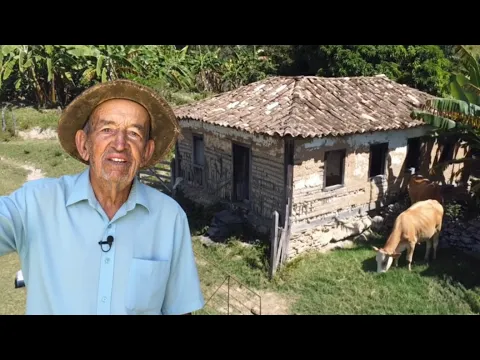

Now 86 years old, the farmer known as seu Benedito — or simply “seu Dito” — still maintains an active routine. Even with natural limitations of age and some hearing impairment, he continues milking cows, taking care of the animals, and meticulously preserving the area around the house.
By his side is dona Valentina, aged 82, a lifelong companion. The couple has an impressive 65 years of marriage, which began on June 19, 1958, when he was just 16 years old. Together, they raised nine children, all born in their own home, at a time when there were no prenatal visits, exams, or frequent medical assistance in the countryside.
Moreover, the routine has always been marked by intense work. Dona Valentina milked cows, made cheese, cooked on the wood stove, and also took care of the livestock and the crops. Even after an accident in 2019, when she broke her leg and had to stop riding horses, she remains active within her capabilities, maintaining care for the house and the food.
From Farm to Table: Simplicity and Hospitality
One of the most striking aspects is the hospitality. Right upon arrival, visitors are invited to lunch, have coffee, and sample homemade sweet bread. The coffee, brewed fresh, follows the residents’ taste: milder and slightly sweet, a symbol of a simple and welcoming tradition.
The garden surrounding the house impresses with its care. There are lettuce, onions, garlic, cassava, and even a heavy-bearing squash plant, something rare for those not used to the countryside. Furthermore, manually constructed stone walls surround the property, some built by seu Benedito himself, reinforcing the artisanal work that has marked his life.
Even after decades, the place remains organized, clean, and functional. Each space carries signs of care, reinforcing that simplicity is not linked to a lack of attention, but rather a choice of lifestyle.
Dangerous Roads and Painful Memories
However, not all stories are light. During the conversation, the couple recalls family losses and the dangers of the region’s roads. A nephew died less than two months ago in an accident involving a truck, highlighting the harsh reality faced by those who live and travel in the countryside.
Still, faith remains present. Dona Valentina emphasizes the importance of giving thanks daily, recognizing her own health and that of her children as a blessing. According to her, even if she spent the entire day giving thanks, it would still be too little considering everything they have lived through.
A Living Portrait of Rural Brazil That Endures
At the end of the visit, it becomes clear that the house is not just an old construction. It represents a way of life that withstands the test of time, rapid modernization, and oblivion. The story of seu Benedito and dona Valentina shows that it is possible to age with dignity, maintaining ties to the land, family, and one’s own roots.
More than numbers — 86 years of life, 65 years of marriage, a house over 135 years old, and marks from 1895 — what remains is the example of resilience, simplicity, and humanity. A true living cultural heritage of the interior of Minas Gerais.
Do you believe that stories like this still exist in many places in Brazil or are they becoming increasingly rare? Have you ever met someone with a similar life?
Source: NA ROÇA and EDUARDO PÁDUA









Parabéns pela parada neste lar. A fé, trabalho e amor com caridade aos vizinhos, com certeza, é a base dessa vida. Falaram pouco na reportagem. Não falaram dos filhos. Com certeza são bons frutos, dados o ambiente da criação.