





 Portuguese
  English
  Spanish
  5 min of reading
  0 comments


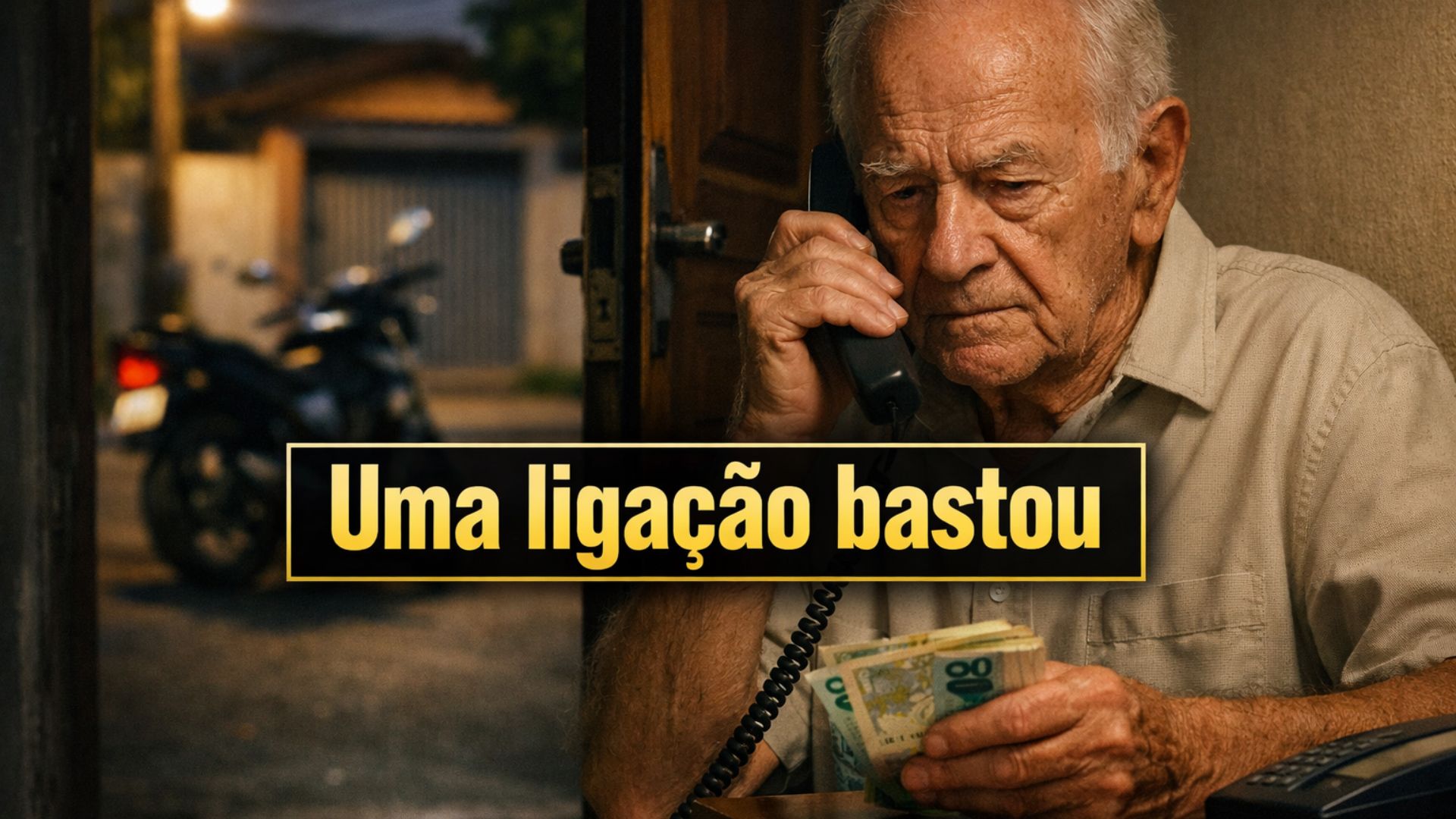
Phone Scam With False Emergency Situation Led Elderly Man to Believe His Son Was in Danger, Resulting in the Delivery of Cash After Face-to-Face Approach in West Zone of Ribeirão Preto, According to Registration by Civil Police.
An elderly man aged 91 lost R$ 1,000 after falling for a kidnapping scam in Vila Virgínia, West Zone of Ribeirão Preto.
The incident occurred on Monday, December 15, and was registered as fraud at the Permanent Judicial Police Central (CPJ), according to the police report.
According to the police report, the elderly man received a call in which the voice of the caller resembled that of his son.
-
São Paulo has connected its two airports by rail for the first time in history, and now you can travel by train from Congonhas to Guarulhos for just R$ 5.40. However, the journey requires four transfers, takes about two hours, and only operates during a narrow time window that almost no one can use.

-
The savings of Brazilians are depleting: savings accounts recorded the third consecutive month of withdrawals, with over R$ 41 billion taken out in the first quarter of 2026, the largest outflow in an entire year.

-
Curitiba will have a direct flight to Europe starting in July, and for the first time in history, Paraná will have a continuous air connection with Europe, saving three hours of travel for passengers who previously needed to connect in São Paulo.

-
The federal government will cancel Bolsa Família and other benefits for millions of Brazilians who do not update their CadÚnico in 2026, and the new system already cross-references data with the Federal Revenue Service in real time to identify those who are irregular.
During the call, the criminal claimed that the family member had been kidnapped and demanded money for his release, initially requesting transfer via Pix.
The retiree reported that he was unable to make the transaction and subsequently delivered cash to a man who came to his house on a motorcycle.
Call Faked a SOS From Son
The police report indicates that the approach began by phone, arguing that the victim’s son was held by kidnappers.
The tactic, common in this type of scam, exploits urgency and attempts to prevent the person from hanging up to seek confirmation from other relatives.
According to the recorded account, when the request for a Pix transfer arose, the elderly man said that he did not know how to carry out the transaction.
In the report, he stated that he “did not know how to make the transfer,” but he could deliver cash that he had kept at home.
At that moment, according to the description in the police report, the retiree informed that the amount available was from his pension.
This information, relayed under emotional pressure, served as a basis for the criminal to maintain the demand for immediate payment.
Motorcyclist Went to the House to Collect the Money
After the phone conversation, a man went to the elderly man’s residence.
The report states that the person arrived on a motorcycle and received the money directly from the victim at the front door.
The amount delivered was R$ 1,000.
After taking the money, the suspect left the location.
Only after the motorcyclist’s departure did the elderly man realize that he had been deceived, according to the police report.
Case Was Registered as Fraud
The case was formalized at the Permanent CPJ as fraud.
The Civil Police should investigate how the criminal obtained the victim’s phone number, what strategy was used to simulate the voice of the son, and if there are others involved in the scheme.
As of the occurrence report, there was no public information about identified suspects, arrests, or recovery of the money.
How the Kidnapping Scam Works
The kidnapping scam is a fraud in which criminals make contact by phone and simulate an emergency involving a relative.
Entities in the banking sector describe that, frequently, the scammer provokes the victim with phrases that lead the person to complete information.
Next, another criminal takes over the call to demand immediate payment as “ransom.”
Despite presenting itself as a kidnapping, the goal is to obtain money quickly, before the victim can check if the relative is safe.
For this reason, the request is usually made urgently and with instructions for the person not to hang up and not to seek third parties.
Public Guidelines to Avoid This Type of Fraud
The São Paulo Public Security Secretariat has already released public guidelines on scams based on phone calls claiming kidnappings.
The general recommendation is to interrupt the call and try to confirm, through other means, if the supposed victim is safe.
Direct contact with the relative or with close individuals is pointed out as a way of immediate verification.
Another practice suggested in guidance materials is to seek help from someone trustworthy, especially when the individual is alone and under pressure.
In such situations, the presence of a neighbor or relative can help avoid decisions made out of fear.
In cases of Pix requests, the Central Bank advises that the victim notify the bank or payment institution as soon as possible.
Filing a police report is also recommended so that applicable measures can be evaluated.
Case in Ribeirão Preto Follows Known Pattern
In Ribeirão Preto, the episode recorded in Vila Virgínia follows the script described in public alerts.
There was a phone call simulating a relative, a demand for urgent payment, and quick withdrawal of cash.
The difference in this case is that the payment ended up being made in cash, with a motorcyclist going to the elderly man’s home to collect the amount.
The report states that the victim, when pressured, informed that he had money at home.
The report includes the phrase “had the money at home,” which led the criminal to go to the address.
Elders Are Among the Primary Targets
Phone scams repeatedly target elderly individuals, especially when they involve emergency stories about family members.
Alerts from entities in the banking sector highlight that criminals rely on emotion and a sense of urgency to prevent basic verifications.
In incidents like the one recorded in Ribeirão Preto, the combination of psychological pressure and quick execution usually reduces the victim’s reaction time.
Still, authorities emphasize that interrupting contact and confirming the situation through independent channels is a central step to break the scam’s dynamic.
With the investigation ongoing, what simple measures within the home and routine phone calls can help families reduce the risk of elderly individuals being pressured and ultimately handing over money to criminals?








Seja o primeiro a reagir!