





 Portuguese
  English
  Spanish
  5 min of reading
  0 comments


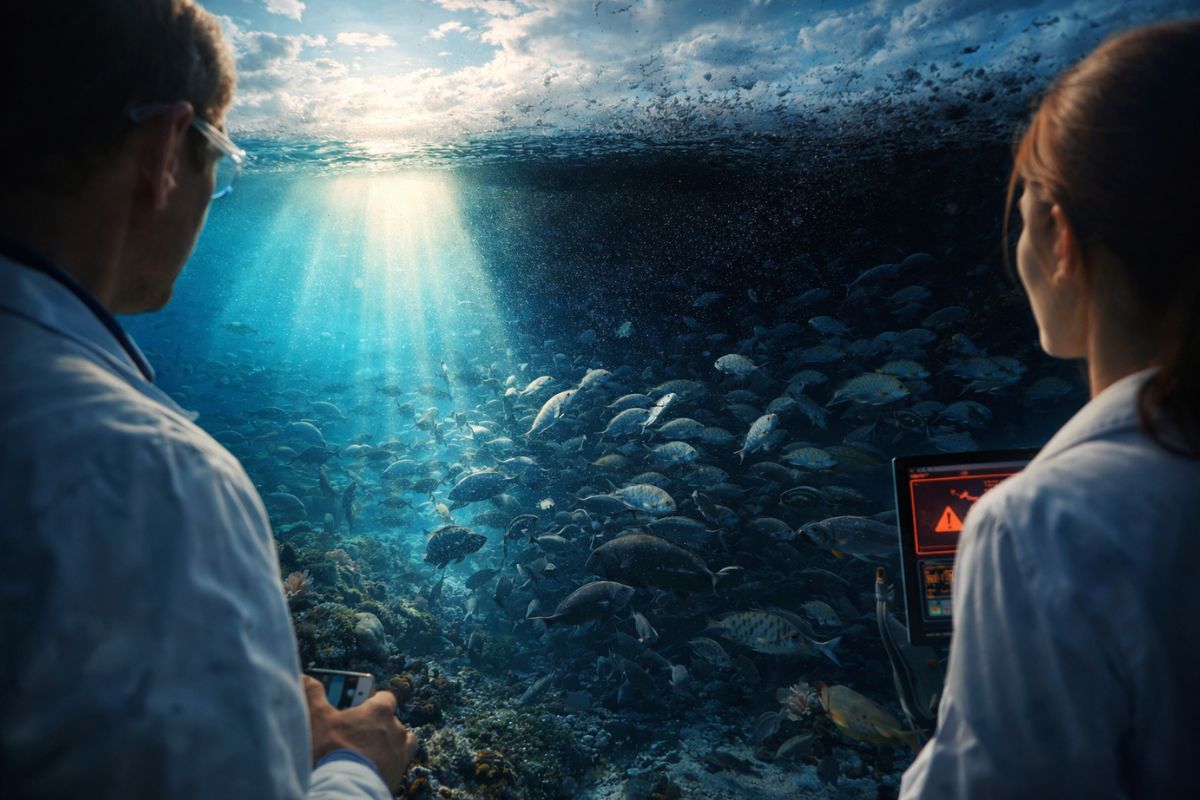
Call For Oceans Blackout, The Darkening Of The Oceans Reduces The Euphotic Zone And Can Last For Weeks. Study From The University Of Plymouth, With Satellite Data From NASA, Indicates A 21% Decrease In Light In The Ocean Between 2003 And 2022, Affecting 75 Million Km² And Pressuring Marine Life.
The blackout in the oceans has ceased to be a metaphor and has become a measurable signal for researchers: vast areas of the sea are losing luminosity at an accelerated pace, plunging entire regions into darkness for weeks and pressuring marine life, according to a survey based on satellite data from NASA.
The process, scientifically known as ocean darkening, was documented in a study led by the University of Plymouth in the United Kingdom. Between 2003 and 2022, the research indicates that 21% of the global ocean, an area larger than 75 million square kilometers, experienced significant reduction in solar light penetration.
What Does Oceans Blackout Mean In Practice

Oceans blackout is the popular label for the loss of luminosity in marine areas.
-
The most famous volcano in the world could paralyze one of the largest metropolises on the planet: Japan accelerates emergency plans for the eruption of Mount Fuji, which could bury Tokyo in ash for over two consecutive weeks.

-
The United States has a serious problem with its F-35s: China is already producing fighters at a pace that exceeds American capacity and could manufacture up to 300 aircraft per year before the end of the decade, shifting the global military balance.

-
Remains with battle wounds of over 100 soldiers from the Roman Empire are found beneath a football field in Vienna, leaving everyone surprised.

-
Elon Musk notes Brazil and lowers the price of his internet, Starlink, promising to connect all corners of the country with affordable plans, 10,000 satellites, and 1 million active users in the national territory!


The central explanation of the study is physical and biological: when water contains higher amounts of sediments, organic matter, and microorganisms, the passage of light decreases, and the darkening of the oceans intensifies.
The most direct effect appears in the euphotic zone, the illuminated layer of the ocean where photosynthesis occurs and that hosts about 90% of marine life.
When the euphotic zone shrinks, the available space for light-dependent organisms is reduced, and the blackout in the oceans begins to reorganize the environment where fish and other animals seek food and reproduce.
The Scope Of The Study And The Global Scale Of Light Loss

The picture of the oceans blackout was built based on satellite data from NASA and a study led by the University of Plymouth.
From 2003 to 2022, the research identifies significant reduction in solar light penetration in 21% of the global ocean, equivalent to over 75 million square kilometers.
According to the survey, in 9% of the oceans, the depth of the euphotic zone decreased by more than 50 meters.
In 2.6% of the ocean, the reduction exceeded 100 meters, an area described as close to the size of an entire continent.
For the University of Plymouth, these numbers indicate a silent and wide-ranging change, detectable via satellite and difficult to observe with the naked eye.
Smaller Euphotic Zone And The Impact On Light-Dependent Animals
The blackout in the oceans affects the vertical space where marine life concentrates.
By reducing the euphotic zone, ocean darkening compresses the habitat available for species that depend on sunlight and even moonlight to survive and reproduce.
Associate Professor of Marine Conservation Thomas Davies from the University of Plymouth summarizes the effect in one sentence:
“These changes drastically reduce the available space for animals that depend on the sun and even the moonlight.”
The technical reading is that when the euphotic zone retreats by dozens of meters, ecological pressure increases without requiring a visible event on the surface.
Phytoplankton, Oxygen, And The Food Chain Under Pressure
The basis of the alert about the blackout in the oceans lies in the dependence on photosynthesis.
The reduction of light directly affects phytoplankton, the foundation of the marine food chain and responsible for a significant portion of the oxygen produced on the planet.
With less light available in the euphotic zone, the darkening of the oceans shortens the space where this process sustains marine life.
Besides phytoplankton, the study points out impacts on fish stocks, climate balance, and essential ecosystem services.
Thomas Davies from the University of Plymouth reinforces the connection between the ocean and everyday life:
“We depend on the ocean for the air we breathe, the food we consume, and even for combating climate change.”
Where The Darkening Of The Oceans Is Most Intense And Where The Sea Has Cleared Up
The data indicate that the darkening of the oceans is especially evident in regions already heavily impacted by global warming, such as the Arctic, Antarctica, and areas in the Gulf of Mexico.
In coastal zones and enclosed seas, like the Baltic Sea, the problem is worsened by increased rainfall and the runoff of sediments and nutrients from agricultural activity.
The scenario, however, is not uniform.
Approximately 10% of the world’s oceans have become clearer during the same analyzed period, showing that the response varies depending on local conditions, such as ocean currents and plankton composition.
Even so, when the blackout in the oceans appears over large areas, the trend draws attention for being perceived on a global scale via NASA and analyzed by the University of Plymouth.
Why The Blackout In The Oceans Happens Out Of Sight
Unlike more visible effects, such as melting glaciers or rising sea levels, the blackout in the oceans advances in areas far from the everyday reality of most people.
The change is linked to luminosity and the depth of the euphotic zone, parameters that are not easily observable without instruments and without historical series.
The consequence is an invisible transformation that can last for weeks, with the potential to alter the distribution of marine life and affect processes related to oxygen, food, and global climate.
This is why the darkening of the oceans, documented by the University of Plymouth with data from NASA, enters the radar as a critical indicator of environmental change.
The blackout in the oceans describes the accelerated loss of luminosity over vast areas of the sea and the reduction of the euphotic zone where photosynthesis occurs and marine life concentrates.
Between 2003 and 2022, the University of Plymouth, with satellite data from NASA, identified a significant decrease in light in 21% of the global ocean and reductions of dozens of meters in the depth of this layer.
If you follow climate, fishing, or biodiversity, it is worth monitoring how the darkening of the oceans appears in historical series and discussing the topic with marine science professionals, as the change occurs far from the coast and outside of the everyday field of vision.
Which aspect of the oceans blackout do you think is the most dangerous: the decline of the euphotic zone, the impact on phytoplankton, or the pressure on fish and oxygen?








-

-

-

-

4 pessoas reagiram a isso.