





 Portuguese
  English
  Spanish
  4 min of reading
  3 comments


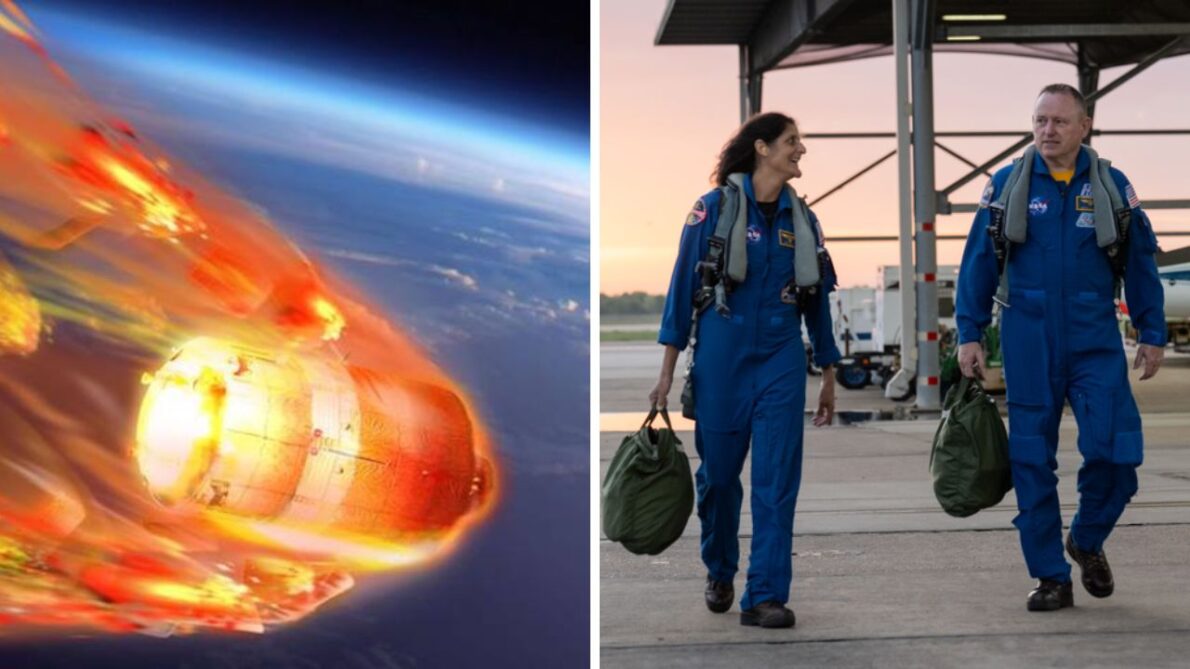

NASA Analyzes Critical Options To Bring Astronauts Back To Earth, But All Involve Significant Risks That Could Be Fatal.
Astronauts Barry Wilmore and Sunita Williams are living in a tense and potentially fatal situation aboard the International Space Station (ISS). As NASA faces a crucial decision, three possible scenarios for the return of the astronauts to Earth are being evaluated. However, all these scenarios present risks that could jeopardize the crew’s lives.
A mission to return astronauts Wilmore and Williams has become a race against time. After a series of critical failures in Boeing’s Starliner spacecraft, which included helium leaks and the failure of five thrusters during docking, NASA needs to quickly decide how to safely bring the astronauts back to Earth.
First Scenario For The Return Of The Astronauts
The first scenario considered by NASA is to return the astronauts in the very Starliner that took them to space. Boeing, responsible for the spacecraft, still argues that this is the best option despite the reported issues. The company argues that since the faulty valves were kept closed during their stay at the ISS, the leaks should not affect the un-docking and re-entry. If this option is chosen, the return of the astronauts is expected to be on September 2.
-
Scientists detect a rare and frightening phenomenon in the Pacific Ocean that could trigger a devastating Super El Niño as early as 2026, and American experts say it is one of the strongest ever recorded in history.

-
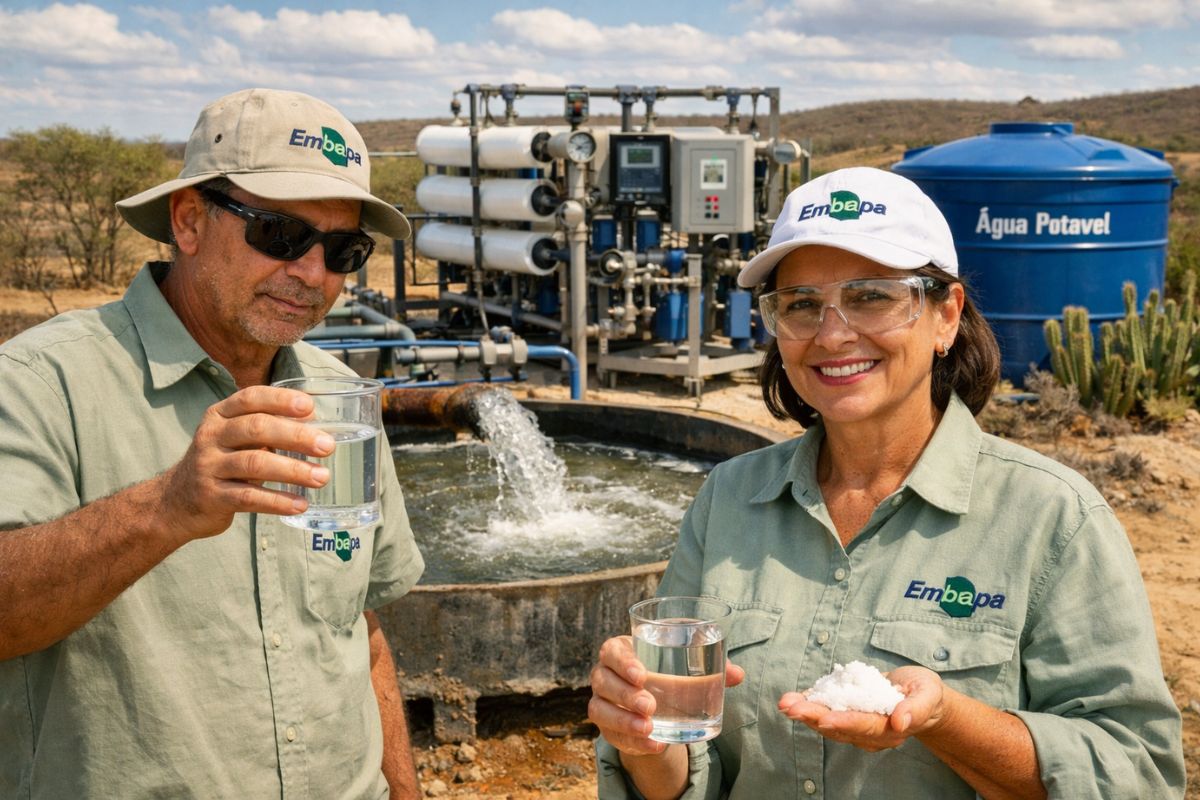
Researchers from Embrapa have discovered how to transform the saline water found in 140,000 wells in the Brazilian Semi-Arid region into a tool for producing food in an area where agriculture has always relied solely on rainfall.
-
China inaugurates a ghost factory that operates in the dark 24 hours a day without any human workers and produces 10 million smartphones a year using 97% of equipment developed by the company itself.

-
Scientists create a semiconductor that mimics the human brain using hydrogen and boost a new generation of smart chips with learning capabilities and the potential to revolutionize artificial intelligence applications.


Second Safer Scenario Is Being Considered By NASA
However, a second, safer scenario is being considered: the return of the astronauts aboard SpaceX’s Crew Dragon spacecraft. In this case, the Starliner would return to Earth without anyone on board, while Wilmore and Williams would come back as part of SpaceX’s Crew-9 mission. The disadvantage of this option is that the Crew-9 mission is not scheduled to return until February, which would mean the astronauts would have to remain at the ISS for about eight months, a much longer period than initially planned.
Third Scenario Is Extremely Dangerous
The biggest concern, however, lies with a third, less discussed, but extremely dangerous scenario. Rudy Ridolfi, former commander of the U.S. military space systems, warned of the severe consequences that could occur if the Starliner’s re-entry is not performed correctly.
Ridolfi explained that the alignment of the spacecraft’s service module is crucial for a safe re-entry. If the alignment is incorrect, the astronauts could face three lethal scenarios:
Trapped With Limited Oxygen: If the Starliner attempts to re-enter at an improper angle, the capsule could bounce off the Earth’s atmosphere and remain in orbit. With defective thrusters and only 96 hours of available oxygen, the astronauts would be trapped in space.
Re-entry Failure: If the spacecraft fails to fully re-enter the atmosphere due to misalignment, it would remain indefinitely in orbit, with no possibility of returning to Earth.
Vaporization Upon Re-entry: The worst-case scenario would be re-entry at a very steep angle, which could cause the Starliner’s thermal shield to fail. The extreme friction and heat would result in the spacecraft burning up before reaching the surface, leading to the loss of the astronauts.
Gravity Of The Decision That NASA Needs To Make
These dramatic scenarios reveal the gravity of the decision that NASA needs to make. The agency, known for its strict safety culture, has a history marked by tragedies such as the Challenger and Columbia space shuttles, which claimed the lives of 14 astronauts. Therefore, NASA is carefully weighing all options before making a final decision.
Astronauts Wilmore And Williams Are Aware Of The Challenges At The International Space Station
Meanwhile, the astronauts Wilmore and Williams continue to receive guidance from Earth. Joe Hace, head of NASA’s astronaut office, stated that the crew is aware of the challenges and is prepared to face any eventuality. “We are human, and this is tough for the crew and their families, but as professional astronauts, they are handling the situation admirably,” said Hace.
The global space community is anxiously awaiting NASA’s decision, knowing that not only the fate of the two astronauts is at stake, but also the future of space missions and the safety protocols that will guide the next decades of space exploration.
I would like to know your opinion on this delicate situation faced by astronauts Barry Wilmore and Sunita Williams. How do you think NASA should proceed given these risky scenarios?







Se a NASA consegue enviar pessoas para o espaço deveria ter a resposta para episódios como esse antes de acontecer, sendo que no espaço tudo é possível. É falta de preparação. Por a vida de pessoas em risco para dizer: nós chegamos lá… Incompetência.
Voltar só em Fevereiro, com a missão da Dragon crew na Spacex.
Infelizmente, acidentes acontecem. Até hoje não se conseguiu eliminar, sequer, as ocorrências em veículos aéreos que transitam dentro da orbita terrestre. Vamos ser realistas, as viagens espaciais, considerando a proporção em que acontecem, são mínimos. Agora, uma pergunta, apesar de parecer fugir ao tema: não existe tanta coisa, ainda, a ser pesquisada na própria Terra?