Portuguese
  Spanish


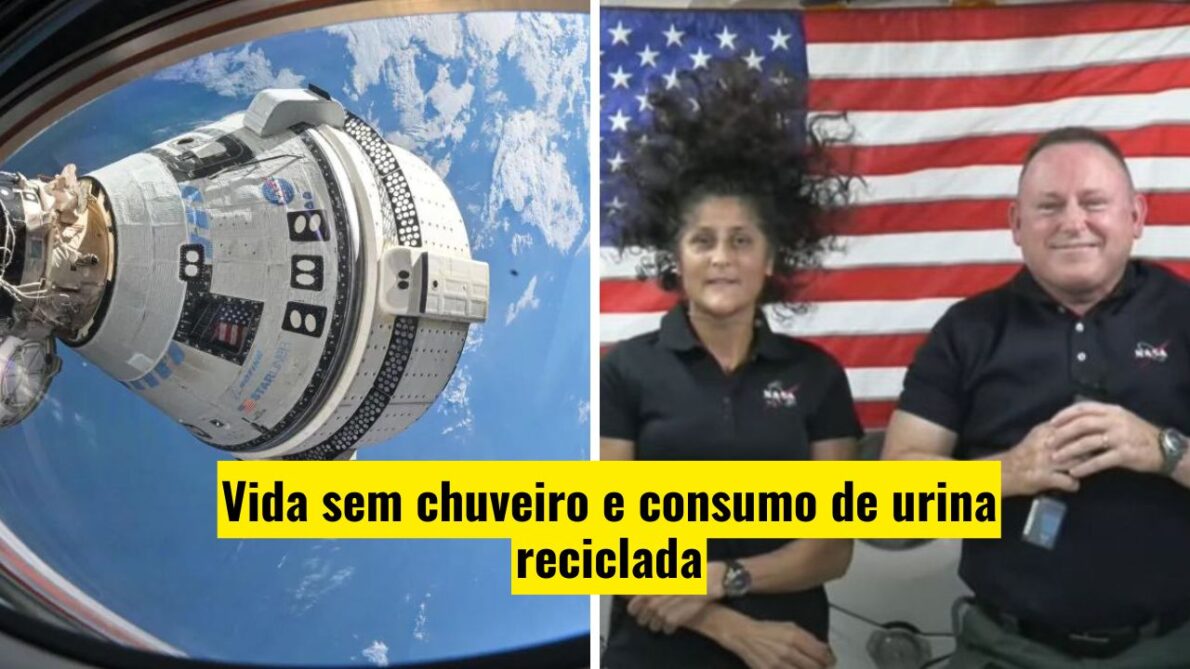

Astronauts Face Extreme Challenges at the International Space Station: Life Without Showers and Drinking Recycled Urine
Isolated in space, astronauts Butch Wilmore and Suni Williams must deal with severe conditions, such as the lack of showers and the need to drink recycled urine, during their extended mission at the International Space Station (ISS).
Life in space is full of challenges, and for astronauts Butch Wilmore and Suni Williams, the situation has become even more complicated. Due to a helium leak in the Boeing Starliner spacecraft, the two astronauts have been forced to extend their stay at the International Space Station (ISS) until February 2025. On board the ISS, Wilmore and Williams must face extreme adversities, such as the lack of showers and the necessity to drink recycled urine, an essential practice for survival in such an inhospitable environment.
How Do Astronauts Maintain Hygiene at the International Space Station?
Maintaining personal hygiene at the International Space Station is an ongoing challenge. Without the possibility of taking a shower, astronauts use soap-wet towels to clean themselves. The amount of clothing is limited, which means they can only change clothes once a week. Life on the ISS requires adaptation to these limitations, and Meganne Christians, a British astronaut, compared the experience to living in an isolated environment where reuse and recycling are key.
-
Artist’s 15-Meter Lighthouse in the Mojave Desert, 160 km from the Sea, Intrigues Visitors with 19 km Range After Years of Bureaucracy

-
Bluetti AC70 Solar-Powered Station: Powers Fridge and Wi-Fi During Blackouts, Delivers 1,000W, 3,000 Charge Cycles, Priced at $900

-
Enormous Black Hole Phoenix A* Challenges Scientific Understanding with Mass of 100 Billion Suns, Surpassing Famous TON 618 in One of the Largest Known Galaxy Clusters
-
Say Goodbye to Storing Wine in a Regular Fridge: Midea’s Climate-Controlled Cellar Holds 34 Bottles, Maintains 5-18°C, and Uses Only Half a kWh Daily


The Impact of Radiation and Zero Gravity on Astronauts’ Health
In addition to hygiene issues, astronauts at the International Space Station face other risks, such as exposure to high levels of radiation, which are significantly greater than on Earth, even with the station’s protective shielding. This exposure poses serious health risks. Moreover, the absence of gravity profoundly affects the body, causing muscles and the heart to work less, resulting in a type of accelerated aging. To combat these effects, astronauts dedicate about 90 minutes a day to physical exercises, essential for maintaining health and avoiding issues such as bone density loss and ocular problems.
Urine Recycling: A Necessity at the International Space Station
One of the most intriguing and, for many, perplexing aspects of life on the ISS is urine recycling. In space, every resource is precious, including water. The onboard system transforms urine into potable water, a vital process for the astronauts’ survival. Meganne Christians humorously highlighted this reality by saying that “yesterday’s coffee is today’s coffee.” The ISS’s toilet system is quite different from what we are used to on Earth, with a conical hose used to collect urine and a small toilet seat for solid waste.
Mission of Butch Wilmore and Suni Williams
The mission of Butch Wilmore and Suni Williams, which was initially intended to last only eight days, has been extended indefinitely due to technical issues, such as helium leaks and propulsion failures. Both astronauts are former test pilots for the United States Navy and were selected for the first crewed mission of Starliner to the International Space Station, launched from Florida in June 2023. Now, isolated in space for a much longer period than planned, the astronauts are facing not only physical challenges but also the boredom and frustration of a mission that seems never-ending.
The situation of Wilmore and Williams at the International Space Station is a clear example of the extreme difficulties that astronauts face when living in space, where every resource is limited and resilience is constantly tested.
Interested in how astronauts cope with extreme challenges at the International Space Station? Share your thoughts in the comments and let us know what you think of these living conditions that are so different from ours here on Earth. Is this something you could face?