Portuguese
  Spanish



There Are Many Reasons That Lead Natural Gas Down Other Paths, But The Data Only Demonstrates How Difficult It Will Be For The Government To Lower Fuel Costs
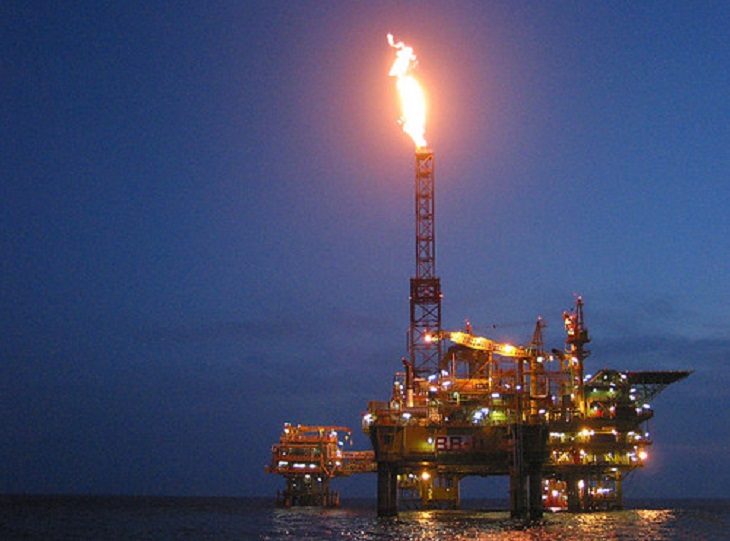
According to data from the ANP and MME, only 50% of the natural gas produced in the country reaches the market, while 36% is returned to the well in the form of reinjection, 11% is consumed on the platforms for power generation, and 3% is burned at the flare.
If we compare the volume of natural gas returned to the wells with that purchased from Bolivia, we will be even more surprised; the volume of reinjected gas is almost double from 2018 until July of this year. The scenario goes against the government’s thinking, which is to reduce fuel prices by half to enable the growth of businesses.
The practice of reinjecting natural gas into wells is common in the Brazilian market, with no limit set by the ANP for the activity. There are two reasons why operators use it to increase oil production.
One reason is to increase the well pressure and facilitate oil extraction, and the other is due to the lack of infrastructure to transport the production to the coast.
-
Brazil to Issue “Panda Bonds” in China, Aiming to Raise Up to 5 Billion Yuan at Lower Interest Rates Than Dollar Debt
-
Brazil to Issue “Panda Bonds” in China, Aiming to Raise Up to 5 Billion Yuan at Lower Interest Rates Than Dollar Debt
-
Over 2,000 Tons of Discarded Fishing Nets Since 2020 Repurposed into Durable Caps, Fins, and Parts

-
Seals and Sea Lions Lose Habitat and Food as Climate Change Advances, Impacting Ice, Prey, and Coastal Communities


The ANP is studying whether it will limit the return of fuel to the wells, but it is not an easy task, as several factors influence the establishment of volumes, such as technical and economic aspects of each field.
“I doubt that the ANP will limit the quantity. It will assess the technical solution proposed by the operator, if it is considered adequate. Operators have data to justify the volumes and discuss technically,” said the Executive Secretary of Natural Gas at the IBP, Luiz Costamilan.
According to the secretary, reinjection is the first option for oil companies in the current scenario because it prevents the decline of pressure in the reservoir. “The main objective is to maximize oil recovery from the reservoir, which reflects on the financial results,” he added.
Thus, even with the ANP stating that natural gas production in Brazil has doubled, the volume reaching the market does not keep up with this growth.
According to data from Abegás (Brazilian Association of Gas Distributing Companies), about R$ 48.7 million is reinjected into the wells daily. If this volume reached the market, there would be a 64% increase in the supply of domestic gas.
However, we need to consider that since gas injection improves production from the wells, the output without the activity would also be lower.
Infrastructure
For natural gas to reach the coast, we would need a much broader pipeline network. Brazil currently has 9,400 km of pipelines, while Argentina has 16,000 km, Europe 200,000 km, and the USA 497,000 km.
Brazilian numbers are quite modest and represent the main challenge of the “New Gas Market” program being implemented by the current federal government.
According to Abegás, investments of around US$ 19.5 billion would be necessary for transportation routes and processing units for this gas to reach consumers.
There is a proposal stalled in Congress for the creation of a fund to finance the construction of pipelines, the Brasduto, but if it becomes law, it will likely not receive the government’s sanction, as Paulo Guedes believes that investments to open the sector should come from the private sector.
Read Also! With a Focus on Pre-Salt, Petrobras Accelerates Decommissioning in the Campos Basin!