





 Portuguese
  English
  Spanish
  6 min of reading
  0 comments


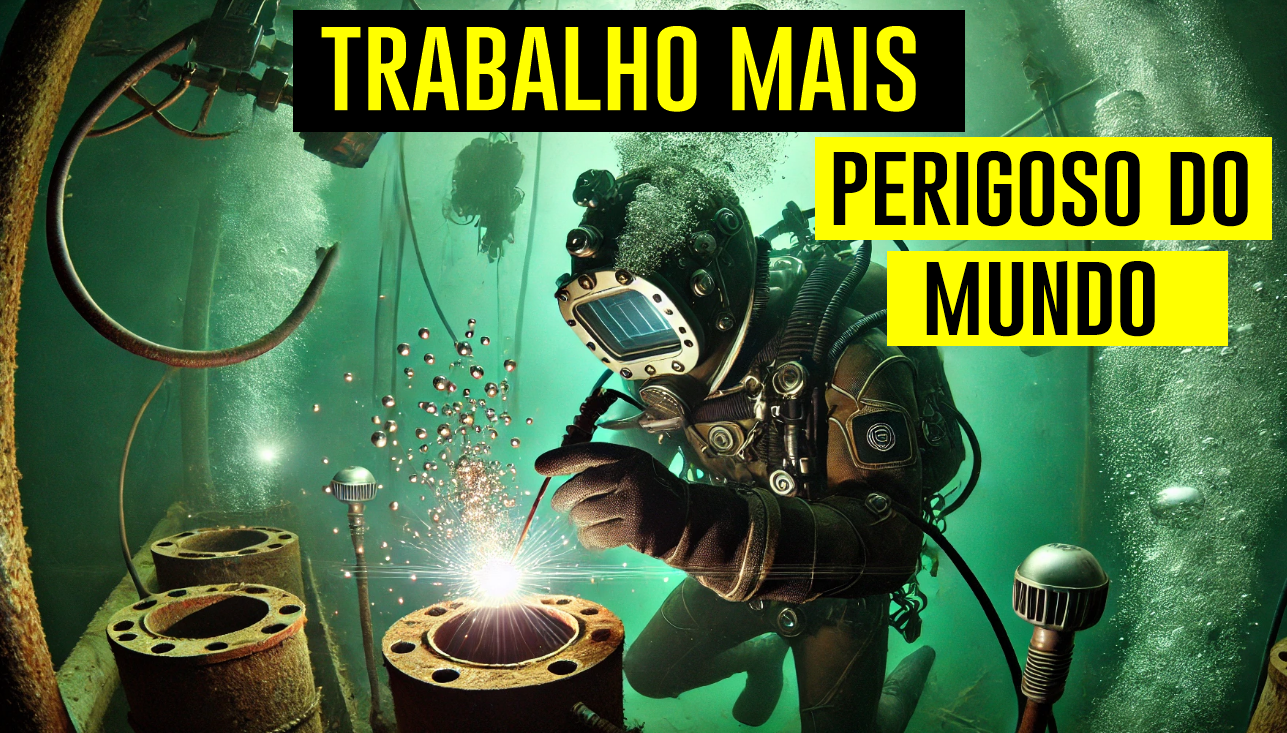
Discover The Profession Considered The Most Dangerous In The World, With Salaries Reaching BRL 20 Thousand Per Month In Brazil. Would You Take On This Challenge?
Facing extreme risks and challenging the limits of courage, one of the most dangerous jobs in the world is gaining attention in Brazil and worldwide. With salaries that can reach an impressive BRL 20 thousand per month, the profession attracts both for the remuneration and the adrenaline, but requires physical and psychological preparation and an unwavering commitment to safety. See all the details for what could be the most dangerous job in the world.
Underwater welding is a fascinating yet dangerous profession. Involving the use of electric tools in a hostile environment, underwater welders face extreme challenges to keep vital infrastructures functioning. Despite the risks, many are drawn by the possibility of high salaries and the excitement of the job.

The Work In Deep Waters: The Most Dangerous Job In The World
The day-to-day life of an underwater welder is anything but common. These professionals work in conditions of reduced visibility, low temperatures, and often in confined spaces. The main task is to join metal pieces or perform repairs on submerged structures, such as oil pipelines, oil platforms, ships, and dams.
-
There is a city in China right next to Hong Kong where people speak Portuguese, the streets have names in Portuguese, and the architecture looks like it came straight out of a historic city in Brazil.
-
Rare frog thought to be extinct after only appearing in fossils reappears, becoming a ‘living relic’ of evolution and gaining a real path to spread after combating introduced predators.

-
House without a door and without a window: a resident lives high in the mountains, says he enjoys the “free life,” mentions that the cat comes and goes hunting bats and rats, and that when it rains he wakes up with wet feet.
-
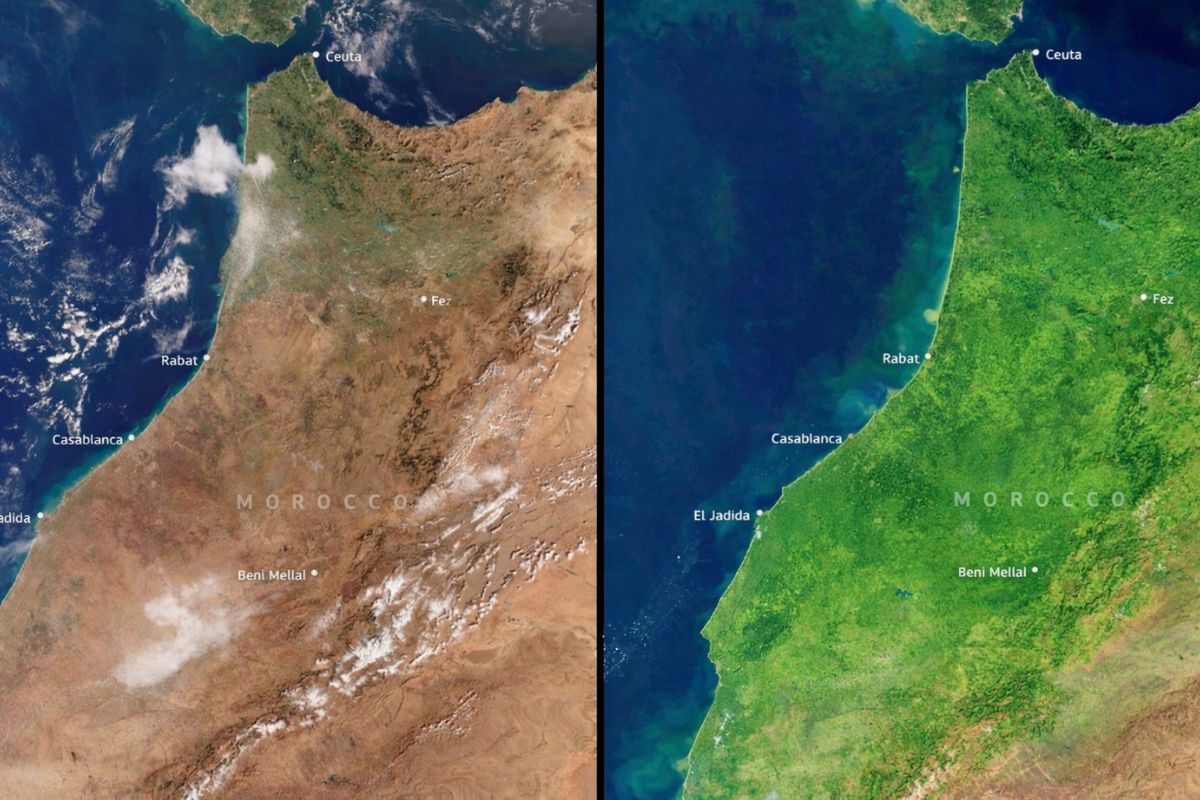
Satellite images show that Morocco became so green in 2026 that the country looks different from space: two months of heavy rains transformed arid land into dense vegetation for the first time in a decade.

To perform the most dangerous job in the world safely, the most widely used method is welding in dry hyperbaric chambers. These temporary structures create a controlled environment where water is kept away from the welding area. Inside the chambers, the pressure is adjusted to prevent diving-related issues, such as decompression sickness.
Even so, it is not always possible to use this method. In emergency situations or when access to the area is restricted, welders resort to wet welding. This method, however, significantly increases the risks, including cracks in the weld due to rapid cooling caused by water.

The Technique Behind Underwater Welding
The idea of using electricity underwater may seem absurd, but modern technology allows this to be done with relative safety. The most common technique is coated electrode welding, which uses an electric arc to generate heat and melt the metals.
During wet welding, the flow of the electrode creates a layer of bubbles around the welding area. This gas protects the weld from oxidizing compounds present in the water, ensuring the quality of the work. However, the process requires precision and knowledge, as any mistake can compromise the welder’s safety and the integrity of the weld.
Risks Of The Most Dangerous Job In The World
Welding underwater is intrinsically dangerous. Welders are constantly exposed to a series of risks, such as electrical shocks, explosions, drowning, and pressure-related illnesses. One of the greatest dangers is known as “Delta P” (differential pressure).
Delta P occurs when two bodies of water with different pressure levels meet, creating a powerful and invisible force. This pressure difference can suck the diver into narrow areas with great intensity, making escape nearly impossible. These accidents are often fatal, especially since Delta P is difficult to detect until it’s too late.
Another significant challenge is the pressure exerted by the depths. Even with the use of modern equipment, welders need to be in excellent physical and mental condition to withstand the hostile environment. If safety procedures are not strictly followed, the risks of accidents increase dramatically.
The risks of electrical shock in underwater welding are elevated due to the combination of electricity and water, which is an excellent conductor. Here are the main factors contributing to this risk:
- High Conductivity Of Water:
Water, especially when it contains mineral salts (like saltwater), conducts electricity efficiently, increasing the risk of shocks. - Poorly Insulated Equipment:
Failures in the insulation of electrical cables or equipment can lead to direct exposure of electricity to the environment. - Damaged Or Exposed Wires:
Worn or damaged wires and connections can cause short circuits and increase the risk of electrocution. - Environmental Factors:
The water turbulence, high pressure, and maritime currents can compromise the equipment or expose the welder to greater risks. - Operational Errors:
Poor grounding techniques or using the wrong equipment for underwater welding can result in electrical shocks.
Training And Certification
To become an underwater welder, much more is required than courage. Specialized training and certifications are essential. In the United States, the American Welding Society (AWS) provides the necessary qualifications for those looking to enter the profession. In other countries, local institutions regulate the training of these professionals.
The process begins with basic training in commercial diving, which teaches essential skills for working in submerged environments. Then, the candidate learns the specific techniques of underwater welding. Many commercial diving schools offer courses that combine theory and practice, preparing students for the real challenges of the profession.
After completing the training, the welder must undergo rigorous testing to obtain certification. This document is essential to work on complex projects and ensure safety during the most dangerous job in the world.
To work as an underwater welder in Brazil, it is necessary to obtain specific certifications that attest to your competence in both welding and commercial diving.
A Vital Job In Various Industries
Despite the dangers, underwater welding is indispensable in various industries. In the oil and gas exploration, for example, welders are responsible for maintaining offshore platforms and pipelines in good condition. In the naval sector, they carry out repairs on ships and submarines, ensuring that these vessels can operate safely.
Other applications include the construction and maintenance of dams, locks, and other hydraulic structures. Additionally, in nuclear facilities, these professionals play a crucial role in inspecting and repairing submerged components.
Without underwater welders, many of these operations would be impossible, highlighting the importance of the profession to the global economy.
The Future Of Underwater Welding
With technological advancements, many wonder if robots will substitute underwater welders. Indeed, there are already drones and automated equipment that perform underwater tasks. However, these devices still lack the skill and adaptability of a trained human.
While robots may execute simple tasks, underwater welding often requires quick decisions and creativity, something machines still cannot replicate. Therefore, welders continue to play a vital role, even in an increasingly automated world.
Moreover, technological advancements directly benefit welders, making their work safer and more efficient. New equipment, such as diving masks with integrated communication and heated diving suits, help reduce risks and improve working conditions.
Main Challenges
Although it is not a profession for everyone, underwater welding offers significant rewards. Salaries are attractive, especially for those who reach the top of their career. In the United States, for instance, an entry-level welder can earn around US$ 32,000 per year. With experience, this amount can exceed US$ 150,000 annually.
The salary of an underwater welder in Brazil varies according to factors such as experience, geographic location, and task complexity. On average, these professionals earn between BRL 5,000 and BRL 15,000 per month. In environments such as oil platforms, salaries can be even higher, reaching BRL 20,000 or more, depending on the depth and complexity of the job.
However, the price to pay is high. Working conditions are challenging, and the constant risk demands a state of perpetual alertness. Additionally, the physical and psychological impact of the job can be significant, especially for those who spend long periods away from their families.
Underwater welding is a unique profession that combines courage, skill, and dedication. These professionals face extreme dangers to keep vital infrastructures functioning, playing a crucial role in various industries.
While risks are high, underwater welding also offers substantial rewards, both financial and personal. For those willing to face the challenges, this career can be an exciting and fulfilling opportunity. But it is essential to remember that safety must always be the number one priority. After all, one mistake can be costly – literally and figuratively.





-

Uma pessoa reagiu a isso.