





 Portuguese
  English
  Spanish
  3 min of reading
  5 comments


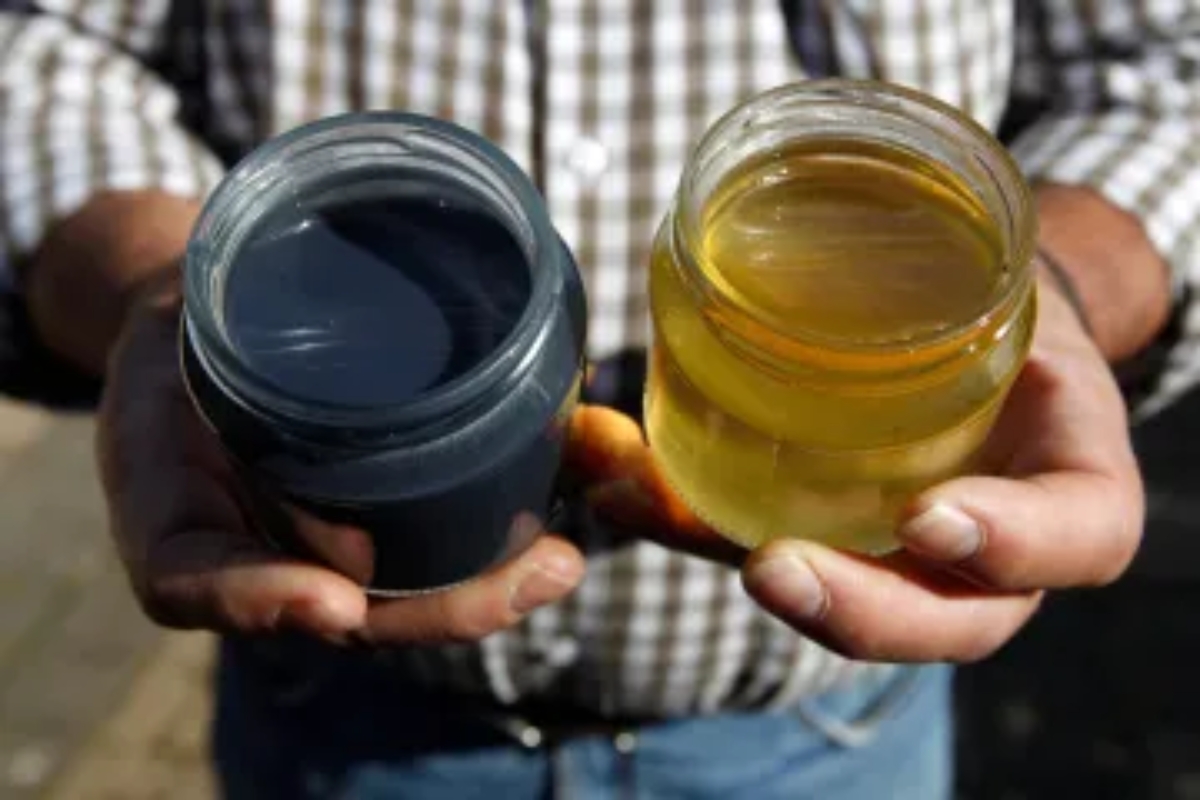


Colored Honey Surprised Producers by Revealing That Small Errors in Residue Storage Can Affect an Entire Beekeeping Chain, Leading to Commercial Losses and Raising Debates About Environmental and Industrial Practices
In 2012, an unlikely phenomenon gained attention in the town of Ribeauvillé, in the Alsace region of northeastern France. Local beekeepers began harvesting blue and green honey from their hives, an event so rare and unusual that it quickly spread through European newspapers. The explanation, however, came from an unexpected source: a waste processing plant linked to the production of M&M’s.
The Emergence of Colored Honey
Between August and September 2012, beekeepers in the region noticed that bees were returning to their hives with brightly colored substances, something incompatible with the typical nectar of Alsace flowers. When the honey was harvested, the shock was immediate: entire combs had taken on shades of turquoise blue, green, and other unusual variations.
The event raised concerns, especially since Alsace has a strong tradition in honey production, with thousands of hives scattered throughout rural areas and a production chain that is relevant to the local economy.
-
These living root bridges and ladders are over 700 years old and help indigenous people survive in one of the rainiest regions in the world.

-
From sertanejo star to international investor: Ana Castela invests millions in a mansion in the USA, creates a themed accommodation in Orlando, and shows that the “boiadeira” also wants to grow away from the stage.

-
The 10 most stunning motorhomes in the world: a $3 million trailer with a rooftop nightclub and garage for a Ferrari, “palaces on wheels” with Italian marble, private cinema, and five-star hotel luxury for billionaires.

-
Trump wanted to spend $400 million on the White House, but the courts prohibited the million-dollar construction.



The Discovery of the True Source
After a few weeks of investigation, beekeepers managed to identify the source of the substance that colored the honey. Just a few kilometers from the apiaries, there was a biogas plant operated by Agrivalor. There, waste from the production of M&M’s candies, including colored shells and sugary remnants used in candy production, was being processed.
The bees were accessing open containers where the material was stored, attracted by the high concentration of sugar. They brought the colored residue into the hives, and that was enough to completely alter the color of the honey.
When the company was informed of the problem, the residues were moved to covered storage locations, preventing the entry of the insects. Consequently, the coloration returned to normal in the following weeks.
Colored Honey: Curious, but Commercially Unviable
Despite international interest and the harmless nature of the episode, the blue and green honey could not be sold. It did not meet the quality and purity standards required for French honey, especially in a region known for its beekeeping tradition.
Sources from the French and European press indicate that all the colored honey produced during that period was discarded. The greater concern was the image of local beekeeping, which depends on consumer trust and the reputation of Alsace’s natural products.

A Case That Became a Global Reference
The Ribeauvillé episode continues to be cited today in studies and articles about bee behavior and the environmental impact caused by industrial residues. It showed that:
- bees can alter their natural routes in search of alternative sources of sugar;
- seemingly harmless residues can lead to unexpected consequences;
- inadequate storage of industrial materials can affect rural production chains.
Besides being curious, the incident became an example used in discussions about waste disposal and the coexistence between food industries and rural producers.
Why Did the Story Resonate So Much?
The combination of an impressive visual of blue and green honey, along with the involvement of one of the world’s most famous candy brands, caused the news to circulate through newspapers in several countries. Sites like France24, Time, BBC, The Local France, and various European outlets treated the case as a mix of scientific curiosity with environmental alert.









Eu sou de Santa Catarina e eu achei azul e vermelho os favos de cera das abelhas, mas o mel não era colorido, tenho um pouquinho desse mel guardando ainda….
O problema é que esse mel é feito praticamente só de açúcar. E além disso vai se saber que tipo de pigmento esposto ao tempo estava misturado???
Achei que iriam comercializar o novo tipo de mel