





 Portuguese
  English
  Spanish
  7 min of reading
  0 comments


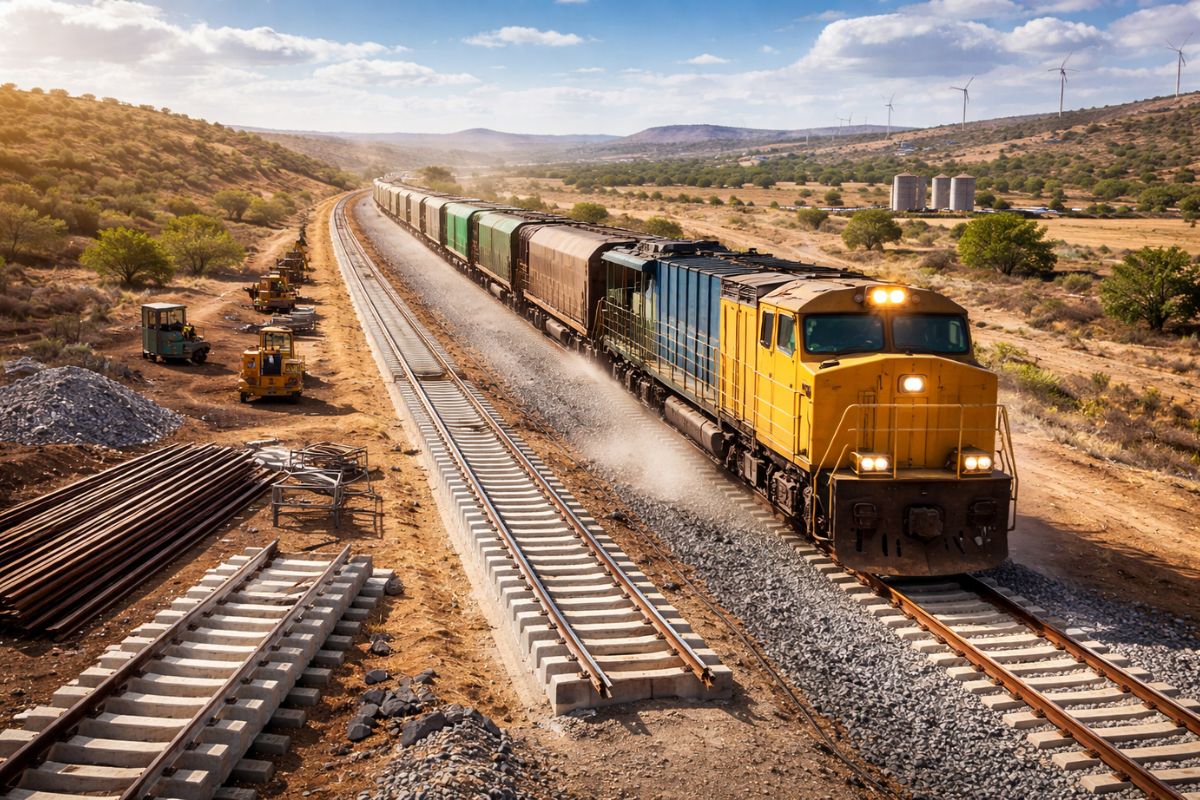
With 79% of the Works Completed, Transnordestina Advances as a Heavy Cargo Railway, Establishes a Railway Corridor in the Semiarid Region, and Promises to Reduce Agricultural Freight and Logistics Costs in the Northeast
After almost 20 years of ups and downs, Transnordestina enters a decisive phase, with 79% physical completion in the priority section, about 1,200 km under construction between Eliseu Martins and the Port of Pecém, and a total estimated investment of R$ 15.7 billion to create a new heavy cargo railway corridor in the Northeast.
In the sertão, the day begins with the sun already above 30 degrees, freshly laid gravel, compactors vibrating, and tracks being aligned with millimeter topographic precision. For the first time in nearly two decades, Transnordestina is no longer just a promise; it is beginning to take shape with concrete infrastructure, tasked with reducing agricultural freight costs in the region by up to 30% and removing hundreds of thousands of truck trips from the highways.
Transnordestina: From the Promise of 2006 to the Decisive Phase of Works
The Transnordestina was officially launched in 2006 with a clear purpose: to reduce the logistics cost of the Northeast by connecting the productive cerrado of Piauí to the coastal ports, in a railway corridor aimed at grains, minerals, fuels, and industrial cargo.
-
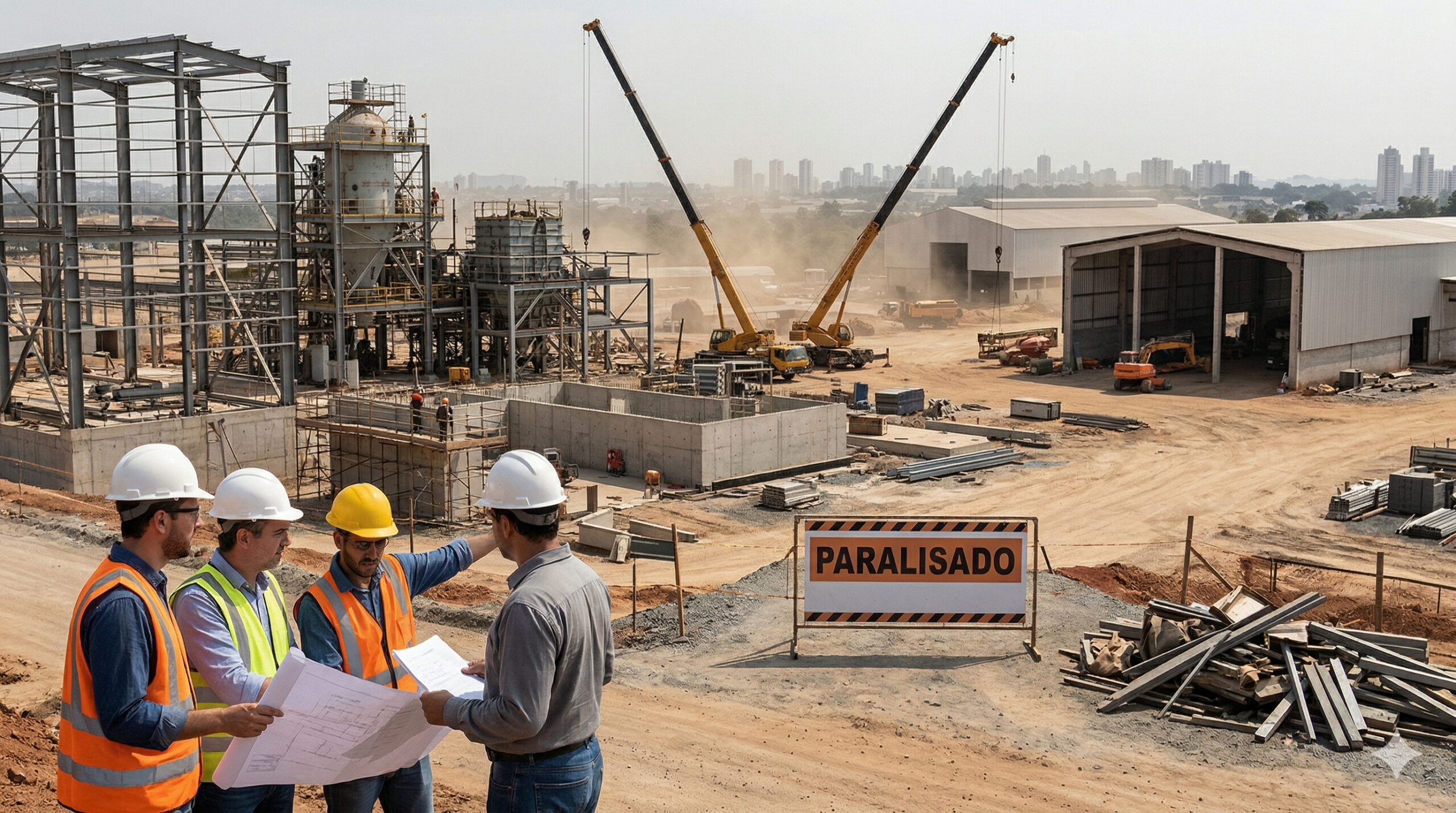
The lack of welders, electricians, and operators becomes a structural threat in 2025, with the construction industry and manufacturing already suffering from delays, cost pressures, and labor shortages in Brazil.
-
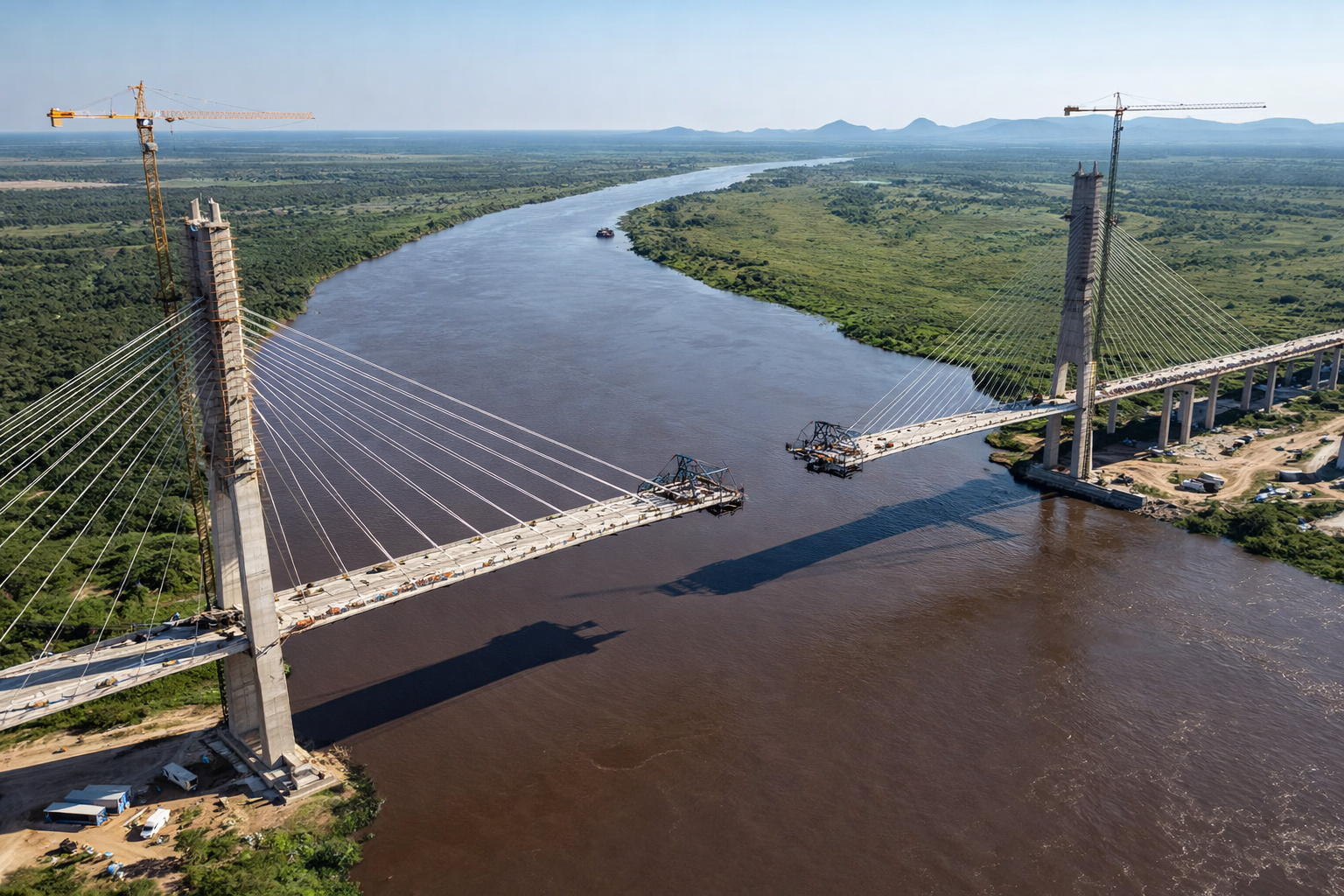
Brazil and Paraguay are just 46 meters away from a historic union on the bioceanic bridge that promises to revolutionize trade between the Atlantic and the Pacific.
-
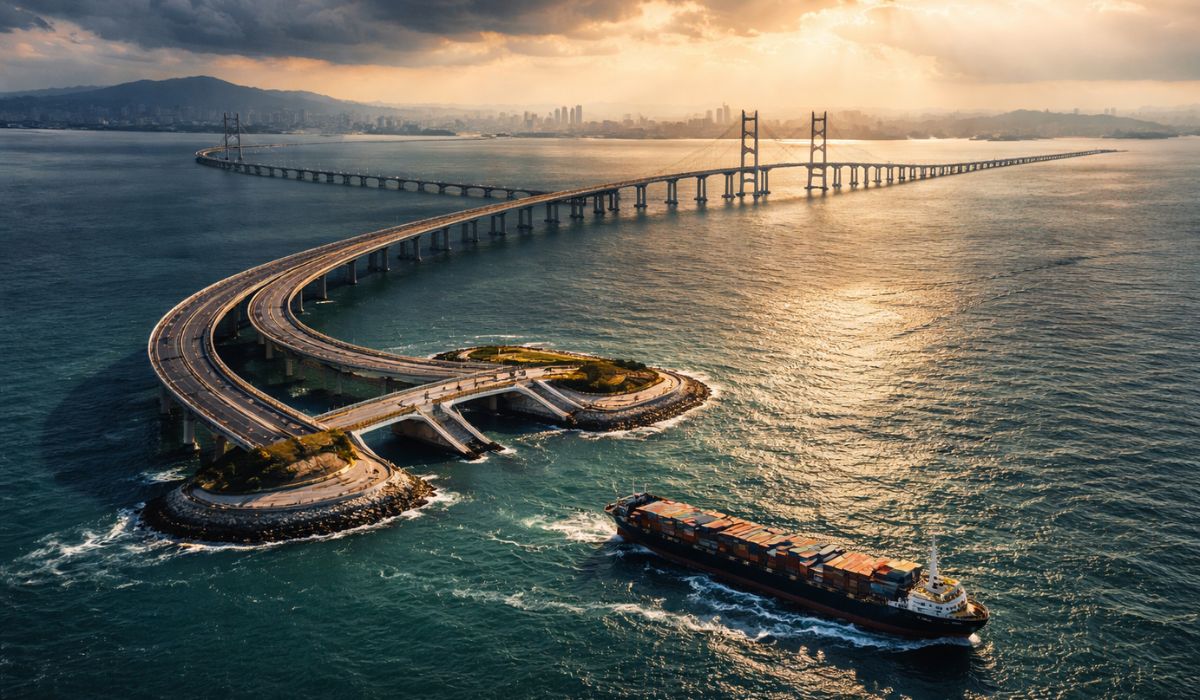
With 55 km over the sea, a cost of US$ 20 billion, and enough steel to build 60 Eiffel Towers, China’s largest project has connected Hong Kong, Zhuhai, and Macau in a colossal bridge that defies the logic of engineering.
-
A trick with joint compound transforms a Styrofoam ceiling into a plaster-like ceiling: leveled panels, wires and mesh at the joints, sand, paint, and change the environment while spending little today.


In the original design, the route totaled about 1,753 km, connecting Eliseu Martins to two port access points and offering an alternative to the almost total reliance on road transport.
In practice, the path to this point has been much less linear. In 2016, just over half of the railway was completed, and the initial budget of R$ 4.5 billion had already been exceeded, surpassing R$ 15 billion over the years.
Transnordestina has gone through stoppages, audits by the Federal Court of Accounts, and contractual restructurings until, starting in 2019, the project entered a phase of institutional and financial reorganization to try to break the deadlock.
In 2022, there was a return of the section towards Suape and a concentration of efforts on the axis to the Port of Pecém, with contractual amendments alongside the National Land Transportation Agency and increased financing through regional funds and a new federal investment plan. From then on, the focus shifted from legal disputes to technical execution in the field.
Current Physical Progress of Transnordestina

Currently, Transnordestina shows about 79% physical execution in the priority section under the concessionaire’s responsibility, with all lots of phase 1 formally contracted.
This point is symbolic because it ends the historical issue of “contract holes,” where entire sections remained without active construction coverage and the route dragged on in disconnected mosaics.
The last segments between Baturité and Aracoiaba recently received service orders, meaning that the entire corridor towards the Port of Pecém is officially under continuous construction.
In Ceará, for example, the physical progress aligns with the 79% figure reported for the section under the responsibility of Transnordestina Logística.
According to the published planning, there are simultaneous work fronts distributed along the route, involving thousands of workers in activities ranging from earthmoving to the installation of railway superstructure.
The investment already executed exceeds several billion reais, with a total estimated at R$ 15.7 billion to consolidate the corridor. With 79% completion and all lots contracted, Transnordestina moves out of the most uncertain phase and now depends primarily on maintaining pace and schedule.
What Has Been Constructed: Earthworks, Permanent Way, and Special Engineering Works
Every robust railway starts with the invisible part. In the Transnordestina, the first step is earthworks, where the so-called grade is defined, that is, the set of slopes and curves that the train will face along the route.
Deep cuts and extensive fills are executed with constant topographic control to maintain slopes compatible with trains of up to 120 carriages.
In areas with weak soil, the original material is replaced or reinforced, with controlled compaction. Tests such as California Bearing Ratio ensure that the base can withstand the weight of the trains before any track is laid. Only after this validation does the permanent way stage begin.
This permanent way starts with the substrate, a transitional layer between the treated soil and the ballast, which protects the base against contamination by fines.
Then comes the graded ballast, designed to distribute dynamic loads, absorb impacts, and ensure drainage. On top of it, concrete sleepers are laid that can support up to 32 tons per axle, the standard for heavy cargo railways.
The tracks are welded into long continuous bars, reducing mechanical joints, vibrations, and the need for corrective maintenance.
As Transnordestina was planned to operate with a mixed gauge in certain sections, the laying of the tracks requires even more geometric precision, with supplementary tracks at strategic points to ensure compatibility with other railway systems.
As the track progresses, bridges and viaducts are built to cross highways, watercourses, and areas with seasonal drainage.
Some of these special engineering works exceed 300 meters in length and require foundations with drilled or continuous helical piles, based on the soil behavior indicated by the surveys.
In parallel, railway yards are established to enable crossings, technical parking, and the formation of long trains, along with a drainage system designed for intense and concentrated rains typical of the semiarid region.
Cargo Capacity and Effects on Highways

The Transnordestina was designed to operate with a capacity of up to 30 million tons per year, in a standard that resembles other heavy cargo corridors in the country.
Each train with around 120 carriages can transport approximately 8,000 tons per trip, replacing about 300 bulk trucks in a single move.
On an annual scale, this replacement can remove hundreds of thousands of truck trips from the highway network, directly impacting traffic jams, pavement wear, and pollutant emissions.
By transferring most of the volume of grains and minerals to the railway, Transnordestina redefines the transportation matrix of the region and opens up space for highways to be used more rationally, focusing on lower volume and more urgent cargo.
The future connection with other structural railways further expands this reach, creating continuous corridors that can link the interior of the Northeast to different national destinations without relying on multiple intermediate road transfers.
R$ 15.7 Billion in Tracks and a New Corridor for Northeastern Agriculture
The estimated investment of R$ 15.7 billion places Transnordestina among the largest recent railway projects in the country.
When this amount is converted into a concrete reference, the scale becomes evident: it’s an amount equivalent to buying a large fleet of new economy cars, occupying hundreds of kilometers of highways if all were in circulation.
Instead of further increasing road traffic, this volume of resources is being directed towards a permanent railway corridor capable of transporting millions of tons per year over decades.
The physical infrastructure of Transnordestina is likely to attract investments in intermodal terminals, warehouses, industrial districts, and grain and mineral processing hubs along the 1,200 km of tracks.
From the rural producer’s perspective, the end goal is clear: to reduce agricultural logistics costs in the region by up to 30%, making the production of grains and other commodities more competitive compared to other logistical corridors in the country.
By bringing the countryside closer to the ports through a single high-capacity railway axis, Transnordestina can redefine the economic geography of the semiarid region.
What Remains to Be Done and What Are the Next Milestones for Transnordestina

Even with 79% physical completion, Transnordestina is still not ready. Phase 1, which concentrates on the priority section between Eliseu Martins and the Port of Pecém, is expected to be completed by the middle of the next decade, with a gradual transition from civil work to the operational stage, as completed segments begin to receive cargo.
Next, phase 2 plans to extend the territorial reach by the end of this decade, resuming the broader connection with the interior and reinforcing the corridor as a robust alternative to long-distance road transport.
At the same time, the planned resumption of the section towards Suape at the federal level is likely to restore part of the original project design, diversifying port access for the Northeast.
Additionally, the future integration with other national railways should position Transnordestina within a continuous railway corridor, linking the Northeast to the main cargo flows in the country.
If the schedule is met and the pace of the work fronts is maintained, the result will not just be a new railway on the map, but a structural change in how grains, minerals, and fuels exit the interior of the Northeast towards the coast.
After understanding this overview, in your opinion, is Transnordestina progressing at the right pace, or should the Northeast already have been reaping the promised reduction of up to 30% in agricultural freight?








-

-

-

4 pessoas reagiram a isso.