





 Portuguese
  English
  Spanish
 6 min of reading
  0 comments


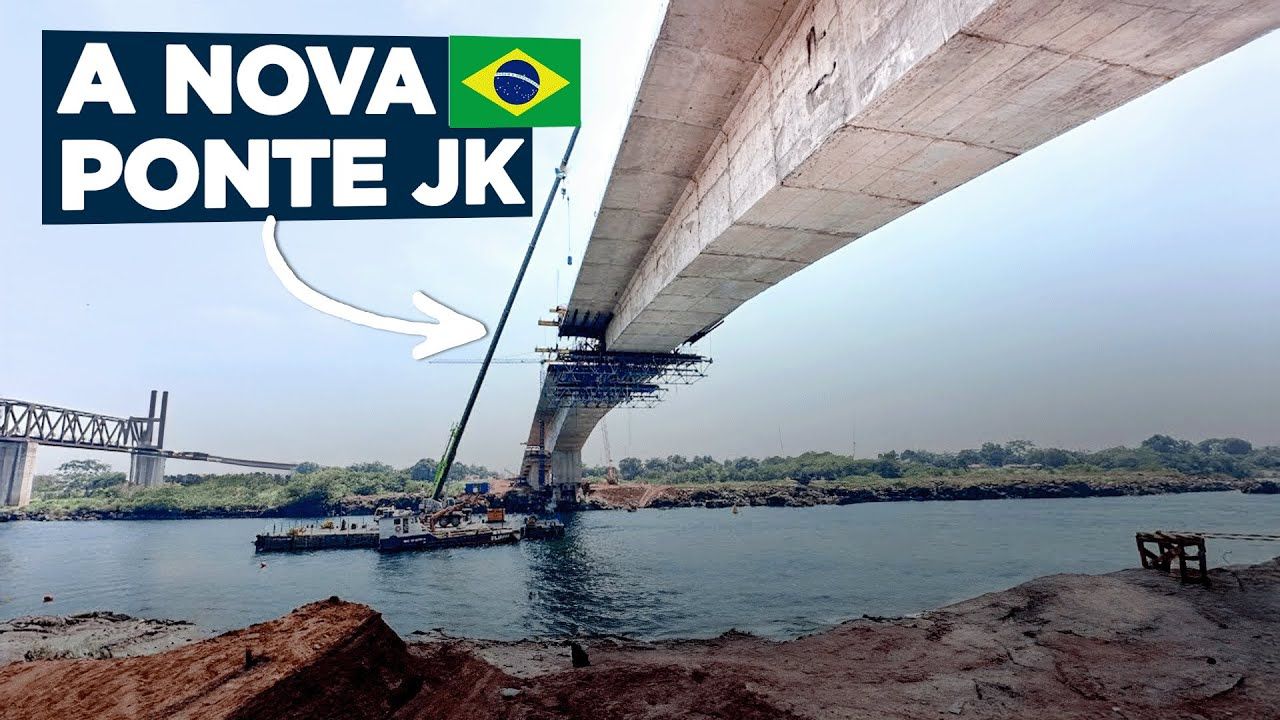
New JK Bridge with 630 Meters Already Has 75% of the Work Completed and Promises to Restore the Vital Link Between Maranhão and Tocantins After the Collapse of 2024, Which Left Deaths and Generated Environmental Risk in the Tocantins River.
The collapse of the old Juscelino Kubitschek Bridge on December 22, 2024, transformed a strategic point on BR 226 into a national bottleneck. The collapse of the central span, with vehicles on top of the structure and trucks loaded with hazardous materials, interrupted the direct crossing between Estreito, in Maranhão, and Aguiarnópolis, in Tocantins. Since then, the region has depended on ferries and temporary accesses, directly impacting cargo flow, passenger transport, and the routine of those crossing the Tocantins River daily.
To respond to this disruption, an emergency contract was issued to build the new JK bridge. The project calls for a deck 630 meters long, about 100 meters longer than the original structure, and 19 meters wide, with two lanes of traffic, shoulders, and sidewalks.
With approximately 75% of the services completed, the new JK bridge has solidified as the main bet to recover continuous road crossing of BR 226 in one of the most important logistic corridors in the North and Northeast.
-
Scientists use sawdust mixed with clay to create a lighter brick, promising efficient thermal insulation and impressing by transforming waste into a solution for construction.

-
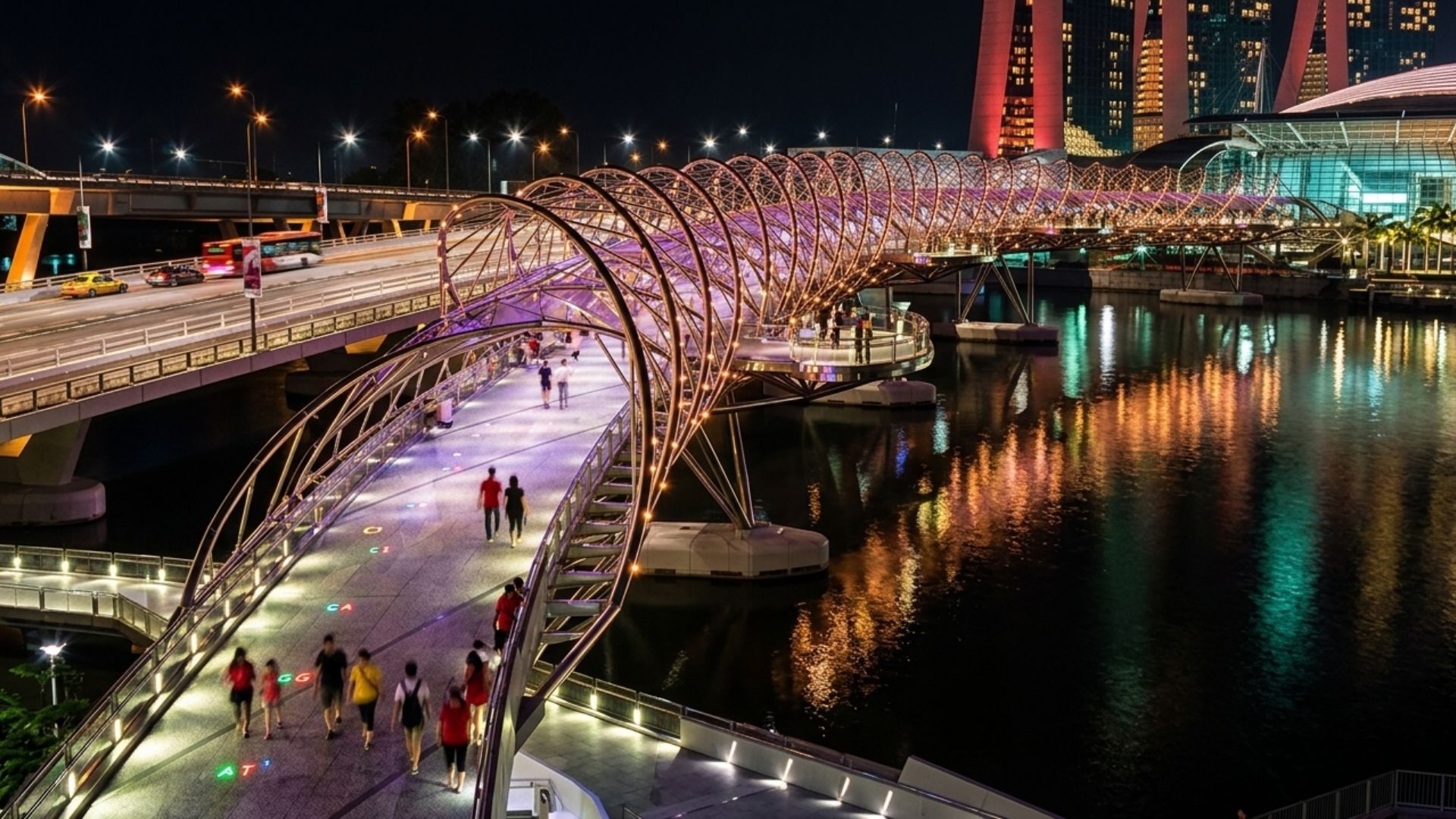
With a DNA shape, this bridge in Singapore draws attention in modern architecture and surprises tourists by transforming a simple crossing into an unforgettable visual experience in the urban heart.
-
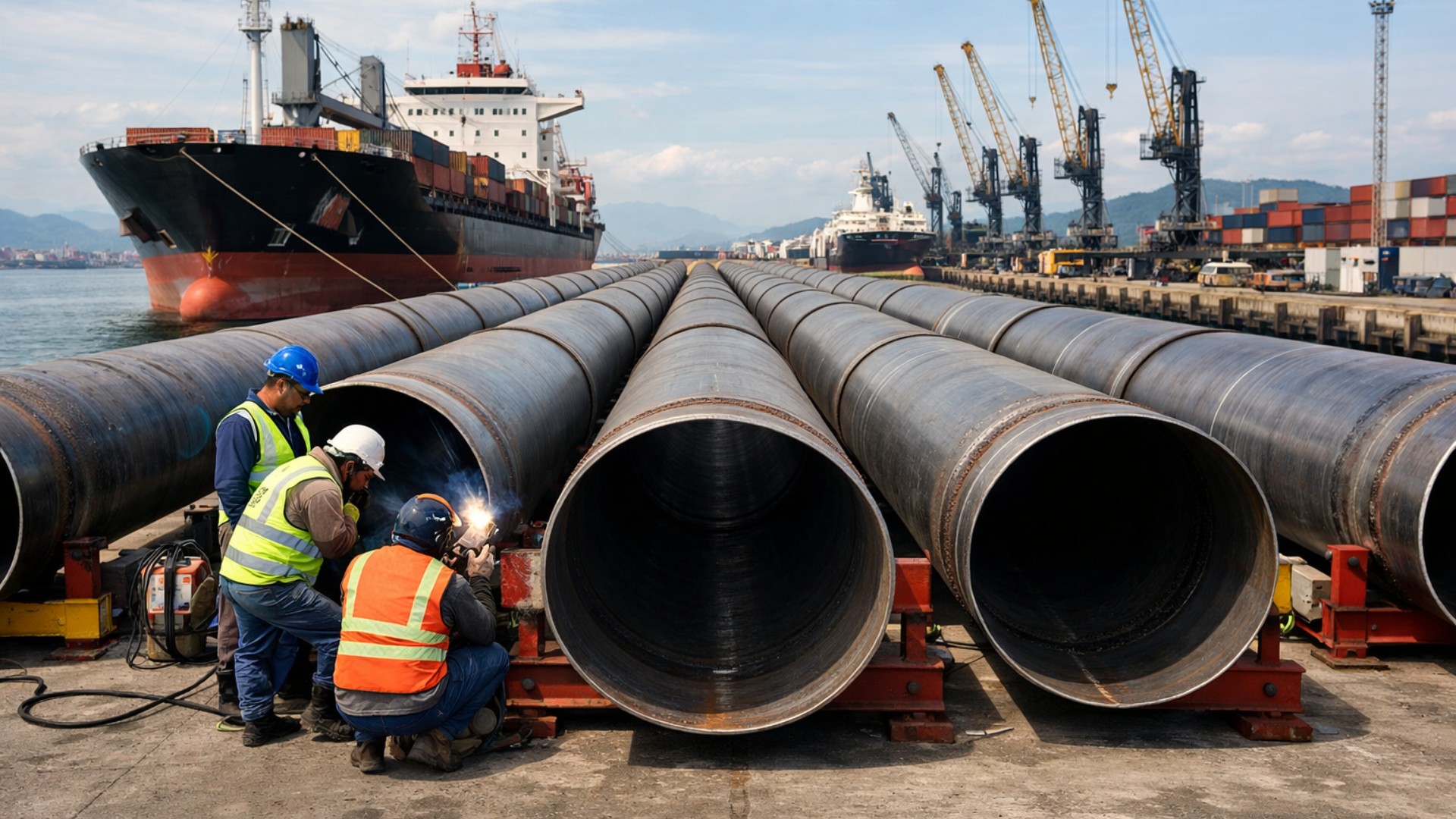
Giant underwater pipeline begins to take shape with a R$ 134.7 million project at the Port of Santos: the 1.7 km structure uses 12-meter and 700 mm pipes to supply water to 450,000 people in Guarujá.
-
A mason reveals a professional plastering technique that uses aligned guides and a 3-meter ruler to plaster an entire wall in up to 3 hours, without visible seams, with uniform thickness, perfect plumb, and a finish ready for painting without rework.


What the Old Bridge Was Like and What Happened in 2024

The first Juscelino Kubitschek Bridge was inaugurated in the 1960s, in a context of road expansion that included the Belém-Brasília highway.
With just over 530 meters in length and a prestressed concrete central span, the structure became the main road connection between Maranhão and Tocantins at that point on the map, integrating cities, services, and the flow of goods in the region.
Over the decades, the scenario around the structure changed. The flow of trucks increased, vehicles became heavier, and operation became practically continuous.
Technical reports began to record cracks, exposed reinforcements, and support issues, with the bridge entering a state of alert. Recovery studies were discussed, but difficulties in bidding and documentation delayed solutions.
On December 22, 2024, the alert was confirmed in the form of collapse. The central span gave way with vehicles on top of the structure, launching trucks, cars, and motorcycles into the Tocantins River.
Among the vehicles involved, there were trailers carrying sulfuric acid and pesticides, which led to the declaration of maximum contamination risk. The tragedy left at least 14 dead, mobilized rescue teams, and caused several municipalities to temporarily suspend water intake from the river as a precaution.
Subsequent reports indicated that the tanks with acid suffered limited damage, with tanks intact or controlled leaks, but the episode definitively exposed the cost of delaying interventions in critical structures.
Why the New JK Bridge Is Different
The new JK bridge was designed to operate at a higher capacity and safety level. With 630 meters in length and about 19 meters in width, the deck was sized for two lanes of traffic, two shoulders, New Jersey type barriers, and sidewalks protected by guardrails.
The central span of the new JK bridge reaches approximately 154 meters, with no pillars in the main navigation channel.
This design enhances navigation safety on the Tocantins River and reduces the risk of direct impact of water and vessels on central supports. The structure rests on 24 deep foundations and 26 pillars, sized for the heavy traffic that crosses daily the corridor linking Matopiba to ports and major consumer centers.
The total investment for the new JK bridge is around R$ 172 million, in an emergency contract with a 12-month deadline to restore the road crossing.
In terms of scale, it is a smaller structure than the major urban bridges in the country, but with high strategic relevance, as it acts as a breaker for an entire road axis.
Controlled Demolition and Preparation of the Riverbed
Before starting the construction of the new JK bridge, it was necessary to safely remove what remained of the old structure. Slanted and cracked sections remained standing after the collapse, posing risks to navigation and the advancement of the work.
The adopted solution was a controlled implosion. More than 200 kilograms of explosives were distributed at strategic points in the pillars and superstructure, with a detonation sequence calculated to direct the fall to the riverbed.
The operation required preventive evacuation of nearby housing, total closure of the highway, and suspension of navigation for safety reasons.
The dismantling generated about 14,000 tons of debris. Next, cleaning of the channel began, using barges, floating cranes, excavators, and smaller vessels to remove blocks and cut reinforcements.
Part of the demolished concrete was reused in rockfill, construction accesses, and platforms on the banks. The remainder went to licensed disposal areas, with environmental control.
Only after the navigation corridor and the area for the new supports were cleared was it possible to move forward to the foundation stage of the new JK bridge.
How Is the Progress of the New JK Bridge

According to the emergency schedule, about 75% of the works for the new JK bridge have already been completed. All 24 deep foundations and the 26 pillars have been finished.
The 45 precast access beams were produced on-site and launched over the supports using large cranes.
In the central span, the deck of the new JK bridge is being executed in successive cantilevers. From the main pillars, the deck advances in segments. Each segment is assembled or concreted, receives prestressing cables to stitch the assembly, and only then releases the next stage.
The progress is made symmetrically, with segments on one side and the other, to maintain the balance of forces and control deformations.
High-precision topography and deformation readings monitor the behavior of the structure throughout the process.
After the closure of the central span and the final joining of the cantilevers, the focus will shift to completing the deck: launching precast slabs, concreting the final slab, executing drainage devices, power ducts, waterproofing, bonding layer, and asphalt pavement.
On the sides, New Jersey type barriers and metal guardrails are installed, separating vehicles and pedestrians and facilitating future inspections and maintenance throughout the life of the new JK bridge.
Impacts for BR 226, Maranhão, Tocantins, and Matopiba
While the new JK bridge is not delivered, the crossing over the Tocantins River continues to be made by ferries, with four provisional docks in operation. This system maintains the connection between Maranhão and Tocantins but imposes queues, longer waiting times, and greater sensitivity to climatic factors such as strong winds and floods.
With the completion of the new JK bridge, BR 226 will once again offer a continuous stretch of road at that point. The removal of the boarding stage, ferry crossing, and disembarkation reduces non-productive stops, decreases fuel consumption, reduces fleet wear, and tends to make freight more competitive.
Crops, meat, industrial inputs, and general merchandise will now cross the Tocantins River with greater predictability and lower operating costs.
For residents of Estreito, Aguiarnópolis, and neighboring municipalities, the new JK bridge restores direct crossing for work, study, health services, and daily commutes, without the need to adapt their routines to the availability of ferries.
Regionally, the new JK bridge strengthens the road corridor that integrates Tocantins, Maranhão, and other Matopiba states with the main economic hubs in the country.
The project also reduces the region’s vulnerability to a single structural disruption point, as occurred in 2024, by introducing a structure designed with larger spans, reinforced foundations, and more rigorous monitoring.
A Reconstruction Focused on Continuity of the Crossing
The trajectory of the new JK bridge summarizes a typical cycle of infrastructure: a structure built in the 1960s, taken beyond the project limits, a collapse with casualties and regional impact, controlled demolition, and reconstruction with a different engineering standard.
In the specific case of the crossing between Maranhão and Tocantins, the central objective is clear. The new JK bridge was planned to restore, with greater safety and capacity, a road link that functions as a transportation axis for cargo, passengers, and public services in two entire regions.
With delivery anticipated for December 2025, the expectation is that the bridge will significantly reduce dependence on provisional solutions, restoring BR 226’s condition as a continuous corridor over the Tocantins River.
And you, how do you evaluate the importance of the new JK bridge for those who live, work, or transport goods between Maranhão, Tocantins, and the Matopiba region?
With information from: Construction Time






-

2 pessoas reagiram a isso.