





 Portuguese
  English
  Spanish
  6 min of reading
  2 comments


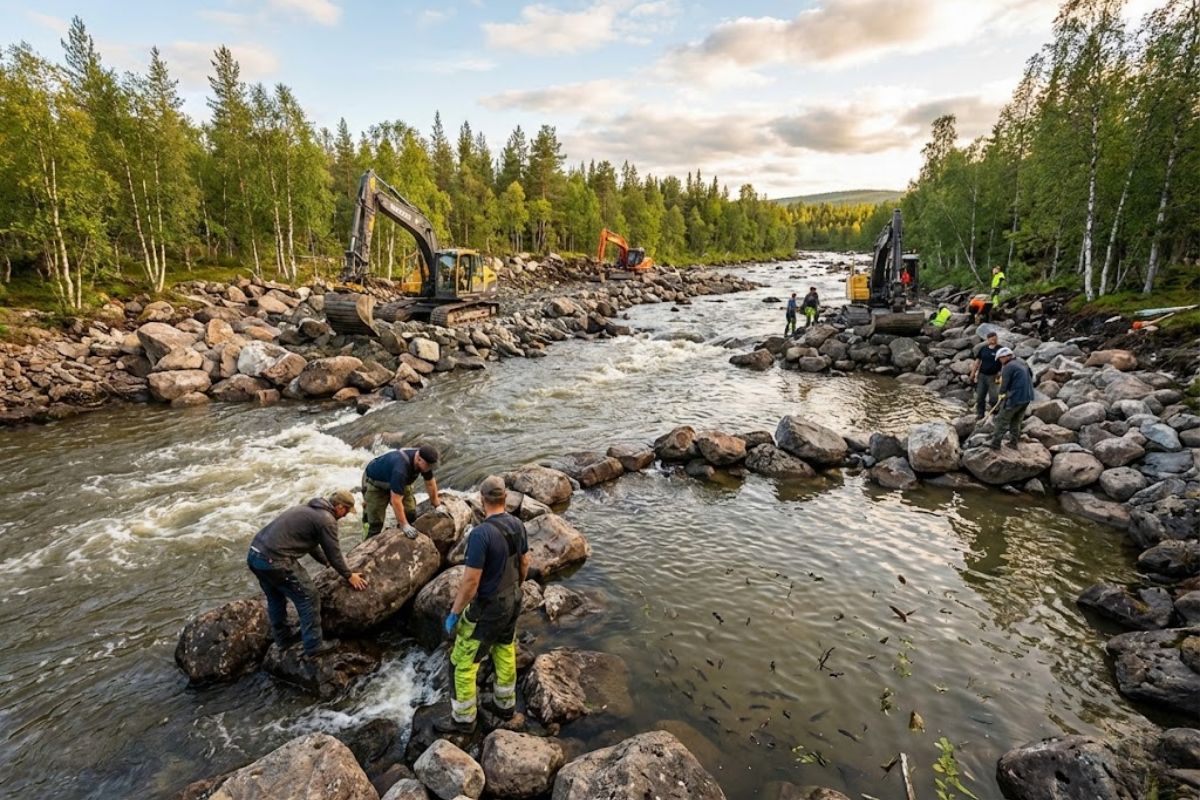


In The Abramsån River, A Tributary Of The Råne In Swedish Lapland, Teams From Rewilding Sweden Remove Wooden Flooring, Reposition Stacked Rocks Along The Banks, And Reduce Water Speed, Creating Pools, Gravel And Connection With The Forest To Bring Back Fish, Mussels And Insects In A Stretch Of Five Whole Kilometers.
In 2023, in Swedish Lapland, entire rivers were remodeled by historical forestry exploitation, which removed rocks and gravel from the beds, eliminated rapids, and straightened bends to facilitate log transport for hundreds of kilometers. In the Abramsån River, this legacy became so extreme that part of the riverbed received a wooden floor made of logs nailed together, installed in the early 20th century.
Now, Rewilding Sweden is restoring rivers and their banks by reconstructing, with technique and heavy machinery, a five-kilometer stretch of the Abramsån, a tributary of the Råne River, which is 210 kilometers long and described as the longest free-flowing forest river in Europe. The goal is to slow down the water, retain gravel, sand and organic matter, and restore conditions for fish, mussels, insects and the riparian life to function again.
How Forestry Exploitation Deformed The Rivers Of Swedish Lapland

The rivers are presented as the lifeblood of Swedish Lapland. Even where there are no dams, the waterways still carry long-term scars left by the forestry industry.
-
China is building a city in Brazil: a complex with an investment of R$ 5.5 billion comes to light, but allegations involving workers draw attention.
-
While Argentina buys old war equipment, Brazil is keeping an eye open and joins the select group of nations with advanced military technology by investing $5.2 billion, producing 36 Gripen fighters in the country, and reducing operational costs.

-
Brazil on alert? Why invading Brazil is a NIGHTMARE for the USA: 8.5 million km², 213 million inhabitants, Amazon covering 60% of the territory, trillion-dollar war, and resistance that even 13,000 aircraft could not control.

-
How to build a floating island from scratch with reeds, giant blocks, and stakes in the lake in a process that needs to be repeated almost every day.

The old logic was simple: to turn the river into a transport corridor. To do this, rocks and gravel were removed from the bottom, rapids disappeared, and bends were “corrected” to allow water to flow faster and carry logs downstream.
The result was a channelization that broke ecological, biogeochemical and hydrological connections between land and water. With accelerated water flow, erosion increased on the banks and riverbed, and local retention of gravel, sand, and organic matter decreased.
This chain of events is described as responsible for the sharp decline in fish populations and for a reduction in the diversity of aquatic insects.
The Abramsån River And The Scale Of What Is Being Rebuilt
The Abramsån is described as typical of many waterways in Sweden, but the situation there exposes the level of past intervention: besides stones and pebbles removed and piled along the banks, there were stretches where a wooden lining was installed on the riverbed.
This creates a stretch with artificial structure, low in habitat, requiring that the restoration be not only aesthetic but structural.
The team sums up the goal directly: to rebuild the entire structure of the river so that it can operate as a natural river system again.
The idea is not to scatter stones randomly, but to recreate conditions that allow the formation of micro-habitats, flow variation, and support aquatic and riparian life.
A Technical Work, With A 24-Ton Excavator And 10 Hours A Day

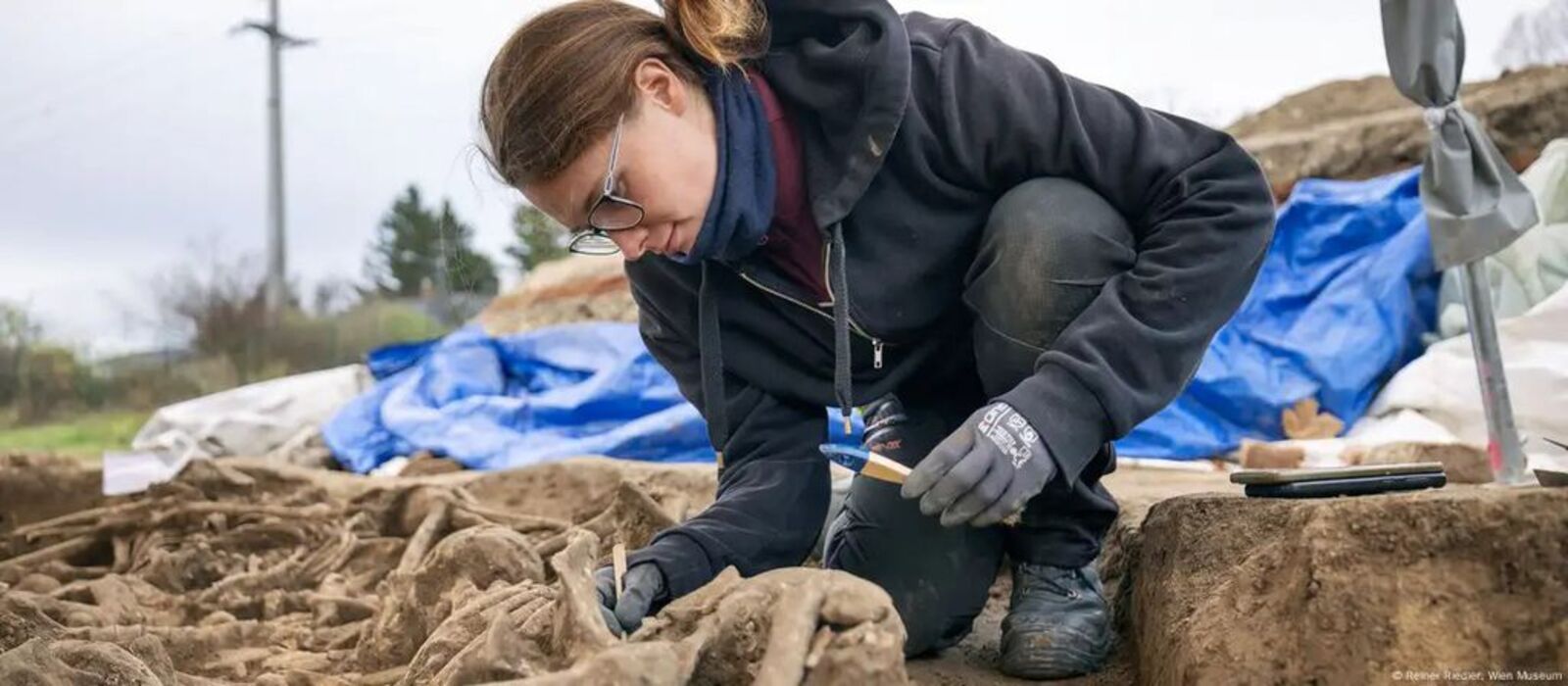
Since June, the team from Rewilding Sweden, described as composed of four full-time employees and two part-time, has been working on the Abramsån.
The plan covers five kilometers; about two kilometers have already been restored, with the first phase expected to be completed soon.
The work is described as highly technical and physically demanding: a 24-ton excavator, with 10-hour shifts, is used to remove sections of the wooden floor and reposition stones in the riverbed.

The rocks that were removed in the past, which had been piled on the bank, are now returning to the water, rebuilding the roughness of the bottom and the shape of the channel.
Henrik Persson, the team leader, states that the removal of the wooden floor took more time than expected.
The average reported pace is 22 meters of river restored per day, reflecting the level of detail, piece by piece, required to reconfigure a river safely and with ecological coherence.
Mussels Removed Before The Machines: The Care With A Key Species

Before the actual restoration process began, there was a step described as time-consuming in its own right: obtaining legal documents.
Next came a critical measure to avoid losses during the work: the temporary removal of freshwater mussels from the section that would be disturbed.
These mussels are described as a large mollusk found in the beds of rivers and clear streams of the north.
The key species, capable of living up to 250 years and filtering up to 50 liters of water per day, improves water quality for other species such as fish, insects, and otters.
Due to their high sensitivity to environmental changes, they also function as environmental indicators.
To remove the mussels in a controlled manner, the team spent a month snorkeling in the area under restoration. Persson reports that thousands of mussels were collected from where the wooden floor was, transported upstream, and kept in a safe location.
The return is scheduled for when the heavy machinery leaves the area, avoiding crushing, burying, and prolonged disturbance.
What Changes When Stones Return To The Bed And The Water Slows Down

The described restoration aims at a set of functions that had been eliminated when the rivers were channelized.
By repositioning stones and gravel in the riverbed, the goal is to restore flow diversity, retention points, and shelter areas.
This type of structure creates more complex stretches favorable for aquatic life, in addition to promoting local retention of sediments and organic matter.
The effect of lateral reconnection: when the channelization is removed and the river starts to “talk” with its bank and floodplain, the water stays in the landscape longer.
This is presented as a broad ecological advantage, with benefits for insects, birds, and fish, as well as for natural herbivores, such as semi-wild reindeer, which feed on hanging lichens associated with wet forest conditions.
The Logic Of The “Aquatic Landscape” And What Comes With Restored Rivers
The restoration of the Abramsån appears aligned with Rewilding Sweden’s “aquatic landscape” approach, which seeks to enhance blue-green corridors by restoring rivers. This includes not only the watercourse but also the soils and forests within the watershed.
Natural forests act as sponges that absorb rain, regulate flow to rivers, and recharge aquifers.
The practical consequence is to reduce impacts from flooding, catastrophic wildfires, and unwanted erosion and sedimentation problems.
When forests are deforested and drained by artificial ditches in landscapes with channelized rivers, water “disappears” too quickly from the territory.
Restoration, therefore, goes beyond the riverbed: it aims to restore water residence time in the system.
Henrik Persson states that this greater retention also reduces downstream effects during heavy rains because the river can act as a natural barrier, cushioning peak flows and helping local communities with fewer flooding episodes.
What Has Been Seen In The Abramsån And Why The Project Wants To Scale Up

A sign of rapid response after the intervention appears simply: shortly after the completion of restoration work, fish began to colonize the lakes.
Rewilding Sweden plans to continue: licenses to restore the lower stretches of the Abramsån are in the process of being obtained. Given the time required for licensing, it is very likely that the next phase will begin in 2025.
Additionally, there is an intention to expand the work from the Abramsån to the Råne River watershed, described as having 420,000 hectares, while legal preparations to restore other tributaries are already underway.
The feeling conveyed by the project is one of patient reconstruction: removing what was imposed on the river, returning stones to their place, restoring natural dynamics and allowing rivers to create habitat, regulate water, and sustain biodiversity in succession.
Do you think that reconstructing rivers “by force”, repositioning stones and undoing past works, is the most realistic way to recover ecosystems that were swept off the map by a century of exploitation?





Sim. Com certeza. Ainda bem que temos cientistas e profissionais da área ambiental que se unem para recuperar ecossistema tão importante que lá estavam mas, que infelizmente diante da ganância e da inconsequência humana são destruídos sem o menor respeito à vida!!!!!
A humanidade tem que buscar saída. Ir atrás do Prejuízo que ela mesma causou!!
Pésima traducción