





 Portuguese
  English
  Spanish
  4 min of reading
  7 comments


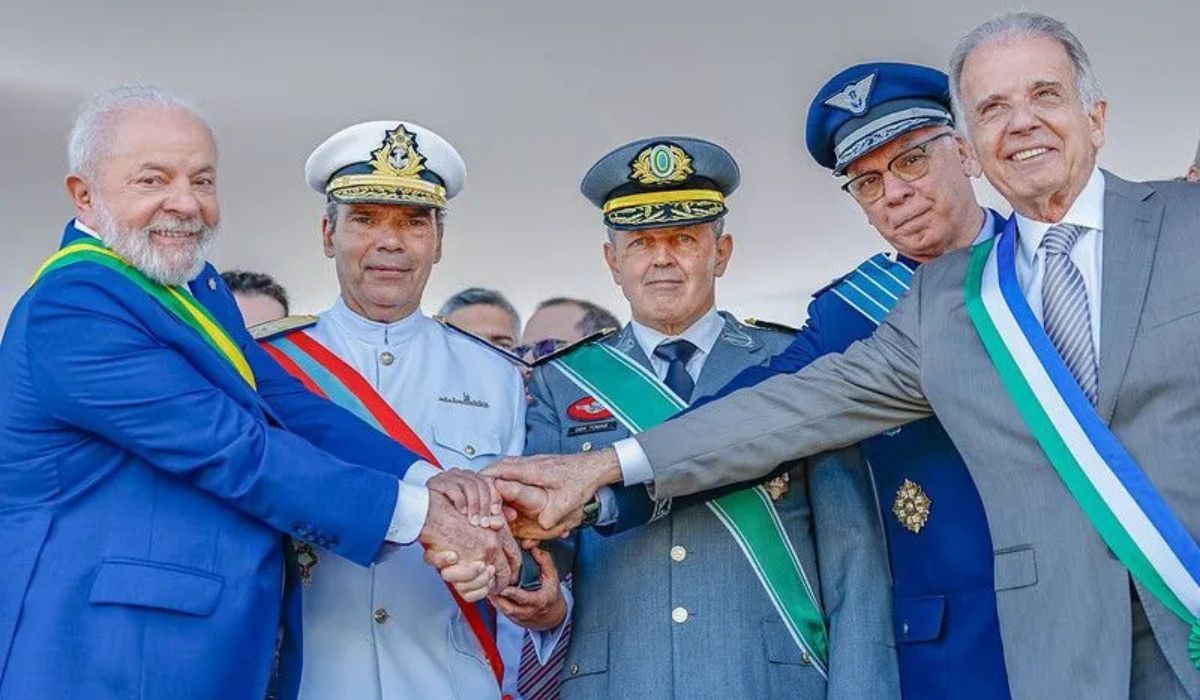


R$ 800 Billion Plan in 15 Years, Advocated by José Múcio, Puts Defense Budget, Purchase of Expensive Equipment, and Armed Forces Priorities Back in the Spotlight Amid Reactions to Recent Military Actions Abroad.
The Defense Minister, José Múcio Monteiro, stated that he delivered a proposal to President Luiz Inácio Lula da Silva to invest R$ 800 billion in the Armed Forces over 15 years.
The statement was made in an interview with the Tarde BandNewsTV, amid reactions to military operations conducted by the United States against Venezuela and Iran, mentioned by the minister as part of the recent international context.
According to Múcio, the idea is to structure a long-term investment cycle to rebuild capabilities and modernize military means.
-
After nearly 30 bids and competition among industry giants, a Spanish company purchases one of the largest airports in Brazil for almost R$ 3 billion and takes over the management of Galeão in a concession that will last until 2039.

-
The Federal Revenue Service now automatically cross-references everything you declare with data from banks, credit cards, brokerage firms, and insurance companies, and any discrepancy between your income and your expenses triggers an alert in seconds.

-
Amid global tensions, Brazil blocks the United States’ proposal at the WTO and paves the way for a trade crisis and possible retaliations.

-
Shopee opens the largest logistics warehouse in Brazil in Guarulhos: 220,000 m² on Dutra, contract signed before construction, pays R$ 45/m² and accelerates deliveries at scale, putting pressure on Mercado Livre and Amazon.


In the interview, he mentioned that Defense, under the current Budget framework, ends up treated as “surplus,” which hampers the continuity of strategic programs.
The minister also compared Brazil’s spending level with that of other countries.
According to him, the country currently invests 1.1% of GDP in defense, while “most” spend about 2% of GDP.
What Múcio Says Led to the President
In the conversation with BandNewsTV, Múcio did not present a complete list of acquisitions, official timeline, or source of funding for the plan.
Nonetheless, he associated the value with the high cost of platforms considered strategic, especially in areas such as land and air, which require high-complexity equipment.
To justify the costs, the minister cited examples of international equipment prices.
“A submarine costs 800 million euros, a Gripen costs 120 million dollars, so it is always expensive, it is a costly weapon. We need to invest in this […] It is a compulsory thing that has to happen or we will never have a defense the size that Brazilian society needs,” he stated.
For him, most resources should go to the Navy and Air Force, with the Army next in line.
Múcio argued that projects from these two forces usually require higher investments per unit.
“The Navy is more expensive and the Air Force is too, as a submarine costs a fortune, and an aircraft costs a fortune,” he said in the interview.
Debate on Defense Investment and International Scenario
The statements come at a time when the government is monitoring developments in conflicts and military operations in various regions.
When addressing the issue, Múcio linked the need for long-term planning to an external scenario that, according to him, has shown instability and rapid changes.
In the minister’s assessment, keeping means updated has a direct relationship with the ability to protect territory, patrol strategic areas, and support missions outlined in Brazilian legislation.
This perspective has appeared in statements reproduced by national outlets over the past weeks, in which he claims to see an international environment with recurring conflicts and calls for investment predictability.
Venezuela: U.S. Operation and Capture of Nicolás Maduro
In the case of Venezuela, Brazilian outlets and news agencies reported that a U.S. military operation in Caracas ended with the capture of Nicolás Maduro on January 3, 2026.
The reports indicated that the action involved movements in different parts of the country and generated reactions from foreign governments and Brazilian authorities.
According to reports published by Agência Brasil, American authorities stated that Maduro and his wife surrendered and were detained in an operation supported by U.S. forces.
Meanwhile, CNN Brasil described the episode as an intervention that resulted in the removal of the Venezuelan leader and sparked diplomatic discussions in the region.
After the episode, reports began to refer to Delcy Rodríguez as the interim president of Venezuela.
According to CNN Brasil, she held the vice presidency before Maduro’s capture.
In the following days, the press reported that Washington maintained pressure on the new command in Caracas, with mentions of judicial measures and investigations discussed by American authorities, according to texts attributed to Reuters and published by Brazilian outlets.
Iran: Bombings, U.S. and Israel, and the Death of Ali Khamenei
In the Middle East, news also intensified following bombings attributed to a joint action by the United States and Israel.
Agência Brasil reported that the death of Ayatollah Ali Khamenei, Iran’s supreme leader, was confirmed by the Iranian government and reverberated among the country’s allies and adversaries, as well as organizations and leaders in the region.
Reuters, in reports published in early March 2026, stated that Iranian state media communicated farewell ceremonies and indicated that the attacks had targeted high-ranking figures.
The texts also recorded U.S. government statements about intelligence elements related to the timing of the operation.
Defense Budget, Military Projects, and Predictability
The central point of the plan presented by Múcio is the defense of predictability.
In the interview, he maintained that military programs cannot be resolved in short cycles, as they involve procurement, development, maintenance, training, and technological integration, in addition to ongoing operational costs.
The minister’s statement also comes in a context where different areas of the government compete for resources and where investments must respect fiscal rules and priorities set by the Executive and Congress.
Therefore, the feasibility of a plan of this magnitude ultimately depends on budgetary and political decisions, in addition to technical details that have not yet been publicly disclosed by the minister in the interview.








Como investir em uma força armada onde a justiça colocou vários militares de alta patente na prisão por trair a Constituição?
Como investir em uma força armada onde a folha de pagamento do pessoal ativo e inativo consome mais de 50% do orçamento?
Se não houve-se tanta corrupção no Brasil e bom uso dos recursos públicos, daria para comprar um novo Gripen por mês
mas o Brasil precisa de coisas bem mais importantes do que caças. O Objetivo dessas guerras estúpidas é inclusive forçar todos os países do mundo a comprar mais armas pra enriquecer os países que provocam as guerras
Trump se tornou uma ameaça ao mundo todo