





 Portuguese
  English
  Spanish
  2 min of reading
  1 comment


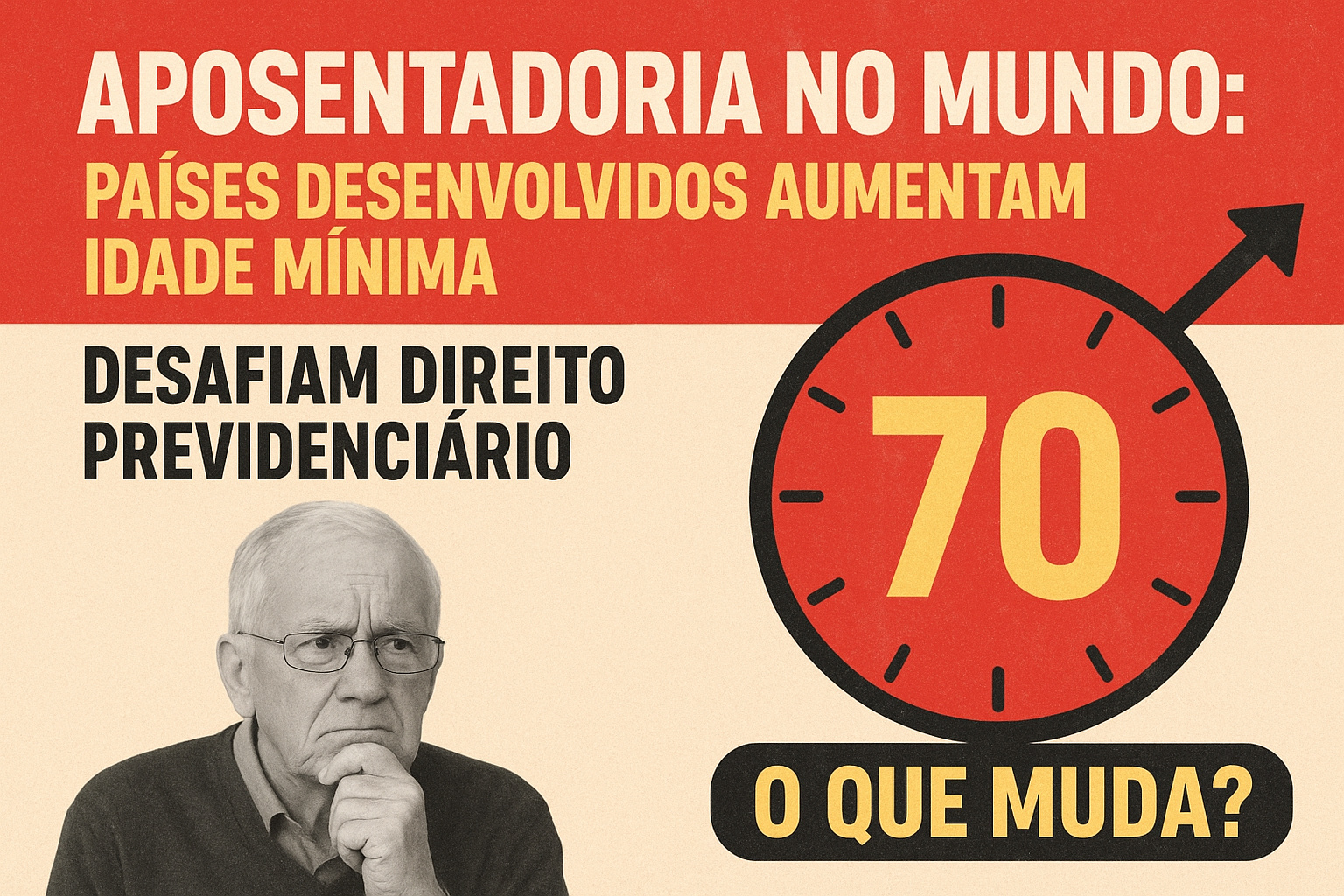


With Population Aging And Legislative Changes, Developed Countries Increase Minimum Retirement Age.
Retirement: Developed Countries Increase Minimum Age
The minimum retirement age is rising in several countries. Denmark is the most recent case. In May, the country raised the minimum age to 70 years.
The increase follows a global trend. European countries have an average of 64 years. The expectation is that the number will continue to grow.
The change occurs because of population aging. Low birth rates reduce the number of contributors. Thus, pension systems need to adjust to remain viable.
-
The noise law will no longer be in effect at 10 PM starting in June with a new rule valid during the 2026 World Cup.

-
The Chamber opens a debate on driver’s licenses at 16 years old as part of a reform that includes around 270 proposals to change the Brazilian Traffic Code and may redesign rules for licensing, enforcement, and circulation in the country.

-
The new Civil Code could revolutionize marriages in Brazil with “express divorce” and changes that could exclude spouses from inheritance.
-
Banco do Brasil sues famous influencer for million-dollar debt and intensifies debate on delinquency, risks of seizure, and direct impact on Gkay’s credibility.


Why The Minimum Age Is Increasing
People are living longer and working for longer. This requires a review of retirement rules.
Advancements in health and quality of life extend productive capacity. Countries like Germany, France, and Italy are already discussing adjustments in legislation to ensure the right to retirement.
Minimum Age In The Largest Economies In The World
Among the 11 largest economies, the minimum age varies widely:
- Italy: 67 years, minimum contribution of 20 years. Less time = proportional value.
- United Kingdom: 66 years, increasing to 67 years between 2026 and 2028.
- Germany: 65.8 years, expected to reach 67 in 2031.
- United States: 62 years for partial benefits, 67 for full.
- Japan: 65 years, with a minimum contribution of 40 years.
- France: 62 to 64 years, depending on the year of birth.
- China: 55 years for manual labor women, 58 for administrative, 63 for men.
- India: 60 years.
- Canada: 60 years reduced, 65 full, 70 maximum cap.
- Brazil: 65 men, 62 women.
- Russia: 63 years.
Denmark Leads The Increase In Minimum Age
Denmark now has the highest minimum age in the world. The goal is to keep the pension system sustainable.
Growing life expectancy makes this change inevitable. Other developed countries are likely to follow the same path.
Social Impacts And Debates About Rights
The increase in minimum age generates debate. For example, unions argue that the measure ignores inequalities in the workplace.
Moreover, heavier professions may be unfairly affected. On the other hand, the adjustment protects the economic viability of pension systems.
Future Of Retirement In Developed Countries
Experts point out that adjustments will be ongoing. Therefore, new rules must balance sustainability and retirement rights.
Additionally, digitalization, greater longevity, and professional changes require flexible solutions. Thus, the challenge is to ensure the right to retirement without compromising the present.
In summary, the minimum age is rising globally. Meanwhile, Denmark leads with 70 years. In this way, the world observes: how to maintain the right to retirement in times of an aging population and low birth rates?









Solid suggestions — would be great to see a downloadable checklist.