






 Portuguese
  Spanish


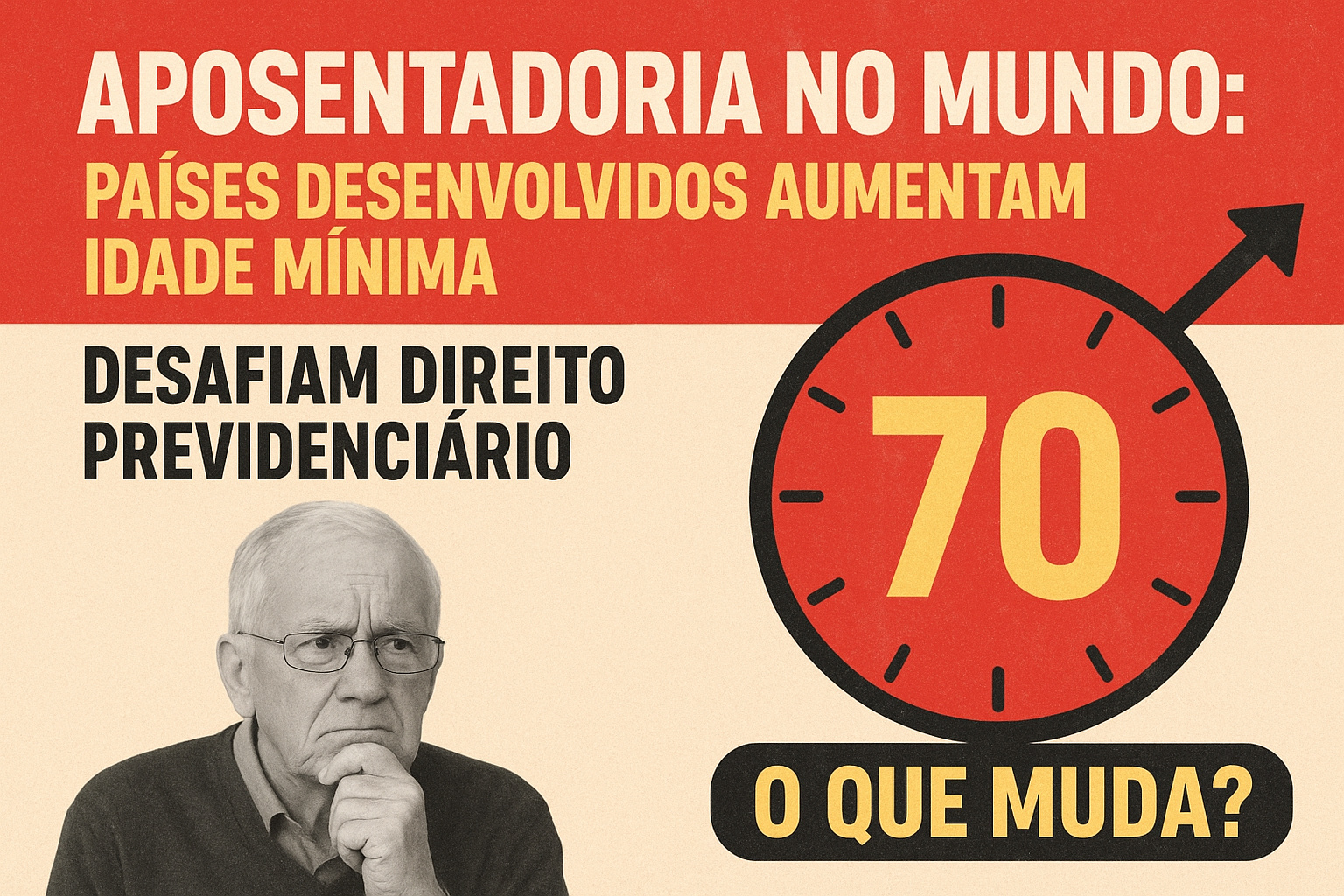


With Population Aging And Legislative Changes, Developed Countries Increase Minimum Retirement Age.
Retirement: Developed Countries Increase Minimum Age
The minimum retirement age is rising in several countries. Denmark is the most recent case. In May, the country raised the minimum age to 70 years.
The increase follows a global trend. European countries have an average of 64 years. The expectation is that the number will continue to grow.
The change occurs because of population aging. Low birth rates reduce the number of contributors. Thus, pension systems need to adjust to remain viable.
-
“Man with Bipolar Disorder Claims ChatGPT Exacerbated Delusions, Leading to Suicide Attempt”

-
U.S. House Approves Bill to Protect Children on Social Media, Limit Addictive Features, and Demand New Measures from Platforms, But Senate Differences Could Stall Progress
-
78-Year-Old Brazilian Farmer Wins Legal Battle for Ownership of 108,000 m² of Land After Decades of Dispute with Federal Government

-
Brazilian Supreme Court Pauses Fines for Workplace Regulation Violations for 90 Days, but Companies Must Still Address Harassment and Overwork



Why The Minimum Age Is Increasing
People are living longer and working for longer. This requires a review of retirement rules.
Advancements in health and quality of life extend productive capacity. Countries like Germany, France, and Italy are already discussing adjustments in legislation to ensure the right to retirement.
Minimum Age In The Largest Economies In The World
Among the 11 largest economies, the minimum age varies widely:
- Italy: 67 years, minimum contribution of 20 years. Less time = proportional value.
- United Kingdom: 66 years, increasing to 67 years between 2026 and 2028.
- Germany: 65.8 years, expected to reach 67 in 2031.
- United States: 62 years for partial benefits, 67 for full.
- Japan: 65 years, with a minimum contribution of 40 years.
- France: 62 to 64 years, depending on the year of birth.
- China: 55 years for manual labor women, 58 for administrative, 63 for men.
- India: 60 years.
- Canada: 60 years reduced, 65 full, 70 maximum cap.
- Brazil: 65 men, 62 women.
- Russia: 63 years.
Denmark Leads The Increase In Minimum Age
Denmark now has the highest minimum age in the world. The goal is to keep the pension system sustainable.
Growing life expectancy makes this change inevitable. Other developed countries are likely to follow the same path.
Social Impacts And Debates About Rights
The increase in minimum age generates debate. For example, unions argue that the measure ignores inequalities in the workplace.
Moreover, heavier professions may be unfairly affected. On the other hand, the adjustment protects the economic viability of pension systems.
Future Of Retirement In Developed Countries
Experts point out that adjustments will be ongoing. Therefore, new rules must balance sustainability and retirement rights.
Additionally, digitalization, greater longevity, and professional changes require flexible solutions. Thus, the challenge is to ensure the right to retirement without compromising the present.
In summary, the minimum age is rising globally. Meanwhile, Denmark leads with 70 years. In this way, the world observes: how to maintain the right to retirement in times of an aging population and low birth rates?









Solid suggestions — would be great to see a downloadable checklist.