





 Portuguese
  English
  Spanish
  4 min of reading
  0 comments


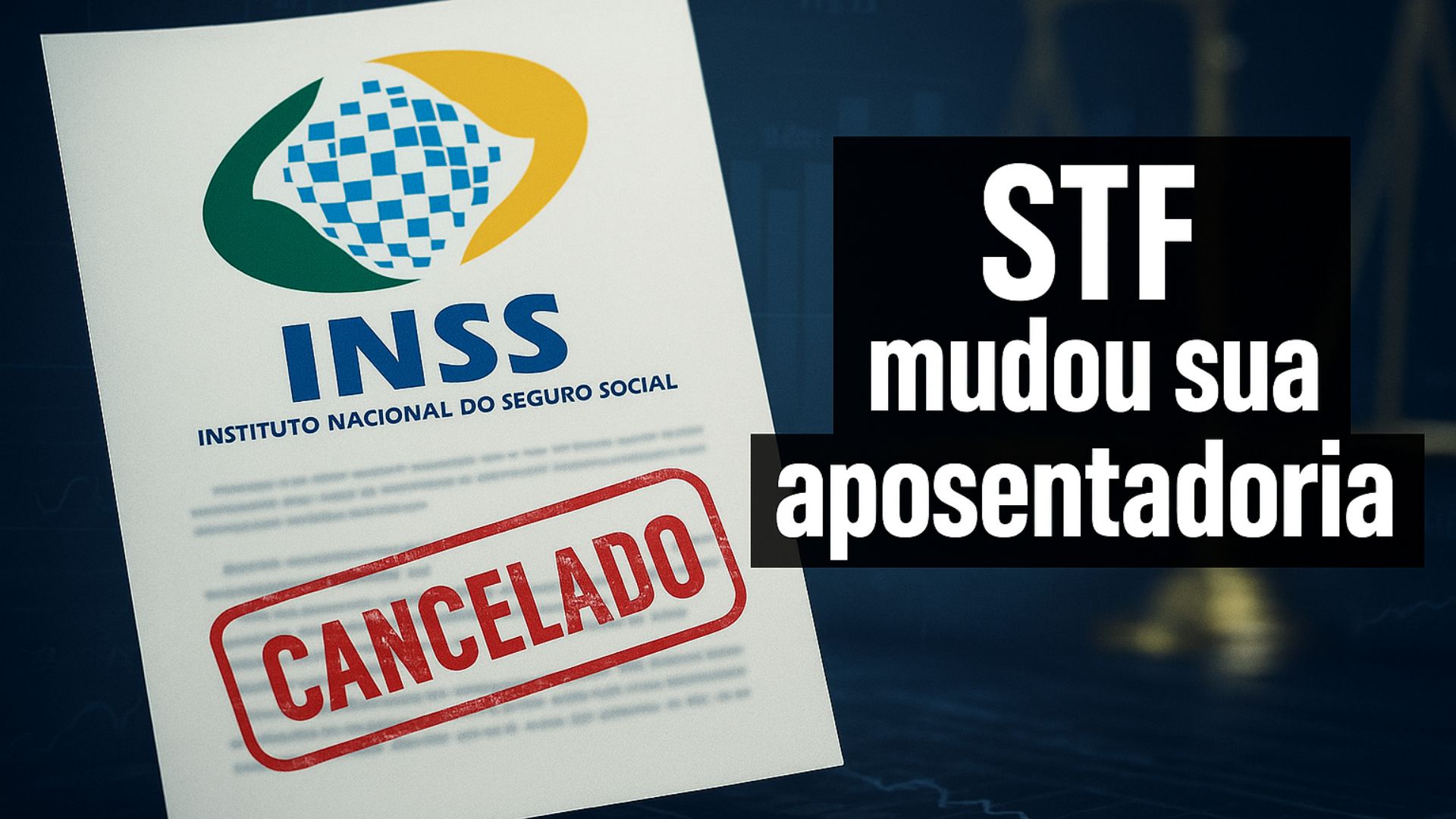
STF Ruling Redefines Social Security Calculations, Closes the “Whole Life Review” Thesis, and Alters the Future of Ongoing Lawsuits in Court.
The Federal Supreme Court decided, in a virtual trial concluded this Wednesday (26), to definitively end the so-called whole life review for retirements from the National Social Security Institute.
By a majority of 8 votes to 3, the ministers canceled the legal thesis that allowed policyholders to recalculate the benefit considering all contributions, including those made before July 1994, when the Real Plan came into effect.
In practice, the Court aligned the understanding of the appeal with general repercussions by stating that the transition rule provided for in Law 9.876/1999 is mandatory and cannot be disregarded by policyholders in favor of a more advantageous retirement calculation.
-
End of the 6×1 schedule: how the reduction of hours can affect service companies, industry, and agribusiness.

-
Brazil Ignores Trump’s threats to BRICS, Buys 42 tons of gold and reduces the Dollar’s share by 6.45% in international reserves.

-
Havan buys historic football land in Blumenau for a million-dollar amount protected by a confidentiality clause and is already planning to change even the layout of streets to build a megastore in half-timbered style costing 80 million reais.

-
Mercado Livre “opens the vault” and announces a record investment of R$ 57 billion in Brazil in 2026, a value 50% higher than the previous year, with an expansion plan that includes 14 new logistics centers, totaling 42 units in the country and hiring an additional 10,000 employees.


The decision also enables the resumption of thousands of cases that were suspended across the country awaiting a definition from the Supreme Court on the subject.
These cases will resume processing, but now under the guidance that there is no longer a right to the whole life review, which is likely to lead to unfavorable judgments of requests that sought this form of recalculation.
What Changes with the End of the Whole Life Review
The whole life review thesis allowed retirees to include all contributions made to the INSS in the benefit calculation, not just those made after July 1994.
The change particularly favored policyholders who had higher salaries before the Real Plan and began contributing with lower amounts in subsequent years.
In 2022, the STF had established a favorable understanding towards policyholders, but the issue was re-evaluated in 2024, when the Court deemed the transition rules from the 1999 pension reform to be constitutional.
As a result, it was established that the policyholder could not freely choose the most advantageous calculation method.
The current ruling formalizes this change and eliminates the possibility of opting for the definitive rule when the policyholder is subject to the transition rule.
From the decision forward, the thesis that authorized the whole life review ceases to exist within the legal system.
How Payments Already Made and Fees Will Be Affected
Although it has ruled out new revisions, the STF preserved those who had already received payments up to April 5, 2024, based on the thesis.
According to the Court, retirees will not have to return amounts paid by provisional or definitive court decisions until that date.
The justification is that the policyholders were protected by valid decisions and by the Court’s prior understanding, which prevents the repayment demand.
The Supreme Court also determined that there will be no charge for attorney’s fees, court costs, or expert expenses for those who had pending actions until April 5, 2024.
Even policyholders who may lose their cases after the resumption of trials will not have these amounts charged.
On the other hand, fees or costs already paid in the past will not be refunded.
Impacts on Suspended Actions
Suspended cases across the country will resume based on the new established thesis.
In practice, whole life review requests are likely to be judged unfounded, as the option for the more favorable calculation is no longer allowed.
Despite this, the modulation protects those who filed actions before the temporal cutoff, avoiding additional charges even in case of judicial defeat.
In cases where the policyholder was already receiving higher amounts due to the review, payments made until April 2024 will remain intact.
Experts believe that, moving forward, the INSS will adjust these benefits in accordance with the transition rule deemed valid by the STF.
This aspect, however, will depend on case-by-case evaluation in court.
Effects on Previous Calculations and Future Revisions
With the cancellation of the thesis, the whole life review ceases to be a viable option to increase retirements granted by the INSS.
Situations in which the policyholder could benefit from including salaries prior to 1994 are now closed, except in cases where other forms of review are legally prescribed.
For those considering filing an action, experts’ guidance is straightforward: new actions based on this thesis should no longer be filed.
Nevertheless, social security issues will continue to engage policyholders and lawyers, especially since many cases still need to be judged in light of the Supreme Court’s decision.
Additionally, benefits that had been increased may be subject to revision for future payments, and discussions regarding attorney’s fees and expert evaluations will continue to demand attention.








-

-

-

-

-

-

49 pessoas reagiram a isso.