





 Portuguese
  English
  Spanish
  3 min of reading
  0 comments


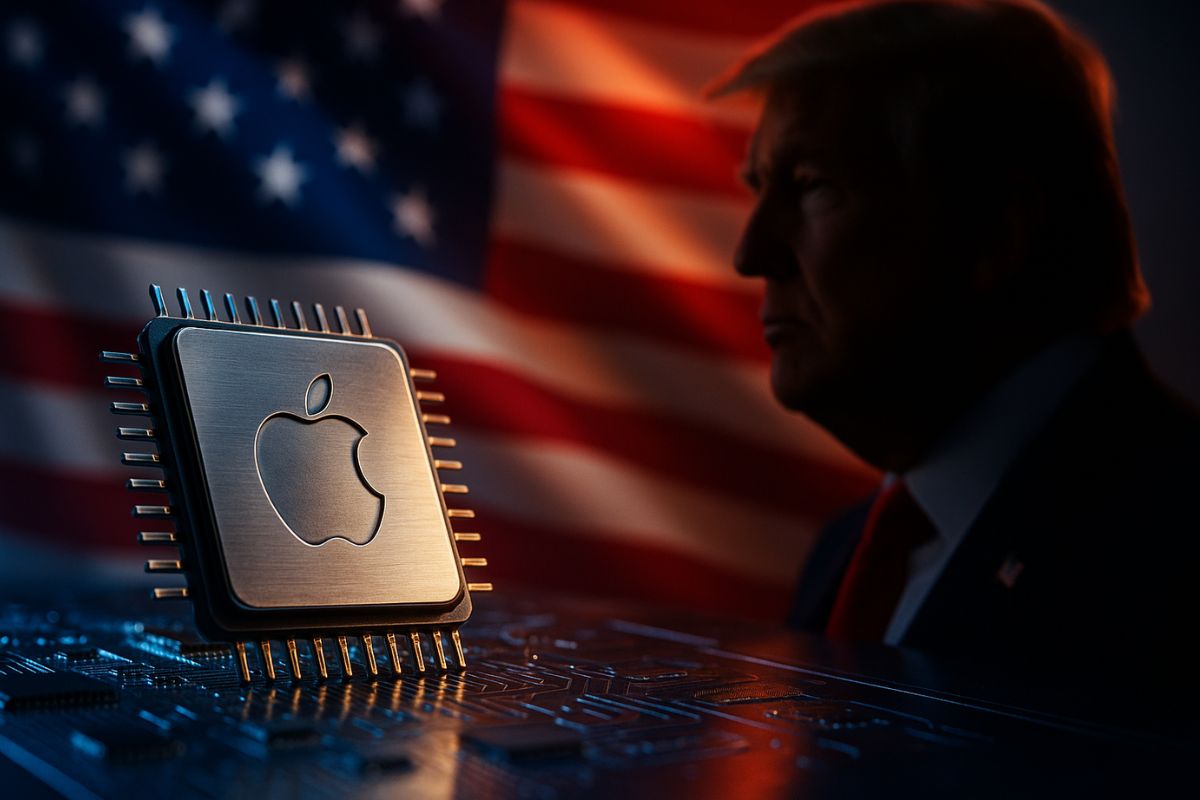
Apple Announces $600 Billion Investment in the USA to Avoid 100% Tariff From Trump on Imported Semiconductors
Apple confirmed on Friday (12) one of the largest private investments in the history of the United States: $600 billion (about R$ 3.2 trillion) earmarked for the expansion of the domestic semiconductor supply chain. The announcement was made by CEO Tim Cook in an interview with CNBC and comes in response to the threat from President Donald Trump, who is considering imposing a 100% tariff on imported chips.
According to Cook, the decision is not only a reaction to the tariffs but also a strategic move to solidify the USA as a global powerhouse in the semiconductor sector. “The president said he wants more in the USA. And we also want more in the USA,” said the executive, highlighting that the plan aims for technological sovereignty in an industry dominated by Asian countries.
Details of Apple’s Largest Investment
The investment of $600 billion will be allocated over four years. Part of this amount includes the expansion of $2.5 billion in partnership with Corning, supplier of the screens for iPhones and Apple Watches at its Kentucky facility.
-
The largest food company on the planet, JBS, has just opened a 4,000 square meter laboratory in Florianópolis to develop customized proteins that modulate muscle mass gain, immune response, and metabolic performance.

-
After nearly 30 bids and competition among industry giants, a Spanish company purchases one of the largest airports in Brazil for almost R$ 3 billion and takes over the management of Galeão in a concession that will last until 2039.

-
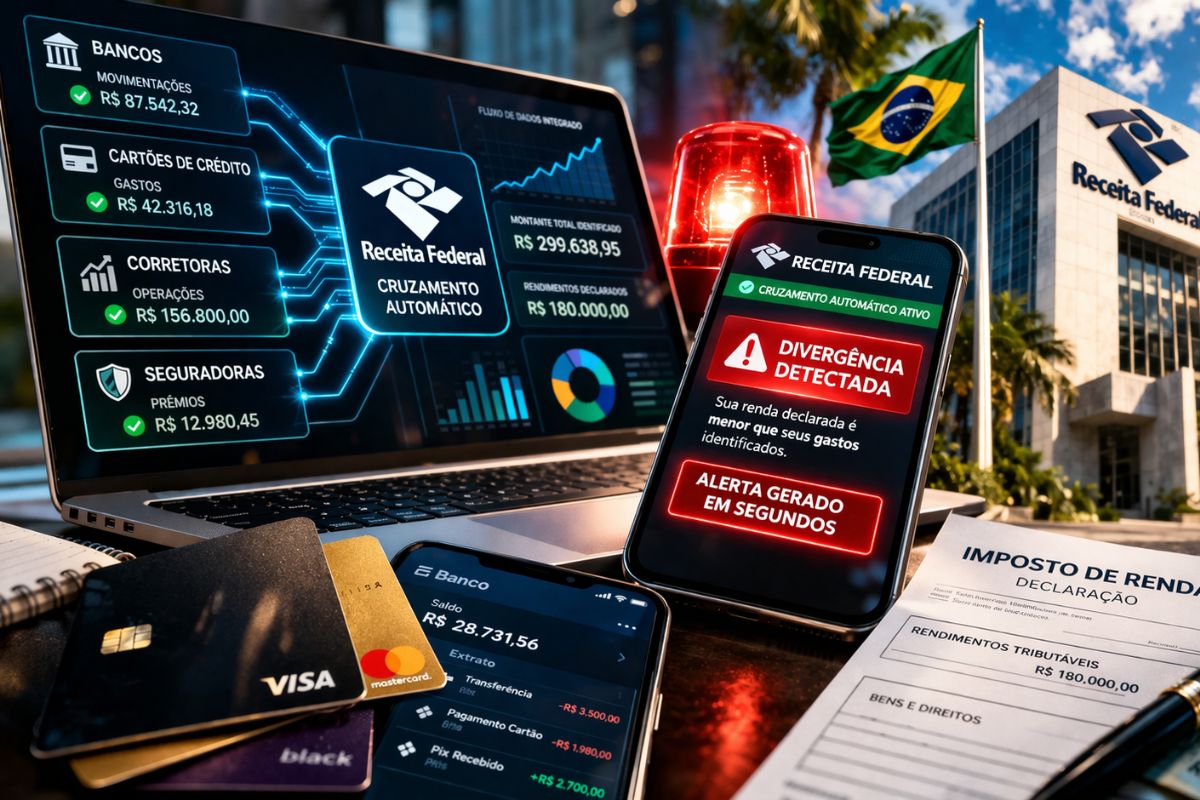
The Federal Revenue Service now automatically cross-references everything you declare with data from banks, credit cards, brokerage firms, and insurance companies, and any discrepancy between your income and your expenses triggers an alert in seconds.
-
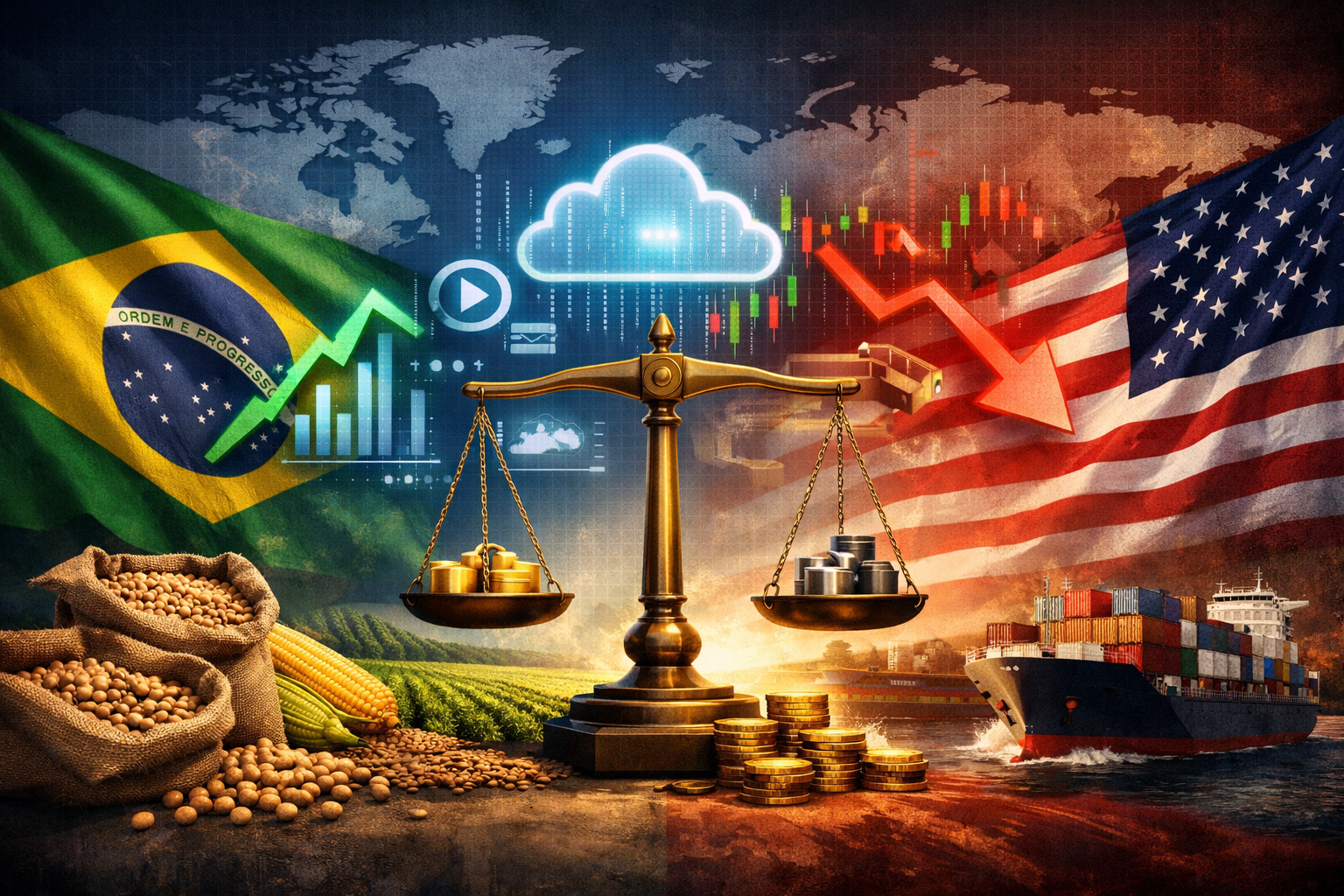
Amid global tensions, Brazil blocks the United States’ proposal at the WTO and paves the way for a trade crisis and possible retaliations.
In addition, Apple will work alongside companies such as TSMC, Texas Instruments, and Applied Materials to create an integrated production network on American soil.
Today, Apple maintains business relationships with about 9,000 suppliers in all 50 states and has already helped generate 450,000 direct and indirect jobs.
The goal is to significantly expand this number, leveraging the wave of reindustrialization encouraged by Trump’s government policies.
Education and Workforce Training
Another relevant point is the Apple Manufacturing School in Detroit, which opened in August. The center aims to train workers and support small and medium-sized businesses in the transition to advanced manufacturing, utilizing artificial intelligence and automation.
This initiative is seen as essential to meet the growing demand for skilled labor in the semiconductor sector.
For experts, this educational front shows that Apple is not limited to building factories but aims to structure a complete ecosystem, ensuring everything from production to professional training.
Political and Geopolitical Pressure of Semiconductors
The support from the Trump administration was emphasized in the announcement. The American president stated that companies investing on American soil will receive “preferential treatment” in tariff regulations.
The tariffs act as pressure to attract productive capital and reduce dependency on foreign suppliers.
The semiconductor sector is considered the “heart of the digital economy”, essential for smartphones, cars, computers, and artificial intelligence systems.
Production concentration in Taiwan and South Korea is seen as a strategic risk, especially amid escalating tensions with China.
In this context, Apple’s move reinforces the USA’s goal of reducing external vulnerabilities and increasing autonomy in critical sectors.
Immediate and Future Impact of Apple
In the short term, the investment prevents the company from suffering from the 100% tariffs, preserving competitive prices and the flow of chip supply.
In the medium and long term, Apple can alter the global industry map, pressuring other giants like Google, Microsoft, and Nvidia to follow suit.
For industry analysts, the announcement represents a turning point in American reindustrialization. Besides escaping the tariffs, Apple positions itself as a protagonist in a new phase of the economy, where local chip production becomes a strategic priority for governments and companies.
The billion-dollar investment from Apple demonstrates how trade and geopolitical disputes are reshaping the technology industry.
The decision to allocate $600 billion for factories in the USA is simultaneously a response to Trump’s tariffs and a historic step toward American industrial sovereignty.
And you, do you believe Apple’s strategy will really change the global balance of semiconductor production or will it just be a temporary response to political pressure?
Leave your opinion in the comments; we want to hear your view on this historic movement.







-

2 pessoas reagiram a isso.