





 Portuguese
  English
  Spanish
  5 min of reading
  1 comment


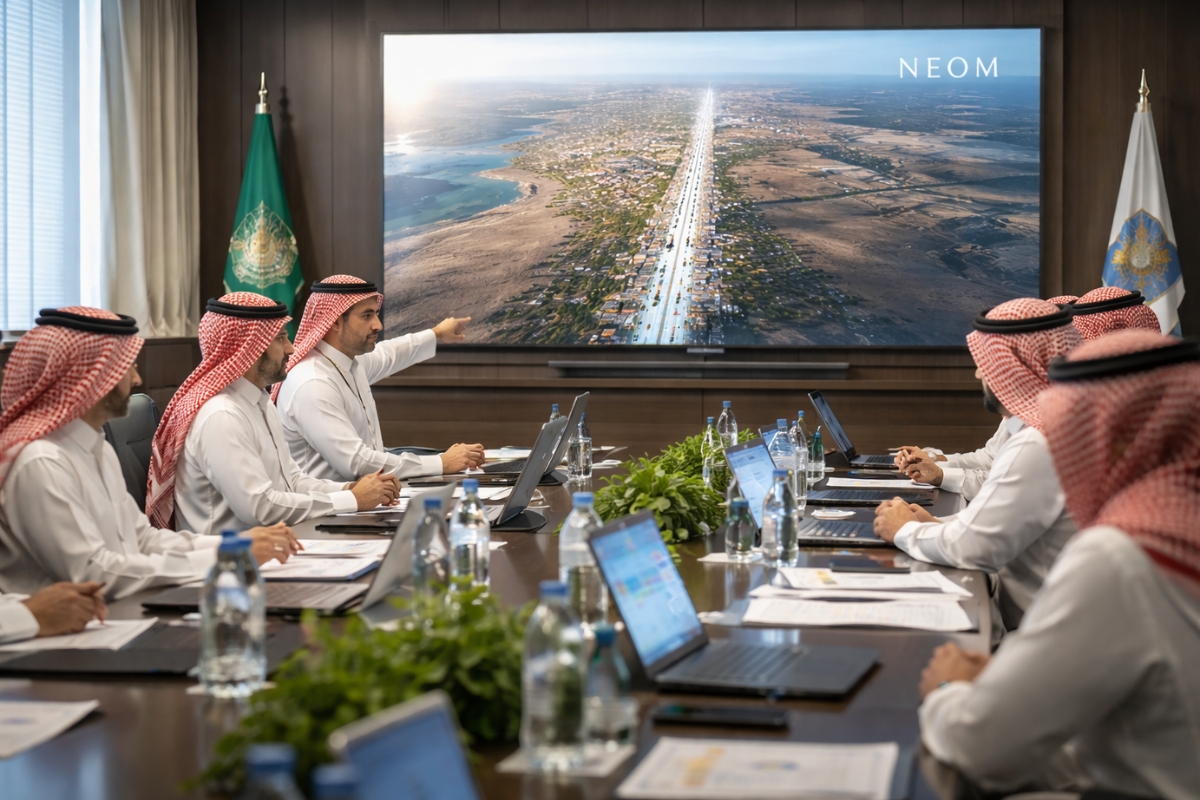


The Saudi Sovereign Fund Suspended the 170 Km Linear City in NEOM, Revised Costs and Began Investing in AI Data Centers, Changing the Strategic Axis of the Project
The announcement of a linear city of 170 kilometers in the Saudi desert was presented as a civilizational milestone. A mirrored structure, without cars and traditional streets, promised to condense millions of people into a narrow strip of territory and project economic power from the Red Sea.
Five years later, the movement is different. Construction was suspended in September 2025, the project entered a deep review, and capital began to flow into artificial intelligence infrastructure, signaling a change in strategic reading by the Saudi state.
The Exact Moment When the Work Was Interrupted
The suspension occurred formally on September 16, 2025, when the Public Investment Fund decided to stop active construction fronts of The Line. The decision was not announced as a cancellation but as a technical pause for a complete re-evaluation of the project.
-
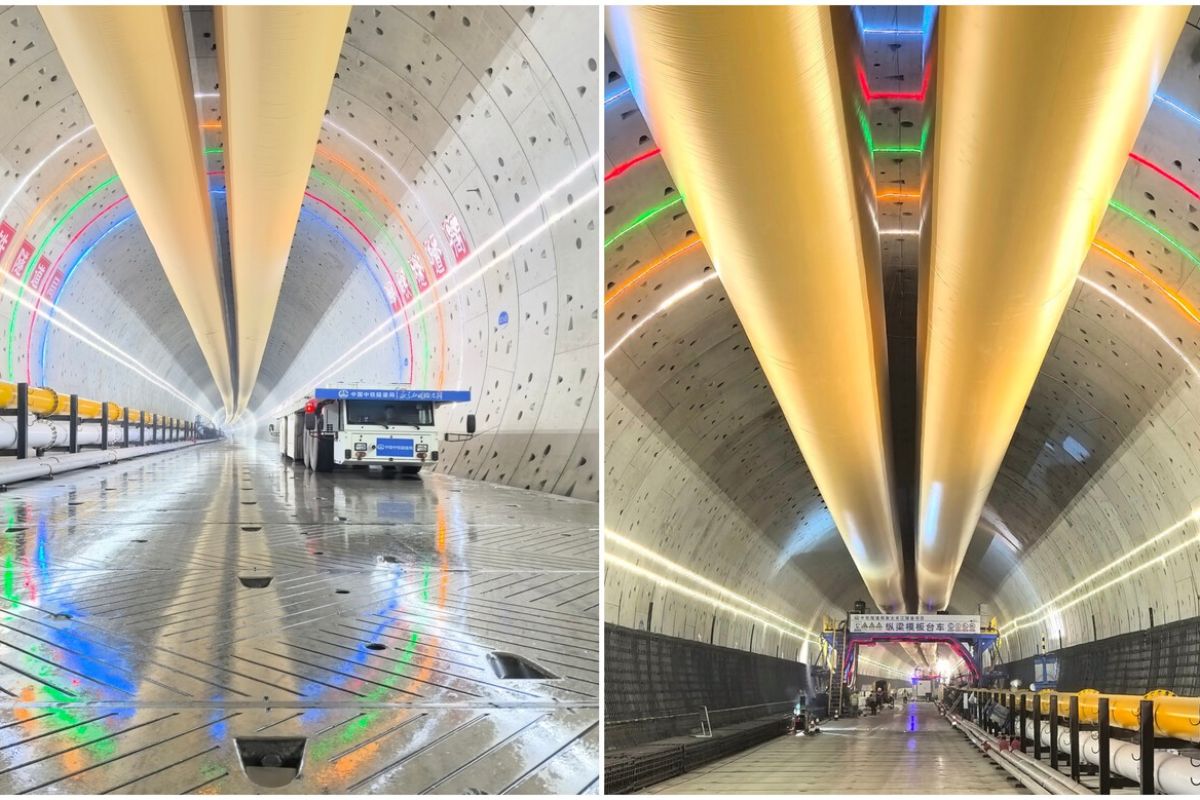
China completes the most critical section under the Yangtze River with the intelligent tunneling machine Linghang, excavating 11.32 continuous kilometers at depths of up to 89 meters and transforming the Chongming-Taicang tunnel into a landmark that redefines the scale of high-speed rail engineering in the 21st century.
-
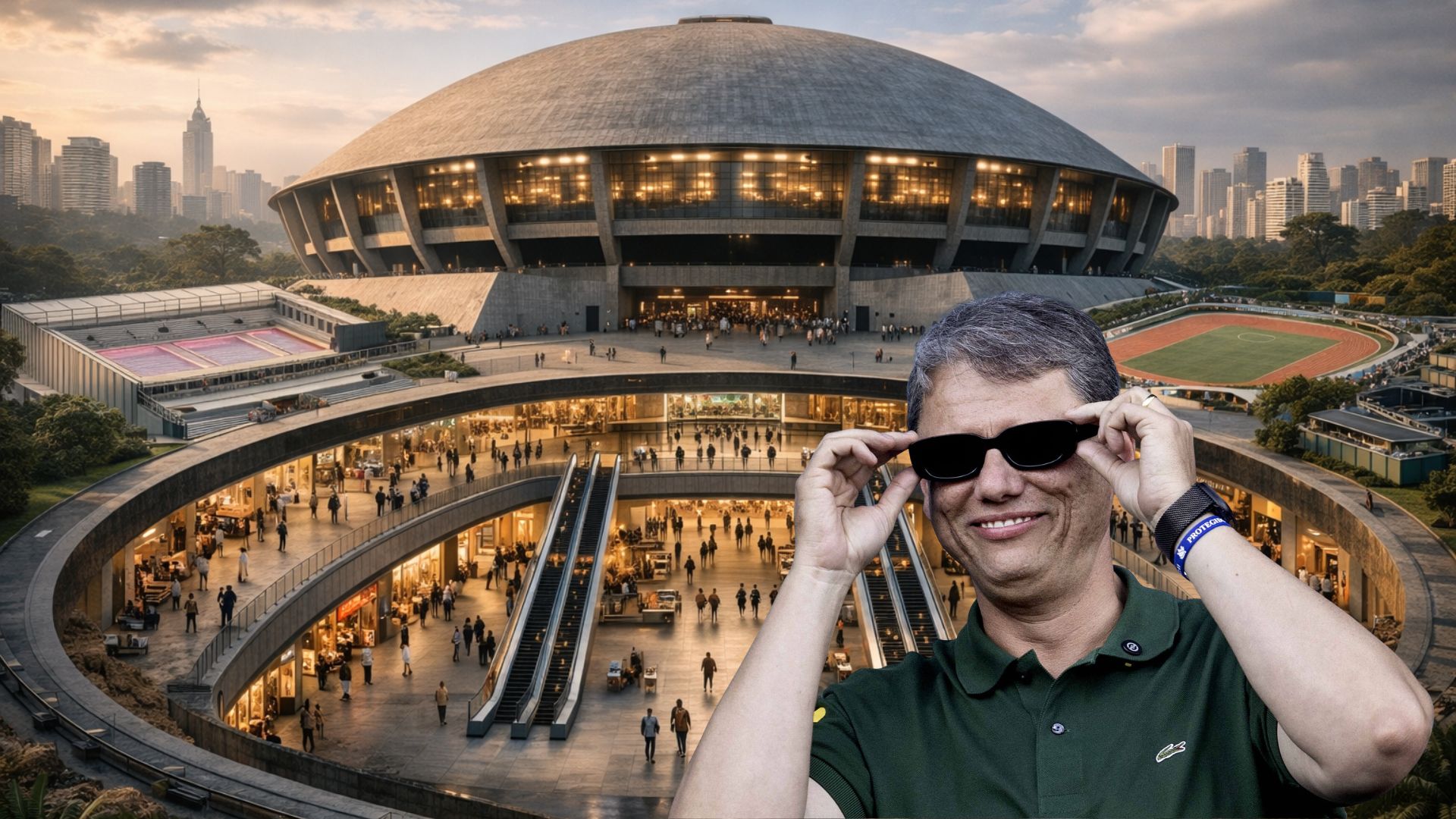
The government of São Paulo surprises South America with a plan to transform the famous Ibirapuera with underground shops, air conditioning, and a 25-year concession in a billion-dollar project that expands the audience, alters a protected area, and provokes an immediate reaction.
-
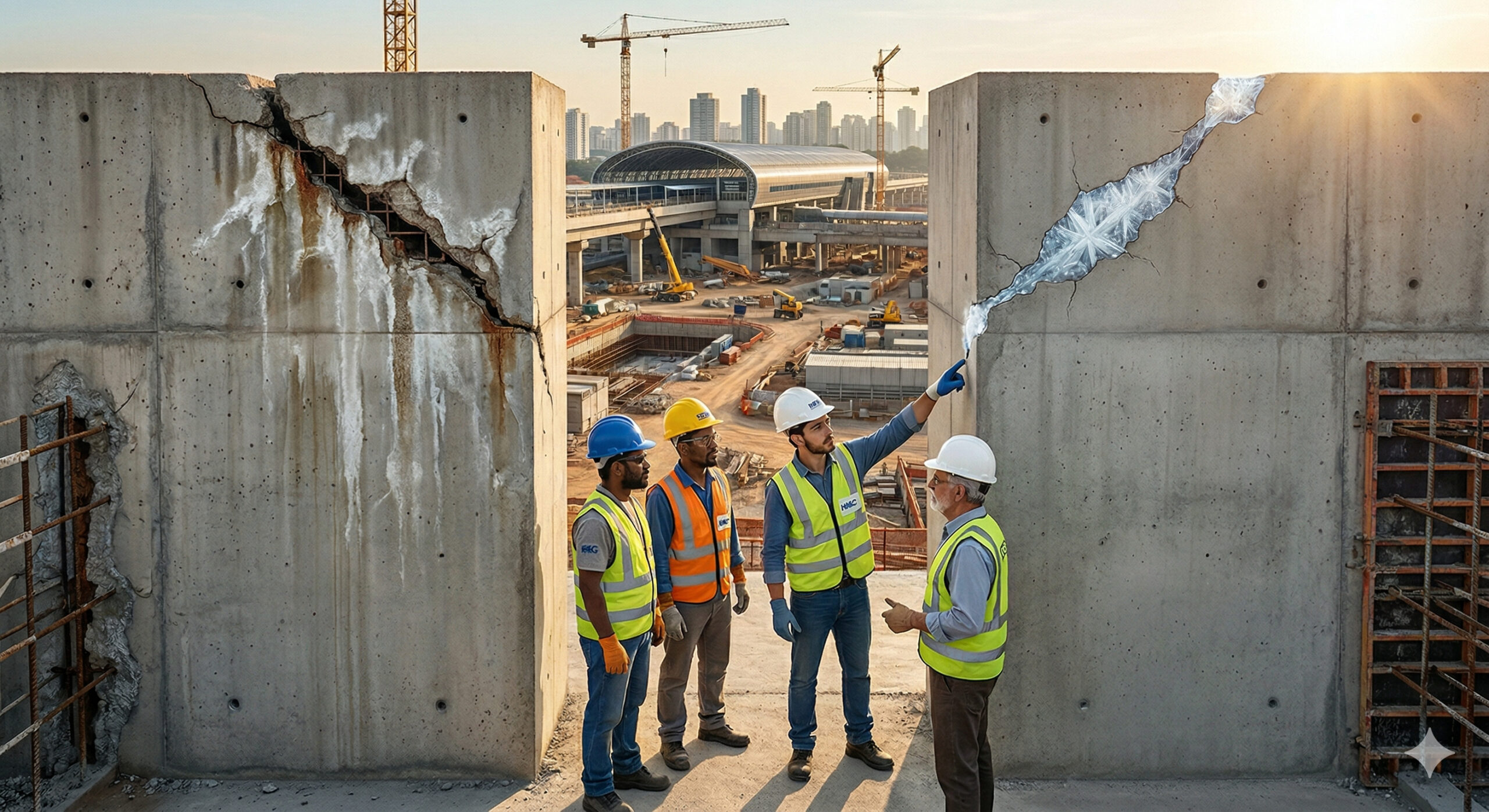
With a lifespan of up to 60 years and a cost up to 30% higher than conventional concrete, self-healing concrete is already being used in Brazil to eliminate leaks, reduce maintenance, and is changing the real cost of construction projects.
-
Engineered wood CLT challenges steel and concrete and promises construction that is up to 2x faster with a lower environmental impact in modern civil engineering.

Since then, there have been no structural activities ongoing along the original route of 170 km. Machines were removed, contracts underwent revision, and international teams were gradually demobilized, signaling that the interruption would not be short-lived or punctual.

Costs Out of Control Pressed the Decision
One of the main factors behind the suspension was the escalation of costs. Initial estimates spoke of figures between 100,000 and 200,000 million dollars, but internal revisions began to indicate much higher numbers to complete the entire planned stretch.
Internal reports indicated that the total cost could reach 8.8 billion dollars, with a timeline extending to 2080. This scenario would position The Line as a project with financial weight incompatible with the fiscal rhythm and immediate priorities of the kingdom.
The Direct Impact on the Finances of the Sovereign Fund
The decision to stop the work came after a record of an amortization of 8 billion dollars in large strategic projects, including NEOM. This accounting adjustment raised an internal alert about return, liquidity, and long-term risk.
The Public Investment Fund began to face simultaneous pressures. Besides NEOM, the country took on heavy commitments with the 2030 Expo in Riyadh and the 2034 World Cup, requiring investments with more predictable results and shorter timelines.
Change of Command and Structural Review of the Project
In November 2024, there was a change in NEOM’s leadership. Aiman al Mudaifer took over as the new CEO, replacing Nadhmi al Nasr, initiating a broad review of the project’s scope, timeline, and purpose.
This review was planned to last about a year and is expected to conclude in the first quarter of 2026. The original concept of The Line began to be treated internally as unfeasible under the terms announced in 2021.
The Drastic Reduction of Urban Ambition
Even before the total suspension, the project had already been scaled back. The first phase, which initially envisioned dozens of kilometers, was reduced to 2.4 km, with an estimated population of 300,000 people, well below the initial projections.
Later, the government began to mention a central section of 5 km by 2030, pushing the remainder to 2045. In practice, this fragmented the idea of a continuous linear city and weakened the urban core that justified the concept.
The Built Infrastructure and What Remained on the Ground
Despite the suspension, significant portions of the work had already been executed. More than 4,500 piles were driven in some sections, with a pace reaching 60 piles per day at the construction peak.
A concrete factory valued at 700 million riyals was also planned, with a daily capacity of 20,000 cubic meters, in addition to the movement of over 90 million cubic meters of material until February 2024.
The Strategic Reading Behind the Change in Course
According to New Arab, an international journalism portal focused on the Middle East, the reevaluation of NEOM was not limited to the city’s cost but to the role that the project should fulfill in Saudi power strategy.
The conclusion was that a long-term futuristic city offered less strategic return than digital infrastructure capable of generating immediate influence, attracting foreign capital, and positioning the country in the global competition for advanced computing.
HUMAIN Emerges as the New Investment Axis

In May 2025, the Public Investment Fund launched HUMAIN, a company created to structure the entire value chain of artificial intelligence in the country. The plan envisions 1.9 GW of capacity in data centers by 2030, advancing to 6.6 GW by 2034.
The first phase involves a supercomputer with 18,000 NVIDIA GB300 Grace Blackwell GPUs and an initial capacity of 500 megawatts dedicated to AI factories, consolidating a rapid leap in computational power.
NEOM as a Data Territory, Not a City Anymore
The location of NEOM began to be viewed from a different perspective. The region offers access to the Red Sea, available space, renewable energy potential, and conditions for large-scale cooling, decisive factors for large data centers.
In this new design, the already built infrastructure can be repurposed for industrial and digital uses, abandoning the idea of housing millions of residents in a single continuous linear structure.
The Silent Abandonment of the Original Concept
Although there has been no formal announcement of cancellation, internally the initial concept of The Line is treated as closed. The expectation is for a completely different project, based on what has already been built, but without the urban ambition presented to the world.
The absence of NEOM in the Saudi budget for 2026 reinforced the perception that priorities have changed, with resources being directed towards areas considered more strategic and less symbolic.
Consequences for the Region and for the Saudi Strategy
The suspension of The Line does not represent just a technical adjustment. It signals a change in the posture of the Saudi state, which now prioritizes digital influence assets over urban mega-structures with uncertain returns.
The focus on artificial intelligence repositions the country on the regional chessboard, expanding its presence in critical infrastructure and pressuring neighbors in a quiet competition for computational capacity and data control.
What emerges from this process is a different NEOM. Less a futuristic city, more a strategic platform. The interruption of The Line ends a cycle of architectural ambition and opens another, more pragmatic one, which changes the strategic reading of the project and the role of Saudi Arabia in the 21st century.







Serán 50.000 millones!!!