





 Portuguese
  English
  Spanish
  5 min of reading
  0 comments


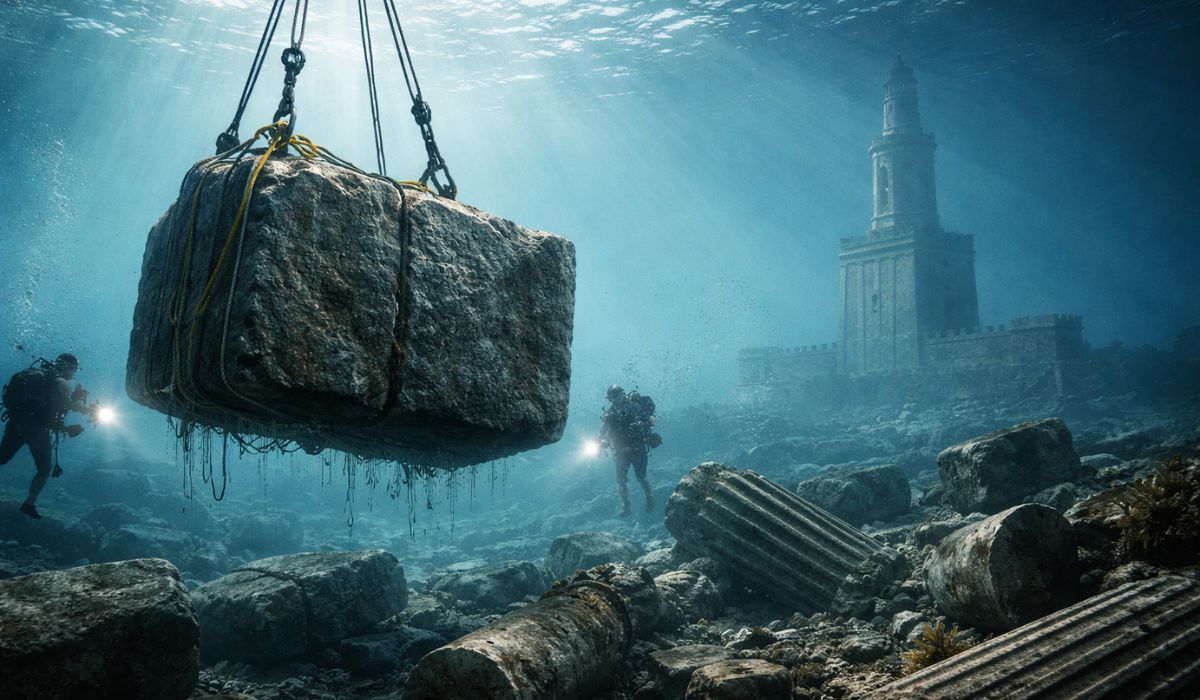
Giant blocks removed from the sea floor in Alexandria have reopened the debate about one of the most famous works of antiquity, now reconstructed with scanning, 3D modeling, and digital archaeology.
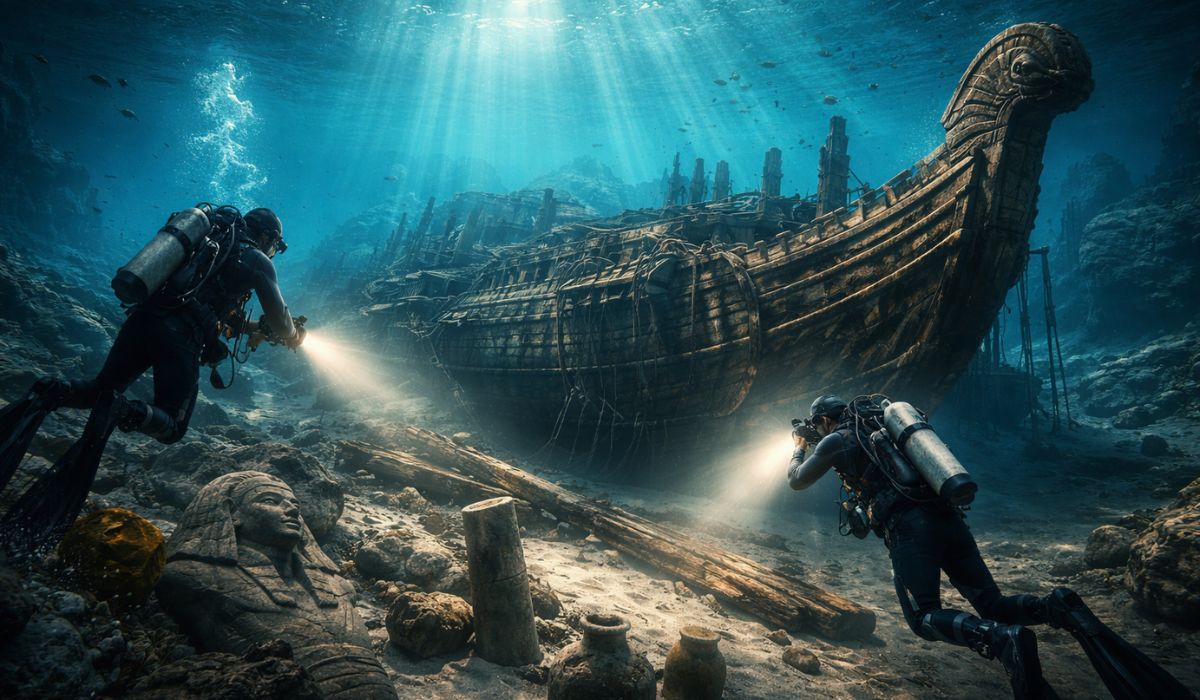
French and Egyptian researchers have retrieved from the sea floor in Alexandria 22 monumental blocks associated with the ancient Lighthouse of Alexandria and incorporated them into a digital reconstruction project of one of the best-known works of antiquity.
Instead of physically reconstructing the monument, the team is working on creating a 3D digital twin, based on recovered pieces, submerged archaeological records, and historical documentation.
The new phase of the project has placed the lighthouse at the center of studies on heritage, ancient engineering, and technology applied to archaeology.
-
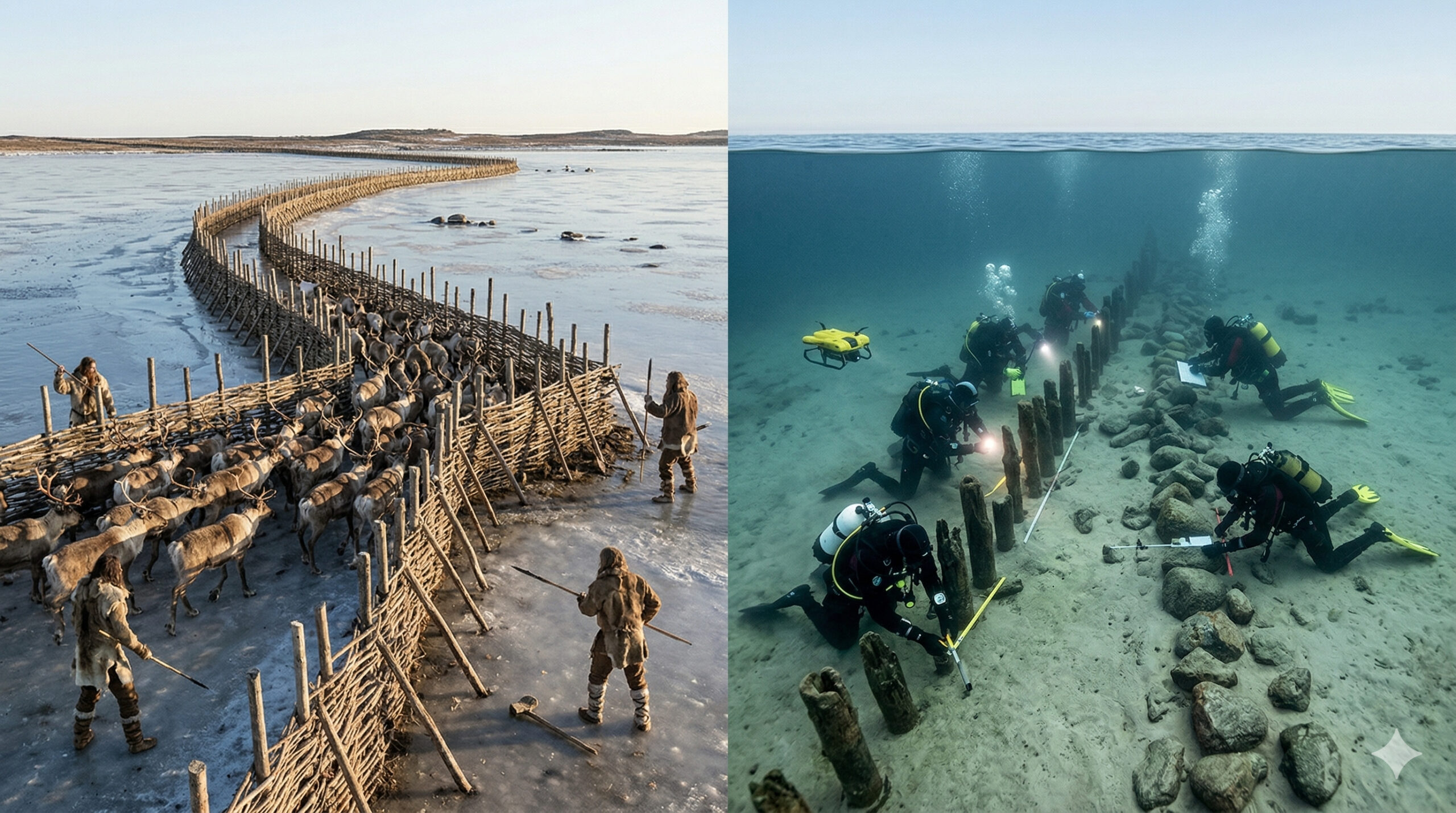
A geologist teaching students to map the bottom of the Baltic Sea identified something unusual on sonar in 2021: a line of stones meandering for almost 1 kilometer at a depth of 21 meters, revealing the largest megastructure of the Stone Age ever found in Europe, about 11,000 years old, built by hunters when the Baltic Sea did not yet exist.
-
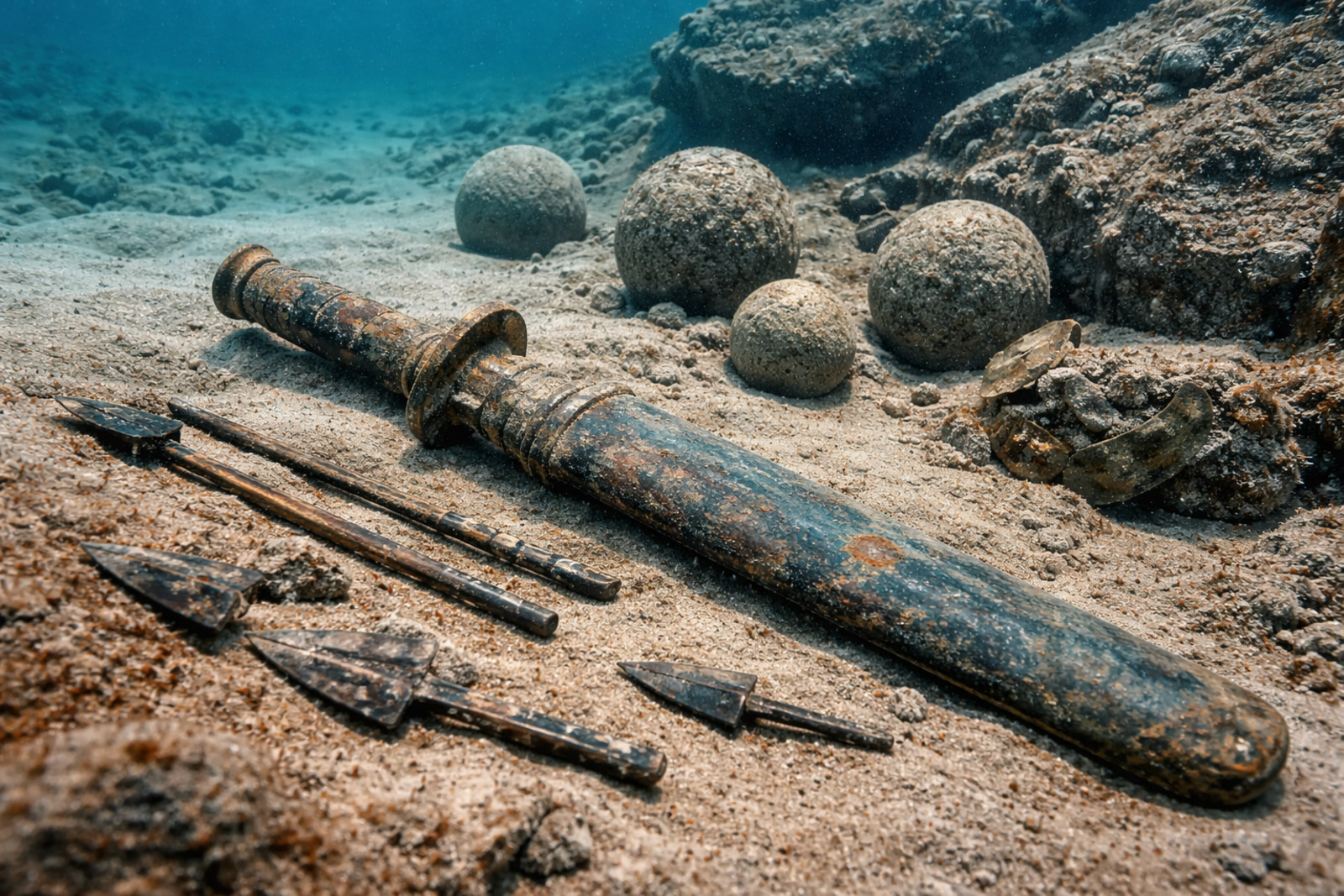
Mongol ship sunk 745 years ago emerges in excavations with sword, arrows, and relics from the 1281 invasion of Japan, destroyed by the first “kamikaze” in history.
-
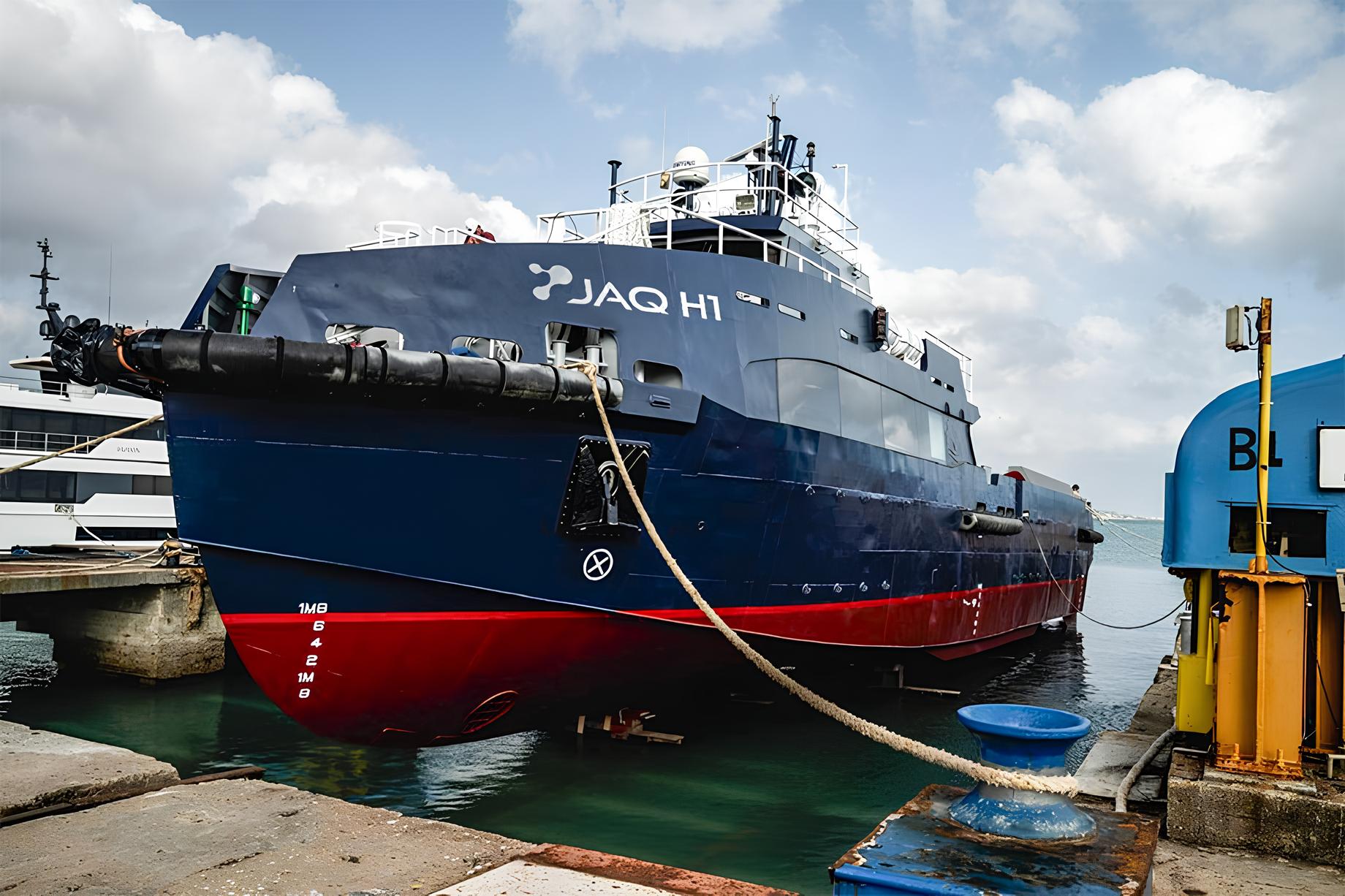
Brazil develops a 50-meter boat capable of producing its own fuel at sea by transforming water into green hydrogen through electrolysis; this unprecedented project seeks energy autonomy and could redefine naval propulsion.
-
The Arctic is shrinking and in March 2026 recorded only 14.3 million km² of ice at the peak of winter, one of the lowest levels since 1979, reducing the planet’s ability to reflect heat and accelerating global warming.


The blocks were located at the port of Alexandria, on the southeastern coast of the Mediterranean, and will now be studied and digitally scanned.
According to the Fondation Dassault Systèmes, the new pieces will be incorporated into the survey of more than 100 architectural elements recorded underwater over the past decade.
The research is led by French archaeologist and architect Isabelle Hairy and brings together historians, archaeologists, architects, and engineers under the PHAROS program.
The goal is to create a virtual model capable of testing hypotheses about the construction, shape, and collapse of the lighthouse, as well as allowing for an approximate visualization of its original appearance.
Among the recently retrieved pieces are parts of a monumental door with an estimated weight between 70 and 80 tons, as well as fragments of a large Egyptian-style pylon.
According to the foundation supporting the project, this ceremonial structure may have functioned as a monument.
The findings expand the body of evidence regarding the architectural composition of the lighthouse and the presence of Egyptian and Greek elements in the same building.

Lighthouse of Alexandria and the new digital reconstruction project
The recovery of large submerged blocks helps explain why the Lighthouse of Alexandria remains one of the most studied monuments of antiquity.
Also known as Pharos of Alexandria, the building was erected around 280 BC on the island of Pharos, by order of Ptolemy II Philadelphus, to guide vessels approaching the harbor.
The structure was part of the infrastructure of a city that, under the Ptolemies, consolidated itself as one of the main political, economic, and cultural centers of the Mediterranean.
Alexandria was founded by Alexander the Great in 332 BC, after the conquest of Egypt from the Persian Empire.
Later, the city became the capital of Ptolemaic Egypt and took on a central position in the Hellenistic world.
In this context, the lighthouse had a practical function in navigation but also marked the maritime entrance of a strategic city.
According to sources gathered by the project, the lighthouse exceeded 100 meters in height, placing it among the tallest structures of the ancient world.

The traditional model attributed to the monument includes a square base, an octagonal middle section, and a cylindrical top.
This configuration frequently appears in studies on ancient architecture and Hellenistic engineering.
The lighthouse’s illumination was produced by a large fire, likely fueled by wood or oil.
Ancient accounts indicate that its light could be seen up to 50 kilometers away.
Historical literature also mentions the use of polished metal surfaces, possibly bronze or copper, to reflect light and concentrate the beam.
However, these elements did not survive, and there are still archaeological limitations regarding the exact functioning of this system.
Submerged blocks and the archaeological puzzle in Alexandria
The submerged ruins of the Lighthouse of Alexandria were identified in 1994 by French archaeologist Jean-Yves Empereur.
Since then, studies at the site have been under the responsibility of the Centre d’Études Alexandrines, in cooperation with Egyptian authorities.
The area where the lighthouse stood remains submerged due to coastal subsidence processes that have affected Alexandria over the centuries.
The most recent phase of the program does not seek to reconstruct the monument with real stones.
The work focuses on digitally rearranging the already known fragments and the newly retrieved blocks.
After being lifted from the sea floor, the pieces undergo documentation and detailed scanning.

Subsequently, the data is sent to volunteer engineers from the Fondation Dassault Systèmes, who attempt to reposition each element in the virtual model.
According to the foundation, the operation functions like assembling a large archaeological puzzle.
This process allows testing hypotheses about the structural fitting of the stones, the design of the lighthouse, and the accumulated damage before the final collapse.
According to the project’s institutional material, the virtual model will also help investigate the construction methods used in the Ptolemaic era and the causes of the progressive destruction of the building.
Historical and archaeological sources indicate that the lighthouse had already been severely damaged by earthquakes before disappearing completely in the 14th century.
At the same time, the project fits into a broader trend in contemporary archaeology.
The use of photogrammetry, three-dimensional modeling, and immersive reconstructions has expanded the capacity to study lost monuments without physically interfering with the archaeological site.
In this case, the proposal for the digital twin serves to compare pieces, test reconstructions, and visualize disappeared structures based on material evidence.
3D technology, heritage, and the search for an ancient wonder
The Lighthouse of Alexandria is part of the tradition of the ancient wonders of the world, a classification popularized by Greek authors and revisited by Roman writers centuries later.
The fame of the monument was already noted in the writings of Pliny the Elder, who wrote about it during the Roman period, long after its construction.
This persistence in historical memory helps explain why the virtual reconstruction project attracts interest beyond Egyptian archaeology.
However, the focus of the research is not only on recovering ancient blocks.
It is also on understanding, based on material data, how a structure that played a technical and urban role on a large scale functioned and was organized.


The rescue of the most recent blocks, especially the monumental entrance elements and the pylon, adds new information about the architectural composition of the lighthouse.
These remnants also contribute to the study of the formal language of a building erected in an Egypt governed by a Macedonian-origin dynasty.
According to the Fondation Dassault Systèmes, the virtual model should eventually allow visitors to digitally explore the lighthouse as if they were on site.





Seja o primeiro a reagir!