Portuguese
  Spanish


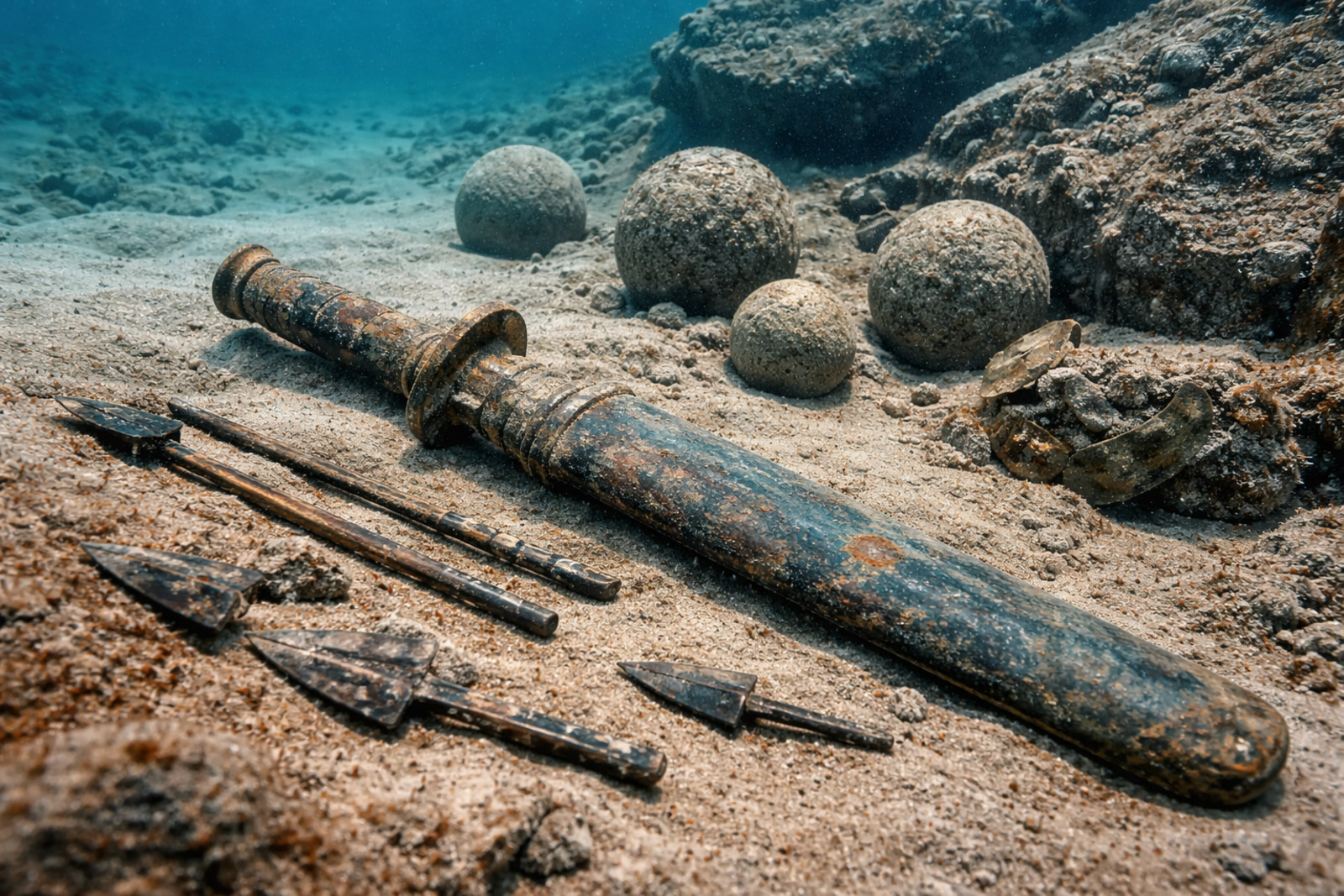

Excavations in Imari Bay revealed a Mongol ship from the 1281 invasion, with weapons and objects that expand the historical portrait of the conflict
Excavations in Imari Bay, near Takashima Island in Japan, revealed a Mongol ship linked to the 1281 invasion, thwarted by a typhoon. The find includes weapons, everyday objects, and new evidence about the conquest attempt led by Kublai Khan.
Find on the Japanese coast
The Mongol ship was identified after an acoustic scan of the seabed conducted in 2023 by a team from the National Institute for Cultural Properties in Nara and Kokugakuin University in Tokyo.
According to the study published in the Yearbook Japan, the newly excavated vessel was in Imari Bay.
-
A newly discovered caterpillar in Hawaii wears the remains of its prey that it devoured as a macabre armor, stitching bones and insect shells to its own back for camouflage.

-
She heard for decades that space was not a place for women, became a pioneer in aviation, was part of the Mercury 13, and at 82, finally traveled with Jeff Bezos before dying at 87.
-
Scientists investigate microplastics in the airways of patients with sleep apnea and reveal a new focus for research on environmental pollution, human exposure, and possible impacts on breathing quality.
-
For the first time, scientists have seen the ocean floor open up in real-time—plates moving apart by two meters in a few days and 160 million cubic meters of lava emerging on the seafloor.




Inside the vessel, there was a sword still in its sheath, arrows, and a pair of engraved metal chopsticks.
The discovery was described as the third shipwreck of this type found in the region in the last 15 years. The other two were found in 2014 and 2011, respectively.
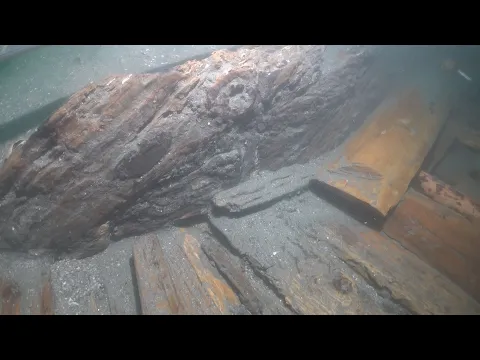

Where the wreckage was
The three located ships were at a depth of 65 feet, approximately 20 meters.
They were also buried about three feet, approximately 90 centimeters, below the ocean floor, covered by layers of sediment.
The analysis of Mongol ship number 3 helped researchers expand the picture of the attempted invasion of Japan in the 13th century.
Radiocarbon dating revealed information about the wood used in the construction of the vessel.
However, the construction style and the artifacts found on board indicated that the ship belonged to the Jiangnan Army, formed by vassals of the Mongols during the Yuan Dynasty.
The invasion of 1281
In the so-called Koan War, Kublai Khan is said to have sent a fleet of 4,400 vessels and about 140,000 soldiers and sailors to Hakata Bay in Kyushu.
On the Japanese side, 40,000 samurai and other warriors defended the corridor. Even so, the offensive seemed to have guaranteed victory before the storm arrived.
A devastating typhoon destroyed the Mongol armada, sparing only a hundred ships, and killed most of the warriors. In the following days, most of the survivors were hunted down and killed by samurai.

The first kamikaze
The invasion of 1281 was the second attempt thwarted by a storm in less than ten years. In 1274, Kublai Khan had already sent between 30,000 and 40,000 men, in 500 to 900 vessels, also to Hakata.
On that occasion, a typhoon sank a third of the fleet and caused the deaths of 13,000 people by drowning. The storm became known as kamikaze, or divine wind.
Life aboard the Mongol ship
The wreckage also contained iron helmets, stone cannonballs, bronze Buddhist statues, mirrors, and everyday utensils.
The team now hopes to analyze a soil sample from the lower planks of the hull, which contained fish bones, leather, and other accessories, to reconstruct what life was like on board before the shipwreck.
With information from New York Post.