





 English
  Francês
  Alemão
  Italiano
  Japonês
  Norueguês
  Portuguese
  Spanish
  5 min of reading
  0 comments


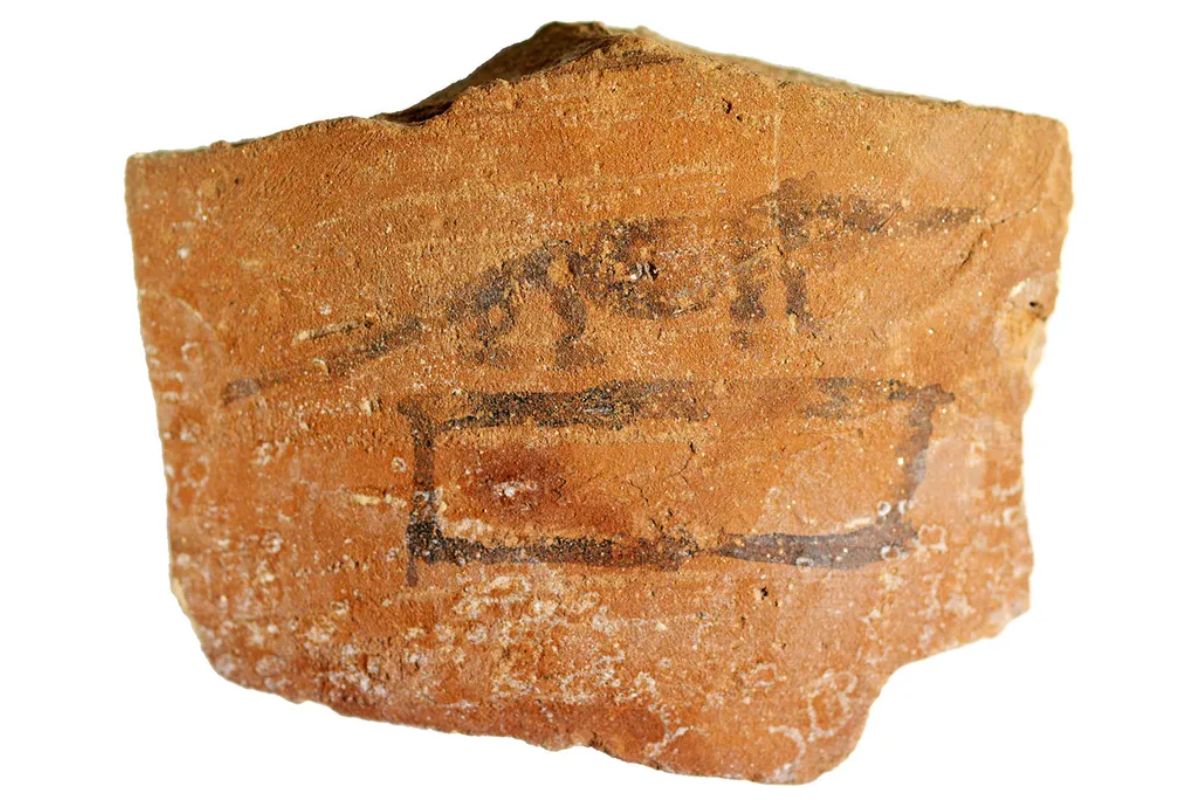
Archeologists find thousands of ceramic fragments used as drafts in ancient Egypt and reveal deep details about economy, religion, education, and social organization in Athribis
The archeologists responsible for the excavations in Athribis have brought to light a discovery that changes the level of understanding about ancient Egypt. There are more than 43,000 ostraca, fragments of pottery used as writing surfaces that record everything from simple tasks to complex aspects of administration and religion.
The analysis conducted by the archeologists reveals that these materials functioned as true notebooks of antiquity. They document the daily lives of ordinary people, something rare in archaeology, allowing for an accurate reconstruction of how life functioned in an Egyptian city even before the time of Cleopatra.
What are ostraca and why are they so important
Ostraca are fragments of pottery or stone used as a writing support. In practice, they were an efficient, cheap, and widely available solution, especially in a context where papyrus was more limited.
-
The climate in 2026 may surprise with extremes even more intense than in 2025, with heatwaves, out-of-season cold, and irregular rainfall in Brazil.

-
Astronomers identify 45 rocky planets that could harbor life, and one of them is just 4.2 light-years from Earth, making it the closest neighbor with the potential to have liquid water on its surface.

-
China showcases laser defense systems that target drones flying very low and attempts to address a flaw that has been concerning armies worldwide.

-
The United States showcases a microwave weapon in an autonomous vehicle that can take down multiple drones at once and aims to reduce the costs of a war that currently burns millions on missiles.


The use of these materials was not just occasional. The archeologists identify that they were an active part of the administrative, educational, and religious system, functioning as quick and practical records of everyday life.
The origin of the term is Greek, related to the word “shell,” and its use dates back centuries before the period studied in Athribis. Some of the oldest known examples date back to approximately 1250 BC, showing that this practice had been established for a long time.
Athribis and the unprecedented dimension of the discovery

Athribis was built around the 4th century BC and is located about 110 kilometers from Luxor. The site has been studied since 2003 by an archaeological mission that brings together international researchers and Egyptian authorities.
Initially, the focus of the excavations was the main temple of the city, linked to the Ptolemaic period. However, the discovery of residential structures and storage areas revealed a much broader scenario, including a large deposit of pottery.
Since 2018, the work has begun to reveal an increasing amount of ostraca. In 2023, the expansion of the excavated area further accelerated the findings. The volume reached dozens of fragments per day, consolidating the total of 43,000 pieces.
This number places Athribis as the most productive site ever found for this type of material, surpassing even historically known locations for such records.
What the records reveal about daily life
The content of the ostraca impresses with its diversity and level of detail. The archeologists found records that cover practically all aspects of daily life.
Among the main contents identified are:
Lists of taxes and delivery records
Administrative notes and simple reports
School exercises and copies of texts
Religious certificates related to rituals
Lists of names associated with local deities
Drawings of animals, human figures, and geometric shapes
This variety shows a highly structured society, with economic control, formal education, and a strong presence of religious practices.
An organized and documented society

The fiscal records found indicate a well-defined system of collection and control. Lists of taxes and deliveries reveal an organized economy, with a constant flow of goods and services.
At the same time, the school exercises show that education was a relevant part of social life. The ostraca were used to practice writing, copy texts, and learn religious and administrative content.
In the religious field, the documents also hold great value. Priestly certificates, for example, indicate the quality of animals used in sacrifices. This evidences a detailed and institutionalized ritualistic system.
Linguistic and cultural diversity
Another point that stands out is the diversity of languages and writing systems present in the ostraca. Most are in Demotic, a cursive form of ancient Egyptian, but there are also records in:
- Greek
- Hieratic
- Hieroglyphs
- Coptic
- Arabic in more recent periods
This linguistic multiplicity shows that Athribis was an active center throughout different historical phases, crossing cultural and political transformations.
Moreover, the most recent records date from between the 9th and 11th centuries AD, indicating that the use of ostraca continued for much longer than previously thought.
Drawings and visual records are also part of the discovery
Not all ostraca are texts. Many of them contain visual representations that further enhance the value of the discovery. Drawings of animals, human figures, and geometric symbols were found, as well as representations associated with deities.
These records help to understand not only writing but also how the ancient Egyptians represented the world around them. They serve as a direct bridge between culture, art, and everyday life.
The role of ostraca in reconstructing history

About one-third of the documents from ancient Egypt known today are recorded on ostraca. This shows that these fragments are not just complementary but central to historical study.
For a long time, it was believed that they were used only when papyrus was lacking. However, archeologists now consider that there was a deliberate choice for the use of pottery, especially for quick and everyday records.
This change in interpretation is significant. It indicates that ostraca were part of a practical logic of writing, not just an improvised solution.
Why this discovery is considered so valuable
The main value of this discovery lies in its ability to show common life. Unlike large monuments or official inscriptions, the ostraca record the daily lives of anonymous people, revealing routines, concerns, and real practices.
This allows researchers to build a much more complete social history. The archeologists emphasize that this type of material offers a direct and unfiltered view of ancient society.
By gathering thousands of fragments with varied content, Athribis becomes a kind of living archive of antiquity.
What can still be revealed
Even with more than 43,000 pieces already identified, the work continues. The archeologists believe that there is still much material to be discovered and analyzed, which can further expand understanding of ancient Egypt.
Each new fragment can bring unprecedented information, whether about economy, religion, education, or daily life. This makes the discovery dynamic and constantly evolving.
In light of so many detailed records about common life in the past, the question remains: if these fragments have already revealed so much, how many stories still lie hidden beneath the sand waiting to be discovered?









Seja o primeiro a reagir!