





 Portuguese
  English
  Spanish
  3 min of reading
  0 comments


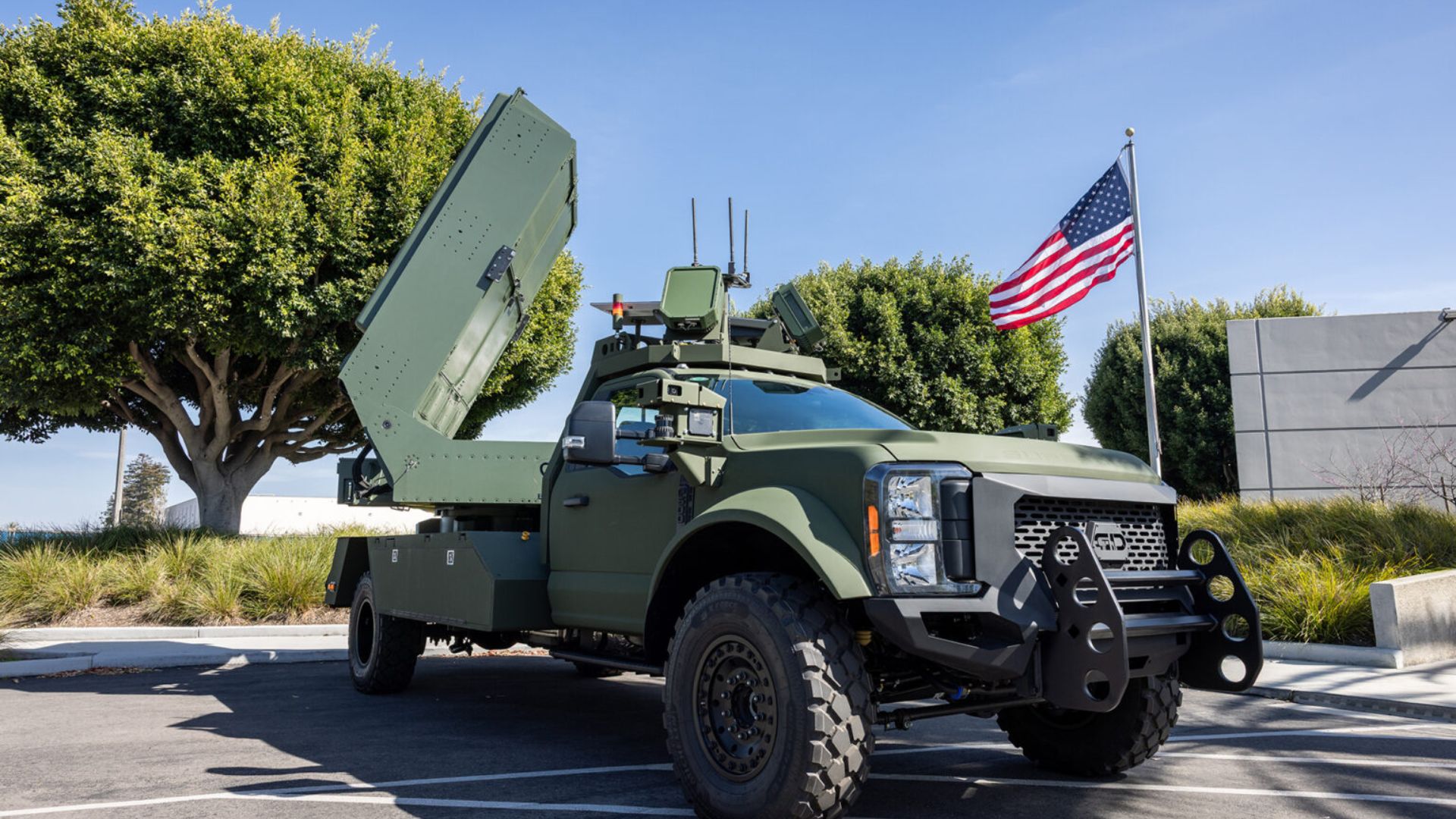
The United States unveiled an autonomous vehicle equipped with a microwave weapon capable of neutralizing swarms of drones, in an attempt to reduce operational costs and expand response capacity in light of the advancement of attacks with cheap aircraft launched in large numbers
The United States presented a new microwave weapon designed to combat swarms of drones, amid the search for lower-cost alternatives in response to the growing use of these aircraft on a large scale. Named the Leonidas Autonomous Ground Vehicle, the system was showcased at the AUSA Global Force Symposium 2026 in Huntsville, Alabama, as a proposal to neutralize multiple targets in seconds.
In recent months, the daily use of cheap and numerous drones by adversaries has exposed the imbalance between the cost of these threats and the value spent by the United States and its allies to shoot them down with traditional missile-based systems.
While drones can be quickly replaced, the replenishment of missiles is more complex and depends on logistical constraints.
-
New technology may retire the common bathroom fixture: smart shower turns on by voice, heats up before the shower, adjusts temperature via mobile phone, and transforms the shower stall into a digital system inspired by a connected home.

-
Workers were digging to build a railway in northern Mexico and found beneath their feet a 1,200-year-old village with underground houses, ancient burials, and rock engravings.

-
The scientists did not expect it, but they found fossils of mysterious species in a cave among volcanic ashes over 1 million years old, revealing an ancient history.
-
Six 400,000-year-old teeth found in China contained a protein that was believed to exist only in the mysterious Denisovans: the discovery reveals that Homo erectus interbred with this extinct relative and left a genetic trace that still lives in human populations today.





Leonidas AGV emerges as a response to the advancement of drone swarms
The Leonidas AGV is a modified vehicle built on the chassis of the medium truck Ford F-600 and equipped with sensors, power distribution, and other components necessary to support a combined microwave weapon and autonomous driving system. The project involves American companies Epirus, General Dynamics Land Systems, and Kodiak AI.
The system’s proposal is to operate without a driver or under remote control, allowing the vehicle to be repositioned within an area, move between interception points, or patrol sensitive zones without exposing teams to enemy fire. Thus, the equipment is presented as an advancement in low-cost countermeasures for drone warfare.
How the microwave weapon acts on drones
The Epirus Leonidas system is described as a high-power microwave weapon capable of generating pulsed electromagnetic energy to damage the electronic components of drones. This effect causes failures in the navigation, propulsion, or communication systems of the affected aircraft.
According to the system’s description, the effect is achieved through localized heating and induced electrical surges, allowing the beam area to neutralize swarm attacks when multiple drones fly close to each other. Unlike laser systems, which hit one target at a time, the microwave-based approach can engage multiple targets simultaneously, provided there is enough energy on board and adequate thermal management for repeated and continuous pulses.
Joint development and focus on rapid adaptation
The Leonidas AGV was developed in a joint effort, with General Dynamics Land Systems acting as the main integrator. The adoption of the Ford F-600 avoided the need to design a specific military vehicle, which can accelerate future iterations and expansions of the platform.
The Leonidas weapon system is already modular and can be adapted to different vehicles, according to the project presentation.
As it does not rely on physical interceptors, it is not limited by ammunition stocks or reload cycles, which expands the possibility of continuous use within a broader anti-drone infrastructure focused on short-range defense.
Autonomous driving and current status of the prototype
The vehicle’s autonomous driving is ensured by the AI Driver system from Kodiak, which uses sensors, cameras, and other perception mechanisms to operate in varied environments, from highways to rugged terrain.
With real-time data, the system can plan routes, avoid obstacles, and reposition the AGV according to changes in threat patterns.
When necessary, human operators can intervene and take control of the vehicle. Despite the public presentation at the AUSA symposium, the Leonidas AGV is still a full-scale prototype, without validation in operational conditions and without demonstration of engagement capability in autonomous movement, although it already indicates the possibility of neutralizing drones with a lower-cost solution in the future.







Be the first to react!