





 Portuguese
  English
  Spanish
  4 min of reading
  0 comments


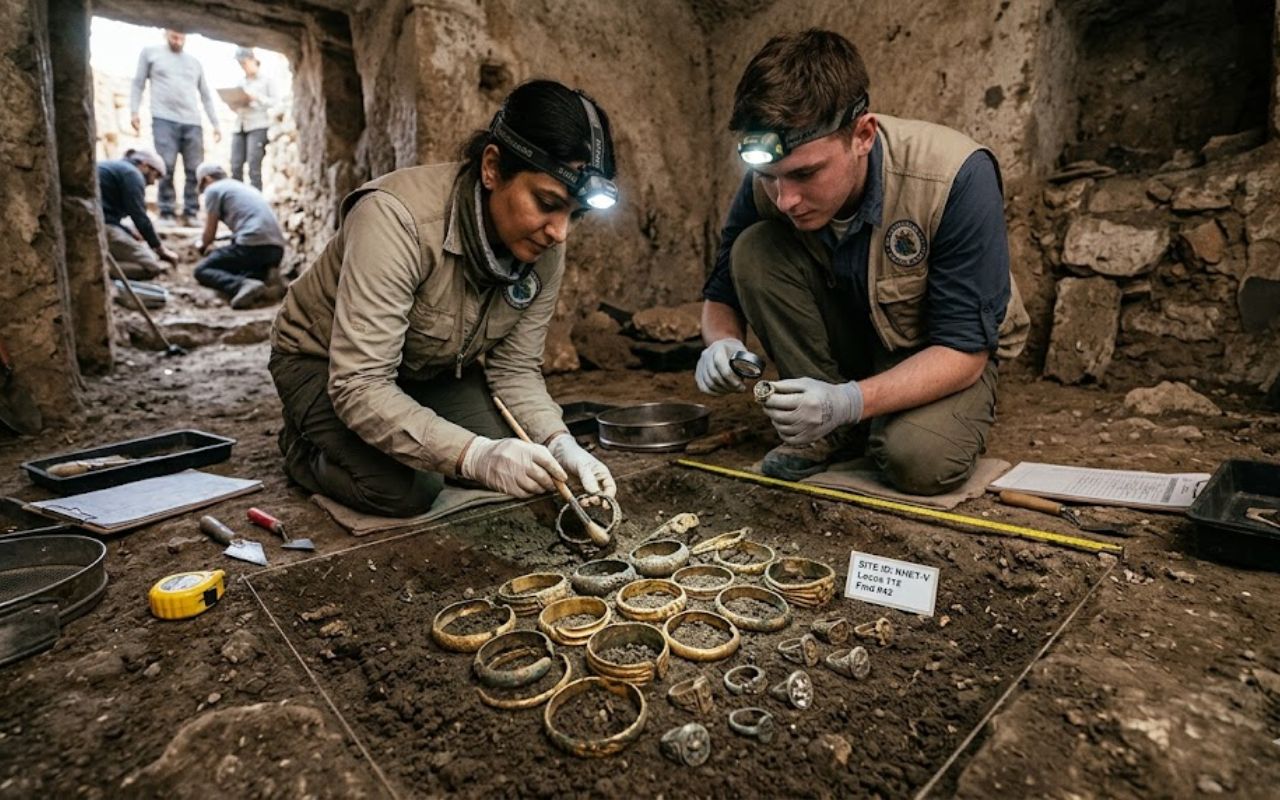
Archeologists discover tomb of elite woman 3,000 years old with various adornments in Chechnya. Finding reveals ancient customs and social hierarchy.
During archaeological excavations carried out in 2025, researchers identified, in Chechnya, Russia, a tomb approximately 3,000 years old that belonged to an elite woman.
The finding emerged in an area that was previously being investigated due to the reconstruction works of the Novogrozny–Serzhen-Yurt gas pipeline.
What caught the attention of the archeologists the most was the significant amount of adornments found alongside the body, a clear indication of high social status.
-
Airbus and Mercedes take the G-Class to the skies: the ACH145 helicopter priced at R$ 78 million debuts in São Paulo, unit goes to Brazilian, AMG cabin, 5-blade rotor, and a 2-year wait.

-
New material could change everything: it is the thickness of an atom, 200 times stronger than steel, and 100,000 times thinner than a human hair.

-
A new study published in Nature reveals that the SLIT3 protein can increase calorie burning by activating brown fat in the body, functioning as a kind of “biological switch.”

-
New signals detected by NASA suggest that the Moon may hide accessible underground cavities, after data from Mini-RF indicated a conduit over 60 meters beneath a lunar pit.


Additionally, the discovery offers important clues about funeral rituals, social organization, and the customs of the ancient populations that inhabited the Caucasus region.
Elite woman was buried with dozens of adornments
The highlight of the discovery is the number of objects found in the tomb of the elite woman. The body was accompanied by 19 bronze bracelets and eight rings distributed across the fingers.
Moreover, there were ceramics and other personal ornaments. This collection is considered unusual and reinforces the idea that the elite woman held a prominent position.
In some graves in the same region, archeologists found up to 60 objects, indicating strong symbolic value in these rituals.
The tomb was located at the Khumykskoye-2 archaeological site, which includes a cemetery with about 160 burials. The graves were organized in rows, with regular spacing.
This pattern suggests planning and well-defined rules within the community. Additionally, it indicates that the funeral rituals followed a structured logic.
The burials were dated between the 10th century BC and the first half of the 8th century BC, reinforcing the antiquity of about 3,000 years.

Differences between men and women appear in the tombs
The archeologists observed clear distinctions between the burials. Women, like the elite woman, were buried with jewelry and adornments.
On the other hand, men were buried with weapons, such as bronze daggers, as well as spear and arrowheads. This difference indicates distinct social roles within society.
Furthermore, the objects seem to reflect the identity and function of each individual.
The analysis of the tombs revealed typical characteristics of the Eastern Koban culture. One of the main patterns was the position of the bodies, usually lying on their sides. The archeologists also identified recurring elements in the burials.
“They were accompanied by a rich and varied set of funerary objects, including one to five large molded vessels, bronze rings for temples, braided bronze ornaments, bronze pins, bracelets, signet rings, and inlays for headdresses, as well as glass and bone beads.”
These details show that the rituals were complex and laden with meaning.
Region had already revealed other archaeological sites
The area of the discovery had already been studied previously. In 2022, 11 archaeological sites were identified along the route of the gas pipeline.
This history led the archeologists to intensify the excavations. As a result, new evidence was found, expanding knowledge about the region. Thus, the site has consolidated as an important point of historical study.
In addition to the cemetery, the archeologists investigated the Tyalling-2 site. In this location, even older traces were found.
Among the findings were burials, ceramics, stone and bone tools, as well as residential structures.
These materials were dated to the first half of the fourth millennium BC. This indicates that the region was occupied by different groups over thousands of years.

Tomb of 3,000 years helps to understand ancient society
The tomb of the elite woman offers important clues about the society of the time. The large number of adornments suggests high social status.
According to the archeologists, this type of burial may indicate a relevant role within the community. Additionally, the objects may have symbolic or ritual meanings.
Therefore, the finding contributes to a better understanding of the social organization of about 3,000 years ago.
The discovery highlights the role of archeologists in reconstructing history. Each analyzed tomb helps to reveal aspects of ancient life.
In the case of the elite woman, the objects found allow for an understanding of habits, beliefs, and social differences.
With information from Aventuras na História








Seja o primeiro a reagir!