





 Portuguese
  English
  Spanish
  2 min of reading
  0 comments


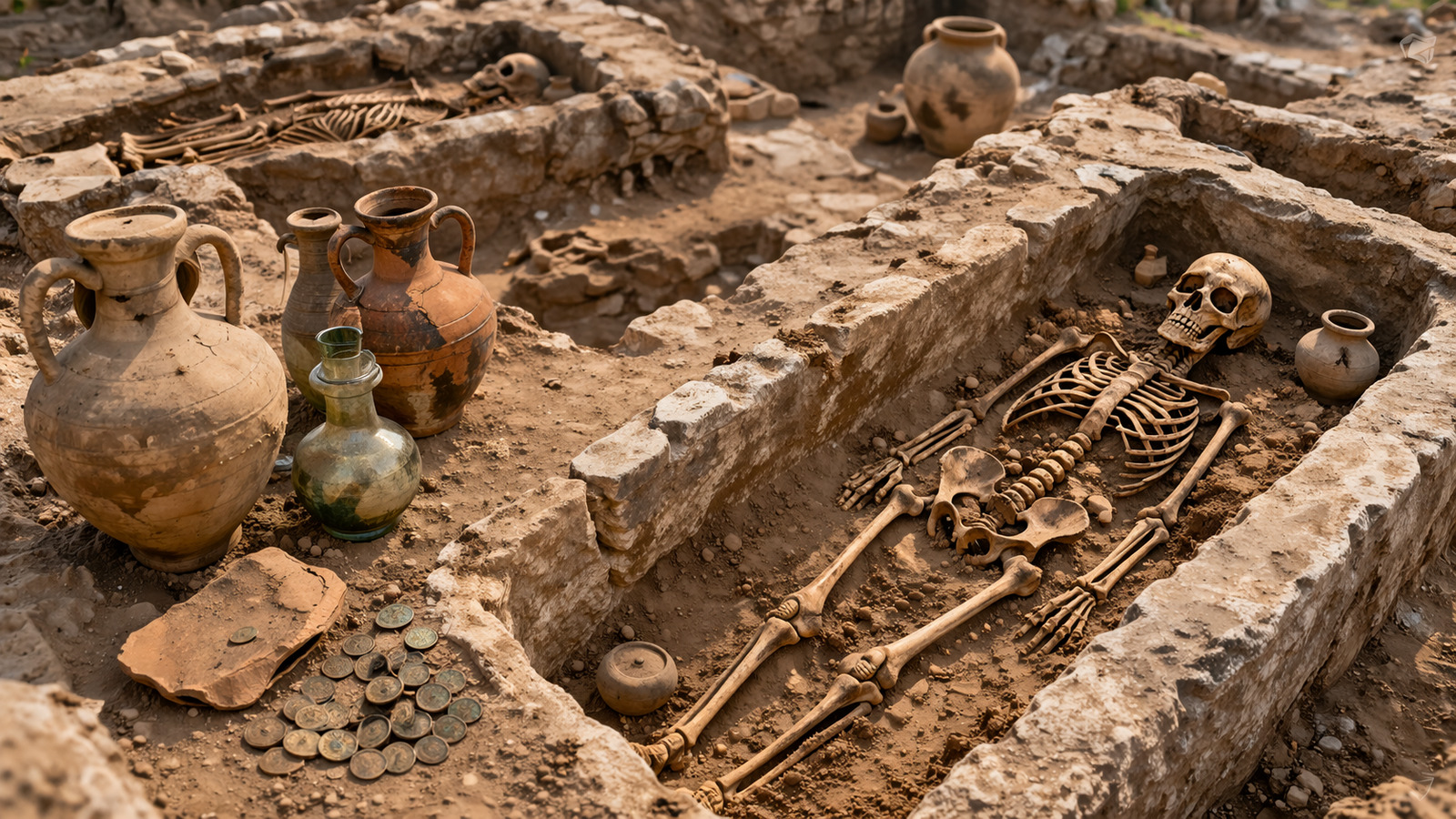
Roman necropolis found beneath urban area of Zadar with more than 3 thousand tombs expands the map of the ancient city of Iader in present-day Croatia, in a burial site used between the 1st and 5th centuries and linked to trade routes of the Adriatic
A team of archaeologists from the University of Zadar announced the discovery of a Roman necropolis with more than 3 thousand tombs beneath the urban area of the city, in the Relja neighborhood, in a finding that helps reconstruct ancient Iader.
Discovery beneath the city
The archaeological site was found beneath an old building of the Croatian automobile club. Researchers classify the area as one of the largest cemeteries from the Roman era ever identified in the Adriatic region.
The tombs belong to the period when Zadar was known as Iader, an important urban and commercial center of the Roman Empire.
-
Asian fruit with intense red color concentrates up to 70 times more lycopene than tomatoes and contains beta-carotene at extremely rare levels in the plant world, according to scientific studies; meet gac.

-
China drilled more than 3,400 meters of ice in Antarctica using hot water and set a world record by nearly one thousand meters, paving the way for discoveries about the limits of life in extreme environments.

-
Companies want to use satellites with mirrors to illuminate the Earth at night, and scientists around the world warn that eliminating darkness could destroy entire ecosystems and affect the health of billions of people.

-
Blackout in the interior of SP? Off-grid hybrid solar system takes over in 16–20 ms without blinking: Victron integrates Fronius on-grid, 30 kWh Pylontech, and 15 kVA three-phase, limits injection, and helps avoid the B wire.

The burial area, according to the archaeologists, was in continuous use between the 1st and 5th centuries AD.

What was found
The excavations revealed ceramic and glass urns, amphorae, coins, oil lamps, jewelry, and household utensils.
Many of these objects were placed beside the dead as part of rituals related to the passage to the afterlife.
The coins refer to the Greco-Roman tradition of offering a symbolic payment for crossing to the underworld.
The lamps had a ritual function, serving to illuminate the path of the deceased in this funeral journey.
Trade and connections
The archaeologists also highlight that several recovered items originate from different parts of the Mediterranean.
This collection reinforces the strategic importance of Iader as a maritime trade hub on the shores of the Adriatic Sea.
The presence of these burial goods indicates intense connections with other regions of the Roman Empire.
For the researchers, the Roman necropolis expands the understanding of trade networks and the circulation of objects in antiquity.

Clues about the urban layout
The discovery also confirms aspects of the urban design of the ancient city. In Roman tradition, necropolises were built outside the walls, usually along the main access roads.
Thus, the site helps indicate where one of the central roads of ancient Iader passed, contributing to reconstructing the urban landscape of about 2,200 years ago.
Excavations continue
The excavations are ongoing, and experts believe that the total extent of the necropolis may be even greater than the area already identified so far.
With information from Adventures in History.








Seja o primeiro a reagir!