





 English
  Francês
  Alemão
  Italiano
  Japonês
  Norueguês
  Portuguese
  Spanish
  3 min of reading
  0 comments


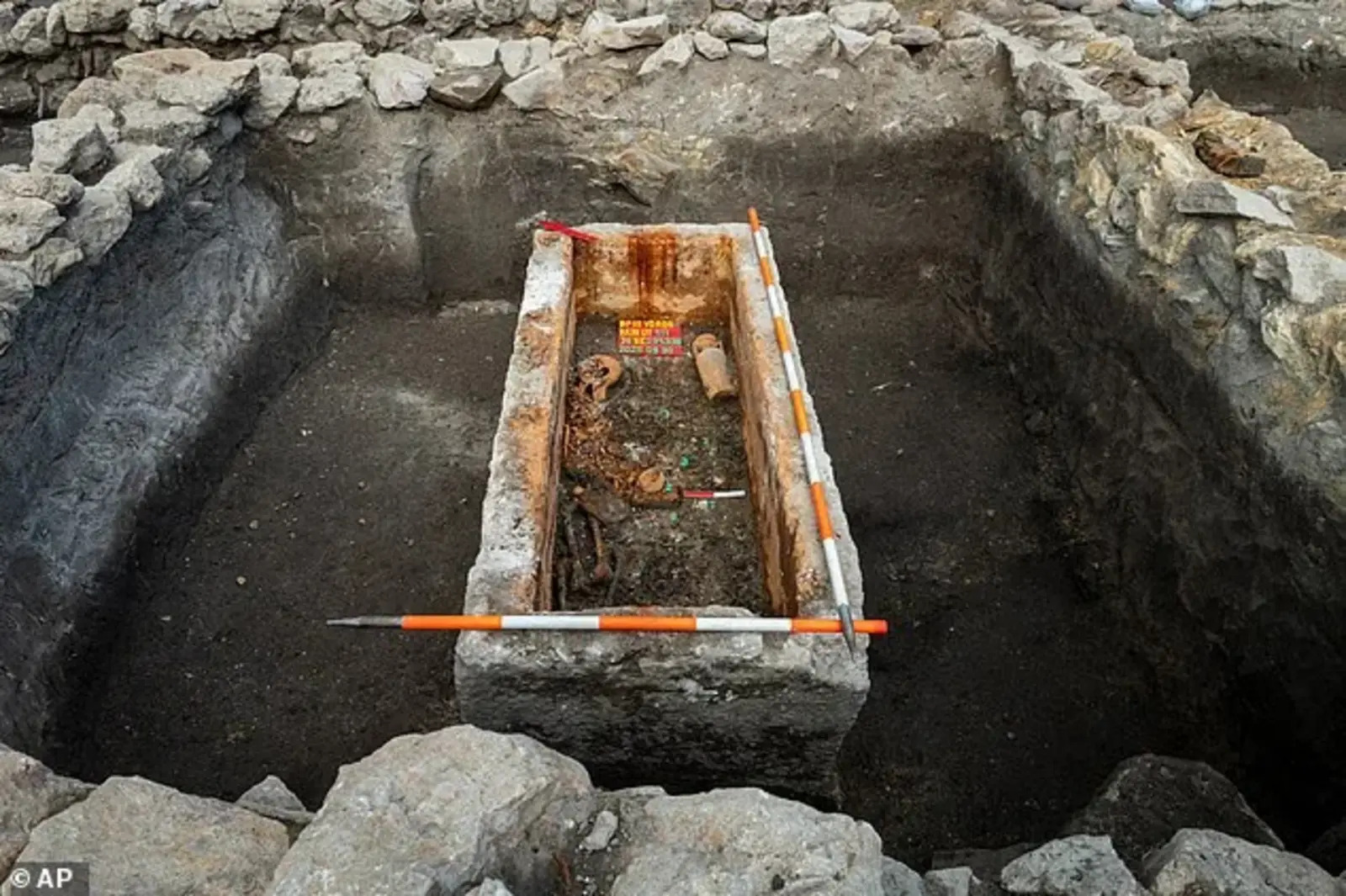
Sealed Roman sarcophagus opened in Óbuda reveals young woman buried with 140 coins, intact vases, and objects indicating high social status
After the opening of a Roman coffin sealed for about 1,700 years, archaeologists found the remains of a young woman in Óbuda, north of Budapest, along with 140 coins and artifacts indicating high social status.
Discovery of a Roman coffin in Óbuda
The limestone Roman sarcophagus was discovered by staff from the Budapest History Museum during an excavation in Óbuda, an area that was once part of Aquincum, the ancient capital of the Roman province of Pannonia.
The stone lid was sealed with melted lead and metal clamps. When the researchers carefully lifted it, they found a complete skeleton surrounded by dozens of objects, in a rare find from Roman life.
-
Storms on Jupiter generate lightning up to 100 times stronger than that on Earth, and data from the Juno spacecraft reveal extreme discharges in the planet’s superstorms.

-
Brazilian discovery leads cancer cells to collapse, reverses the logic of treatment, and may pave the way for therapies with less resistance and less damage to healthy body cells.
-
In the depths of the African forest, these rare and terrifying native species dominate rivers, swamps, and treetops with venom, brute strength, lethal teeth, and behaviors that seem impossible in the heart of the wild.

-
The end of total solar eclipses has a deadline: the Moon is moving away from the Earth at about 3.8 cm per year, and in approximately 600 million years, it will no longer completely cover the Sun, ending one of the rarest coincidences in the Solar System.


Objects found in the tomb
Among the items identified inside the Roman sarcophagus were two intact glass vases, bronze figures, and 140 coins.
There was also a hairpin shaped like a bone, an amber jewel, and remnants of fabric with gold threads.
According to the archaeologists, the size of the skeleton suggests that the remains may belong to a woman.
The combination of the coffin and the objects drew attention for their preservation and the wealth of material found.
Indications of high status
For Roman period specialist and project co-leader, Gergely Kostyál, the sarcophagus and its contents stand out.
He stated that this likely indicates that the buried person was wealthy or held a high social position.
Kostyál emphasized that it is rare to find an intact Roman sarcophagus like this one, never used before, because in the fourth century it was common to repurpose earlier sarcophagi.
Therefore, the discovery gained relevance among scholars.
Examinations and excavation area
Anthropologists will examine the remains of the young woman. The analysis may reveal details about age, health, and origins, expanding the information about the discovery made in Aquincum.
The coffin was located among the ruins of houses in a neighborhood of Aquincum that was later repurposed as a cemetery.
In the vicinity, scholars located a Roman aqueduct and eight graves, but none with similar preservation.
Emotion among researchers
The excavators removed a muddy layer of about four centimeters inside the coffin. The team believes this material may contain more treasures.
For the researchers, the Roman sarcophagus holds scientific importance and reveals the devotion demonstrated in Antiquity.
Archaeologist Gabriella Fényes said she was moved and stated that she still trembles at the thought of the pain of burying this young woman.
With information from Revista Planeta.






Seja o primeiro a reagir!