





 Portuguese
  English
  Spanish
  3 min of reading
  0 comments


Discovery in Luxor Brings Together Sealed Papyri, Colored Coffins, and a Funeral Chamber That Could Enlarge the Study of the Singers of Amon
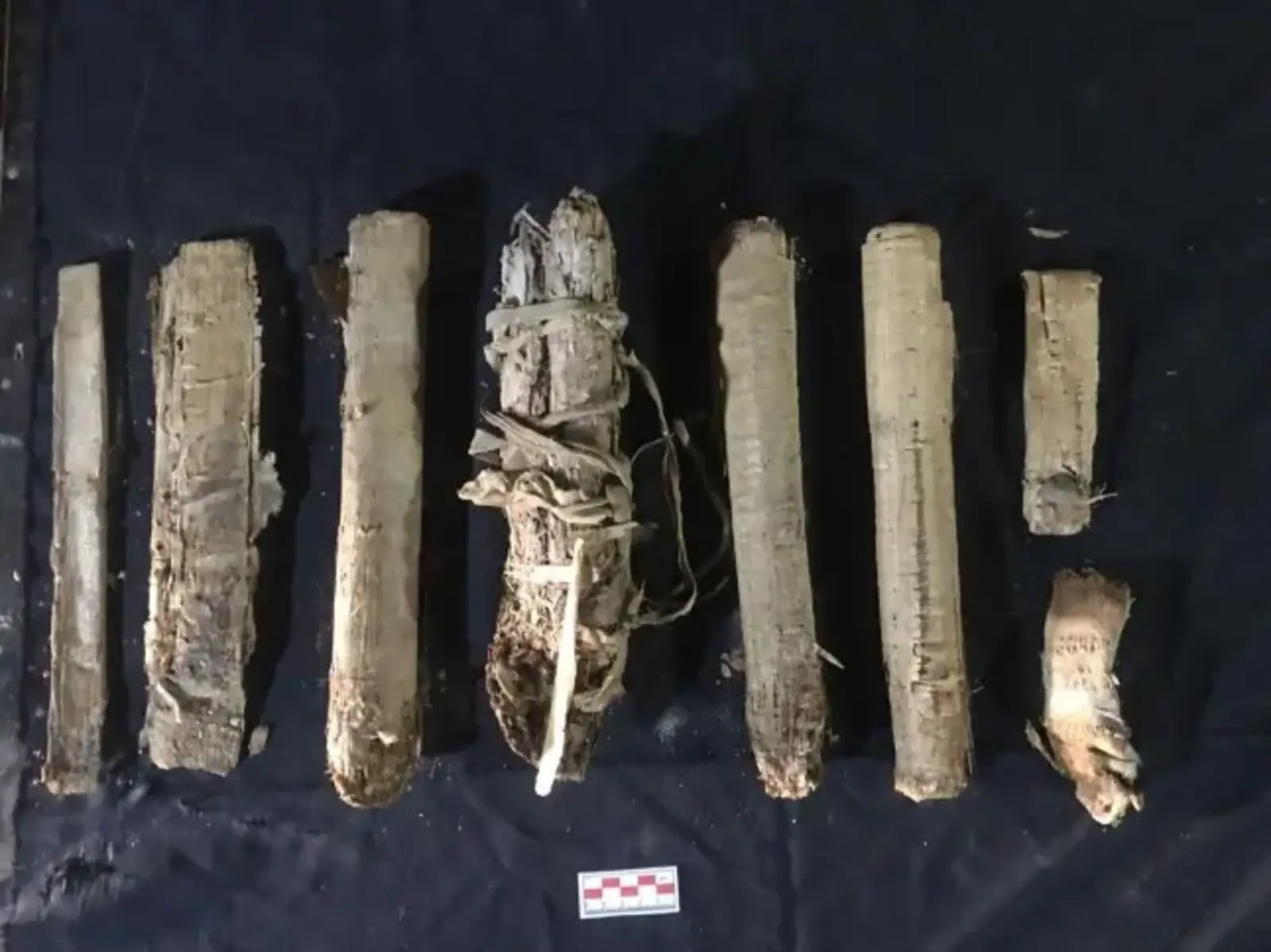
Archaeologists in Egypt found 3,000-year-old papyri inside a ceramic vase on the west bank of Luxor, alongside colored coffins of the singers of Amon. The discovery is significant because it could enlarge the study of this religious group, although the content of the scrolls is still sealed, undergoing restoration and translation.
Discovery in Luxor
The discovery was announced by Egyptian authorities following excavations on the west bank of Luxor.
The papyrus scrolls were stored in a ceramic vase and date back to the Third Intermediate Period, a rare set preserved for about 3,000 years.
-
Before the space shuttle existed, NASA put a “wingless airplane” made of wood to fly at over 190 km/h towed by a car and then launched from a C-47, and this strange experiment practically proved that it was possible to re-enter the atmosphere and land on a runway like a conventional airplane.

-
In Japan, a 150 kg humanoid robot named AIREC has begun testing to assist patients, change diapers, and alleviate a crisis where there is only 1 candidate for every 4.25 positions for elderly caregivers.

-
A cold air mass has already arrived in Brazil and is advancing in the coming hours with temperatures that may approach 0°C in the southern mountains and a risk of frost in the middle of April, surprising those who had not yet felt the autumn of 2026.

-
Equatorial Game aims to reach 120 thousand students with energy efficiency, gamification, and solar energy in public schools across seven states.

The papyri were found hidden alongside a set of colored coffins linked to the singers of Amon.
Some of the scrolls drew attention due to their state of preservation, as some still retained their original clay seals intact.
Authorities stated that the papyri vary in size and represent a valuable source of information.
The scrolls will remain closed for now as they undergo restoration and translation before their content is finally revealed.
Crowded Funeral Chamber
Nearby, researchers located a funeral chamber carved into the rock. The space was filled with coffins belonging to the singers of Amon, devotees linked to the temples dedicated to the god Amon in ancient Egypt.
To accommodate the large number of pieces, the ancient Egyptians organized the sarcophagi into 10 horizontal rows.
The lids were separated from the boxes to increase the internal capacity of the chamber and allow for better use of the available space.
This form of organization demonstrated a practical solution to maximize funeral space. The arrangement of the coffins became one of the most striking elements of the find, both for the volume gathered and for the way everything was stored.
Race for Preservation
Not all the material has withstood the passage of centuries well. According to reports, the wood of the coffins was in poor condition, prompting the team to initiate urgent conservation work on-site.
The restorers treated deteriorated wood fibers and the painted plaster layer that had weakened over time.
They also performed careful mechanical cleaning to remove deposits without compromising the vibrant colors preserved on the surfaces.
This work became essential to stabilize the pieces before later stages of analysis.
The preservation of the papyri and coffins was treated as an immediate priority given the conditions found during the excavation.
Who Was Buried There
The exact identity of the people buried has not yet been determined. The coffins bear titles but no names, and the most recurring designation recorded on the pieces is “Singer(s) of Amon.”
Authorities state that the discovery is opening new avenues for the study of the class of singers and musicians of that period.
The find has also been described as a significant addition to the history of notable archaeological discoveries in Egypt.
The Egyptian Minister of Tourism and Antiquities, Sherif Fathy, stated that the discovery reflects the ongoing support of the Egyptian state for archaeological research.
He linked this effort to a broad strategy to preserve cultural heritage and highlight its civilizational and human value.
Other Recent Finds
In another research front in Egypt, an ancient monastery in Wadi El-Natrun emerged from the desert sands. The complex of mud bricks had monk cells, ovens, remains, crosses, and palm paintings.
Inscription found in this monastery revealed names and daily routines of the monks. In another region, archaeologists also discovered a 5th-century monastic hostel with 13 rooms, kitchens, storerooms, a marble column, artworks, and Greek inscriptions.
On the Giza Plateau, a theory raised based on radar scans suggests an underground network of wells and tunnels and even the possibility of a second Sphinx, although the mystery remains.
With information from New York Post.







Seja o primeiro a reagir!