Portuguese
  Spanish


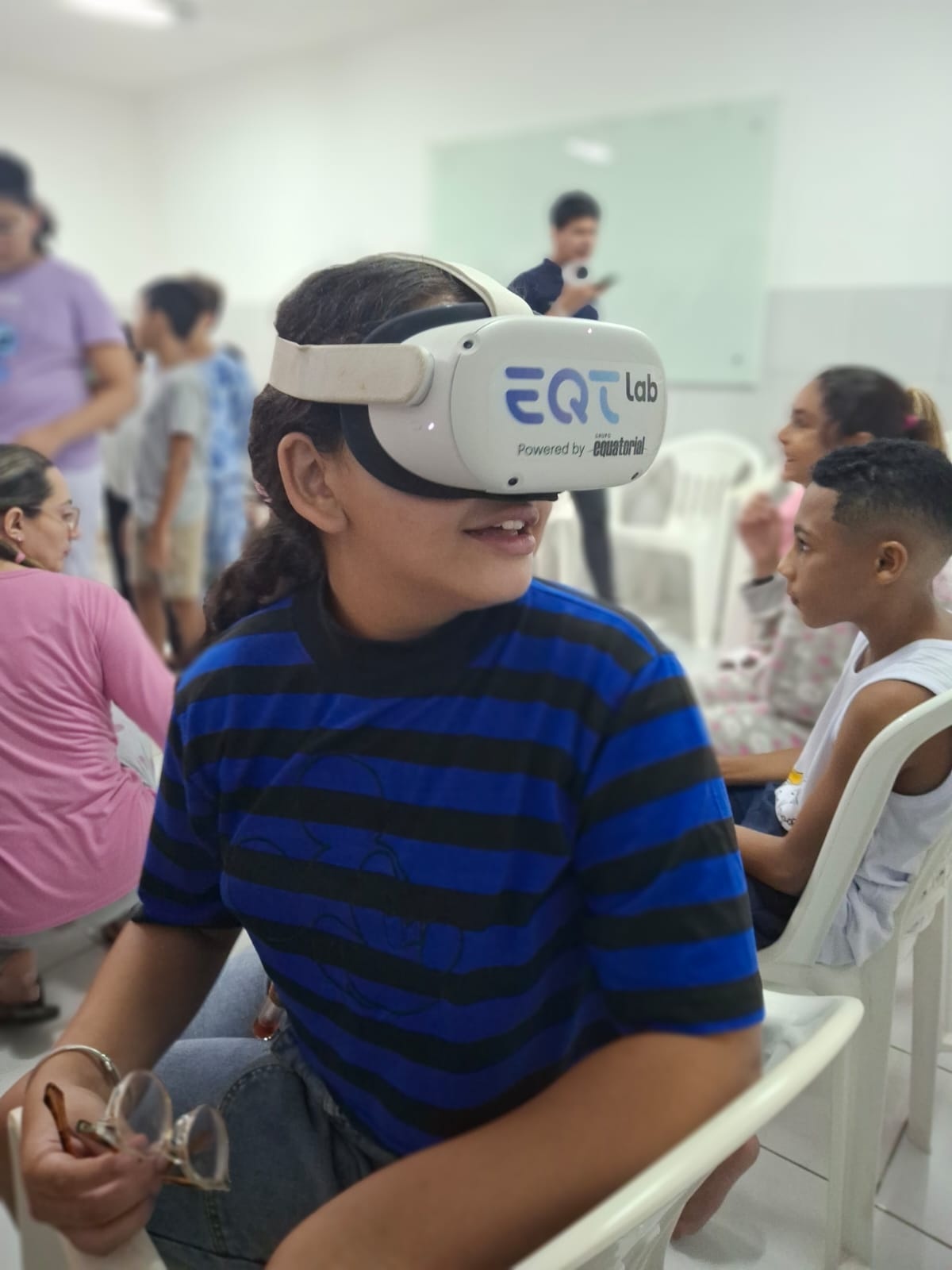

The educational project of the Equatorial Group integrates technology, sustainability, and practical actions in communities, with a direct impact on energy consumption and the training of youth
Furthermore, the Equatorial Group launched, in March 2026, the first edition of the Equatorial Game, according to an official statement from the company itself.
Thus, the initiative combines education, energy efficiency, and technology to generate social impact in public schools and low-income communities.
At the same time, the project adopts gamification and practical challenges, connecting learning to students’ daily lives.
-
AI Security System in Brazil Aims to Cut False Alarms by Differentiating Pets from Intruders, Enhancing 24/7 Monitoring for Homes and Businesses

-
Archaeologists Discover 1,500-Year-Old Byzantine Mosaic with Greek Biblical Inscription in Israel, Uncover Ruins of 10 Buildings Near Kiryat Gat
-
Ohio Carpenter Finds 308-Gram Meteorite the Size of a Baseball After Dreaming of Its Location

-
Chinese Student Builds Humanoid Robot for $2,100 at Age 20, Now Leads Robotics Startup in China



In this way, the content becomes applicable and relevant both inside and outside the school.
Project reaches students in seven Brazilian states
Additionally, the project was structured within the ANEEL Energy Efficiency Program (PEE/ANEEL).
As a result, the forecast is to reach 120,000 students across Brazil, according to institutional data released in 2026.
At the same time, the Equatorial Game Challenge will be implemented in 168 public schools.
In this regard, the units are distributed across the states of Maranhão, Pará, Piauí, Alagoas, Goiás, Amapá, and Rio Grande do Sul.
Moreover, the initiative expands the reach of the E+ Education Program, bringing a more digital, interactive, and active learning-based approach.
Learning goes beyond the classroom and reaches communities
Furthermore, during the challenges, students are encouraged to apply concepts of energy efficiency and sustainability in their routines.
Thus, participants conduct energy diagnostics, identifying opportunities for consumption reduction.
As a result, the project promotes behavioral changes and expands its impact beyond the school environment.
At the same time, the My Economic Home module reinforces this practical proposal.
In this way, students share knowledge with family members and neighbors.
Consequently, there is a strengthening of the collective awareness about the responsible use of electricity.
Technology and practice transform knowledge into action
Furthermore, according to Julio Cesar Mendes, executive of R&D and PEE of the Equatorial Group, the initiative represents an evolution in energy education.
In this context, he highlighted, in March 2026, that the project connects technology, content, and practice.
Thus, knowledge is transformed into concrete action, generating a direct impact on people’s lives.
Schools receive solar energy and students gain efficient equipment
Additionally, as a form of recognition, the project provides for concrete energy efficiency actions.
In this way, public schools in vulnerable areas that stand out will be benefited with:
- Installation of photovoltaic generation systems
- Replacement of inefficient equipment
At the same time, awarded students will have their homes contemplated.
Thus, there will be a swap of old equipment for more efficient models.
Consequently, this contributes to the reduction of energy consumption and to the conscious use of resources.
Initiative reinforces ESG agenda and training of conscious youth
Furthermore, the project reinforces the Equatorial Group’s commitment to the ESG agenda.
In this sense, the initiative integrates:
- Quality education
- Energy efficiency
- Reduction of consumption
- Responsible action in communities
At the same time, by bringing knowledge and practical solutions, the project contributes to forming a more prepared generation.
Thus, students become more aware, engaged, and aligned with the energy challenges of the future.
In light of this, the proposal shows how education, technology, and sustainability can walk together — but will initiatives like this be able to transform, in a lasting way, the energy behavior of future generations?