





 Portuguese
  English
  Spanish
  3 min of reading
  2 comments


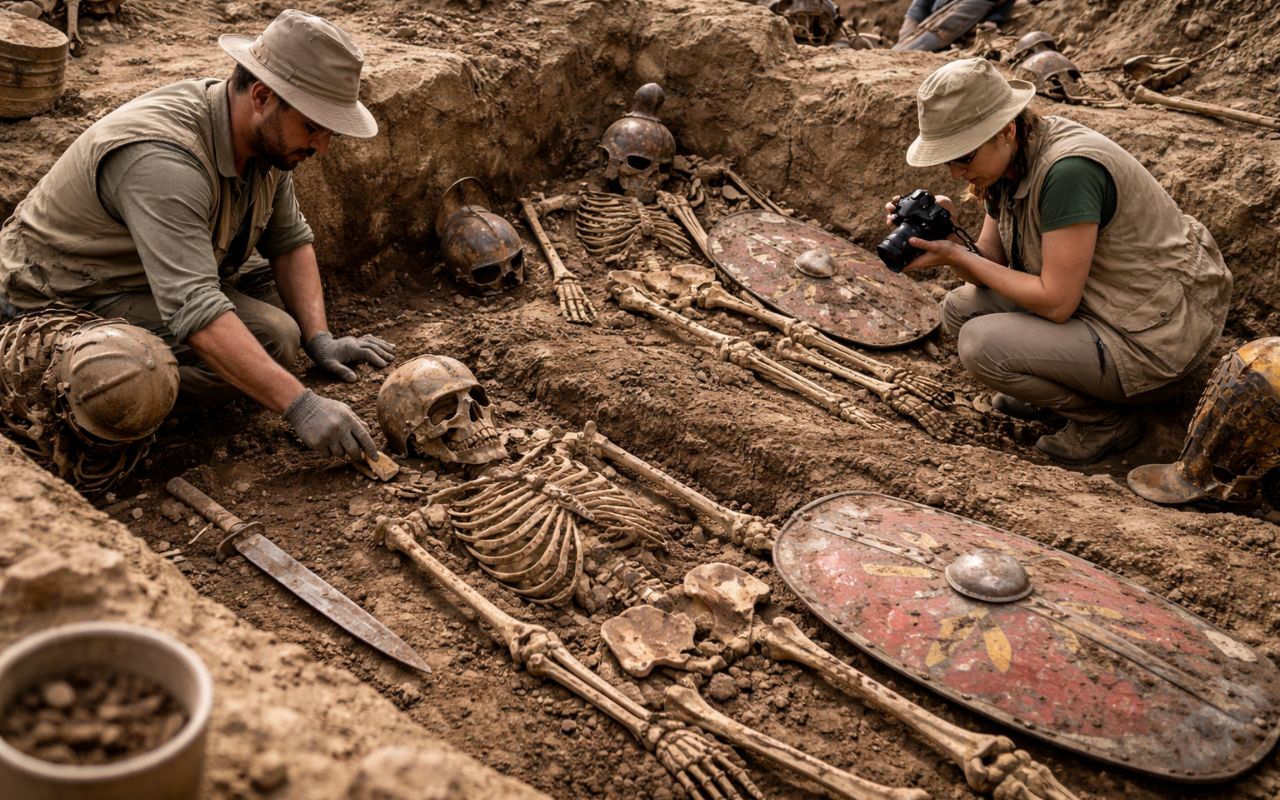


Discovered in Croatia, Skeletons of Roman Soldiers Show Signs of Battle from 1,800 Years Ago. Find in Well in Osijek Rescues Dark Moment in Roman Military History.
Researchers announced the discovery of seven skeletons in an ancient well in the city of Osijek, in eastern Croatia — remnants of Roman soldiers who died in a battle estimated to have occurred around 1,800 years ago.
The excavation took place at the archaeological site of ancient Mursa, during construction work for a university, and the complete study was published on October 15, 2025, in the journal PLOS One.
The place where the skeletons were found indicates that they were deposited quickly, without ceremonial burial, suggesting a post-conflict urgency scenario.
-
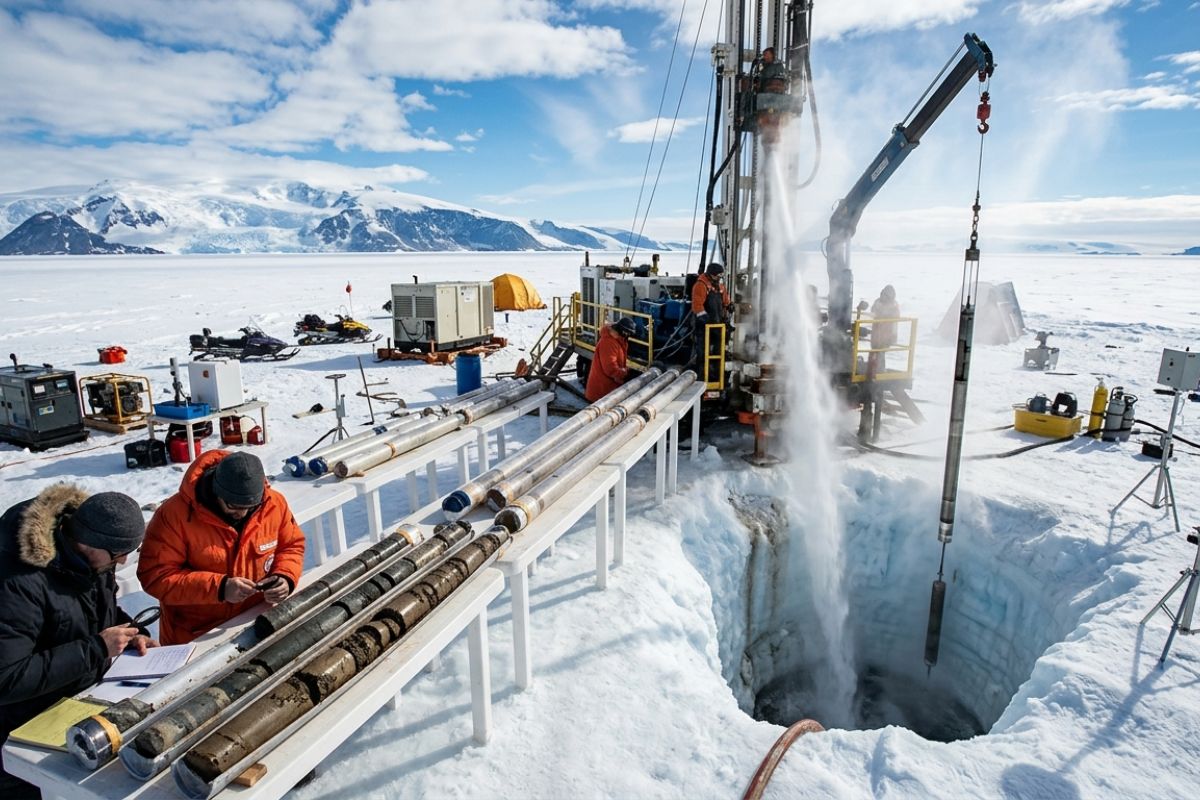
With pressurized hot water, scientists melt 523 meters of ice in West Antarctica and extract a 228-meter rock core with a record of 23 million years, revealing ice-free periods and global warnings.
-
Denmark resumes the idea of building the world’s first energy island with $30 billion, connecting several countries and changing the European energy game amid uncertainty due to the war in Iran.

-
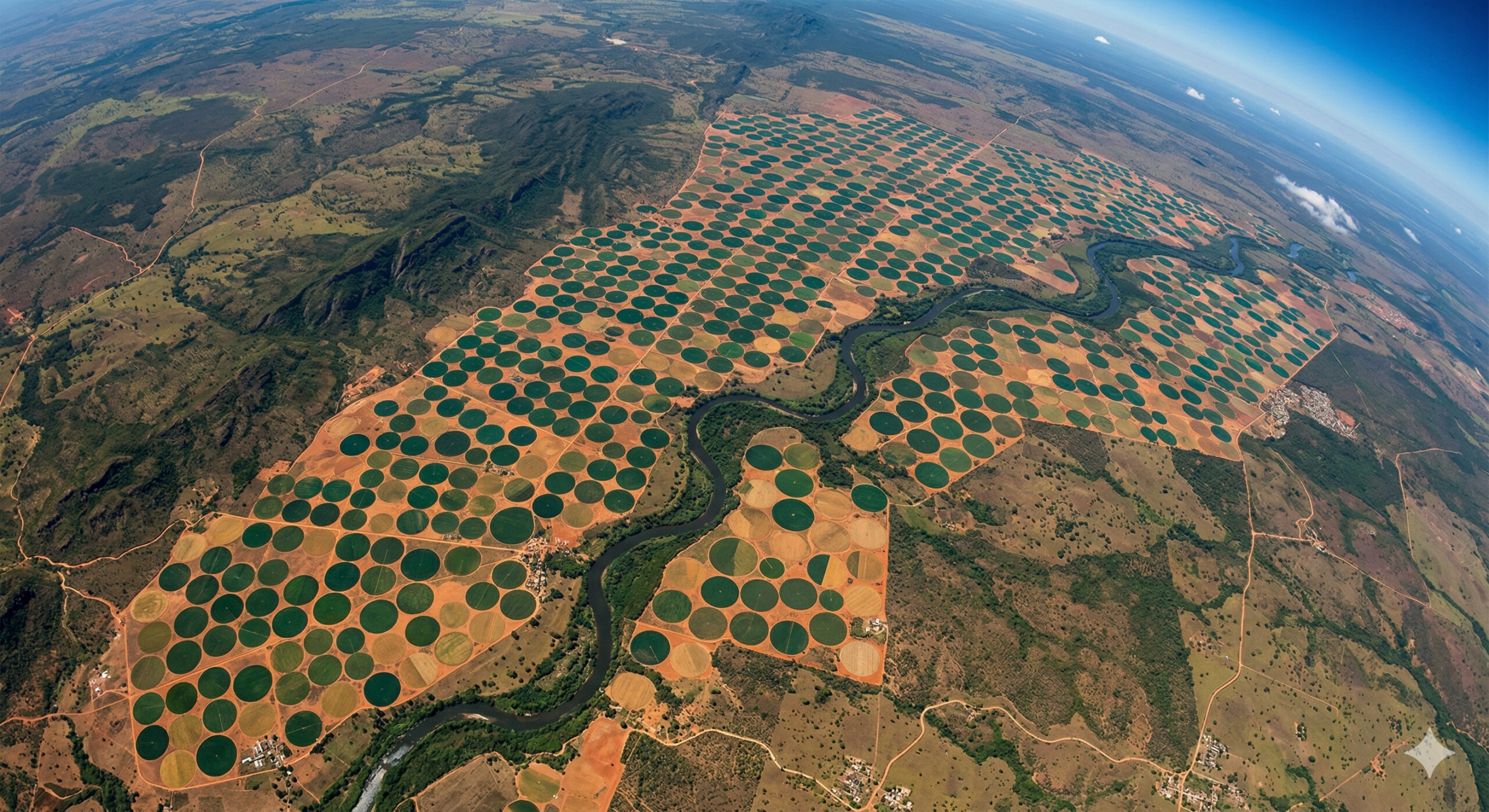
In the interior of Bahia, gigantic “perfect” circles drawn on the land appear from space as targets kilometers in diameter, revealing irrigation systems so precise that they transform crops into geometric patterns visible from orbit.
-
The heatwave in Brazil that hit in March is set to end as a cold front arrives between Good Friday and Easter Sunday, causing a temperature drop of up to 6 degrees and rain in the Central-South region, according to the Easter weather forecast.


The bones were preserved enough to reveal injuries caused by blunt force trauma, meaning hard blows to the head.
The work of the archaeologists allowed the association of the remains with a violent episode during the Crisis of the Third Century, when internal conflicts shook the Roman Empire.
Who Were the Roman Soldiers?
The analyzed remains belong to adult men, both young and middle-aged, who showed signs of direct combat.
The observed injuries involve cranial trauma and marks from personal weapons, indicating close-quarter fighting. There is also evidence that the skeletons of Roman soldiers were discarded without local Roman burial rituals.
The discovery was led by anthropologist Mario Novak, who, along with other specialists, conducted dating and comparisons with artifacts found at the site. A Roman coin with a compatible date helped confirm the chronology of the late 3rd century AD.
The Battle Scene
The skeletons were excavated in 2011, but were only recently subjected to detailed analysis. The site is Osijek, in the region of ancient Mursa, an area of great Roman military importance.
The so-called Battle of Mursa, one of several that occurred during the instability of the Empire around 260-270 AD, is the most likely historical event associated with these dead.
The well was in the path of university construction work, which led to an archaeological alert.
The superposition of archaeological layers preserved the context, allowing for the identification of both the positions of the skeletons and the remnants of associated objects.
How the Study of the Roman Soldiers’ Bones Was Conducted
To confirm that they were skeletons of Roman fighting soldiers, researchers used techniques such as carbon dating, forensic analysis of bones, and anthropological study of the injuries.
The fracture patterns suggestive of blows, combined with the historical location, support that this was not a normal burial, but a result of intense conflict.
Additionally, the research noted that these skeletons were mixed with sediments and debris, indicating rapid deposition, possibly after death in battle or circumstantial chaos.

The genetic analysis points to diversity among the individuals, something compatible with the plural composition of Roman legions in the final centuries of expansion.
This discovery of skeletons of Roman soldiers offers a concrete window to understand the moments of crisis in the Roman Empire.
It helps answer questions about how confrontations occurred, how the dead were treated in extreme situations, and how imperial power operated in regions distant from Rome.
Additionally, finding such well-preserved physical evidence allows for the reconstruction not only of battles but also of aspects of soldiers’ lives — health, origin, injuries, and even practices of abandonment or disposal of bodies in moments of disaster.
This type of find is valuable for historical archaeology and for the memory of the affected populations.





Interessante isso!
Eu quase IA acreditando