





 Portuguese
  English
  Spanish
  4 min of reading
  0 comments


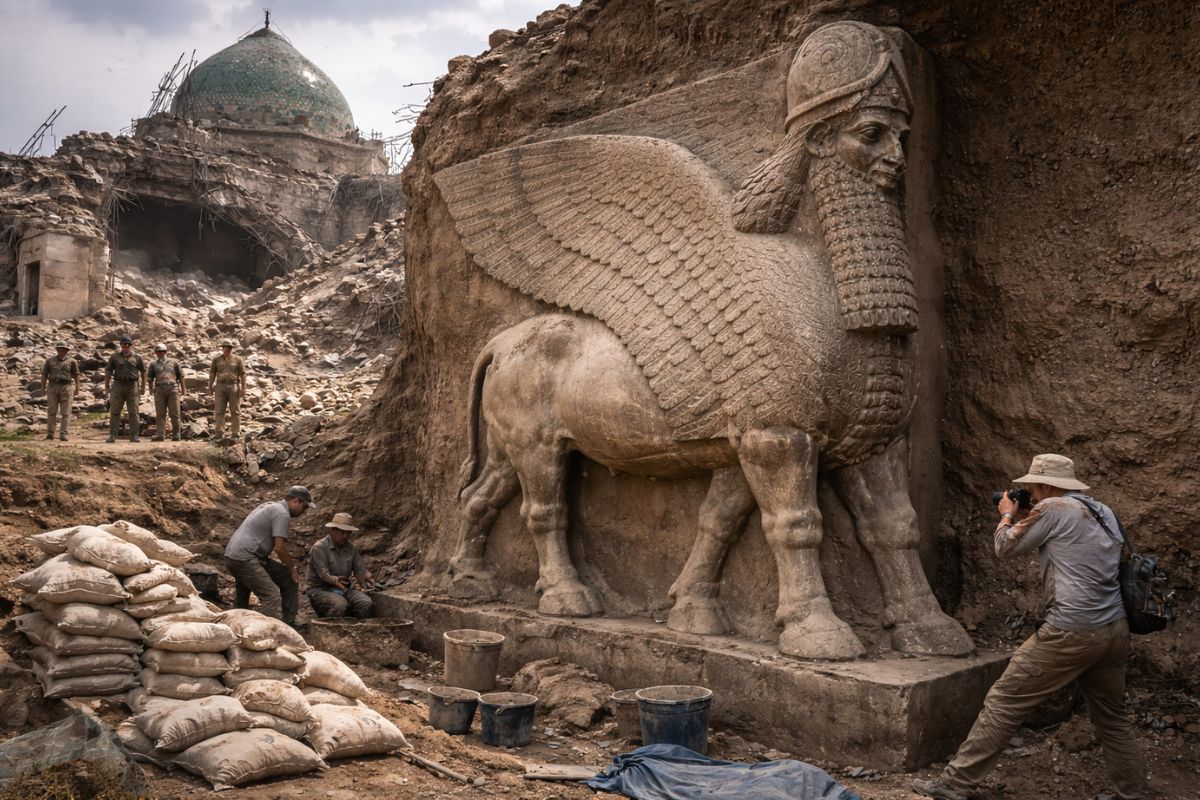
The lamassu of Mosul is almost twice as large as those in the British Museum and the Louvre. It was located at the entrance to the throne room of King Esarhaddon, who ruled the largest empire the world had ever seen until then, from Persia to Egypt. And along with him, archaeologists found cuneiform tablets of three kings and war spoils brought from Egypt and Syria.
In Mosul, in northern Iraq, beneath what had been the Mosque of the Prophet Jonah for centuries, there existed a palace that no one could excavate. The site was sacred. Untouchable. No archaeologist had permission to dig there for over a hundred years.
In 2014, the Islamic State took Mosul. They destroyed the mosque. They blew up the sanctuary. And then they began to dig tunnels beneath the ruins to loot antiquities and finance their operations. When Iraqi forces retook the city, they found the tunnels. And inside them, the walls of an Assyrian palace that no one knew existed there.
Since 2018, teams from the University of Heidelberg (Germany) and the Iraqi Antiquities Council have been exploring these tunnels and the surrounding structures. In September 2025, they announced the discovery that redefined the scale of Assyrian art: a 6-meter-tall lamassu, the largest ever recorded in history.
-
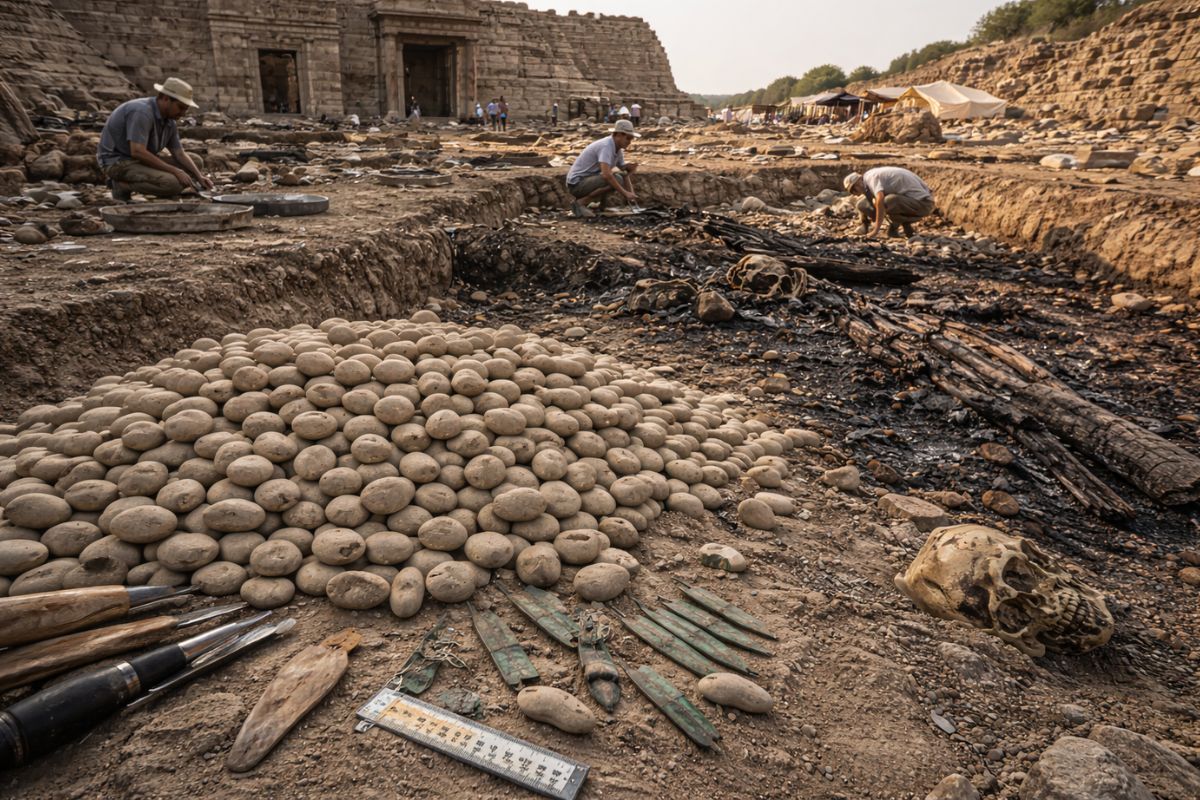
Archaeologists found thousands of sling projectiles dating back 3,500 years concentrated in front of the palace of Troy along with arrowheads, burned buildings, and hastily buried bodies, and now science believes that the war described by Homer in the Iliad may have been real.
-
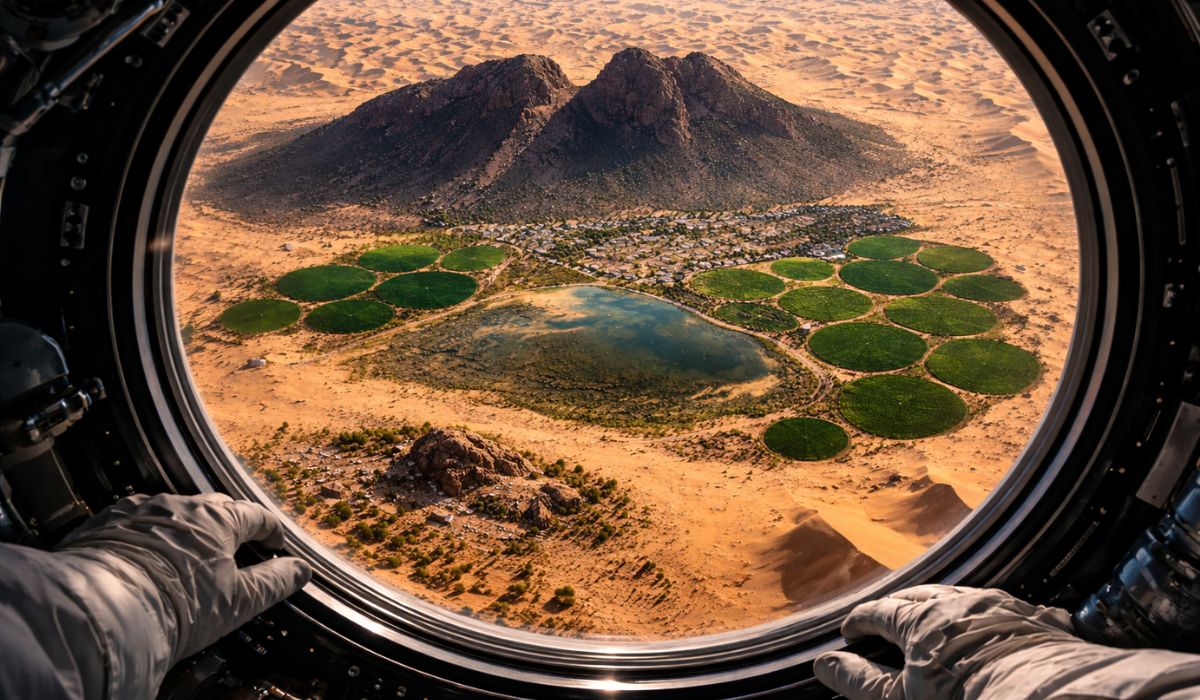
Seen from space, an image taken by an astronaut shows an unlikely oasis in the Saudi Arabian desert, protected by a terrain that slows the advance of sand, surrounded by green circles, remnants of an extinct lake and nearly 10,000 years of preserved history.
-
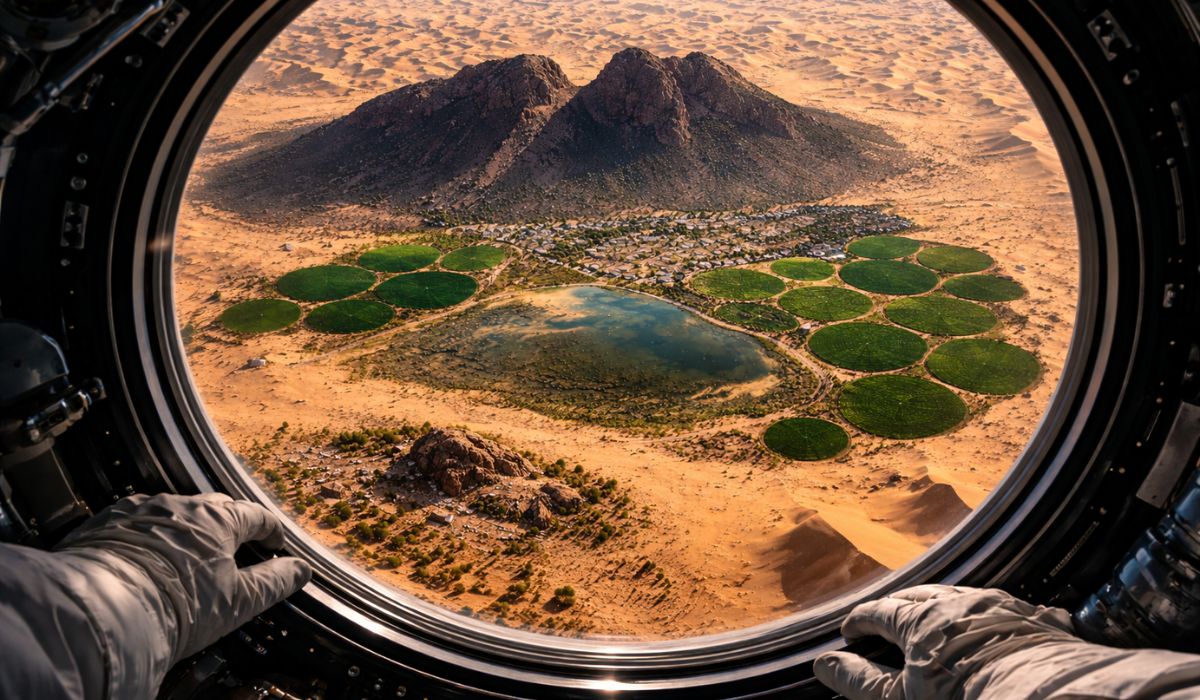
Seen from space, an image taken by an astronaut shows an unlikely oasis in the Saudi Arabian desert, protected by a terrain that slows the advance of sand, surrounded by green circles, remnants of an extinct lake and nearly 10,000 years of preserved history.
-
Support during childbirth advances in Brazil and strengthens the role of doulas: expectant mothers gain more comfort, guidance, and support from the beginning to the postpartum period.

What is a lamassu

A lamassu is a hybrid creature: body of a bull, wings of an eagle, and a human head. In ancient Mesopotamia, these colossal statues were positioned in pairs at the entrances of royal palaces. They were not decoration. They were protective deities. Their function was to ward off evil and project the absolute power of the king who lived inside.
The most famous examples in the world are in the British Museum, in London, and in the Louvre, in Paris. They measure between 3.5 and 4.2 meters. They are impressive. Anyone who has seen one in person knows that the scale is intimidating.
The lamassu of Mosul is 6 meters tall. Almost double. It is the largest piece of monumental Assyrian sculpture ever found.
The king behind the statue
The lamassu guarded the entrance to the throne room of King Esarhaddon, who ruled the Neo-Assyrian Empire between 681 and 669 BC. To understand the scale of this man’s power: during his reign, Assyria became the largest empire the world had ever seen until then.
Esarhaddon conquered Egypt. He rebuilt Babylon (which his own father, Sennacherib, had destroyed). He expanded Assyrian dominion from the Persian Gulf to the Mediterranean. And he built a palace in Nineveh designed to intimidate anyone who entered.
The throne room was the highlight. Multiple corridors led to it, each flanked by pairs of lamassu. The visitor walked between giant winged bulls until reaching the throne. The message was clear before any words were spoken.
Esarhaddon appears in the Bible (Ezra 4:2). His father Sennacherib also appears (2 Kings 18-19). And his son Ashurbanipal completes the triad of the most documented kings of Mesopotamian antiquity. Cuneiform tablets of the three kings were found in the same palace.
The irony of the Islamic State
The story of this discovery has a layer that no screenwriter would invent.
The Islamic State destroyed the Mosque of the Prophet Jonah to erase Iraq’s cultural heritage. They dug tunnels to loot artifacts. And in doing so, they inadvertently opened access to a palace that the mosque had kept sealed for over a thousand years.
Without the destruction by the IS, archaeologists would likely never have been permitted to excavate beneath an active religious sanctuary. The group that wanted to destroy history ended up revealing one of the greatest archaeological discoveries of the century.
Together with the lamassu, the teams found dozens of cuneiform tablets inscribed with the names of Sennacherib, Esarhaddon, and Ashurbanipal, as well as artifacts that appear to be war spoils brought from Egypt and the Levant. Ceramics, ritual objects, and pieces that tell the story of the military campaigns that made Assyria the terror of the ancient world.
What 6 meters mean
To put it in perspective: 6 meters is the height of a two-story building. It is taller than an adult giraffe. It is a solid stone statue, carved from a single block, positioned at the entrance of a room where a man sat on a throne receiving ambassadors from all over the known world.
The question that archaeologists are asking now is whether this lamassu was a unique piece, specially commissioned by Esarhaddon, or if it was part of a tradition of colossal sculptures that simply did not survive the test of time. If the second hypothesis is true, there were even larger statues in Mesopotamia that have been lost forever.
Iraqi authorities plan to transform the site of Nabi Yunus into a museum complex that will integrate the Assyrian ruins with the Islamic heritage of the Mosque of Jonah. The destruction has turned into preservation. The looting has turned into excavation. And the largest winged bull in history is back, 2,700 years after being buried.
With information from Archaeology Magazine, Heritage Daily, Greek Reporter, and Assyrian International News Agency.






Seja o primeiro a reagir!